John Jodzio - Knockout
Здесь есть возможность читать онлайн «John Jodzio - Knockout» весь текст электронной книги совершенно бесплатно (целиком полную версию без сокращений). В некоторых случаях можно слушать аудио, скачать через торрент в формате fb2 и присутствует краткое содержание. Год выпуска: 2016, Издательство: Soft Skull Press, Жанр: Современная проза, на английском языке. Описание произведения, (предисловие) а так же отзывы посетителей доступны на портале библиотеки ЛибКат.
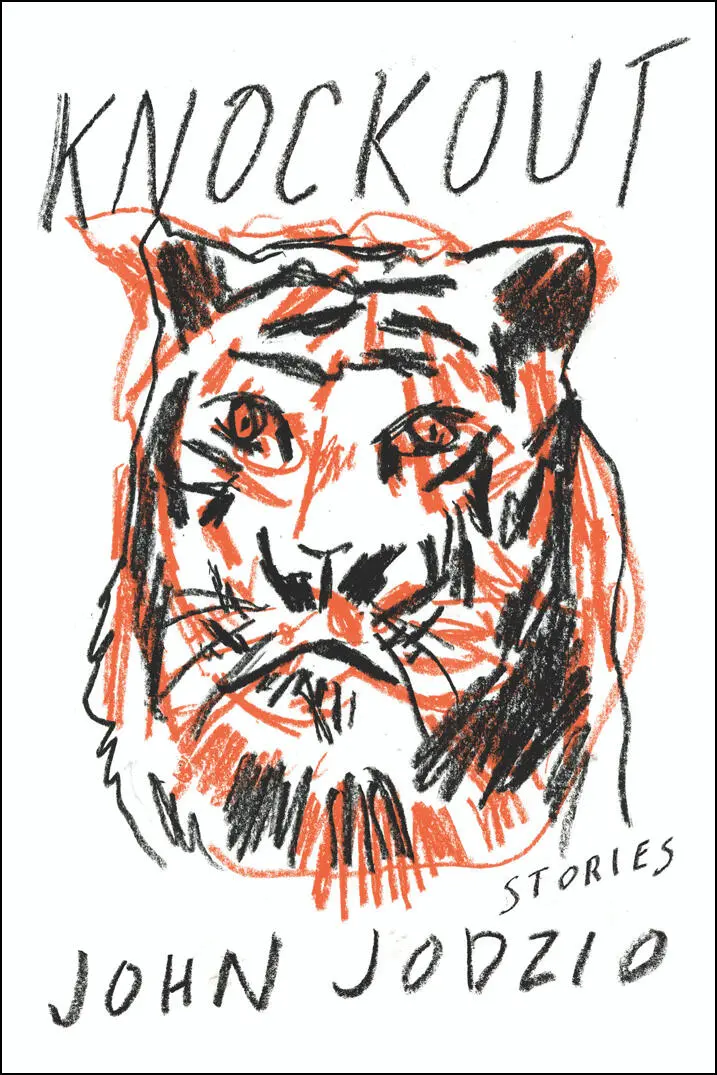
- Название:Knockout
- Автор:
- Издательство:Soft Skull Press
- Жанр:
- Год:2016
- ISBN:нет данных
- Рейтинг книги:4 / 5. Голосов: 1
-
Избранное:Добавить в избранное
- Отзывы:
-
Ваша оценка:
Knockout: краткое содержание, описание и аннотация
Предлагаем к чтению аннотацию, описание, краткое содержание или предисловие (зависит от того, что написал сам автор книги «Knockout»). Если вы не нашли необходимую информацию о книге — напишите в комментариях, мы постараемся отыскать её.
. But with his new collection, Jodzio creates a class of his own.
Knockout With its quirky humor, compelling characters, and unexpected sincerity,
by John Jodzio is poised to become his breakout book, drawing a wide readership to this provocative and talented young writer.
Knockout — читать онлайн бесплатно полную книгу (весь текст) целиком
Ниже представлен текст книги, разбитый по страницам. Система сохранения места последней прочитанной страницы, позволяет с удобством читать онлайн бесплатно книгу «Knockout», без необходимости каждый раз заново искать на чём Вы остановились. Поставьте закладку, и сможете в любой момент перейти на страницу, на которой закончили чтение.
Интервал:
Закладка:
Ingrid Eccles is a small woman, her brown hair pulled up in a misshapen bun. There are lots of doilies in her apartment, lots of pictures of Christian, a good layer of dust covering everything.
The pictures of Christian hang in chronological order on her living room wall, the naked youngster on the shag rug, the boy holding the baseball bat, the teenager with wings of hair feathered over his ears.
Ingrid can’t sit still. She makes lemonade, puts out a plate of cookies.
“I can’t believe he’s gone,” she tells Lisa.
As he ages, the pictures of Christian get fewer and fewer. In the last one, he looks off the rails, his mouth held in a sneer, his eyes watery and distant.
“They were having trouble figuring out his meds,” Ingrid says when she notices Lisa looking at that picture. “At that point he hated any sort of camera being around him. Ever since he was fifteen there were signs. The drugs helped for a while, but then not so much.”
Lisa holds a napkin underneath her cookie. She wants to ask Ingrid if she feels relieved he’s gone, but she knows it’s a horrible question. She eats her cookie, shakes Ingrid’s hand, tells her thank you.
Later that week, Lisa is eating dinner with her dad at a seafood place near the wharf, a place with a signed picture of her father in a frame up on the wall. He’s dressed up, she’s not. They are an odd couple, her in paint-splattered chinos and a raggedy T-shirt, him in a slate-colored suit. The owner keeps coming over to their table, asking if everything is all right for “Mr. Turner.”
“Twyla called me today. She heard they might resurrect my character on Sunset Beach ,” he tells her. “There’s scuttlebutt. That’s what she told me. Scuttlebutt. I would have been on a deserted island all these years. Shipwrecked or some shit. I come back pissed off and out for revenge.”
When they get home, Lisa goes up to bed. Later that night, she gets up and finds her father asleep in front of the TV. His legs are propped up on a chaise lounge. His cannonball video is paused and he’s frozen there on the screen. The picture is old and blurry and you can’t really tell what is happening, so Lisa grabs the remote from off the coffee table and clicks forward a couple frames. That does it; it moves her father out of the haze. She sets the remote back down on the coffee table and leaves him sitting there, a man held in mid-flight, a man with no pinnacle and no nadir, a man unaware of the ground below.
CHET
My older brother Chet died after he got bit by a sick elk. It was a horrible death, lots of moaning and black puke and weeping styes all over his back and chest. Nothing, not any of the doctors at the hospital, not shitloads of morphine or the tenderness of the nursing staff, nothing could ease his pain. Poor Sick Chet. Poor Poor Sick Sick Chetty. That’s what we all said.
Chet got bit on our annual hunting trip. The elk that bit him was one I’d shot but hadn’t shot well enough. Chet got to it before me and he knelt down in the switch grass to field dress the beast. While he was unsheathing his hunting knife, the elk reared up and chomped down on his thigh, right through his Carhartts. The elk keeled over immediately after that, like that bite was his last wish.
At first, Chet shook off the pain. He gulped blackberry brandy and revenge-stabbed the elk in the face about fifty times — it was only on the drive home that he started to look green. I knew something was wrong with him when my dad asked us if we wanted to stop at the strip club in Lake City and Chet said he thought it might be best to skip the strippers and head straight home. I knew something was especially fucked when my dad and I dragged Chet inside the strip club anyway and he fainted before he even saw one goddamn tit.
Chet’s newlywed wife, Flor, stood vigil by his hospital bed the entire time. Flor was Panamanian and she often wore her hair in pigtails and her dresses were embroidered with tiny flowers on the bodice and sleeves. She’d only been married to Chet for two months, but most nights she slept on a cot next to Chet’s wasting body, feeding him popsicle chunks and dabbing his forehead with a damp washcloth as he drifted in and out of consciousness. Unfortunately, one morning she started to puke. It was regular yellow-brownish puke, not blackish puke like Chet’s, but I was still worried for her. By then, I’d fallen under the spell of her dark eyes and loved the pragmatic way she stood by Chet’s bedside as he fought his way though chill and fever, pain and fear.
“You’re not sick,” the doctors explained after they’d examined Flor. “You’re pregnant.”
Flor told Chet the news immediately, thinking this bit of wonder might provide him some sort of extra will to survive this horrible elk-biting disease.
“I’m with child,” she explained. “Which is a beautiful thing, right? A baby!”
Chet was in a coma by then. He hadn’t spoken in a week, but after Flor told him about the baby we heard him mumble, okay, okay, okay. We milled around his bed for a while after that, excited, hoping for more, hoping for a small signal he was still fighting. Unfortunately, those were the last words Chet ever spoke. A few minutes later his body seized up, every muscle in his arms and legs tightening and braiding, his torso bucking up and down on his bed. The doctors rushed in with a crash cart, but it was useless. Flor buried her head in my shoulder and sobbed.
“It was like he was waiting to hear about the baby before he said good-bye,” I told her.
II
Five years might be a long time for some people to grieve, but it isn’t for me. I still tear up every time I think of Chet. It’s just how I’m wired. I end up thinking about Chet a lot because I can see his gravestone from the cafeteria of the power plant where I work. Sometimes I’ll be eating a grilled cheese sandwich and I’ll accidentally glance down at the graveyard and think about how Chet liked grilled cheese sandwiches and my eyes flood with tears. I can’t help it.
A bunch of my other relatives are buried in that cemetery too. It’s about two hundred yards from the power plant, overlooking the river. It’s extra ominous because steam from the turbines billows over it and because there are always craggy old fishermen on the shore below, casting their lines into the murky bilge. It’s great fishing if you like bottom feeders — suckers, carp, the occasional gooch that’s taken a wrong turn from the gulf — all of them love the soupy water, all of them love being nearly boiled alive.
Today at lunch, I eat a chicken salad sandwich Flor has packed for me. My Uncle Jimmy, who also happens to be my boss, is staring out at the river with his binoculars. Jimmy is my mom’s brother. Truth be told, this is kind of a family-run power plant. My Aunt Joan works in human resources, my dad was the plant maintenance coordinator until he retired last year. After Chet died, we got Flor a job in the childcare center, where she works with Uncle Jimmy’s twin daughters, Elaine and Erica. Some people might call this nepotism, but we call it taking care of our own. And that’s what we do, even when our own are total dumbasses like Allen, my first cousin, who works in the turbine control room and who, about two to three times per year, knocks out the entire power grid east of the Mississippi.
“Uh-oh,” Uncle Jimmy says, passing me the binoculars.
I look down at the cemetery to see what he’s uh-oh-ing. The old priest from town, Father Hollenbeck, is down there trying to dig up Chet’s grave again.
“You’ve got to be fucking kidding me,” I say.
It’s the middle of August, 102 degrees. I was hoping to stay inside the air conditioning today. I was planning to take a restorative nap after playing some computer solitaire, but instead I holster my taser and tromp past the cooling towers and then over the catwalk that runs the length of the outtakes. I pass by Vince, Uncle Tommy’s bastard son, in the guard shack.
Читать дальшеИнтервал:
Закладка:
Похожие книги на «Knockout»
Представляем Вашему вниманию похожие книги на «Knockout» списком для выбора. Мы отобрали схожую по названию и смыслу литературу в надежде предоставить читателям больше вариантов отыскать новые, интересные, ещё непрочитанные произведения.






Обсуждение, отзывы о книге «Knockout» и просто собственные мнения читателей. Оставьте ваши комментарии, напишите, что Вы думаете о произведении, его смысле или главных героях. Укажите что конкретно понравилось, а что нет, и почему Вы так считаете.