John Jodzio - Knockout
Здесь есть возможность читать онлайн «John Jodzio - Knockout» весь текст электронной книги совершенно бесплатно (целиком полную версию без сокращений). В некоторых случаях можно слушать аудио, скачать через торрент в формате fb2 и присутствует краткое содержание. Год выпуска: 2016, Издательство: Soft Skull Press, Жанр: Современная проза, на английском языке. Описание произведения, (предисловие) а так же отзывы посетителей доступны на портале библиотеки ЛибКат.
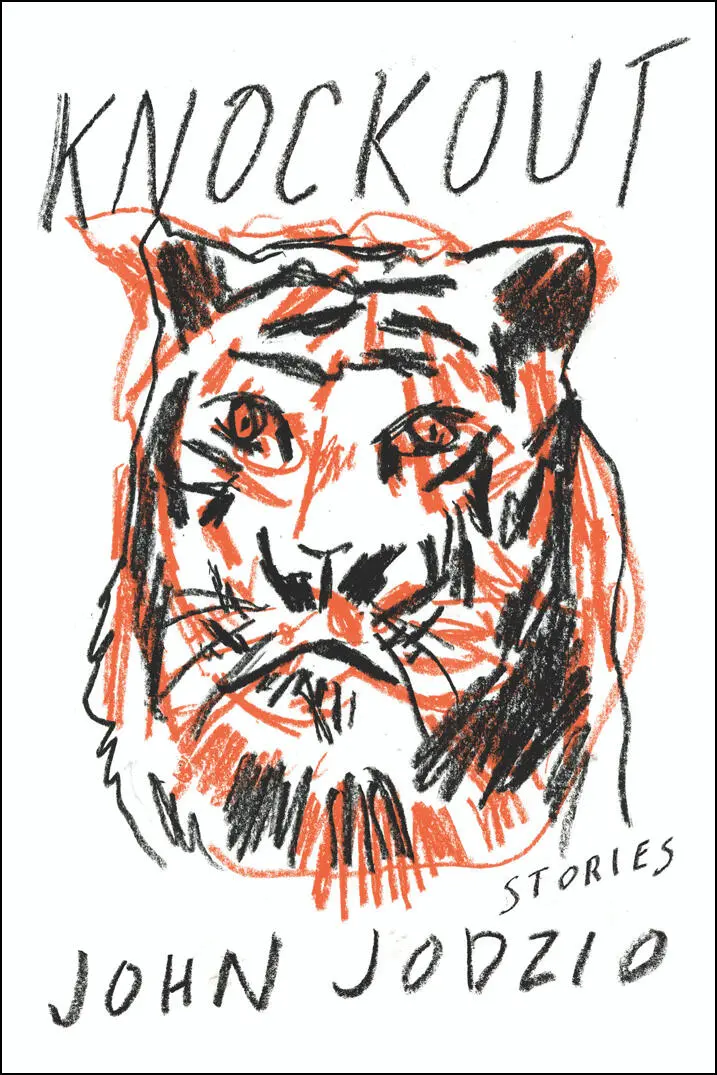
- Название:Knockout
- Автор:
- Издательство:Soft Skull Press
- Жанр:
- Год:2016
- ISBN:нет данных
- Рейтинг книги:4 / 5. Голосов: 1
-
Избранное:Добавить в избранное
- Отзывы:
-
Ваша оценка:
Knockout: краткое содержание, описание и аннотация
Предлагаем к чтению аннотацию, описание, краткое содержание или предисловие (зависит от того, что написал сам автор книги «Knockout»). Если вы не нашли необходимую информацию о книге — напишите в комментариях, мы постараемся отыскать её.
. But with his new collection, Jodzio creates a class of his own.
Knockout With its quirky humor, compelling characters, and unexpected sincerity,
by John Jodzio is poised to become his breakout book, drawing a wide readership to this provocative and talented young writer.
Knockout — читать онлайн бесплатно полную книгу (весь текст) целиком
Ниже представлен текст книги, разбитый по страницам. Система сохранения места последней прочитанной страницы, позволяет с удобством читать онлайн бесплатно книгу «Knockout», без необходимости каждый раз заново искать на чём Вы остановились. Поставьте закладку, и сможете в любой момент перейти на страницу, на которой закончили чтение.
Интервал:
Закладка:
“How about ‘effusive’?” she says.
Her dad arches his shoulders up for her to rub. When she doesn’t do it right away, he clears his throat.
“Effusive works,” he says. “So far.”
He fills out the crossword like he fills out his days — cautious at the beginning, then with much more abandon. She often hears him rumbling around in the kitchen late at night. It sounds like shopping carts banging into each other, his cane smacking the stove, the refrigerator. She waits until all the noise has died away, when he’s passed out in his recliner, and she carries him off to bed. He weighs next to nothing now, bends over her arms like a bolt of cloth.
“It’s not a jaunt, it’s a journey,” he told her recently, “full of starts and stops to select our roles.”
The roles they’ve settled on are these: He’s the crotchety old soap opera star who feels the world has done him terribly wrong. Scared and broke, but unable to cop to it. She’s the trapped daughter who drives off in her car with no intention of returning, but who always turns around before she reaches the state line.
His days are still full of frustration, jaw clenching, things that he cannot accomplish. The jar of pickles out of his reach. An imaginary mosquito always buzzing around his ankles. The way they communicate best is by him shaking the ice cubes in his empty gin glass and her filling it up.
After he finishes his crossword, they start his physical therapy. Lisa pulls and contorts his body into paperclip shapes. Each day she does this she finds he’s stiffened, less pliable. She limbers him up with towels warmed in the microwave; treats his body as if it were day-old bread wet heat might soften.
“My slow trudge to sludge,” he says in his gravely news voice. She presses him into a small package, his thighs up to his chest.
“Screw you,” he grunts. “Screw you and yours.”
“Right back at you,” she says.
“You are killing me,” he says. “Every damn day of every damn day.”
They have their routines and the routines do what routines always do, take fear out the equation, tell your insides you’re okay, make you able to corral your breath when your breath tries to run away.
“Just leave me to die,” he says. “Put me on a burning raft and set me adrift on the ocean current.”
“No money for a raft,” she tells him.
“Then sell that body of yours,” he says. “It’s passable enough.”
“It’s a buyer’s market,” she responds. “You’d need more than I got.”
They could go on like this all day, back and forth like they were in some black-and-white talkie, clipped speeches about just how hard it is to put one foot ahead of the other, how happiness is always slightly out of reach. Even though noir always calls for you to keep on walking until you disappear right off the edge of the screen, she stays put. She thinks it’s sad to know the exact strength of every fiber of your body — your heart, your lungs, your legs.
Aweek later, Eric asks her on another date.
“Same deal as last time,” he says. “Except this time the dinner actually happens, all right?”
Lisa picks him up and they drive through the swamp. Eric asks her some more trivia questions. What state, full of milk and honey, was the destination in The Grapes of Wrath ? What’s the main vegetable in vichyssoise? This time the ride seems shorter — maybe because she actually knows how far they’re going. While she drives, Eric nods off. Halfway back home, Lisa sees a man standing in the middle of the road, flagging her down. At first she thinks his car has broken down, but there’s no car anywhere around. When she gets closer she sees the moon hit the man’s skin and she realizes he’s naked. The man is weaving back and forth across the road, like he’s drunk. She screeches to a stop.
“Shit,” Eric yells, awake now, pulling a gun out of his jacket pocket. “What are you doing? Shit, shit, shit.” Eric waves his gun around, looking for any movement in the brush, thinking this is a trap, thinking that dudes with machine guns will step out of the desert darkness and riddle their car with bullet after bullet.
Lisa stares at the naked man. He’s about twenty-five feet away from her, breathing heavily through his mouth. He’s young with shoulder-length blond hair, clean shaven. She watches as he pulls a lighter from his palm and flicks it and his body goes up in flames. She sees the man crumple to his knees.
It takes her a second to register what has happened. She opens her door to get out and help him, to throw her jacket over his body, something, but before she can get out Eric reaches across her body and pulls the door shut.
“Drive,” he tells her in a voice that seems much too calm.
Her father had a job a few months back, reading audio books, but he got fired. He has a perfect voice for reading anything — spy novels or travails of sappy love — all of the publishers tell him that, but lately he’s too morose and stubborn.
“He’ll get more work if he stops talking about death in between takes,” his old agent Twyla told Lisa. “And if he stops being so damn pedantic. He’s acting like he’s Orson Welles or something.”
His agent, Twyla, retired to St. Pete and she comes over to their condo every Tuesday night for dinner. She’s going through menopause right now, full of hot flashes and gland puffiness. Twyla likes her dad, remembers the good times. After the accident, she could have dropped him as a client, but she stuck it out. She kept offering him up to casting agents, always hung up on them when they asked— Who? or Isn’t he dead?
They’re like an old couple, recasting themselves in stories long past — Twyla as the pretty young agent who talked like a sailor, her father as the up-and-comer who had a shot to be a leading man.
Sometimes Lisa wraps up little presents for her father to give to Twyla. Last week, her father gave Twyla a pair of earrings shaped like butterflies.
“What is in the box?” her father asked as he signed the card. “So I can pretend I know.”
“Butterflies,” she said.
Lisa didn’t bother to clarify. She’d rather have him think there was something alive in there, that once the bow was loosed, something amazing might flutter out.
Lisa doesn’t sleep much for the next few days. Every time she closes her eyes she sees the burning man, flopping and spinning around on the road. The morning after it happened, she drove back out to the swamp. She couldn’t find a body, no burn marks on the tar, no evidence that anything actually happened.
“Did we break up?” she asks Eric after she finally gets a hold of him after a week of calling. “Do I need to find a new dealer?”
“You were a car,” Eric tells her. “You were some fun for a day or two.”
Lisa scours the newspaper for any information about the burning man. They run a missing person piece on a man named Christian Eccles who looks like the man she saw. He battled schizophrenia. His mother, Ingrid, was quoted in the story. She looked up Ingrid Eccles’s address and called her. She told her she was a reporter, made an appointment to talk.
“I’m going to see his mother,” she tells Eric.
“Let it go,” he says. “He was crazy. You were in the wrong place at the wrong time.”
“Will I ever see you again?” she asks.
“Sometimes the beauty of something is its utter convenience,” Eric tells her.
Before she meets Christian Eccles’s mother, she drives her father to have breakfast with Twyla. More than anything her father wants to get his license back. That’s the thing he misses the most. He’s gone down to the DMV and taken the test three times in the last year, but his hip always gives out on him halfway through the test and he has to quit.
Читать дальшеИнтервал:
Закладка:
Похожие книги на «Knockout»
Представляем Вашему вниманию похожие книги на «Knockout» списком для выбора. Мы отобрали схожую по названию и смыслу литературу в надежде предоставить читателям больше вариантов отыскать новые, интересные, ещё непрочитанные произведения.






Обсуждение, отзывы о книге «Knockout» и просто собственные мнения читателей. Оставьте ваши комментарии, напишите, что Вы думаете о произведении, его смысле или главных героях. Укажите что конкретно понравилось, а что нет, и почему Вы так считаете.