Uwe Tellkamp - The Tower
Здесь есть возможность читать онлайн «Uwe Tellkamp - The Tower» весь текст электронной книги совершенно бесплатно (целиком полную версию без сокращений). В некоторых случаях можно слушать аудио, скачать через торрент в формате fb2 и присутствует краткое содержание. Год выпуска: 2014, Издательство: Penguin, Жанр: Современная проза, на английском языке. Описание произведения, (предисловие) а так же отзывы посетителей доступны на портале библиотеки ЛибКат.
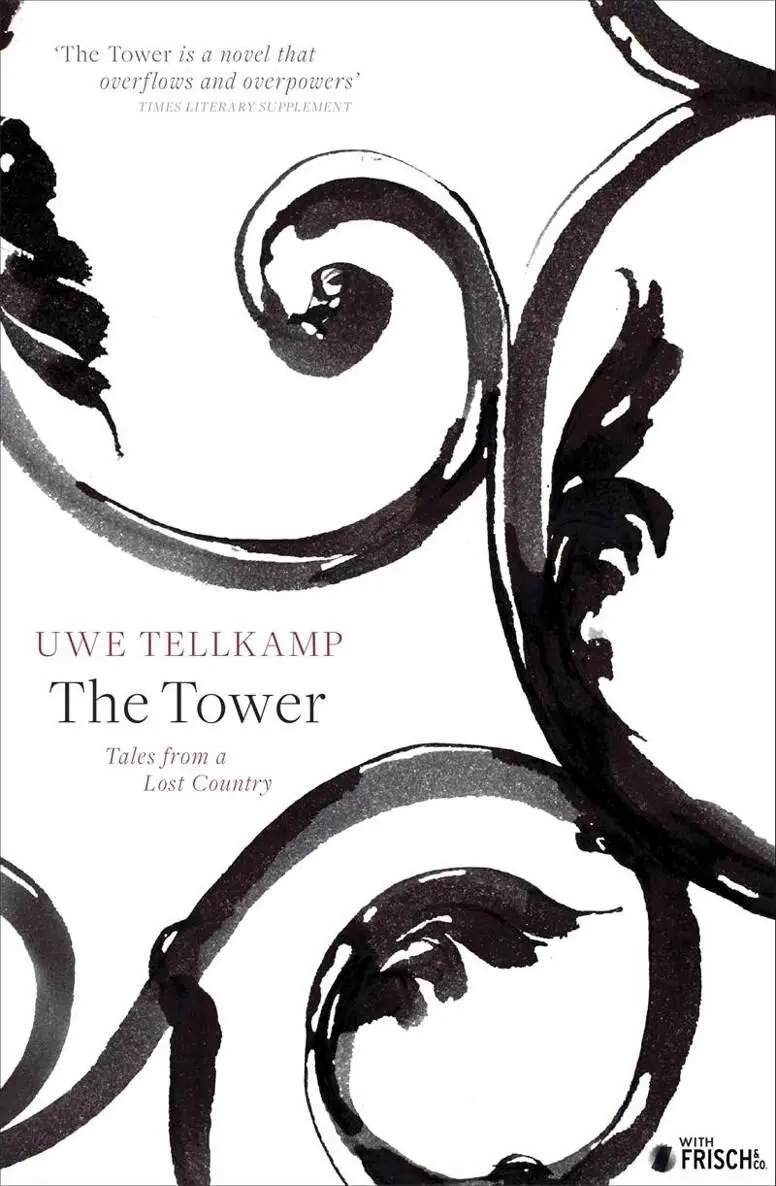
- Название:The Tower
- Автор:
- Издательство:Penguin
- Жанр:
- Год:2014
- ISBN:нет данных
- Рейтинг книги:5 / 5. Голосов: 1
-
Избранное:Добавить в избранное
- Отзывы:
-
Ваша оценка:
The Tower: краткое содержание, описание и аннотация
Предлагаем к чтению аннотацию, описание, краткое содержание или предисловие (зависит от того, что написал сам автор книги «The Tower»). Если вы не нашли необходимую информацию о книге — напишите в комментариях, мы постараемся отыскать её.
The Tower — читать онлайн бесплатно полную книгу (весь текст) целиком
Ниже представлен текст книги, разбитый по страницам. Система сохранения места последней прочитанной страницы, позволяет с удобством читать онлайн бесплатно книгу «The Tower», без необходимости каждый раз заново искать на чём Вы остановились. Поставьте закладку, и сможете в любой момент перейти на страницу, на которой закончили чтение.
Интервал:
Закладка:
Reina alighted from the last carriage of the train that had just arrived. Christian gave an embarrassed wave, waited, set off hesitantly; he suddenly felt this meeting was inappropriate, the pot of cyclamen, which he was holding like a basket full of bees, ridiculous; the purple, turned-back flowers waved dementedly in the evening breeze. For a moment Christian thought of Ina in Berlin, of his wedding present for her and the awkward gesture with which he’d put it in her hand. He lifted up the pot, at the same time Reina also lifted up her present; unlike him she’d unpacked her cyclamen and as they exchanged their ‘Hello, Christian’ and ‘Hi, Reina’, they also exchanged their pots of cyclamen. Reina raised her shoulders, scratched her upper arm, looking for an insect bite, and Christian couldn’t think of anything to say; he searched desperately for some compliment but what occurred to him, of all things, was that the scar on her neck brought out the delicacy of her skin, the lovingly scattered freckles. But he didn’t want to say that, just like that. It would have made her even more confused, more inhibited than she seemed to be: standing there, uncertain what to do, for now she was there and that left the question of what they should do, in a strange town that Christian too only knew from its station — barracks, metal works, chemical smells, the Dutch Courage were none of them the kind of place one knew because one was at home there.
Reina was there; he had no expectations. She’d changed in the eighteen months since the senior high, the woman she was becoming shimmered through her still girlish features, her hair was done differently: Christian found these changes strangely arousing and since he immediately began to reflect on that, he trotted along beside Reina in silence, head bowed, sensing the torment that she was trying to cover over with words that didn’t get to him. He wasn’t quite sure but he felt for a moment that he wanted to annoy her a little — that was when she was at her prettiest. She hadn’t put on very much make-up, for that he was grateful. Her new hairstyle, yes, that did look a bit dolled up, that would be the effect of the big city. That and the womanliness in her features made Reina strange beyond what he had expected and imagined, and that was precisely what aroused him, not her smell, her voice, not the glances of the others on the platform that awoke from their torpor as they passed over Reina and drew back into contempt, perhaps just indifference, when they looked at Christian. I don’t belong to you any more, the womanliness in Reina seemed to be saying and aroused desire, the instinct for possession. She fell silent; immediately he withdrew into himself, even more than he had already done with his discourteous silence that made their encounter hard work for her, an exhausting search for ways of getting a conversation going, leaving the approach to her; and now he felt bitter, decided it had been a mistake to meet Reina, especially in his situation.
Christian sought out the shade, looked nervously to the left and right, taking on the skipping gait, ever ready to flee, to manoeuvre, of those who believe they are being followed. Sometimes he quickly ducked, clenched his fists (he’d stowed the cyclamen in the knapsack he’d brought with him) as if there were something in the empty air between them that he could only ward off in that way; sometimes he abruptly took one step back, which, as he noticed, Reina at first found irritating, then merely awkward, it seemed; but he was only avoiding an anticipated burst of light, an as yet invisible punishment that he didn’t know and couldn’t have explained but was sure to come, perhaps already had a face and was observing him; whatever he did, it would encounter him, and differently, in a different form from the one he expected. But he too could behave unexpectedly, not avoid a patch of brightness here, there take fifteen paces straight forward and suddenly swerve to the right because the punishment was thinking, right, I’ve got you now, at the sixteenth pace you’re mine — but that was precisely when he’d gone off to the side, the spear had been thrust into empty space! Christian realized that Reina had stopped.
‘You’re being very odd, what’s wrong? I think you’re not even listening to me.’
That was true. Like a euphoric sower on his field, the neon sign over the station concourse kept on casting a cheerful ‘Welcome to Grün — the pearl of the West Erzgebirge’ over the floor, unconcerned that it was pale from carefully torn-up newspaper. Reina wouldn’t start to cry now. The shy Reina, as she’d written in her letter; she began to dissolve into the mocking Reina who could turn into the hurtful Reina; he felt sorry about that and yet incapable of making things any easier for her. He felt paralysed, he would have known what words to use, but they refused to roll off his tongue, it was lumpy and too steep a climb and they just couldn’t make it.
‘Your letter, have they … I did receive your letter.’
Yes: he just nodded, briefly observed the way her fingers were tapping the edge of the cyclamen pot, then he gave her a bag that she accepted with a thoughtful look. There was a cupboard on the station forecourt and Christian would have thought it quite natural if the door had opened to reveal a skinny, white-eyed girl. ‘They haven’t decided anything yet. There’ll be a hearing. Military court. We should talk about something else.’
‘I went to see your parents.’
‘You said so in your letter.’
‘Should I go back? You’re so negative.’
‘No. No.’ And then another word that took a great effort to say but for that very reason he wanted to see what would happen when he did say it: ‘Sorry.’ It came out fairly easily and made him think of Waldbrunn, his walk along the Wilde Bergfrau, his arrogance that was directed at Verena.
‘Where are we going?’ Reina looked round, didn’t seem to like what she saw.
‘Dunno. Have you any suggestions? I don’t really know my way round here. Cinema?’ he said, in the hope that they would sit there next to each other, watch some film or other, remain silent. Silence was what was best. Each close to the other, just close, without words. But Reina said no. ‘We can’t talk there. Perhaps … perhaps that sounded too challenging: Where are we going? It was just …’
They passed the cinema, it was the only one in the town. It was showing Soviet fairy-tale films: The Scarlet Flower, Gharib in the Land of the Djinns . Christian liked to go to the cinema when he had a pass. It reminded him of the Tannhäuser Cinema. The roof was damaged, on fine days the sunlight came in through a gap, rain on wet days — on sunny days a black umbrella with balloons tied on and guided by a string was floated up underneath the hole, on wet days a bucket placed under it.
‘You always called me Montecristo. My real name made you laugh.’
‘I didn’t say anything to your parents, just as you told me. But don’t you think … Your father could do something for you.’
‘No. They have enough worries as it is. Especially my mother. — We could go and have a meal. My treat.’
‘Verena’s made an application to leave. She’s in Leipzig too, I sometimes see her.’
‘That could harm you.’
‘I’ve already had a discussion in the dean’s office. It was two of them who conducted the discussion. — But she’s my friend, they can’t forbid me to see her.’
‘Oh yes they can. They have ways of doing it. The guy who died offered to spy for them if they saw to it that he was transferred. They said: It’s where you are now that we need you, Comrade Burre. Of course we’ll protect you, we know what military ethics means. They can do as they like.’ They crossed the marketplace to the fountain. Jets of water came from a four-headed gryphon in black sandstone. ‘And Siegbert?’ Christian asked.
Читать дальшеИнтервал:
Закладка:
Похожие книги на «The Tower»
Представляем Вашему вниманию похожие книги на «The Tower» списком для выбора. Мы отобрали схожую по названию и смыслу литературу в надежде предоставить читателям больше вариантов отыскать новые, интересные, ещё непрочитанные произведения.


Обсуждение, отзывы о книге «The Tower» и просто собственные мнения читателей. Оставьте ваши комментарии, напишите, что Вы думаете о произведении, его смысле или главных героях. Укажите что конкретно понравилось, а что нет, и почему Вы так считаете.