Rupert Thomson - Divided Kingdom
Здесь есть возможность читать онлайн «Rupert Thomson - Divided Kingdom» весь текст электронной книги совершенно бесплатно (целиком полную версию без сокращений). В некоторых случаях можно слушать аудио, скачать через торрент в формате fb2 и присутствует краткое содержание. Год выпуска: 2012, Издательство: Bloomsbury UK, Жанр: Современная проза, Фантастика и фэнтези, на английском языке. Описание произведения, (предисловие) а так же отзывы посетителей доступны на портале библиотеки ЛибКат.
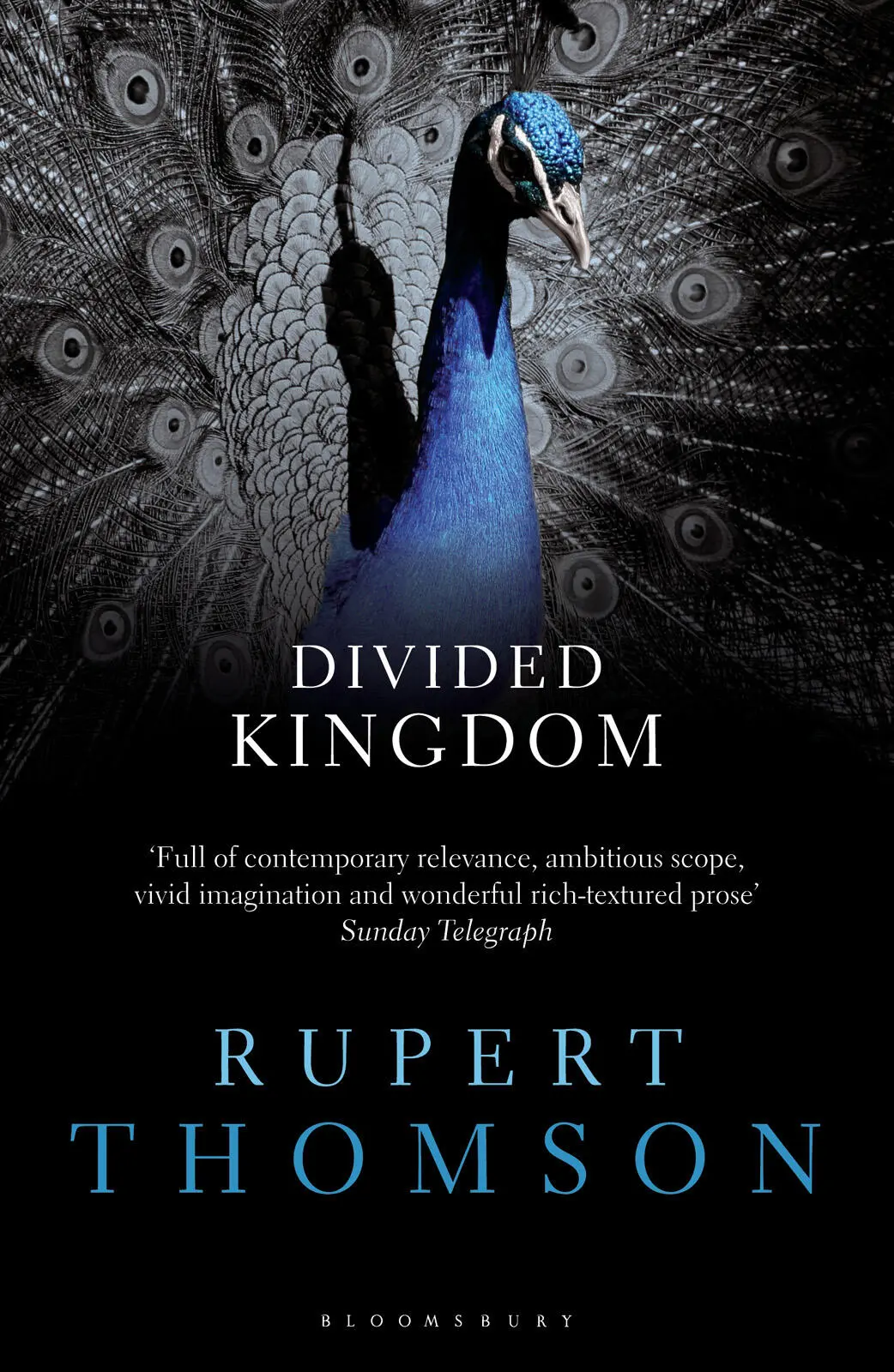
- Название:Divided Kingdom
- Автор:
- Издательство:Bloomsbury UK
- Жанр:
- Год:2012
- ISBN:нет данных
- Рейтинг книги:5 / 5. Голосов: 1
-
Избранное:Добавить в избранное
- Отзывы:
-
Ваша оценка:
Divided Kingdom: краткое содержание, описание и аннотация
Предлагаем к чтению аннотацию, описание, краткое содержание или предисловие (зависит от того, что написал сам автор книги «Divided Kingdom»). Если вы не нашли необходимую информацию о книге — напишите в комментариях, мы постараемся отыскать её.
Divided Kingdom — читать онлайн бесплатно полную книгу (весь текст) целиком
Ниже представлен текст книги, разбитый по страницам. Система сохранения места последней прочитанной страницы, позволяет с удобством читать онлайн бесплатно книгу «Divided Kingdom», без необходимости каждый раз заново искать на чём Вы остановились. Поставьте закладку, и сможете в любой момент перейти на страницу, на которой закончили чтение.
Интервал:
Закладка:
At dawn I was woken by a vicious scratching, and I sat up quickly, thinking someone was trying to get in. Then I realised it was coming from above me. Through the skylight’s blurry plastic I saw arrowheads, delicate as pencil drawings. It was just birds’ feet. Birds walking on the roof.
We left the caravan soon after, fells rising in blue-black curves above the mist. Later, the sun burned through. We drank from a stream that tasted metallic, as if we were sipping the water from a spoon. We walked south and then west, clouds tumbling in the sky, huge sweeps of land on every side. We saw no people, not even one. There was only the sound of our boots in the grass and, sometimes, the clatter of a pheasant’s wings as, startled by our approach, it heaved itself into the air.
That night we curled up in a hut that smelled of sheep, the ground outside littered with shotgun cartridges and brittle clumps of fleece. The wind kept me awake, levering its way into every crack and crevice in the walls. In the morning we climbed down to flat land. Houses now, and villages, with youths standing around. They would be smoking or kicking a football about or trying to put each other in headlocks. Their eyes would flick in our direction as we passed, and I sensed the shape of their thoughts, dark and splintery. I had to work hard not to show any fear. The memory of those strangers stretched across the road still lingered. I noticed a boy leaning against a wall next to a newsagent’s. He watched us go by, then slid a few words out of one side of his mouth, and the boys who were with him laughed, the noise so abrupt and harsh that two crows lifted from a nearby tree. No one actually confronted us, but that wasn’t the point. It was the constant, unremitting threat of violence that I found wearing. It was the sense of apprehension, the dread.
In the early afternoon we stopped to rest. The road shadowed a railway cut, and we climbed over the wall and installed ourselves on the embankment, so as to be hidden from any passers-by. Odell unwrapped the cold meat and bread, leftovers from the day before. A passenger train rushed past below us as we ate. Odell eyed it thoughtfully. The sky had clouded over. A chill wind bent the blades of grass beside me, and I huddled deeper into my creaky leather coat.
We were about to move on when a goods train rattled down the line towards us. Instead of the usual trucks, it was hauling several transporters, each of which had a tarpaulin lashed over its main frame. Odell began to slither down the embankment, signalling for me to follow her. When she reached the track she ran alongside one of the transporters. Catching hold of a stanchion, she swung herself up on to a metal footplate. I tossed her my bag, then hoisted myself on to the same section of the train. She was already loosening the ties on one corner of a tarpaulin. We ducked under the heavy plastic and found ourselves pressed up against a yellow sports car, one of three, all identical in make and colour. I tried the door on the driver’s side, fully expecting it to be locked, but it opened with an expensive click. I hesitated for a second, then climbed inside. The smell of leather upholstery enfolded me — the smell of newness itself. Odell climbed in after me. Settling behind the steering-wheel, she pulled the door shut. The smooth swaying motion of the car, the darkness beyond the windows, the presence of a girl beside me — for a moment I was able to fool myself into thinking that it was my first night at the Bathysphere and nothing else had happened yet.
‘I’ve got another story for you,’ Odell said.
I turned to face her.
‘Not so long ago,’ she said, ‘I was in love with someone …’
I smiled. It was a good beginning.
His name was Luke, and they had met when she was twenty. One Sunday evening she was waiting on the platform of a provincial railway station. She wanted to get back to the city, but there had been all kinds of delays and cancellations, and people were standing three or four deep by the time the train pulled in. Then she saw him, through one of the carriage windows. He was reading a book, his face lowered, his black hair falling on to his forehead. In that same moment she noticed that a window in his carriage had been left open. She tended not to use her gift for her own personal gain, not any more, but that evening she decided to flout the rules for once. A damp flurry of wind took her over the heads of the other passengers, through the window and down into the seat directly opposite the dark-haired boy. When he looked up and saw her, his eyes widened and he breathed in sharply.
‘What are you staring at?’ she said. ‘Do I remind you of someone?’
‘No.’ He seemed momentarily dazed by the speed and boldness of her questions. ‘I didn’t hear the door open.’
‘Perhaps you were asleep.’
‘Asleep? I don’t think so.’ He glanced at his book. ‘I was reading.’
‘Then perhaps you were in another world,’ she said.
The train shook itself and then began to move. She stared out of the window, pretending to take an interest in the lights of unknown houses, distant towns.
‘I’m sorry,’ he said after a while. ‘I didn’t mean to be rude.’
What she had loved most of all about Luke was lying next to him while he was sleeping. He always looked so untroubled. She thought that if they slept in the same bed for long enough she would acquire that look of his. At the beginning she would stay awake for hours and try to draw the calmness out of him. She used to see it as a grey-blue vapour drifting eerily from his body into hers.
She had wanted to be with him for ever — in fact she’d been quite unable to imagine not being with him — but she had made a mistake: she told him what she could do. In bed one night, with all the lights out, she turned to him and said, ‘You know when we first met, on that train …’
‘I knew it,’ Luke cried when she had finished. ‘I knew there was something.’
Initially, he was seduced by the glamour of it. He saw a kind of peculiar, inverted celebrity, and that excited him. But he soon started to feel that their relationship had its roots in deception — her deception — and the subject would come up whenever they argued. The fact that she had fooled him. Made him look stupid.
‘No, no, you don’t understand,’ she would cry. ‘It was because I loved you. And anyway, you almost guessed. Even then, at the beginning.’
She should never have told him. She should’ve been content simply to have profited from her gift. But she had been unsure of herself, perhaps. She had hoped to bind him to her still more closely. Once, many years ago, a great-aunt had given her some advice. An air of mystery is just as valuable as wit or beauty. It keeps people interested — especially men. And certainly, for the first few months, Luke had suspected there was a side to her that he hadn’t understood, and he would worry at it almost pleasurably, as you might push your tongue against a loose tooth. When she told him the truth, however, it allowed him to think that the riddle had been solved. He had reached the end of her, and there was nothing more to discover. Far from binding him, the knowledge set him free. He could move on.
And another thing. Although she had sworn him to secrecy, he was always nearly giving the game away. He couldn’t bear it that people didn’t know about her. To start with, she thought it was because he was proud of her, but then she began to realise it was something far less healthy. He had sensed that people found the relationship odd, and that reflected badly on him. If they knew who she was, though, they’d get it. In other words, it wasn’t that he wanted people to know she was different, or special, or extraordinary. No, in the end he was only concerned with his own image.
Читать дальшеИнтервал:
Закладка:
Похожие книги на «Divided Kingdom»
Представляем Вашему вниманию похожие книги на «Divided Kingdom» списком для выбора. Мы отобрали схожую по названию и смыслу литературу в надежде предоставить читателям больше вариантов отыскать новые, интересные, ещё непрочитанные произведения.


Обсуждение, отзывы о книге «Divided Kingdom» и просто собственные мнения читателей. Оставьте ваши комментарии, напишите, что Вы думаете о произведении, его смысле или главных героях. Укажите что конкретно понравилось, а что нет, и почему Вы так считаете.