Rupert Thomson - Divided Kingdom
Здесь есть возможность читать онлайн «Rupert Thomson - Divided Kingdom» весь текст электронной книги совершенно бесплатно (целиком полную версию без сокращений). В некоторых случаях можно слушать аудио, скачать через торрент в формате fb2 и присутствует краткое содержание. Год выпуска: 2012, Издательство: Bloomsbury UK, Жанр: Современная проза, Фантастика и фэнтези, на английском языке. Описание произведения, (предисловие) а так же отзывы посетителей доступны на портале библиотеки ЛибКат.
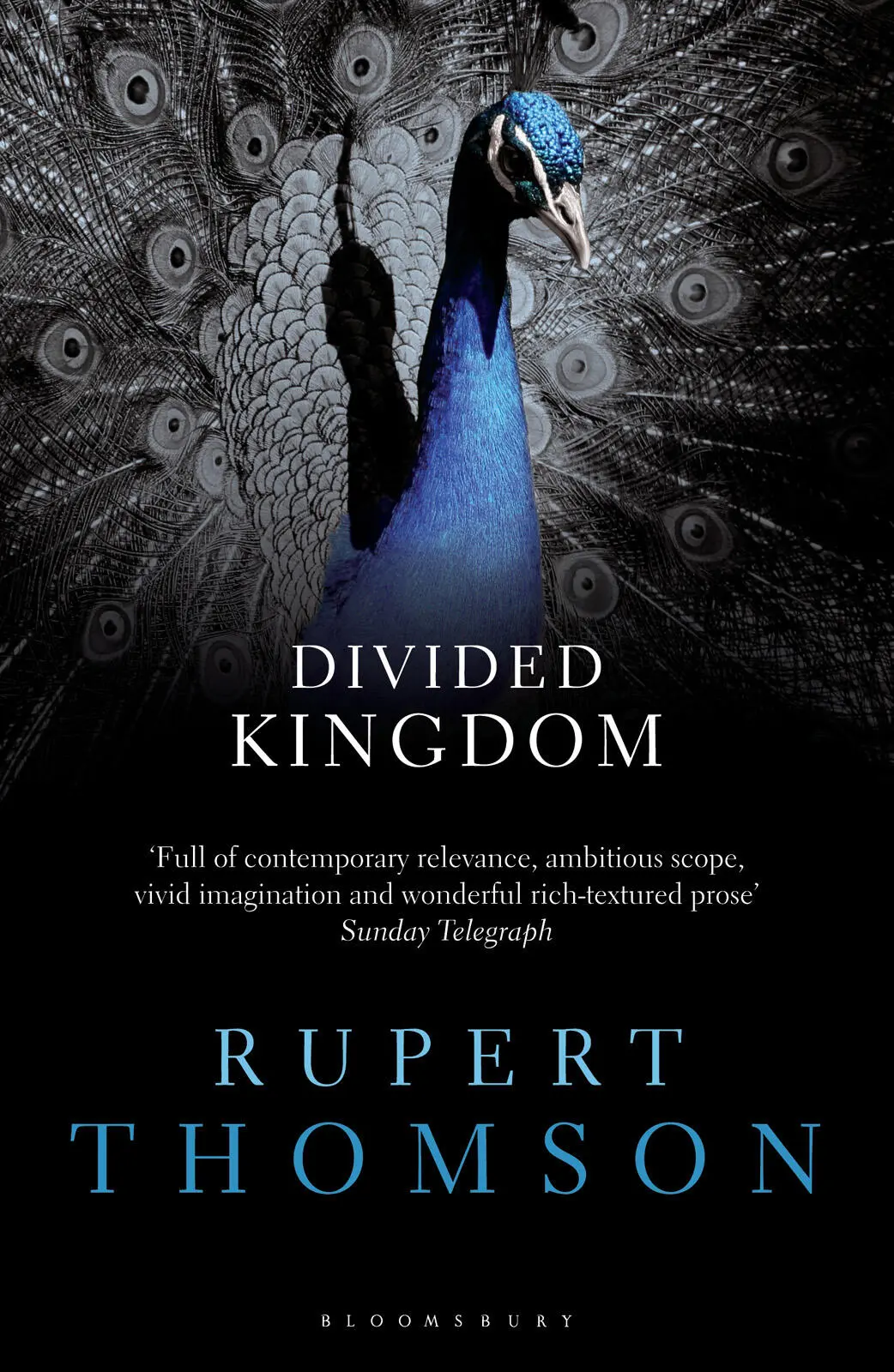
- Название:Divided Kingdom
- Автор:
- Издательство:Bloomsbury UK
- Жанр:
- Год:2012
- ISBN:нет данных
- Рейтинг книги:5 / 5. Голосов: 1
-
Избранное:Добавить в избранное
- Отзывы:
-
Ваша оценка:
Divided Kingdom: краткое содержание, описание и аннотация
Предлагаем к чтению аннотацию, описание, краткое содержание или предисловие (зависит от того, что написал сам автор книги «Divided Kingdom»). Если вы не нашли необходимую информацию о книге — напишите в комментариях, мы постараемся отыскать её.
Divided Kingdom — читать онлайн бесплатно полную книгу (весь текст) целиком
Ниже представлен текст книги, разбитый по страницам. Система сохранения места последней прочитанной страницы, позволяет с удобством читать онлайн бесплатно книгу «Divided Kingdom», без необходимости каждый раз заново искать на чём Вы остановились. Поставьте закладку, и сможете в любой момент перейти на страницу, на которой закончили чтение.
Интервал:
Закладка:
Odell sighed. ‘I wasn’t as beautiful as he was. People were always admiring him, and he’d pretend he hadn’t noticed. I didn’t mind that, really. I just wanted him to see the beauty in me. A beauty others didn’t see. Maybe he couldn’t, though. Or maybe it wasn’t enough.’
I see it , I said inside my head.
The train had slowed, and I could feel every joint in its body as it picked its way cautiously through what felt like a maze of points. Odell sighed again. Opening her door, she said she was going to take a look outside.
When she returned, she told me we had reached a city. She thought it might be Ustion, but she couldn’t be sure. In any case, it would probably be wise to leave now, before the transporters were either checked or unloaded.
Although the train was still moving, we had no trouble jumping down on to the tracks. The station loomed about half a mile ahead of us, a harsh recorded voice echoing from the cavernous interior. Any luggage found unattended will be destroyed. A mist had descended, and all the lights were ringed with gauzy haloes. Crouching low, I followed Odell across the rails, then we scaled a wall of dark bricks and dropped down into a side-street.
We weren’t prepared for the sight that greeted us when we turned the corner. Men rampaged along the main road, red shirts worn outside their trousers, open cans of beer in their hands. Cars raced past, honking their horns. Some had pennants tied to their aerials, others had scarves trapped and flapping in their wound-up windows. Odell bought a paper from a news-stand. The Ustion Gazette. She had guessed right. As she took her change, she asked the vendor what was happening.
‘Important game tonight,’ he said.
We ducked into a doorway as a second group of men swayed towards us. They were singing strange savage songs that I’d never heard before. With their cropped hair and their hard, exultant faces, they seemed to have sealed themselves off from the rest of us. It was like the divided kingdom in miniature — the same tribalism, the same deep need to belong. If you supported a football team, you saw all other teams as forces to be challenged, ridiculed, defeated. You stuck together, no matter what. You dealt with everything life threw at you. The triumphs, the disasters. The thick and thin of it. People have to have something they can identify with , Miss Groves had told us once. They have to feel they’re part of something. I watched as a man with a shaved head heaved a rubbish bin through a plate-glass window. His companions whooped and roared. They began to chant his name, breaking it into two raucous syllables. Then on they went towards the ground, which rose out of the terraced streets like some great cauldron, bubbling furiously with noise and light.
Given the conditions, Odell thought it best if we got off the streets. We found a hotel not far from the station and registered as Mr and Mrs Burfoot, a new name for me, and one that gave me an unexpected thrill. Later, we had dinner in a bar on the ground floor. We chose a table that had a view of the TV. The football was on. As we took our seats, the two teams walked out of the tunnel, flanked by police with riot shields and visors. Fights had already broken out on the terraces. The camera homed in as the crowd surged in two different directions at once, and I thought of how the sea looks when a wave rebounds from a breakwater and meets another wave head-on. We ordered steak pie and chips from the blackboard behind the bar, and I drank a pint of dark, flat beer, which was what the other men were drinking. Once the game began, I turned my back on Odell — a perfect example of choleric behaviour, I thought — and when we left more than an hour later I still hadn’t so much as glanced at her. At the door a shrill whistling from the crowd had me looking over my shoulder. One of the home side’s star players was being stretchered off the pitch with his hands covering his face. They showed a slow-motion replay of the foul. A defender from the opposing team hacked him to the ground and then stood back, arms raised in the air, palms outwards, as if innocent of any wrongdoing. They were like children, these footballers, with their transparent lying and their endless tantrums. Nothing was ever their fault. They wanted to get away with everything.
Once we were back in our room, Odell locked the door, then leaned against the wall with her hands behind her. I was reminded of Sonya for a moment — she often used to stand like that — but, at the same time, the comparison seemed obscure, even meaningless. I had loved Sonya, I really had, but she had become intangible to me, not quite real, as had almost every other aspect of the way I had lived before. When I considered my return to the Red Quarter, when I tried to imagine what that might entail, my mind closed down. The question Odell had asked me — Do you want to get out of here or don’t you? — expressed it perfectly. Yes, I wanted to get out of the Yellow Quarter, of course I did, and yet, once that had been achieved, I couldn’t actually visualise a life. If I thought about the people I used to see on a regular basis — Vishram, Sonya, Kenneth Loames — they appeared as ephemeral and irrelevant as ghosts, whereas the ghosts themselves — Ob, Neg, Lum — had true substance and even — strange, this — a kind of nobility. If I survived, who would I be exactly? Which version of myself would I be left with? How would I fit in? Turning away from Odell, I walked to the window. A helicopter hovered in the middle distance, its searchlight aimed at the ground directly below it.
She came and stood beside me. ‘It’s only crowd control.’
Of course. The football would be over any minute. Even so, when the helicopter veered towards us, with its head lowered and its searchlight sweeping the streets and buildings, we both instinctively stepped back from the window. All of a sudden the angry stutter of its rotor blades was on top of us, the air itself vibrating. I shaded my eyes as blinding light flashed through the room. It was as though some supernatural force had just flown in one wall and out the other, as though we had been visited by a creature to whom concrete and plaster meant nothing. The helicopter moved on, heading westwards, restless, inquisitive.
‘I didn’t finish my story about Luke,’ Odell said.
I drew the curtains, shutting out the night.
‘You’re not too tired?’ she said.
I shook my head. We settled on the bed, Odell leaning against the pillows with her knees drawn up while I lay on my side, my cheek propped on one hand.
Luke had left her eighteen months ago, she said, and in all that time she had heard nothing from him. Then, in late November, the day after she saw me being arrested by the Blue Quarter police, she had gone home for a few hours. She lived in an old petrol station on the outskirts of Aquaville. The ground floor had been a working garage — it still smelled of diesel oil and spray-paint — but the upstairs was like a loft, with windows running along one side and a view over the fields.
She was just sorting through her mail when there was a knock on the door. It was Luke. His dark hair stuck up at all angles, and the whites of his eyes looked dingy, almost stained. He was in trouble, he said.
It took another hour and most of a bottle of wine for him to get to the point. His girlfriend was about to be transferred. He didn’t want to lose her, though, so he had hidden her. When Odell reminded him of the penalties he would face if he was caught, he snapped at her. Yes, he knew about the penalties. He knew. Then he lowered his voice again. He was sorry. He was tired. He hadn’t slept.
‘You have to help me,’ he said.
She couldn’t, she told him. Didn’t he have any idea who she worked for? It turned out that he didn’t — so she’d kept something from him after all! — but once he got over the shock he tried to persuade her that it was perfect. They’d never suspect a person in her position. She shook her head. She couldn’t risk it. When he made a half-hearted attempt to blackmail her, she lost her temper. He backed down.
Читать дальшеИнтервал:
Закладка:
Похожие книги на «Divided Kingdom»
Представляем Вашему вниманию похожие книги на «Divided Kingdom» списком для выбора. Мы отобрали схожую по названию и смыслу литературу в надежде предоставить читателям больше вариантов отыскать новые, интересные, ещё непрочитанные произведения.




Обсуждение, отзывы о книге «Divided Kingdom» и просто собственные мнения читателей. Оставьте ваши комментарии, напишите, что Вы думаете о произведении, его смысле или главных героях. Укажите что конкретно понравилось, а что нет, и почему Вы так считаете.