Rupert Thomson - Divided Kingdom
Здесь есть возможность читать онлайн «Rupert Thomson - Divided Kingdom» весь текст электронной книги совершенно бесплатно (целиком полную версию без сокращений). В некоторых случаях можно слушать аудио, скачать через торрент в формате fb2 и присутствует краткое содержание. Год выпуска: 2012, Издательство: Bloomsbury UK, Жанр: Современная проза, Фантастика и фэнтези, на английском языке. Описание произведения, (предисловие) а так же отзывы посетителей доступны на портале библиотеки ЛибКат.
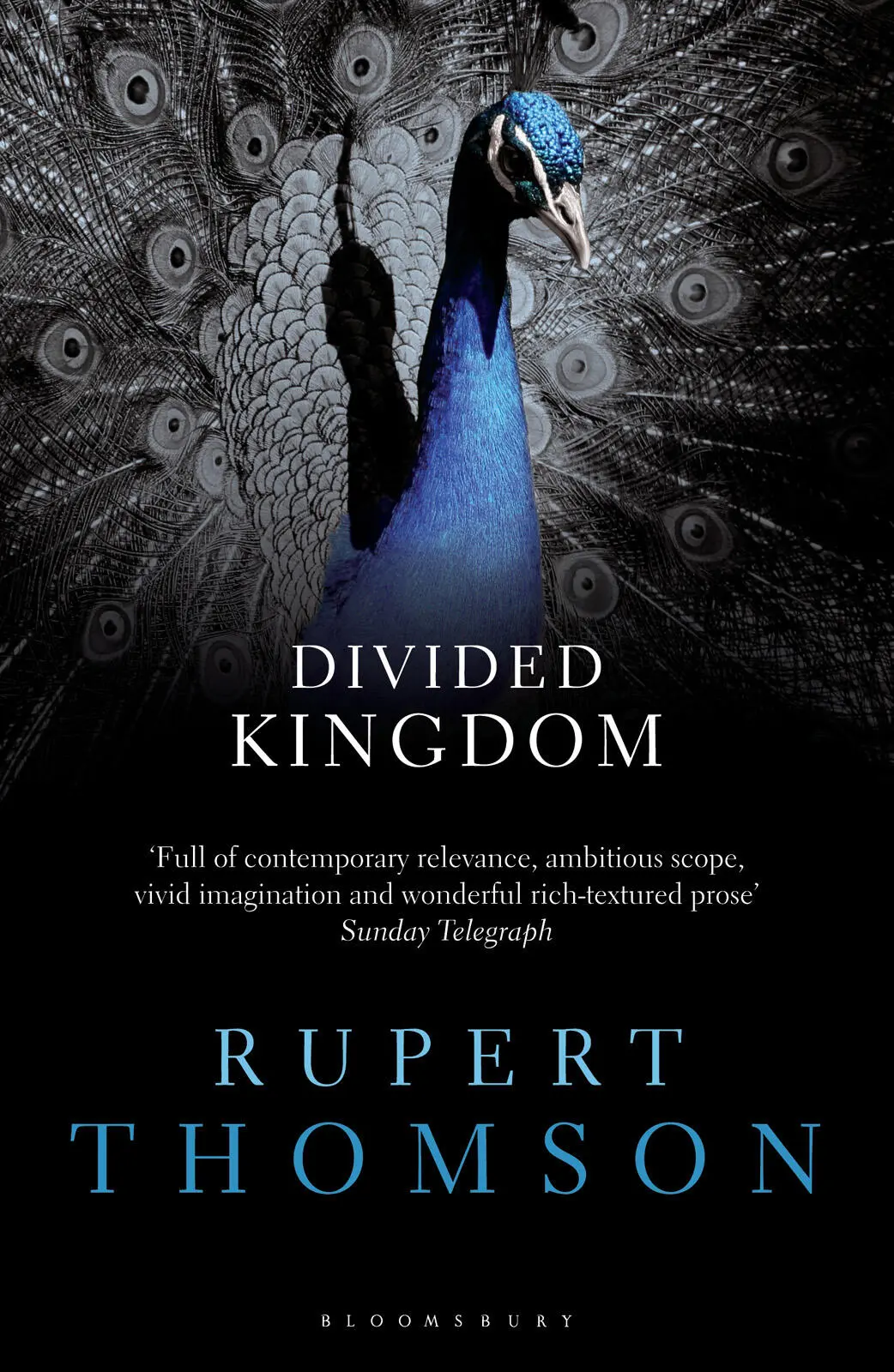
- Название:Divided Kingdom
- Автор:
- Издательство:Bloomsbury UK
- Жанр:
- Год:2012
- ISBN:нет данных
- Рейтинг книги:5 / 5. Голосов: 1
-
Избранное:Добавить в избранное
- Отзывы:
-
Ваша оценка:
Divided Kingdom: краткое содержание, описание и аннотация
Предлагаем к чтению аннотацию, описание, краткое содержание или предисловие (зависит от того, что написал сам автор книги «Divided Kingdom»). Если вы не нашли необходимую информацию о книге — напишите в комментариях, мы постараемся отыскать её.
Divided Kingdom — читать онлайн бесплатно полную книгу (весь текст) целиком
Ниже представлен текст книги, разбитый по страницам. Система сохранения места последней прочитанной страницы, позволяет с удобством читать онлайн бесплатно книгу «Divided Kingdom», без необходимости каждый раз заново искать на чём Вы остановились. Поставьте закладку, и сможете в любой момент перейти на страницу, на которой закончили чтение.
Интервал:
Закладка:
My mouth had dried up. I had no spit.
Though the cries had stopped, I could still hear them.
I was exhausted, and yet I couldn’t seem to sleep — or if I did drift off for a while I was always on the verge of witnessing some terrible atrocity, violence the like of which I had never imagined before, let alone encountered. In my dreams people kept telling me not to look. If I didn’t look, they told me, I would be all right. But I couldn’t help looking. There was a part of me that was inquisitive, perhaps, or weak-willed, or even missing altogether. I was the woman who became a pillar of salt. The warrior who turned to stone.
All night she lay beside me, and I drew comfort from the warmth and nearness of her body. When the cold of the floor rose up through the layers of sacking, I pressed myself against her, the backs of her thighs on my lap, her hair in my mouth. She didn’t seem to mind. As for me, I was used to sleeping next to strangers. I’d been doing it for weeks.
At some point she realised I was still awake and started telling me a story.
‘The night you were taken from your family,’ she said, ‘was the night I came into the world.’
I stared at her, wondering how she knew that, but she didn’t notice. She was looking at the ceiling, her profile showing as the finest of silver lines.
She had been born on a houseboat, which was where her parents had lived back then. Her father worked as a lock-keeper. At midnight, when she was five hours old, she had opened her eyes for the first time. It had been snowing all evening.
It was raining where I was , I said inside my head.
Her mother wrapped her in a shawl and held her up to the window. She had watched the snowflakes come showering out of the sky like white flowers, snowflakes landing on the canal and vanishing. She had no memories of that night — her parents had told her about it later, when she was older — but she sometimes wondered whether that was where it all began.
Where what began? I said inside my head.
The first time it happened, she had been standing on the towpath. She remembered the warm air on her bare arms, the drowsy sound of bees humming. It must have been summer. She couldn’t have been more than four or five. A dandelion floated out over the still green water. She had only stared at the delicate, almost transparent ball of seeds for a few moments, but when she returned to herself again she was standing on the other side of the canal. She had a tickle in her nose, as if she might be about to sneeze, and both her feet were wet. She began to cry. Her father appeared on the deck of the houseboat, his face the colour of a peeled apple. How did you get over there, Odell? She had no words for what she’d done.
After that, she kept ending up in strange places. She learned to look forward to the lost seconds, the thrilling, inexplicable journey from where she was to somewhere else. She would feel powerful yet passive. Years later, she had the same sensation on a funfair ride, the way the car whirled her backwards in a tight curve, a motion that was slow at first, oddly hydraulic, then high-speed, blurry, irresistible. She couldn’t always regulate it, though, certainly not in the beginning. Sometimes it took her by surprise, like the afternoon she stepped outside during a gale and her mother found her as the sun was setting, two miles down the towpath and halfway up a tree.
Under the velvet my body jerked, tension leaving my muscles at long last.
One day she went walking with her parents in the fields near the canal. The wind was blowing hard again, and she had lifted her arms away from her sides and leaned against it, as if it were a wall. Then she was gone. Her parents had been looking at her when it happened, waiting for her to catch up with them. In the next moment they heard her calling from the far end of the field. Though it scared them half to death, it also came as something of a relief. In the past they had often been at a loss to explain her movements, but now, perhaps, they had an answer. She should protect her gift, they told her. Keep it to herself. She did the opposite, of course.
I was falling away. Sinking. A light object dropping through thick liquid.
The trouble was, she had never been popular at school. Her looks seemed to unnerve people. They could never tell what she was thinking. To try and win them over, she started doing tricks. Once, while in the company of two girls from her class, she used a gust of wind to transport her from the school playground to the roof of the bicycle shed. Up here , she shouted. I’m up here. The girls wouldn’t have anything to do with her after that. They claimed she’d hypnotised them. All they would talk about was her weird eyes. Green, they said, but black too, somehow, like fir trees planted too close together. Black like a forest. And her face as well, the freckles. It made them think of one of those roadsigns in the country that people have fired guns at –
I woke to see bright fragments lying on the floor. Despite the barred window and its mask of vines and creepers, the sun had managed to penetrate the room. I turned in the bed. The girl’s eyes slid open.
‘You slept,’ she said.
I sat up and yawned, the memory of her story still with me. It seemed to have been addressed to the naive or credulous side of me. It appeared to be testing my ability to suspend my disbelief. But maybe that was the whole point. She had claimed to be capable of extraordinary things. I was supposed to have faith in her.
She had been out, she said, just before dawn. The men had gone. As for my friends …
I rose to my feet and walked into the corner of the room. I found a cobweb that spanned both walls and pushed gently at the sticky threads. They had surprising resilience. Behind me, the girl had fallen silent, aware that I had heard enough. When she spoke again, she approached the subject from a different angle.
We would have to lie low, she said. Let things settle. In the meantime, she had a change of clothes for me. It wouldn’t be wise to be dressed as one of the White People, not at the moment. If I wanted to wash, there was a water-butt outside. I turned to face her. She was sitting on the faded velvet, lacing up her boots.
Yes , I said inside my head. I’d like to wash.
She handed me a bag containing the clothes, then she unbolted the door. I followed her down the staircase and into the cellar. While she looked outside, to make sure there was nobody around, I stared at the walls. I’d just noticed the graffiti. Genitals, both male and female, all highly exaggerated.
‘Originally this would have been a guest-house for the priory,’ the girl said. ‘Later, it became the vicarage. The vicar was moved out during the Rearrangement.’ She was standing just inside the room, shaking water off her hands. ‘After he went, the place was taken over by the military. They trained border guards here. You can see what kind of people they must have been.’ Her eyes drifted across the walls without showing any expression. ‘I don’t know why they left. Maybe the novelty wore off. It’s been empty for a while now.’ She glanced at me. ‘You go and wash if you like. I’ll wait here.’
The hinges let out a croak as I pushed the door open.
It was the most perfect morning. Beneath a blue sky the snow had the restrained glitter of caster sugar, and it lay evenly on everything, the branches of the trees half white, half black. The air had absolute clarity and crispness; simply to stand and breathe felt like a luxury. I thought I could hear the trickle of a stream, but it might have been the river on the far side of the field — or perhaps the snow had already started melting. There was a tension to the stillness, as if the beauty of the day could not be sustained for long.
Читать дальшеИнтервал:
Закладка:
Похожие книги на «Divided Kingdom»
Представляем Вашему вниманию похожие книги на «Divided Kingdom» списком для выбора. Мы отобрали схожую по названию и смыслу литературу в надежде предоставить читателям больше вариантов отыскать новые, интересные, ещё непрочитанные произведения.



Обсуждение, отзывы о книге «Divided Kingdom» и просто собственные мнения читателей. Оставьте ваши комментарии, напишите, что Вы думаете о произведении, его смысле или главных героях. Укажите что конкретно понравилось, а что нет, и почему Вы так считаете.