Rupert Thomson - Divided Kingdom
Здесь есть возможность читать онлайн «Rupert Thomson - Divided Kingdom» весь текст электронной книги совершенно бесплатно (целиком полную версию без сокращений). В некоторых случаях можно слушать аудио, скачать через торрент в формате fb2 и присутствует краткое содержание. Год выпуска: 2012, Издательство: Bloomsbury UK, Жанр: Современная проза, Фантастика и фэнтези, на английском языке. Описание произведения, (предисловие) а так же отзывы посетителей доступны на портале библиотеки ЛибКат.
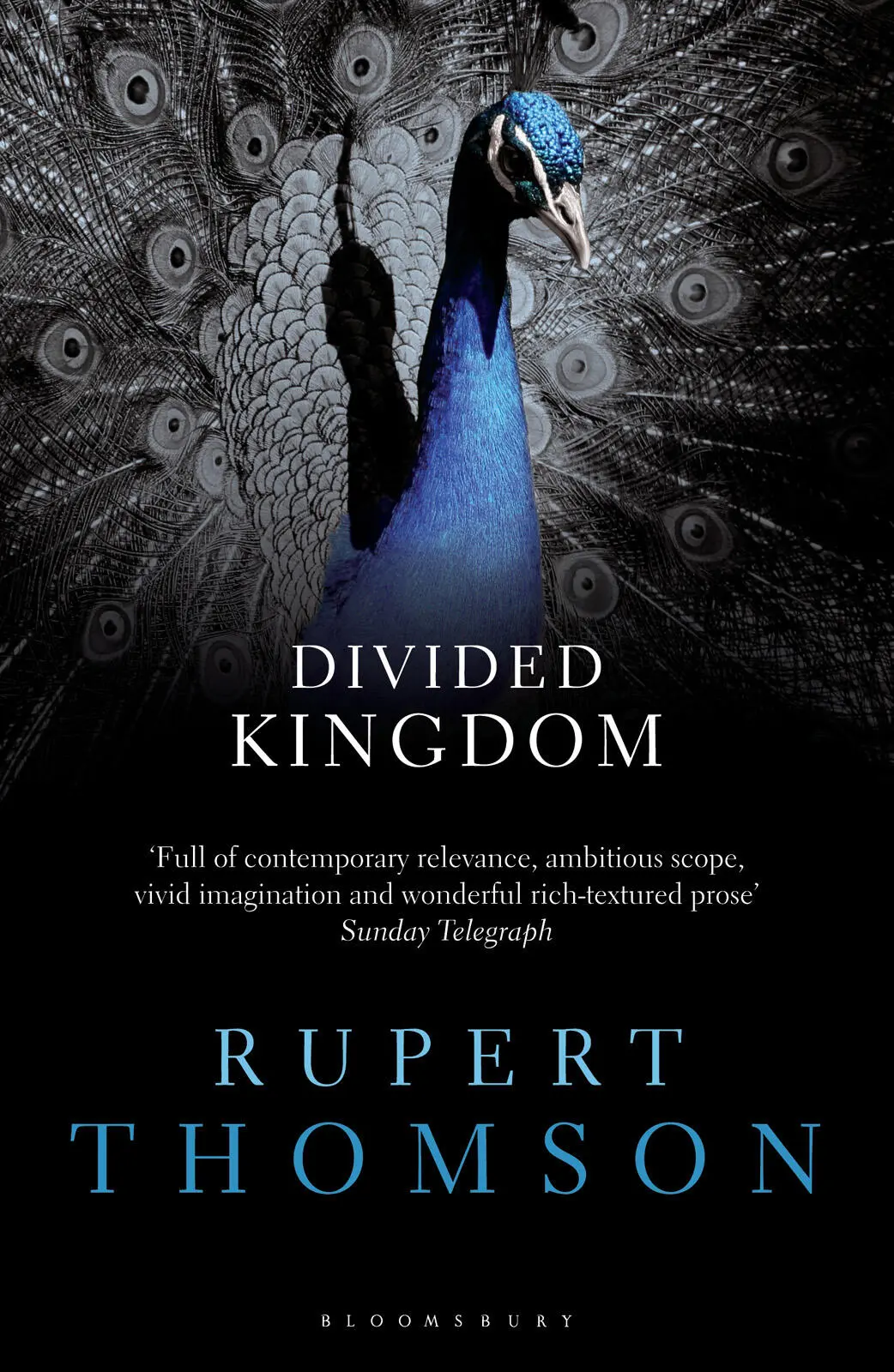
- Название:Divided Kingdom
- Автор:
- Издательство:Bloomsbury UK
- Жанр:
- Год:2012
- ISBN:нет данных
- Рейтинг книги:5 / 5. Голосов: 1
-
Избранное:Добавить в избранное
- Отзывы:
-
Ваша оценка:
Divided Kingdom: краткое содержание, описание и аннотация
Предлагаем к чтению аннотацию, описание, краткое содержание или предисловие (зависит от того, что написал сам автор книги «Divided Kingdom»). Если вы не нашли необходимую информацию о книге — напишите в комментариях, мы постараемся отыскать её.
Divided Kingdom — читать онлайн бесплатно полную книгу (весь текст) целиком
Ниже представлен текст книги, разбитый по страницам. Система сохранения места последней прочитанной страницы, позволяет с удобством читать онлайн бесплатно книгу «Divided Kingdom», без необходимости каждый раз заново искать на чём Вы остановились. Поставьте закладку, и сможете в любой момент перейти на страницу, на которой закончили чтение.
Интервал:
Закладка:
That afternoon, as I watched Neg inspect a cracked wingmirror that he had picked up at the dump, I realised I had seen his face before. Not literally, of course. But I remembered that Jones had had the same expression, or lack of it, when I found him standing on one leg in that gloomy passageway. Jones had been a White Person before anybody even knew White People existed. He would have to have been one of the first. If Jones was still alive, he would probably be living among the White People, just as I was. How strange to think that I could run into him at any moment!
After walking for several hours with a strong wind at our backs, it began to look as though we were making for a blighted area known as the Wanings. The provincial capital was Pyrexia, a city that manufactured chlorine, plastics and petrochemicals. The Yellow Quarter’s leadership had recently declared the Wanings to be ungovernable. I had heard stories of atrocities from various relocation officers, though none of them ever claimed to have actually set foot in the region.
By the middle of the fourth day we had reached a high, barren moor. The wind had died down, and the sky, which was overcast, seemed suspended just above our heads. If you touched the clouds they would be soft, I thought, like the breast of a bird. On we went, still heading north. Our cloaks whispered across the heather.
In the late afternoon we hauled a dead sheep out of a disused mineshaft. Luckily, it hadn’t started rotting yet, and we roasted the carcass over a peat fire. Our bellies full, we slept for longer than usual. It was almost light before we set off again.
Although we tended to keep to the high ground, out of sight of human habitation, we would sometimes climb down to a road and look for animals that had been run over. We found plenty of rabbits and even, once or twice, a pheasant. We carried a supply of stale bread and raw vegetables with us, but the roads became, for a while at least, our chief source of food.
We had no choice but to sleep in the open. Every six or seven hours we would huddle down, packing ourselves tightly together, like children playing sardines.
Time began to blur.
Once, we had to cross an eight-lane motorway. I heard it long before I saw it, a sustained but airy roar that I mistook for a waterfall. A man was hit by a truck that day. I watched his body spin, then crumple. He was dead when I reached him, one side of his head grazed and bloody, his spine smashed, the pulse in his neck nowhere to be found. The truck hadn’t even slowed down. We laid him on his back on the hard shoulder. Curiously, his hands were still moving, folding inwards, as if he wanted to touch the inside of his wrists. A woman tried to arrange blades of grass across his face, but the slipstream from the traffic kept disturbing them. In the end we had to use a piece of shredded tyre instead.
Beyond the motorway the land turned bleaker still. Only the wind and the clumps of blackened heather and the shifting pale-yellow grasses. The further north we went, the more use we seemed to be making of the daylight hours; we had removed ourselves from society to such an extent that we no longer needed to hide. Also, there were the mineshafts, which would pose a threat if we were travelling at night. And I had seen notices warning of unexploded ammunition. At some point in the past the area must have been used as a firing-range.
I suppose we must have been in the Yellow Quarter for about ten days when we scaled a stony ridge and then came to a halt, a wide shallow valley sprawling before us. A single road ran across the land from north to south. I couldn’t imagine who it might be for. The military, perhaps. To the west of the road lay a stretch of ground that seemed to have been dug up or turned over, and a crowd of White People had gathered there. While it looked as though we might have reached our destination at last, I couldn’t see anything in this desolate place to justify the long and perilous journey we had just undertaken.
We began our descent, and before too long we were on the valley floor ourselves. The White People were not in the habit of exchanging greetings. There was no embracing, for instance, no physical contact. They stood in front of each other or beside each other in a muted show of acknowledgement, or else they circled one another with their eyes lowered and their hands fidgeting among the folds of their cloaks, as if overwhelmed by a sudden attack of nerves. I could never tell whether they were renewing their acquaintance or meeting for the first time.
I walked over to the muddy area I had seen from the ridge. It was the rough size and shape of a swimming-pool. Tyre tracks led from the road to one of the longer sides. At the far end, I saw a man on his knees. I moved towards him, curious, but not wanting to intrude. Every now and then he would lean forwards and lay his cheek tenderly against the earth. When I reached him, I nodded and murmured, an all-purpose mode of conduct that I had picked up from my three companions. The man ignored me. Staring out over the land, I thought I understood. Something had happened here.
I returned to the main group. Lum and Neg had built a small fire by the roadside. Potatoes nestled among the embers. I squatted down and hunted through my pockets, bringing out apples and red peppers that I had found at the back of a village supermarket several days before. I also produced a few muddy beetroot, stolen from someone’s kitchen garden. Lum placed the peppers round the fringes of the fire so they would sear. Neg bit gingerly into one of the apples. As for Ob, he was gazing into the distance with his usual mystical intensity.
Most of the White People had set up camp by now. Some even owned billy cans in which they were heating water or broth. The curved shape of the valley amplified our murmurs. Once we had eaten, though, a hush settled over us, a silence that had the patient, reverential quality of a vigil. The air itself appeared to have tightened as if, like a crisp new sheet, it had been snapped out over the mattress of the earth. I wrapped my cloak around me and lay down.
When I woke it was dusk, and our fire had burned low, the mound of grey ash delicately embroidered with scarlet threads. As I tried to rub some feeling back into my legs, I looked up and saw a full moon balanced on the ridge above me, a moon so huge that I imagined for a moment that both the land and all the life in it had shrunk. The colour, too, astounded me. A lavish, creamy pale-gold, it had the gleam of antique satin or newly minted coin. Glancing round me, I saw that people were rising to their feet as if they had just received a signal.
I watched them move towards the rectangle of earth. Arranging themselves around the edge, they started taking off their clothes. I had no choice but to join them and do the same. Once undressed, we stepped out on to mud that had a particular coldness of its own — far colder, somehow, than the grass, far colder even than the air. Our flesh gave off the pale, almost transparent glimmer of a puddle when it freezes. The people nearest me were scooping up the mud and plastering their bodies with it, their faces too. As I bent down, a light seemed to flare inside my head, and I saw a lorry reversing towards a wide, deep trench. Its tail-lights glowed, then faded. Glowed again. Then the back end lifted on hydraulic rods, and the load began to spill … All this I received in a split-second, then it went dark again, and there was only my bare arm reaching out and the mud below, and the hairs rose on my skin, but not with cold.
I started covering myself, then stopped, aware of a sound coming from the people gathered round me. They were calling out, not to each other, but to some larger thing, or even to the void, perhaps, their voices tentative, enquiring. Slowly the volume grew, the voices becoming less distinctly individual, less obviously human. I thought of a swarm of bees, a reverberation that was partly music, partly noise, and I found that I had been caught up in it and that my voice had merged with theirs. I was ridding myself of burdens I had been carrying for years — the collusion, the deceit, the lies I had told to others, and to myself as well; everything was being dumped on this rectangle of ground, and I could leave it here, I could leave the whole lot here. The sound made earth and air vibrate, and that was all we were just then, a single voice raised against the elements, a resonance, a kind of harmony.
Читать дальшеИнтервал:
Закладка:
Похожие книги на «Divided Kingdom»
Представляем Вашему вниманию похожие книги на «Divided Kingdom» списком для выбора. Мы отобрали схожую по названию и смыслу литературу в надежде предоставить читателям больше вариантов отыскать новые, интересные, ещё непрочитанные произведения.

Обсуждение, отзывы о книге «Divided Kingdom» и просто собственные мнения читателей. Оставьте ваши комментарии, напишите, что Вы думаете о произведении, его смысле или главных героях. Укажите что конкретно понравилось, а что нет, и почему Вы так считаете.