Rupert Thomson - Divided Kingdom
Здесь есть возможность читать онлайн «Rupert Thomson - Divided Kingdom» весь текст электронной книги совершенно бесплатно (целиком полную версию без сокращений). В некоторых случаях можно слушать аудио, скачать через торрент в формате fb2 и присутствует краткое содержание. Год выпуска: 2012, Издательство: Bloomsbury UK, Жанр: Современная проза, Фантастика и фэнтези, на английском языке. Описание произведения, (предисловие) а так же отзывы посетителей доступны на портале библиотеки ЛибКат.
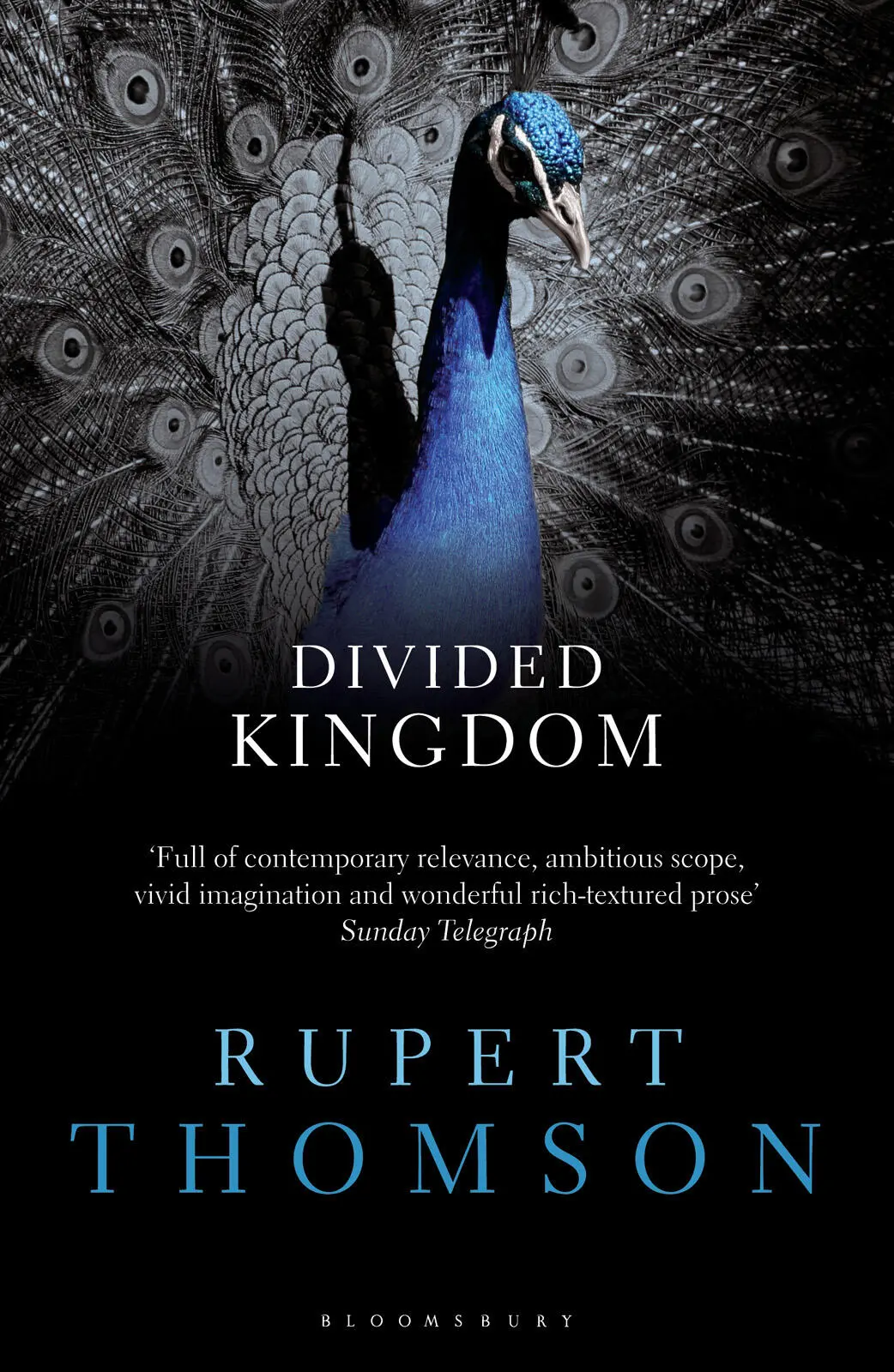
- Название:Divided Kingdom
- Автор:
- Издательство:Bloomsbury UK
- Жанр:
- Год:2012
- ISBN:нет данных
- Рейтинг книги:5 / 5. Голосов: 1
-
Избранное:Добавить в избранное
- Отзывы:
-
Ваша оценка:
Divided Kingdom: краткое содержание, описание и аннотация
Предлагаем к чтению аннотацию, описание, краткое содержание или предисловие (зависит от того, что написал сам автор книги «Divided Kingdom»). Если вы не нашли необходимую информацию о книге — напишите в комментариях, мы постараемся отыскать её.
Divided Kingdom — читать онлайн бесплатно полную книгу (весь текст) целиком
Ниже представлен текст книги, разбитый по страницам. Система сохранения места последней прочитанной страницы, позволяет с удобством читать онлайн бесплатно книгу «Divided Kingdom», без необходимости каждый раз заново искать на чём Вы остановились. Поставьте закладку, и сможете в любой момент перейти на страницу, на которой закончили чтение.
Интервал:
Закладка:
For the rest of that day we moved with real urgency, and I wondered whether there might not, after all, be some desire on the part of my companions to put distance between themselves and what had happened at the border. At the same time it implied a knowledge of the territory. We had entered a place where one did all one could to avoid confrontation. To convey a sense of purpose, even to look as though one had a destination in mind, was to engage in a form of self-defence.
We had crossed into the northern reaches of the Yellow Quarter, which was less densely populated, but we still couldn’t seem to get away from the roads, at least not to begin with. We walked on grass verges, in ditches, along hard shoulders, and the traffic hissed past us, endless traffic. People would blast their horns at us, or wind their windows down and jeer, and once a can of beer came cartwheeling through the air and struck the bearded man on the point of his elbow. After that, he held his arm across his chest, but he wore the same expression as before, his chin lifted upwards and a little to one side, his dusty-looking eyes unfocused, as if he was listening to distant music.
By late afternoon we were approaching the outskirts of a city, the main road lined with car showrooms, designer-clothing outlets and fast-food restaurants. Our shadows appeared on the pavement before us like dark predictions. I looked over my shoulder. The sun had dropped out of a mass of shabby cloud, giving off an orange light that seemed unnatural, diseased. It was time to sleep. We started searching the yards and alleys behind the shops for bedding. We found several sheets of plastic in a skip and shook off the rainwater, then we carried them into the corner of a car-park and settled in the long grass up against a wire-mesh fence. I listened to the lorries pulling in — the clash of gears, the sneeze of brakes — and heard the drivers shouting at each other, trading insults and dirty jokes.
Over the past few days, as we journeyed south-east across the moors of the Green Quarter, then west towards the border, I had been observing my companions and I had begun to form a theory. I had noticed certain sounds recurring, and made a point of recording how and when they were used. Created almost exclusively from consonants, they had an abrupt, glottal character. The sound ‘Ng’, for instance, was used in relation to the man with the sore mouth, and I wondered if this might not be a name the White People had given him. Once I’d had that idea, I turned my attention to the bearded man and quickly discovered a sound that was applied to him, a sound best represented by the word ‘Ob’. Likewise, ‘Lm’ was often employed around the woman, its comparative softness a subtle, almost poignant acknowledgement of her gender. Since crossing the border that afternoon, I had started using these curious sounds myself, tentatively at first, but then with increasing confidence, and I was usually rewarded with a grunt or a glance or a jerk of the head. Once, in response to my use of the word ‘Lm’, which I pronounced Lum, the woman came out with something that sounded like ‘Gsh’. Later, the bearded man used the same sound when looking in my direction. Could it be that I had a White name now?
The woman, Lum, was leaning over me, shaking my shoulder. It didn’t seem possible that I had slept, and yet the sky behind her head had the murky burnt-orange glow of night. I sat up and looked past her. The other two were already awake and on their feet, Neg urinating through the wire-mesh fence.
To the north of the city we stumbled into an area of heavy industry. The landscape was strewn with the tangled paste jewellery of chemical plants. All those buildings ticking, humming, breathing. All those strings of pearly lights. And white smoke blossoming in tall chimneys, like stems of night-scented stock. Beauty of a sort, but poisonous. We didn’t cover the miles with our usual efficiency. We kept tripping on debris piled up at the edge of the road, then Lum fell into a narrow culvert and damaged her leg, and we had to take turns supporting her. That slowed us even more. We slept again at dawn, as always.
The next night we left the road for an unpaved track. As we came over a rise, I heard a strange, inhuman squabbling, and there before us lay an enormous rubbish dump with hundreds of gulls wheeling and swooping, fighting over scraps. We forced an opening in the corrugated-iron fence and began to circle the dump in a clockwise direction. On the far side, out of sight of the entrance, a bonfire had been lit, its flames sending handfuls of red sparks into the air. The woman murmured and, looking away to my left, I saw a group of pale figures emerging from a wood. By the time we reached the fire, there must have been thirty of us. We had gathered in the same place, at more or less the same time, and yet, so far as I could tell, nothing had been arranged or discussed. There had been no communication — at least not in the ordinary sense of the word. It seemed like evidence of the telepathic powers that I had always been so sceptical about.
They sat themselves down all round the fire, and I sat with them. They nodded, muttered, scratched themselves. They prodded at the fire with bits of stick. In the side of the dump, which lifted above us like a tattered cliff-face, pieces of silver foil winked and glittered. A litre bottle was passed from hand to hand. The fumes that rose from the neck smelled floral, but the taste reminded me of gin, and I imagined for a moment that I was back in Clarise Tucker’s front room, sampling one of Starling’s deadly new concoctions. Between random bursts of animation, when the White People would either grunt or moan, a silence would fall during which they stared into the fire, apparently lost in thought. I didn’t understand what they were up to. It was like an assembly, a convocation, but of the most eccentric kind. Though our numbers had swelled, I felt more exposed, more of an outsider, and I found a stick of my own and stirred the embers in an attempt to disguise my growing sense of awkwardness.
And then, in a flash, I had the answer. They were sending pictures to each other in their heads. They were showing them to each other as you might show photographs, except they were doing it telepathically. How did I know this? Partly it was intuition. But also, if I concentrated hard enough, if I blocked out the rest of the world, I seemed to see images that I could not explain. They were only fragments — a burning house, a frozen lake, a naked man sat backwards on a horse — but they came from somewhere quite outside my own experience. It was another form of communication, a different language altogether, and yet, given time, I felt I could become fluent. Then, perhaps, I would receive whole sequences of images. Meanwhile, I was a mere novice, with no real contribution to make. I was the person who nods and grins, even though he hasn’t got the joke.
They stayed awake all night, only dozing off when the first blush of colour appeared in the eastern sky. In the middle of the day we moved on, travelling due north. I counted thirty-four of us. There were no children. Was that a coincidence, or was it true what I had heard, that White People were sterile? Certainly all the ones I had come across had been born either before or possibly during the Rearrangement, which lent weight to the view that they were the fall-out from that radical exercise in social engineering. The Rearrangement had been a kind of controlled explosion, sending a white-hot flash through the heads of everybody living in the country at the time. The vast majority had recovered, adapted, tried to make it work in their favour. But there were some who had been less fortunate. Their minds had been scorched; their thoughts had turned to cinders. That, at least, was the general consensus. Although I could see a certain logic in the sterility argument — how could life be created by people who were not themselves, supposedly, alive? — it also seemed rather too convenient, a piece of sophistry or wishful thinking on the part of those for whom the White People were an embarrassment. For if fertility had been destroyed, along with language and character, then the White People would die out. They would no longer be able to act as reminders of the system’s cruelties and its shortcomings. There would be no exceptions to the rule.
Читать дальшеИнтервал:
Закладка:
Похожие книги на «Divided Kingdom»
Представляем Вашему вниманию похожие книги на «Divided Kingdom» списком для выбора. Мы отобрали схожую по названию и смыслу литературу в надежде предоставить читателям больше вариантов отыскать новые, интересные, ещё непрочитанные произведения.


Обсуждение, отзывы о книге «Divided Kingdom» и просто собственные мнения читателей. Оставьте ваши комментарии, напишите, что Вы думаете о произведении, его смысле или главных героях. Укажите что конкретно понравилось, а что нет, и почему Вы так считаете.