Stephanie Danler - Sweetbitter
Здесь есть возможность читать онлайн «Stephanie Danler - Sweetbitter» весь текст электронной книги совершенно бесплатно (целиком полную версию без сокращений). В некоторых случаях можно слушать аудио, скачать через торрент в формате fb2 и присутствует краткое содержание. Год выпуска: 2016, Издательство: Knopf, Жанр: Современная проза, на английском языке. Описание произведения, (предисловие) а так же отзывы посетителей доступны на портале библиотеки ЛибКат.
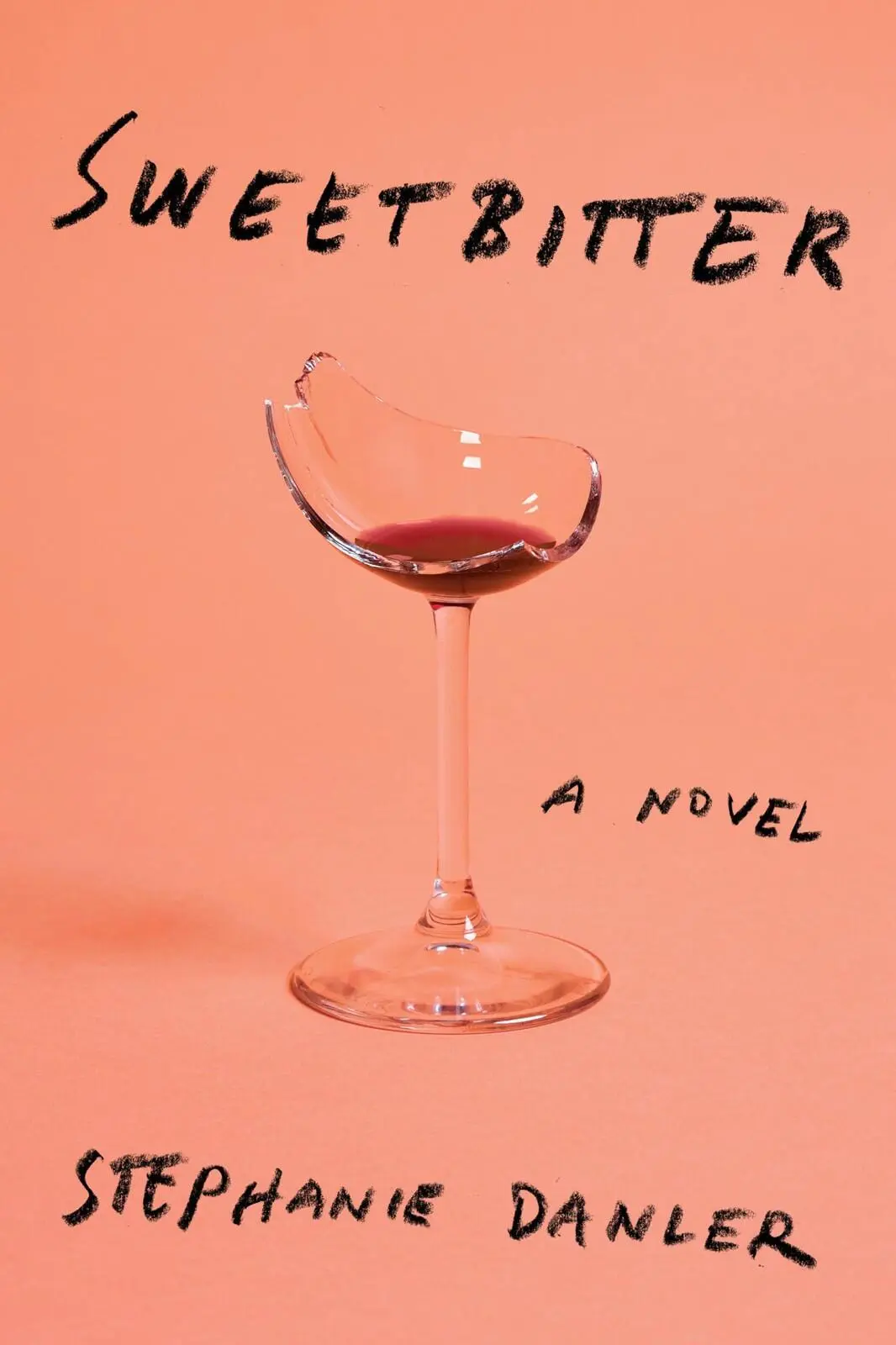
- Название:Sweetbitter
- Автор:
- Издательство:Knopf
- Жанр:
- Год:2016
- ISBN:нет данных
- Рейтинг книги:3 / 5. Голосов: 1
-
Избранное:Добавить в избранное
- Отзывы:
-
Ваша оценка:
Sweetbitter: краткое содержание, описание и аннотация
Предлагаем к чтению аннотацию, описание, краткое содержание или предисловие (зависит от того, что написал сам автор книги «Sweetbitter»). Если вы не нашли необходимую информацию о книге — напишите в комментариях, мы постараемся отыскать её.
off. Her appetites — for food, wine, knowledge, and every kind of experience — are awakened. And she's pulled into the magnetic thrall of two other servers — a handsome bartender she falls hard for, and an older woman she latches onto with an orphan's ardor.
These two and their enigmatic connection to each other will prove to be Tess's hardest lesson of all.
is a story of discovery, enchantment, and the power of what remains after disillusionment.
Sweetbitter — читать онлайн бесплатно полную книгу (весь текст) целиком
Ниже представлен текст книги, разбитый по страницам. Система сохранения места последней прочитанной страницы, позволяет с удобством читать онлайн бесплатно книгу «Sweetbitter», без необходимости каждый раз заново искать на чём Вы остановились. Поставьте закладку, и сможете в любой момент перейти на страницу, на которой закончили чтение.
Интервал:
Закладка:
—
“WHAT’S THAT bartender’s name again? The one who only talks to Simone?” I asked Sasha. I was casual about it.
Sasha was a backwaiter. He was otherworldly beautiful: broad alien cheekbones, blue eyes, bee-stung, haughty lips. He could have been a model, except he was barely five foot four. His gaze was so cold, you knew he had been everyone: a rich man, a poor man, in love, abandoned, a murderer, and close to death. None of these states impressed him much.
“That bartender? Jake.”
He was Russian, and though he was clearly fluent in English, he didn’t bother to adhere to its rules. His accent was both elegant and comical. He rolled his eyes at me while he cut bread.
“Okay, Pollyanna, let me tell you few truths. You’re too new.”
“What does that mean?”
“What you think it means? Jakey will eat you for dinner and spit you out. You even know what I’m speaking of? You’re not bouncing around after that.”
I shrugged like I didn’t care and filled the bread baskets.
“Besides. He’s mine. I’ll cut your fucking throat if you touch him and I’m not a joker.”
“Silence in the kitchen! Pick up.”
—
“PICKING UP!”
The kitchen was a riot of misshapen, ugly tomatoes. They smelled like the green insides of plants, like sap, like dirt.
There were tomatoes of every color: yellow, green, orange, red-purple, mottled, striped, dotted. They were bursting. “Seaming” is what Chef called it, when the curves and indentations pulled apart from each other, but not completely, like parted lips.
“Heirloom season,” Ariel sang out. She was also a backwaiter. She always had pounds of eyeliner on, even if it was the morning. She had bangs and dark-brown hair that she twisted up onto her head and held with chopsticks. She was still named Mean-Girl in my head because she wouldn’t speak to me during training, only pointed and gave exasperated sighs. But today she was passing out dripping bar mops to the line cooks from a bucket of ice water. They wrapped them around their heads like bandanas or slung them over the backs of their necks. That didn’t seem like something a Mean-Girl would do. In fact, I hadn’t seen anyone do something that compassionate with their bar mop stash. I heard from my own head, Our first tenet is to take care of each other.
She handed me a bar mop. I put it on the back of my neck and it felt like rising out of a soggy cloud into clean air.
“Pick up.”
“Picking up,” I said. I looked expectantly to the window but there were no plates lined up. Instead Scott, the young, tattooed sous chef, passed me a sliver of tomato. The insides were tie-dyed pink and red.
“A Marvel-Striped from Blooming Hill Farm,” he said, as if I had asked him a question.
I cupped it while it dripped. He pinched up flakes of sea salt from a plastic tub and flicked it on the slice.
“When they’re like this don’t fuck with them. Just a little salt.”
“Wow,” I said. And I meant it. I had never thought of a tomato as a fruit — the ones I had known were mostly white in the center and rock hard. But this was so luscious, so tart I thought it victorious. So — some tomatoes tasted like water, and some tasted like summer lightning.
—
“WHAT ARE HEIRLOOMS?” I asked Simone as I ran to get behind her in line for family meal. She had two white plates in her hand and I felt a shiver of expectation looking at that second plate. I noted how she made her own — a generous tongful of green salad and a cup of the vichyssoise.
“Exciting, isn’t it? The season? They’re rare or unique breeds of plants and animals. Once all our tomatoes were like that. Before preservatives and supermarkets and this commercial food production hell we’re living in. Breeds evolved in places based on one evolutionary principle: they tasted better. The point is not longevity or flawlessness. All of our vegetables were biologically diverse, pungent with the nuances of their breed. They reflected their specific time and space — their terroir.”
On the second plate she took the biggest pork chop on the bone, a scoop of the rice salad, and a wedge of gratin potatoes. She said, “Now everything tastes like nothing.”
—
THEY CONJOINED in my mind. It wasn’t that they were always together. Theirs was an oblique connection, not always direct. If I saw one, my eyes started to move, looking for the other. Simone was easy to find, ubiquitous, directing everyone — she seemed to have some sort of system where she divided her attention between the servers equally. But I had a harder time tracking him, his alliances, his rhythms.
If they were in the restaurant together they had one eye on each other and I had one eye on them, trying to understand what I was seeing. It wasn’t like they were the only fascinating people at the restaurant. But they were an island if the rest of us were the continent — distant, inaccessible, picking up stray light.
—
“PICK UP.”
My eyes snapped open but I was the barista today, the kitchen was far away. Howard looked at me from the Micros terminal. He was waiting for me to make him a macchiato but I was overthinking it. I threw the first two shots away.
“I’m hearing Chef scream, ‘Pick up’ in my sleep,” I said, swirling the warm milk. It was as glossy as new paint. “Punishing myself I guess.”
“Thanatos — the death drive,” Howard said. He laid a napkin over his arm and inspected a bottle of wine on the service bar. “We fantasize about traumatizing events to maintain our equilibrium. Lovely.” He took the macchiato and smelled it before taking a sip. He regarded me. The other managers wore suits but somehow everyone in the restaurant always knew that Howard was the man in charge — as if his suits were cut from a finer fabric.
“It’s compulsive but we actually find the painful repetition pleasurable.” He took another sip.
“It doesn’t sound pleasurable.”
“It’s how we self-soothe. How we maintain the illusion that we are in control of our lives. For example, you repeat ‘Pick up’ in hopes that the outcome each time will be different. And you are repeatedly embarrassed, are you not?” He waited for me to respond but I wouldn’t meet his eyes. “You are hoping to master the experience. The pain is what we know. It’s our barometer of reality. We never trust pleasure.”
Every time Howard looked at me I felt bare. A coffee ticket printed up and I used it as an excuse to turn around.
“Are you dreaming about work often?” he asked. It felt like he spoke it into my neck.
“No.” I slammed a portafilter to empty it and I could feel him walk away.
But I was. The dreams were tidal, consumptive, chaotic. Service played over in my head, but no one had faces. And I heard voices, layered on top of one another, a cacophony. Phrases would rise then evanesce: Behind You, Pick Up, To Your Right, To Your Left, Picking Up, Candles, Can You, Now, Toothpicks, Pick Up, Bar Mops, Now, Excuse Me, Picking Up.
In my dreams these words were a code. I was blind and the directives were all I had to pick my way through the blackness. The syllables quaked and separated. I woke up talking: I couldn’t remember what I had been saying, only that I was driven to keep saying it.
—
TERROIR. I looked it up in The World Atlas of Wine in the manager’s office. The definition was people talking around it without identifying it. It seemed a bit far-fetched. That food had character, composed of the soil, the climate, the time of year. That you could taste that character. But still. An idea mystical enough to be highly seductive.
—
IGNORE HIM. That’s what I did. When Jake came into family meal late and took his seat next to Simone, when he pulled up on his bike outside the front window, when he called harshly out for bar mops, I looked away.
Читать дальшеИнтервал:
Закладка:
Похожие книги на «Sweetbitter»
Представляем Вашему вниманию похожие книги на «Sweetbitter» списком для выбора. Мы отобрали схожую по названию и смыслу литературу в надежде предоставить читателям больше вариантов отыскать новые, интересные, ещё непрочитанные произведения.










Обсуждение, отзывы о книге «Sweetbitter» и просто собственные мнения читателей. Оставьте ваши комментарии, напишите, что Вы думаете о произведении, его смысле или главных героях. Укажите что конкретно понравилось, а что нет, и почему Вы так считаете.