Stephanie Danler - Sweetbitter
Здесь есть возможность читать онлайн «Stephanie Danler - Sweetbitter» весь текст электронной книги совершенно бесплатно (целиком полную версию без сокращений). В некоторых случаях можно слушать аудио, скачать через торрент в формате fb2 и присутствует краткое содержание. Год выпуска: 2016, Издательство: Knopf, Жанр: Современная проза, на английском языке. Описание произведения, (предисловие) а так же отзывы посетителей доступны на портале библиотеки ЛибКат.
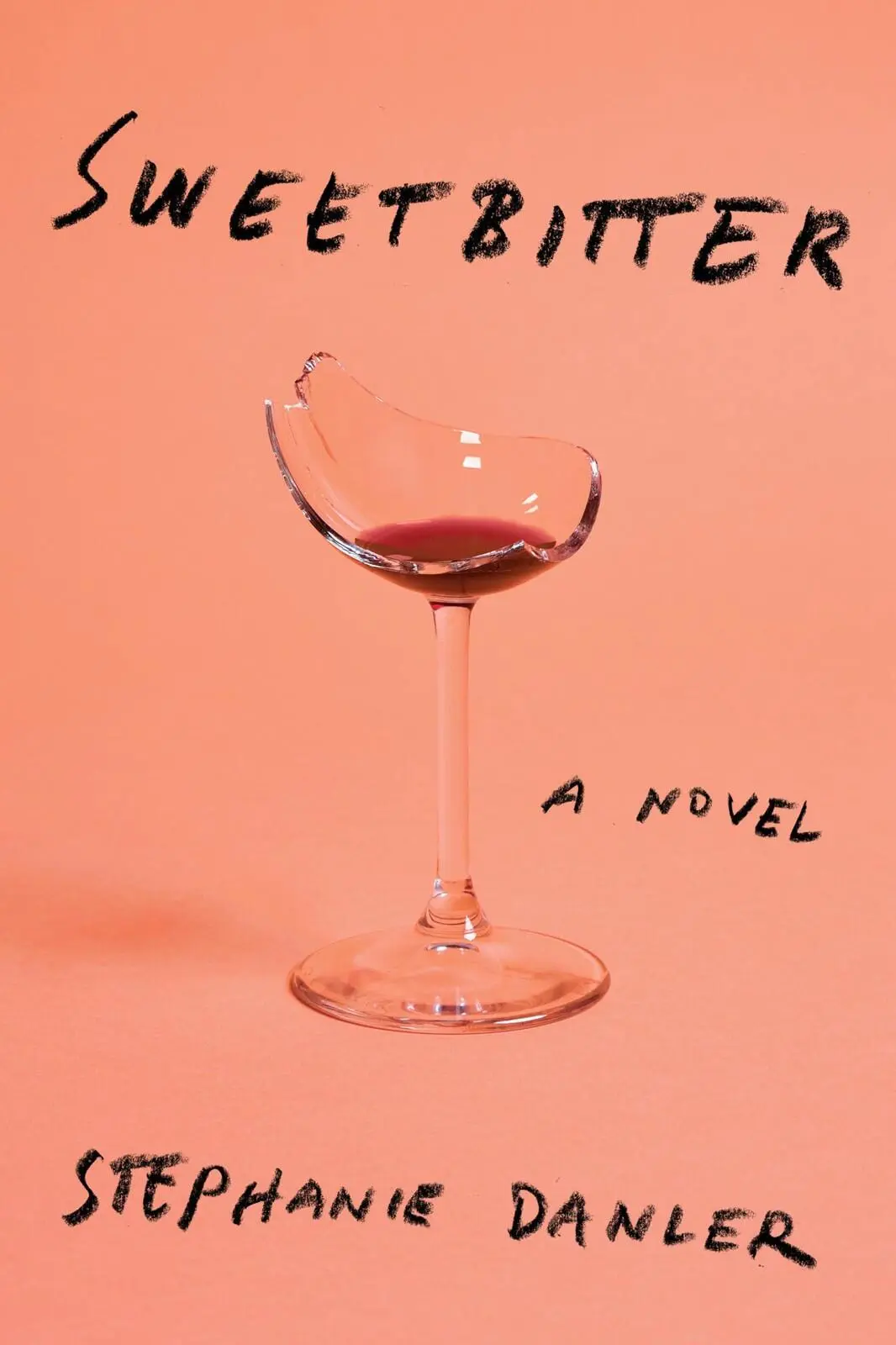
- Название:Sweetbitter
- Автор:
- Издательство:Knopf
- Жанр:
- Год:2016
- ISBN:нет данных
- Рейтинг книги:3 / 5. Голосов: 1
-
Избранное:Добавить в избранное
- Отзывы:
-
Ваша оценка:
Sweetbitter: краткое содержание, описание и аннотация
Предлагаем к чтению аннотацию, описание, краткое содержание или предисловие (зависит от того, что написал сам автор книги «Sweetbitter»). Если вы не нашли необходимую информацию о книге — напишите в комментариях, мы постараемся отыскать её.
off. Her appetites — for food, wine, knowledge, and every kind of experience — are awakened. And she's pulled into the magnetic thrall of two other servers — a handsome bartender she falls hard for, and an older woman she latches onto with an orphan's ardor.
These two and their enigmatic connection to each other will prove to be Tess's hardest lesson of all.
is a story of discovery, enchantment, and the power of what remains after disillusionment.
Sweetbitter — читать онлайн бесплатно полную книгу (весь текст) целиком
Ниже представлен текст книги, разбитый по страницам. Система сохранения места последней прочитанной страницы, позволяет с удобством читать онлайн бесплатно книгу «Sweetbitter», без необходимости каждый раз заново искать на чём Вы остановились. Поставьте закладку, и сможете в любой момент перейти на страницу, на которой закончили чтение.
Интервал:
Закладка:
Jesus, we were slammed all night.
Acknowledgments
My gratitude is boundless.
To Claudia Herr
To Mel Flashman
To Peter Gethers
I don’t know how to deserve the attention, dedication, and hours you’ve given me, except to work harder. Thank you.
To Robin Desser, Sonny Mehta, and Paul Bogaards. To Carol Carson, Oliver Munday, and Cassandra Pappas. To Christine Gillespie, Sarah Eagle, Erinn McGrath, and Jordan Rodman. To Katherine Hourigan, Rita Madrigal, Lydia Buechler, and the awe-inspiring team at Knopf.
To Sarah Bush, Sylvie Rosokoff, Meredith Miller, Lauren Paverman, and everyone at Trident.
To the MacDowell Colony, Byrdcliffe Colony, and Casey and Steven at the Spruceton Inn for time and space.
To Helen Schulman and Jonathan Dee.
To Mani Dawes for my PhD in restaurants. To Heather Belz and Michael Passalacqua. To Tia.
To Jody Williams, Caryne Hayes, and my loves at Buvette.
To DHM and everyone at USC.
To Pam.
To Christina.
To AGH.
To Car.
To Bradley.
To my tireless readers and supporters: Margaux Weisman, Emily Cementina, Morgan Pile, Marianne McKey, Waverly Herbert, Mariana Peragallo, Eli Bailey, TJ Steele, Dave Peterson, Alejandro de Castro, Lu and Francesca, Kevin Ruegg, Wendy Goldmark, Denise Campono, and Nancy Ferrero.
To SJD, who read every sentence of every draft, and said the only thing I needed to hear: It’s good. Keep going.
A Note About the Author
STEPHANIE DANLER is a writer based in Brooklyn, New York.
An Alfred A. Knopf Reading Group Guide Sweetbitter by Stephanie Danler
The questions, discussion topics, and reading list that follow are intended to enhance your reading group’s discussion of Sweetbitter, the dazzling, eagerly awaited debut novel by Stephanie Danler.
Discussion Questions
1. The title appears within one of the novel’s epigraphs, a quote from a poem by Sappho: “Eros once again limb-loosener whirls me / Sweetbitter, impossible to fight off, creature stealing up.” How does this fit into Tess’s story?
2. On this page, Tess likens the Hudson River to Lethe. According to Greek mythology, the dead drink from Lethe to forget their previous lives. On this page, in her interview with Howard, Tess says, “Or maybe it means we’ve forgotten ourselves. And we keep forgetting ourselves. And that’s the big grown-up secret to survival.” What is Tess trying to forget?
3. Throughout the novel, Tess considers the idea that she is a “fifty-one percenter,” whose optimistic warmth, intelligence, work ethic, empathy, and self-awareness and integrity made her uniquely qualified to work at the restaurant. How does this concept figure into her developing sense of herself, and her coworkers? Does it prove to be a good thing?
4. Simone is prone to lecturing Tess philosophically. (Appetite “cannot be cured. It’s a state of being, and like most, has its attendant moral consequences.” [this page] “Your senses are never inaccurate — it’s your ideas that can be false.” [this page]) What do these proclamations tell us about Simone’s character? And what do we learn about Tess?
5. “The sharing of secrets is a ceremony, marking kinship. You have no secrets yet, so you don’t know what you don’t know” (this page). What secrets does Tess develop? Do they help her, or hurt her?
6. What does Simone mean when she tells Tess, “And you want to take every experience on the pulse” (this page)? And when Tess repeats that phrase to Jake on this page, why does he say, “You’re too malleable to be around [Simone]”?
7. The concept of “terroir” appears several times in the novel. On this page, Tess wonders if people can have it. Which characters do you think have terroir? Can a book have it?
8. At what point does it become clear to the reader that Tess has developed a problem with drugs and alcohol? When does she realize it?
9. Simone and Jake each influence Tess greatly. Whose influence proves more beneficial, and whose is more damaging? What does she want from each of them? What does she get?
10. On this page, Tess tells Jake, “You’re all terrified of young people. We remind you of what it was like to have ideals, faith, freedom. We remind you of the losses you’ve taken as you’ve grown cynical, numb, disenchanted, compromising the life you imagined. I don’t have to compromise yet. I don’t have to do a single thing I don’t want to do. That’s why you hate me.” What do you think of her assessment?
11. Several of Tess’s coworkers assign to her nicknames of their own devising—“new girl,” “Skipper,” “Fluffer,” “little one.” The reader doesn’t even learn her real name until this page. What do these names have in common? Are they terms of endearment, or belittling?
12. What role does Howard play in Tess’s coming of age? What does he see in her that she hasn’t yet seen in herself?
13. Tess and Simone each came to New York at twenty-two. How were their paths similar, and how were they different?
14. Tess and Jake both grew up motherless. Simone becomes a mother figure for each. Which of them gets the most out of the relationship: Tess, Jake, or Simone?
15. Why does Samantha’s appearance at the restaurant affect Simone so deeply?
16. Why does discovering Simone’s key tattoo affect Tess so deeply?
17. When examining the photographs pinned to Jake’s wall, Tess thinks, “It reminded me, the way he skirted around those photos, of something Simone had told me during one of our lessons: try not to have ideas about things, always aim for the thing itself. I still did not understand these four photographs, the why of them” (this page). What does this passage mean? What does she want to know?
18. Why does Tess feel so betrayed when she learns about Jake and Simone’s planned sabbatical? How does the timing, coinciding with the restaurant’s closing, affect her response?
19. Over the course of the novel, Tess devotes herself to studying wine — but after she shares her thoughts on Beaujolais, Mrs. Neely says, “Child, what is wrong with you? There’s no roses in the damn wine. Wine is wine and it makes you loose and helps you dance. That’s it. The way you kids talk, like everything is life or death” (this page). What does this exchange do for Tess? What does Mrs. Neely represent?
20. When Sasha tells Tess about the reality of Jake and Simone’s relationship, why is she surprised?
21. Why does Tess have sex with Howard?
22. Regularly throughout the novel, the author interrupts Tess’s storytelling with collections of overheard fragments of conversation. What purpose do these poetic interludes serve? What does the final one represent?
Suggested Reading
Kitchen Confidential by Anthony Bourdain
In the Drink by Kate Christensen
Bad Behavior by Mary Gaitskill
Blood, Bones & Butter by Gabrielle Hamilton
The Liars’ Club by Mary Karr
Complete Poems and Selected Letters of John Keats by John Keats
Bright Lights, Big City by Jay McInerney
Tropic of Cancer by Henry Miller
Down and Out in Paris and London by George Orwell
The Catcher in the Rye by J. D. Salinger
Just Kids by Patti Smith
Интервал:
Закладка:
Похожие книги на «Sweetbitter»
Представляем Вашему вниманию похожие книги на «Sweetbitter» списком для выбора. Мы отобрали схожую по названию и смыслу литературу в надежде предоставить читателям больше вариантов отыскать новые, интересные, ещё непрочитанные произведения.







Обсуждение, отзывы о книге «Sweetbitter» и просто собственные мнения читателей. Оставьте ваши комментарии, напишите, что Вы думаете о произведении, его смысле или главных героях. Укажите что конкретно понравилось, а что нет, и почему Вы так считаете.