Stephanie Danler - Sweetbitter
Здесь есть возможность читать онлайн «Stephanie Danler - Sweetbitter» весь текст электронной книги совершенно бесплатно (целиком полную версию без сокращений). В некоторых случаях можно слушать аудио, скачать через торрент в формате fb2 и присутствует краткое содержание. Год выпуска: 2016, Издательство: Knopf, Жанр: Современная проза, на английском языке. Описание произведения, (предисловие) а так же отзывы посетителей доступны на портале библиотеки ЛибКат.
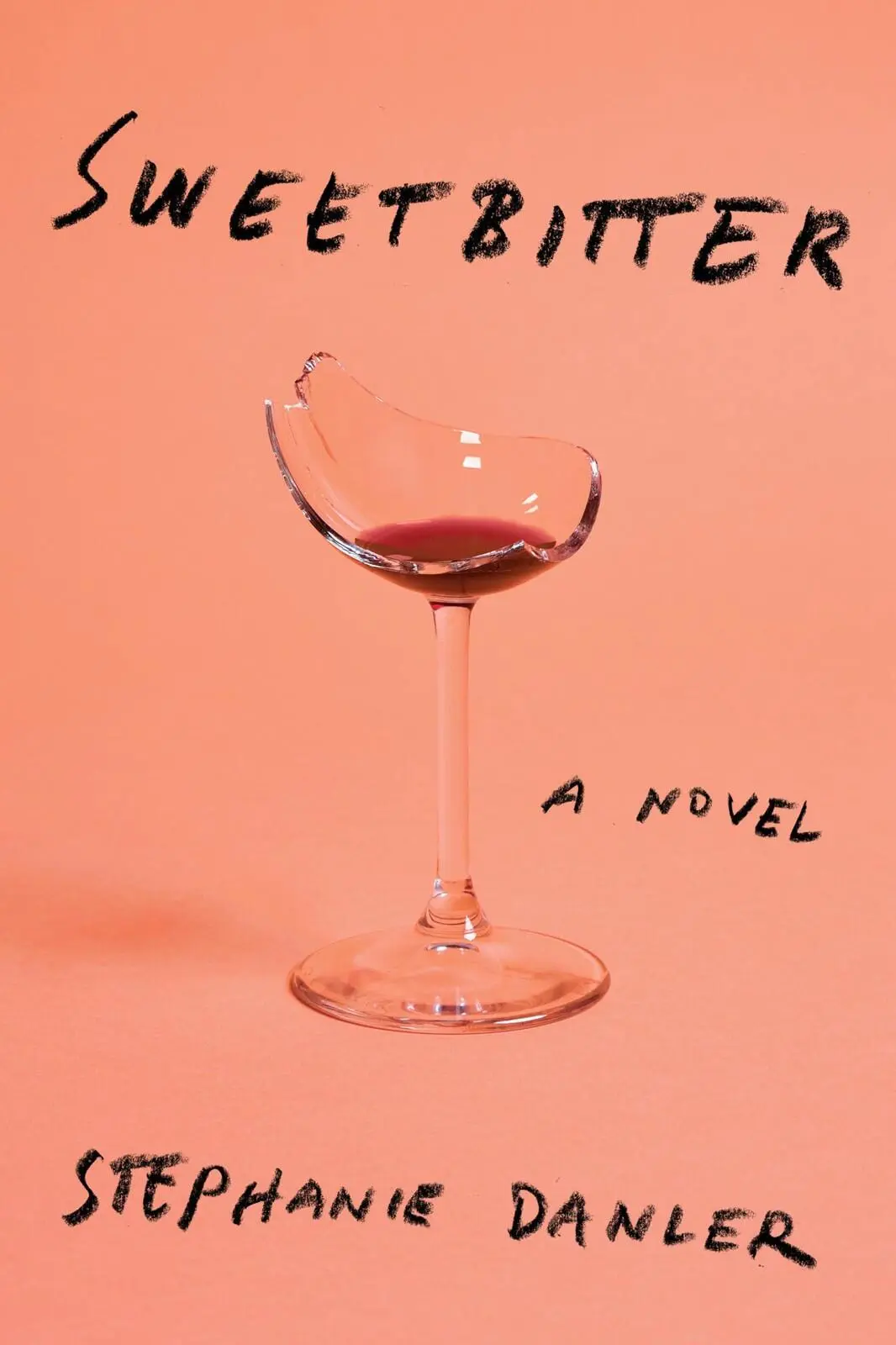
- Название:Sweetbitter
- Автор:
- Издательство:Knopf
- Жанр:
- Год:2016
- ISBN:нет данных
- Рейтинг книги:3 / 5. Голосов: 1
-
Избранное:Добавить в избранное
- Отзывы:
-
Ваша оценка:
Sweetbitter: краткое содержание, описание и аннотация
Предлагаем к чтению аннотацию, описание, краткое содержание или предисловие (зависит от того, что написал сам автор книги «Sweetbitter»). Если вы не нашли необходимую информацию о книге — напишите в комментариях, мы постараемся отыскать её.
off. Her appetites — for food, wine, knowledge, and every kind of experience — are awakened. And she's pulled into the magnetic thrall of two other servers — a handsome bartender she falls hard for, and an older woman she latches onto with an orphan's ardor.
These two and their enigmatic connection to each other will prove to be Tess's hardest lesson of all.
is a story of discovery, enchantment, and the power of what remains after disillusionment.
Sweetbitter — читать онлайн бесплатно полную книгу (весь текст) целиком
Ниже представлен текст книги, разбитый по страницам. Система сохранения места последней прочитанной страницы, позволяет с удобством читать онлайн бесплатно книгу «Sweetbitter», без необходимости каждый раз заново искать на чём Вы остановились. Поставьте закладку, и сможете в любой момент перейти на страницу, на которой закончили чтение.
Интервал:
Закладка:
—
“VEE-OWN-YAY.”
I didn’t mean to correct her. I was only refilling waters on table 30 and I heard Heather stumbling. It was a classic trick, to keep talking while you opened a bottle of wine. No matter the skill level, it was a necessarily slow time in the momentum of service, which usually revolved around a series of quick entrances and quippy exits. But when you tussled with the wine bottle, all eyes were on you, bored, expectant. The only natural thing was to talk through the lapse.
Heather had swayed the guests — rather ingeniously, I thought — from the California Chardonnay they’d requested to a white from the Rhône Valley. It would have similar viscosity and heft, with all the honeyed stone fruit, but without the dominant vanilla and butter of an over-oaked Chardonnay.
The maneuver had the makings of an ideal service experience. They trusted Heather and she rewarded that trust with an education, opening an undiscovered pocket of taste to them. They could spend the rest of the week asking their friends if they knew that the Rhône produced a small amount of white wine. White wine from the Rhône? their buttoned-up friends would say. Yes, had they heard of a Châteauneuf-du-Pape Blanc? No? Then the guests would repeat to their friends verbatim what Heather had said to them: “This wine is fairly obscure, something of a secret…”
We gave a similar speech about whites from Bordeaux, Rioja, anywhere that had prestigious red-wine real estate. And we nodded the composed nod of wisdom when they were surprised. A bonus that the wines were pricey and built a nice check, but it was all true — the whites were bold, rich, and a bargain.
As Heather poured for the man in position 1, a woman shaped like a risen soufflé asked Heather just exactly what the grapes were. Heather started strong with Roussanne, Marsanne, but they were the easy ones. She paused. She looked at the ceiling. The guests’ trust hovered in the air like a threatening cloud.
“Viognier,” I said. Vee-Own-Yay. That’s how I remembered it in my head when Simone taught it to me. The room blinked at me, the lights brightened.
“You know,” I said, taking a breath, “back in the sixties it wasn’t a grape worth mentioning. No one in France wanted to replant it after phylloxera in the nineteenth century. It’s such a…” I rubbed my fingers together for the right word, “… fickle grape.”
The imagined buzzing of tickets being printed, a clang of glasses at the bar. I didn’t want to keep going but I was feeling it now, the ownership that came when the guests entirely submitted to you.
“But they started planting it in California, all along the central coast, and then everyone was like, Wait, what is that incredibly aromatic wine? And then the French said, It’s ours, obviously. You know how the French are.”
They chuckled. Position 2 stuck her nose into the glass and jiggled the wine. I leaned to her and said, “I always get jasmine. That’s how I remember it.”
“I can smell jasmine!” she said to the woman at position 3. I recognized that — the thrill of receiving revelations.
I fielded Heather’s look with a shrug. Like it had been a lucky guess. I went to refill the pitcher but I was thinking, What the fuck? I studied. Keep up.
—
THE GRAYEST, BLURRIEST, most miserable weather. Slush congregating in the gutters, lakes welling up in drains, snot and tears mingling on faces, the air like a drill into the head, When will it end? What next?
It happened like this: he asked, rather awkwardly and for the first time, if I wanted breakfast. Neither of us had to go to work that day and I always wanted breakfast. It was too cold to talk as we walked, my lips like slabs of marble.
He led me to Cup & Saucer on Eldridge and Canal, a tiny lunch counter camped out among the mute Chinese signs. It had faded cursive advertising Coca-Cola on the outside, a layer of bacon grease and fryer oil on the windows inside, and he knew everyone. We had horrid, caustic coffee and I put ketchup on my eggs and I saw the etchings of his wrinkles and they were gray, his golden eyes were flinty, gray, and my hair in the reflection of the window was dishwater colored and gray, the circles under my eyes a lavender gray, and he kissed me, graying daylight fraying and coarse, and he was eggish, lined in tobacco and salt and I thought, Oh lord, oh fuck, is my life becoming one unstoppable banquet? A month of gray and the happiest days of my life.
—
“YOU’RE REALLY DEVELOPING quite nicely,” Howard said to me. His navy suit shone. His tone was light but too direct; I compulsively caved in my chest.
“Developing what?”
“What’s your favorite right now?” He eyed the leather-bound wine lists I was wiping down.
“My favorite what?”
“What excites you?” He paused. “On the list.”
“Oh.”
Simone must have spoken to him. Besides our lessons deepening, I had been studying in my off time. I had a ritual — and having any ritual sounded so mature that I told everyone about it, even the regulars. On my days off I woke up late and went to the coffee shop and had a cappuccino and read. Then around five p.m., when the light was failing, I would take out a bottle of dry sherry and pour myself a glass, take out a jar of green olives, put on Miles Davis, and read the wine atlas. I didn’t know why it felt so luxurious, but one day I realized that ritual was why I had moved to New York — to eat olives and get tipsy and read about Nebbiolo while the sun set. I had created a life that was bent in service to all my personal cravings. Looking at Howard now, I wondered if I was becoming the woman with the shopping bags that I had imagined in my interview. If Howard — with his watchful, unapologetic eyes — had seen what I wanted before I did, and had hired me because he knew this job could give it to me.
“The Manzanilla, I think. La Gitana.” I said.
“Ha!” He clapped his hands, genuinely surprised. “The Manzanilla, where on earth did you pick that up?”
“Mrs. Neely, actually. She’s always asking for sherry for her soup and I thought it was sherry vinegar, but then I saw Simone getting it from the bar and I thought it was a sweet wine — at first.”
“And?”
“It’s not sweet.”
“No, it’s not. It’s one of the oldest, most complex and undervalued wines in the world.”
I nodded, too excited suddenly. “I agree! I’ve never tasted anything like it. It’s like nutty and rich, but so light, bone dry, actually, salty.”
“It’s the ocean air — that area of Spain is where the Atlantic, the Mediterranean, and the river all converge. You can’t make sherry anywhere else, but I’m sure Simone told you that. It’s like Champagne in that manner, especially with the chalk content in the soil. They have a name for it…”
“Albariza. That’s the soil.” I liked having answers. And of course he understood about sherry. Maybe that was what unsettled me, the way he spoke in decrees, like Simone, but I was always aware that he was a man. There were no shared sympathies between us. He didn’t ever seem to have a question, and I don’t mean curiosity, but a throbbing, existential, why-is-it-like-this question. He had already mastered the answer to that Why?
He was the only one who had seen me before the sheer terror of my training, before I had become mute and emerged with a different voice. He was the only one who knew. And always this feeling that he was not just in charge of the mechanics of the restaurant, but that he was puppeting us by cords tied to our unnameable aspirations and fears.
“You were smart to ingratiate yourself with her,” he said. He walked around the bar and pulled out the La Gitana from the fridge and poured two small glasses. “She’s not like this with new employees. The opposite, actually. I can’t tell you how many potential servers she’s failed on their trails and we’ve had to let them go.”
Читать дальшеИнтервал:
Закладка:
Похожие книги на «Sweetbitter»
Представляем Вашему вниманию похожие книги на «Sweetbitter» списком для выбора. Мы отобрали схожую по названию и смыслу литературу в надежде предоставить читателям больше вариантов отыскать новые, интересные, ещё непрочитанные произведения.











Обсуждение, отзывы о книге «Sweetbitter» и просто собственные мнения читателей. Оставьте ваши комментарии, напишите, что Вы думаете о произведении, его смысле или главных героях. Укажите что конкретно понравилось, а что нет, и почему Вы так считаете.