Stephanie Danler - Sweetbitter
Здесь есть возможность читать онлайн «Stephanie Danler - Sweetbitter» весь текст электронной книги совершенно бесплатно (целиком полную версию без сокращений). В некоторых случаях можно слушать аудио, скачать через торрент в формате fb2 и присутствует краткое содержание. Год выпуска: 2016, Издательство: Knopf, Жанр: Современная проза, на английском языке. Описание произведения, (предисловие) а так же отзывы посетителей доступны на портале библиотеки ЛибКат.
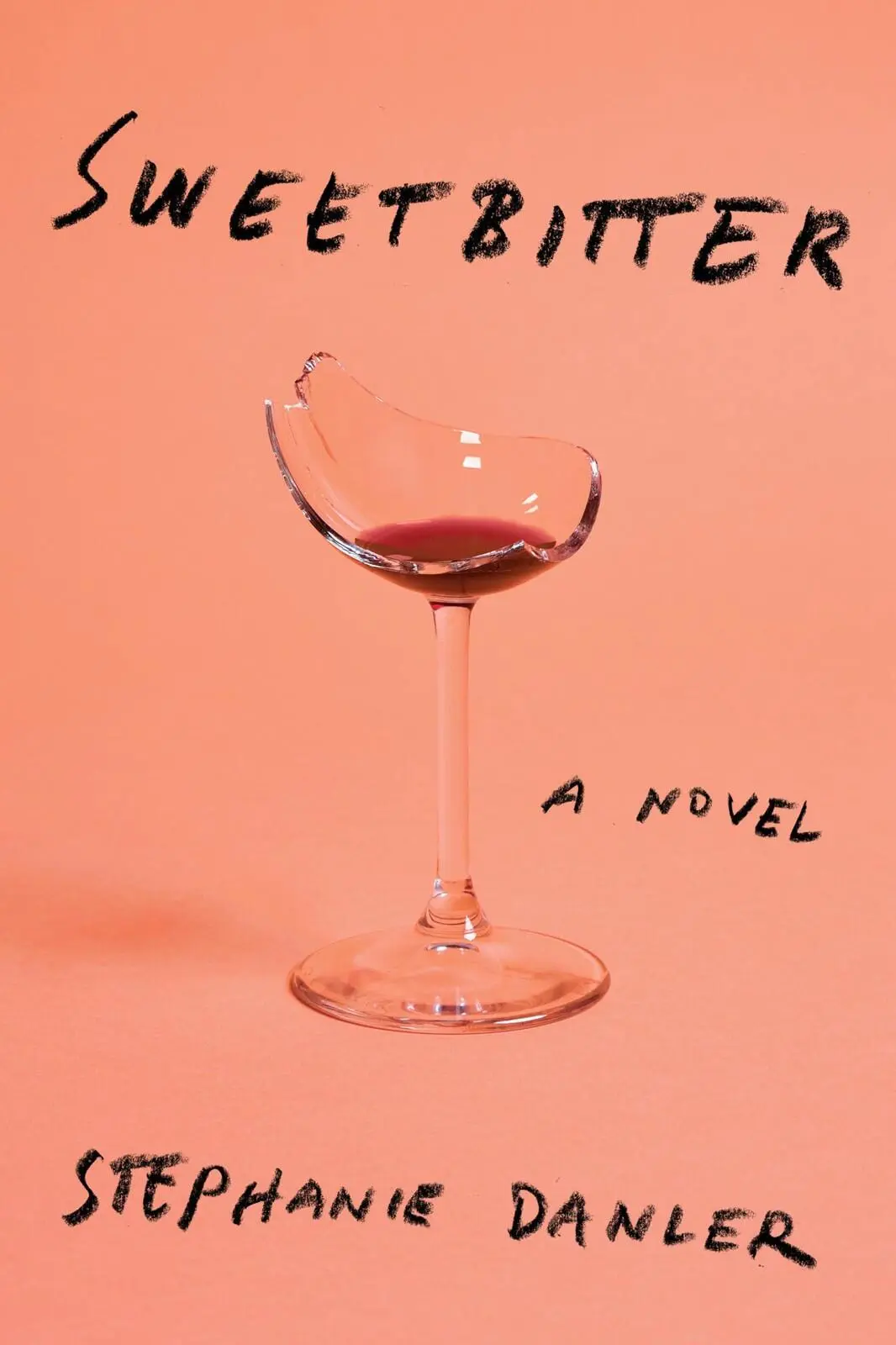
- Название:Sweetbitter
- Автор:
- Издательство:Knopf
- Жанр:
- Год:2016
- ISBN:нет данных
- Рейтинг книги:3 / 5. Голосов: 1
-
Избранное:Добавить в избранное
- Отзывы:
-
Ваша оценка:
Sweetbitter: краткое содержание, описание и аннотация
Предлагаем к чтению аннотацию, описание, краткое содержание или предисловие (зависит от того, что написал сам автор книги «Sweetbitter»). Если вы не нашли необходимую информацию о книге — напишите в комментариях, мы постараемся отыскать её.
off. Her appetites — for food, wine, knowledge, and every kind of experience — are awakened. And she's pulled into the magnetic thrall of two other servers — a handsome bartender she falls hard for, and an older woman she latches onto with an orphan's ardor.
These two and their enigmatic connection to each other will prove to be Tess's hardest lesson of all.
is a story of discovery, enchantment, and the power of what remains after disillusionment.
Sweetbitter — читать онлайн бесплатно полную книгу (весь текст) целиком
Ниже представлен текст книги, разбитый по страницам. Система сохранения места последней прочитанной страницы, позволяет с удобством читать онлайн бесплатно книгу «Sweetbitter», без необходимости каждый раз заново искать на чём Вы остановились. Поставьте закладку, и сможете в любой момент перейти на страницу, на которой закончили чтение.
Интервал:
Закладка:
We sat down in restaurants after midnight. We went to karaoke in Koreatown when Ariel wanted to sing. Ariel sang them all but her true calling was Alanis Morissette’s “Ironic.” Will sang “China Girl.” One time Jake came and I was sure he was just going to sit in the corner and break my brain, but then he stood and in a low mumble he sang “Born to Run” and I screamed like a teenager.
I could place an order at SriPraPhai with my eyes closed. Nicky knew to pour me a big glass of Pouilly-Fuissé as my first shift drink. Simone said I had a palate for “broader” whites, which to me meant they stretched across the width of my tongue. I bought myself a cashmere scarf. I was on track to making $60,000 in a year. I took a lot of cabs.
—
I WALKED ACROSS the park in numbed, clipped steps. I was going to wait for Jake at the kitschy Irish pub that none of us went to. Jake and I went there now. Paulie, the bartender, was beginning to know us. I was always cut earlier than Jake, and if I didn’t want to get dragged to Park Bar I had to leave immediately. Then I sat with Paulie and nursed a beer until Jake came. We were usually still there when the cockroaches crawled out by the beer taps. We batted them away and Paulie swung towels at them like a matador.
That night was the coldest I’d had in New York — Nicky told me he dropped his coffee on the sidewalk and it froze. He said it looked like glass. I wasn’t taking my time across the park, but I stopped when I saw Robert Raffles sleeping on a bench. Will used to buy beer and chips at the bodega to hand them off to Robert when we got on the train.
At first I didn’t think it was a person on the bench. And though I tried not to look too closely, as I walked I got the vibration of something human, and then I saw Robert’s shoes, or the duct-taped and shredded coverings on his feet that passed for shoes. I thought of the coffee on the sidewalk.
So I went and roused him. I gave him fifty dollars. I walked him to a shelter.
No. I didn’t.
I sped up to a confused shuffle and stepped past him. I told myself he was sleeping. I told myself if he was still there when I came out, I would call the police. But what would they do? Put him in a hospital? A shelter? If I gave him money, would he use it to get warm? Will said Robert had been living in the park for thirty years. He must be aware of the options, the emergency rooms, the subway stations.
I hit the far end of the park and stopped. My toes were numb, as if I were standing on ice. He was obscured by a trash can, if he was still there, or had ever been there. I ran the rest of the way to Paulie’s, my breath in frozen puffs behind me. I ran into the flat yellow light like I had been chased.
“I don’t know,” I said, “if he’s still there when I leave, I’ll do something. Maybe…actually, do you guys have any blankets? Maybe there are some blankets at the restaurant. But it’s like, on a night like tonight…” I shrugged. “It’s not a blanket kind of night, do you know what I mean?”
Paulie nodded, a small, friendly man well into middle age, light on his feet, a charming Irish accent. Exactly what you wanted in a place where shamrocks hung above the booths.
“It’s a jungle out there,” he said, filling a small beer for himself. “Kitchen’s closing — you want anything?”
“Can I get some fries? Just the basket thing.”
I wasn’t hungry. But I had cramps in my stomach, like small alarms. The fries came out damp, and took two extra doses of salt, but they were reassuring.
“Fuck,” Jake said, slamming the door behind him. “Fucking shit fuck it’s cold.”
We nodded. He pulled the stool out next to me and I felt guilty about Robert Raffles. But willingly so. It was a jungle. I had to protect my life, my bank account, my commute, my bar stool, some were cold so others could be warm, I didn’t create this system, I said, or did I every time I made those little running steps?
“Did you see Robert Raffles in the park?”
“Who?”
“Robert Raffles, the homeless guy that Will is friends with.”
“Fucking Will.” Jake grabbed two of my fries and ate them automatically. He saw that I was still looking at him, and he pressed his fingers into my temples. “No one was in the park.”
Jake slid his cold fingers down the side of my face and started to unwrap my scarf.
“I like to see your throat,” he said simply.
No one was in the park. Problem solved. I tilted my chin up when I took a sip of my beer, elongating my neck. What’s happening to me? I asked, but not out loud. He got a beer and fed me cold French fries from cold fingers until both of our cheeks turned pink.
—
SERVICE SLOWED. At the restaurant, all our affinities waxed and waned, a definite period of waning as the holidays died away and we faced an interminable amount of deaf winter. We were mean, our tones short, we developed strategies against one another, plotted downfalls, worked ourselves up over small triumphs. You could have safely assumed we hated each other.
—
VESELKA, three a.m. I was slowly but surely falling in love with the food of the Eastern Bloc, partly because I finally awoke to the fact that I was living in a city that once housed immigrants from non-Asian countries, countries of endless cold. Mostly though because the food was cheap and Jake hated spending money on food.
Bowls of borscht in front of us, nothing thin about them, a muscular, magenta soup, sticking to the spoon. Pierogi, boiled, piled with sour cream and horseradish, stuffed cabbage leaking juice into tomato broth. That was how the winter soul was fed.
When I called Jake a Marxist he said I didn’t understand the word. When I called him a proletariat, he laughed. When I fingered the holes in his wool coat that hung shapelessly to his ankles, when I pointed to the peeling soles of his boots, he laughed. Hours of my life I never got back, in the most acerbic, unsweetened days of winter, trying to make him laugh.
“I’m buying you a burka,” I told him, and he laughed again.
Initially, I didn’t bring her up. It was as if I were protecting his feelings, wanting him to think that I thought only of him when we were together. But whenever I saw a new twist in his body, a new tilt to his brows, it felt like I was being shown something that was Simone’s. It was a perverse pleasure, but the bonds between them and me were so new I just wanted to reinforce them. And eventually, one of those nights, he sat next to me and said Simone had been driving him fucking crazy, nagging him about his close. He was testing me out, and I said, “Your close is the least of your problems. Do you think Howard knows you’ve been late for every shift for six years?” He laughed. Then she was with us, invisible, benign.
“And then she tells me, ‘All you need is a knack for understanding light and shade.’ Um, what?”
“Keats again!” He shoved a pierogi into his mouth. “She can’t help it, you know. She spent so many years with these poets, she doesn’t know what’s hers anymore.”
“Her what?”
“Her words. Her thoughts. She was a poet — is a poet. I don’t know. She graduated high school at sixteen. Had a full ride to Columbia.”
“She went to Columbia?”
“She didn’t.”
“Where did she go?”
“Cape Cod Community.”
My food stuck in my throat. “No. Fucking. Way.”
“Yes, you little elitist bitch. Swallow your food.”
I swallowed. “You’re being serious.” Simone at community college, collecting her straight As, bored, silent, serious. “But why?”
“Not everyone gets the privilege of running away.” He glanced at me and relented. “Besides, she had to take care of me.”
“Simone turned down Columbia to take care of you?”
Читать дальшеИнтервал:
Закладка:
Похожие книги на «Sweetbitter»
Представляем Вашему вниманию похожие книги на «Sweetbitter» списком для выбора. Мы отобрали схожую по названию и смыслу литературу в надежде предоставить читателям больше вариантов отыскать новые, интересные, ещё непрочитанные произведения.











Обсуждение, отзывы о книге «Sweetbitter» и просто собственные мнения читателей. Оставьте ваши комментарии, напишите, что Вы думаете о произведении, его смысле или главных героях. Укажите что конкретно понравилось, а что нет, и почему Вы так считаете.