Adam Johnson - Emporium
Здесь есть возможность читать онлайн «Adam Johnson - Emporium» весь текст электронной книги совершенно бесплатно (целиком полную версию без сокращений). В некоторых случаях можно слушать аудио, скачать через торрент в формате fb2 и присутствует краткое содержание. Год выпуска: 2003, Издательство: Penguin Books, Жанр: Современная проза, на английском языке. Описание произведения, (предисловие) а так же отзывы посетителей доступны на портале библиотеки ЛибКат.
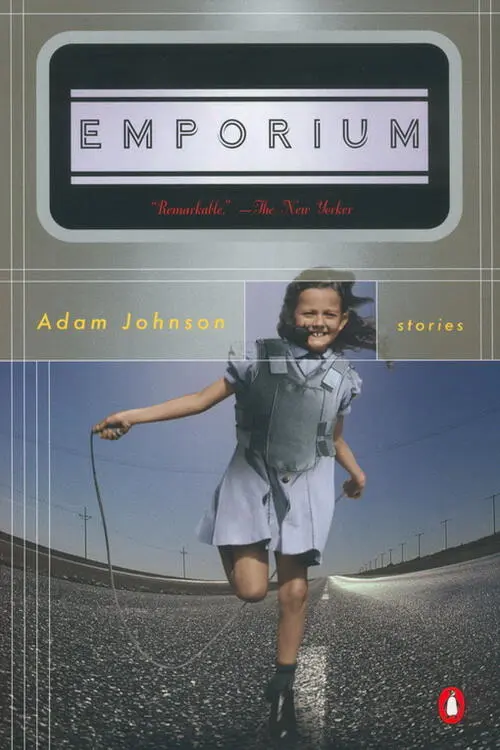
- Название:Emporium
- Автор:
- Издательство:Penguin Books
- Жанр:
- Год:2003
- ISBN:нет данных
- Рейтинг книги:3 / 5. Голосов: 1
-
Избранное:Добавить в избранное
- Отзывы:
-
Ваша оценка:
Emporium: краткое содержание, описание и аннотация
Предлагаем к чтению аннотацию, описание, краткое содержание или предисловие (зависит от того, что написал сам автор книги «Emporium»). Если вы не нашли необходимую информацию о книге — напишите в комментариях, мы постараемся отыскать её.
Emporium — читать онлайн бесплатно полную книгу (весь текст) целиком
Ниже представлен текст книги, разбитый по страницам. Система сохранения места последней прочитанной страницы, позволяет с удобством читать онлайн бесплатно книгу «Emporium», без необходимости каждый раз заново искать на чём Вы остановились. Поставьте закладку, и сможете в любой момент перейти на страницу, на которой закончили чтение.
Интервал:
Закладка:
My father will not take the check.
I’m looking at Treen, and his collarbone is right there. I am so ready to lay some jiu-jitsu on him that I start bouncing up and down on my toes. “Come on,” I tell Dad, “let’s take him out.”
“Go wait in my truck,” he tells me, and I just do what I’m told.
It’s only a minute later that my father is behind the wheel, and without really speaking, we’re driving to a gas station to buy a twelve-pack of Coors. Then we return to the job site, where we find Treen’s gone inside, the check sitting under a rock in the driveway. Here we drink in the hot cab for three hours, until sunset, looking at the blue kachina symbol painted on Treen’s garage door. It is a rainbird.
My father starts talking and he never really stops. He talks about everything, most of it I’ve never heard before, and though his mind goes all over the place, it’s like he’s only telling different parts of one big story. He tells me that when he was a boy, he had a half-wild sheepdog named Bone that killed the mayor’s son’s prize boxer in front of the Bijou Theater. He tells me I was named after his great uncle Ronald, who was rumored to have seen an angel, underwater, when he was drowning in the Atlas River — the angel said breathe the water, but Ronald knew the angel was lying. I hear that Dad enlisted in the navy on a bad impulse, and regretting it, stole a horse from a ranch in Kingman, rode into the hills to decide whether to report for service, and when he returned nine days later, no one had noticed the pony was gone. I was conceived at a drive-in feature of The China Syndrome , he tells me, a movie that kind of rattled him because it was a true story.
We sweat beer, and the adrenaline settles into a dull ache in my stomach. While Dad talks, he lets his arms hang on the steering wheel, so that it seems like we are driving to a place we know so well there is no need to watch the road. The illusion is ruined only by Treen’s head popping over our pink wall from time to time to view us with eerie concern. But my father does not seem to see him.
“You know,” my father says, “by the time I was your age, I’d made it through shark survival school, dengue fever, and a magazine fire. I’ve made it through the seven seas of the world.” He lifts his hands. “Now where am I?”
“Let’s go home,” I say.
Looking tired, he says, “I suppose,” and puts a smoke in his lips that he doesn’t light. Then he steps out of the truck, walks up the driveway, and bends down to grab the check, which he folds and puts in his shirt pocket. “I’ve got a repair job for us tomorrow, at the end of Ocotillo Street,” he says and clamps a hand on my shoulder, squeezing the way he used to when I was a kid. Then we part.
My legs are cramped when I climb into my own truck. Pulling away, I can barely work the clutch. In the rearview mirror, I see my father pausing to light his rojo before he, too, heads out. His face flares orange as he lifts the glowing lighter, smoke curls from the cab, and then comes a faint clang as his shifter finds reverse.
* * *
Loren’s house is across from the Presbyterian Youth Center, and at eight, I pull into its parking lot. Under this low cloud ceiling, the moon, if involved, casts no glow, and it is absolutely dark. The church’s perfect lawns crawl right to the asphalt, and my headlights set to glowing a row of white-trunked orange trees.
I find Loren sitting on the curb, the way her daughter might between classes. Right away, I can see she’s been crying, and when she climbs in, a shiner is clear under the dome light.
“What happened to your eye?”
“Don’t say anything, please. Jack had another relapse. Let’s just leave it.”
“Is this because of me?” I ask. “I mean, I got a look at his power thing today.”
“Don’t worry, tiger. He’s more likely to try to baptize you than kill you.”
“I’m worried about you,” I say. “I can take care of myself.”
Loren laughs once, a little too hard, and has to blow her nose.
“Look, I don’t want him to ruin this, too,” she says. “Let’s just go to the desert again. That’s all I want right now.”
I put the truck in gear and swing south toward the desert, but as soon as we hit the two-laner that crosses the Indian reservation, we get stuck behind a semi rig pulling an open trailer of onions. The papery skins snap into the wind and flutter in our headlights like snow. Our eyes water as they whip in the cab, do loops, and leave.
The onions make me sniff and tear up, but what I really feel is pissed.
“What a hypocrite,” I say. “Does he think Jesus is just going to forgive him? I wouldn’t forgive him if I were you. I say don’t do it.”
“Please,” Loren says. “Let’s just drop it.”
I can’t drop it though. I’m getting all worked up out of nowhere.
“Who does he think he is? Why doesn’t he pick on someone his own size? That’s what these Christians do, they—”
“You ever stop to think about the kind of problems you’d have to have to want to be born all over again?” Loren asks me. “I suppose other people become marines or wind up in jail. But before this church thing, Jack was raging all the time. All the time. My daughter, Cheryl, was completely out of control.”
The city lights dim with the curving road, reducing the flurry of skins to two cones of mothlike flutter in our high-beams until the highway finally divides, and we can pass the rig. It’s so dark that it’s hard to know how fast we’re going — creosote and palo verde appear in flashes, leaning over the road’s tight shoulders, and then are gone.
As I swing into the new lane, I ask, “How come you didn’t join the church? I mean, what kept you in control?”
“I can cope with lots,” Loren says, bracing a hand on the dash. “I can roll with just about anything.”
The trees start to disappear in the west, and I know we have taken up with the SanTan rail line beside us, though the only sign is the rise and fall of a purple shine that paces us in the power wires that follow the tracks.
In the dark, I find a turnoff that looks like the one we took before, but I can’t tell, and we’re pretty much committed when we hit the soft sand. We wander through a web of scrub brush, the lights casting stark shadows that wheel and bounce through all our wrong turns and back-outs.
We wallow down a dry arroyo, and the virgin desert we’d hoped for isn’t in the cards. We come to a halt before some old drums and a pile of blackened bedsprings left from a giant mattress fire. I switch off the dome light so it doesn’t blind us when we open the doors, and even making the few steps to the tailgate in such dark is like negotiating the cold ass of the moon. In the Chevy’s work bed, we make out for a while under a low sky, staticky and featureless. I scatter the tools, throwing shovels and trowels over the side, and then I peel back a plastic tarp to reveal a half ton of cool, wet sand, into which we sink our shapes like snow angels.
Loren lays her body on mine, and as our clothes come off, our breath alternates, hard, in each other’s faces. She pulls me inside her, then presses her thumb hard behind my scrotum. The feeling is deep and weird, and I am erect forever. For a while, about six degrees of the moon, I am outside of myself, I am a part of someone else, and it doesn’t feel like flying, the way you might think. It feels like landing, maybe the way a jet comes down out of the clouds, or a ship steams all the way around the world and finds its slip.
I drop her off in the church parking lot, rolling in with my headlamps off. Across the street, instead of seeing the green-black Chevelle in the driveway, the garage door is open, with all the lights on, and we make out the distant figure of Jack, leaned-back on an incline bench, smoking a cigarette with one hand while his whole other arm soaks in an orange cooler.
Читать дальшеИнтервал:
Закладка:
Похожие книги на «Emporium»
Представляем Вашему вниманию похожие книги на «Emporium» списком для выбора. Мы отобрали схожую по названию и смыслу литературу в надежде предоставить читателям больше вариантов отыскать новые, интересные, ещё непрочитанные произведения.











Обсуждение, отзывы о книге «Emporium» и просто собственные мнения читателей. Оставьте ваши комментарии, напишите, что Вы думаете о произведении, его смысле или главных героях. Укажите что конкретно понравилось, а что нет, и почему Вы так считаете.