Svetislav Basara - The Cyclist Conspiracy
Здесь есть возможность читать онлайн «Svetislav Basara - The Cyclist Conspiracy» весь текст электронной книги совершенно бесплатно (целиком полную версию без сокращений). В некоторых случаях можно слушать аудио, скачать через торрент в формате fb2 и присутствует краткое содержание. Год выпуска: 2012, Издательство: Open Letter, Жанр: Современная проза, на английском языке. Описание произведения, (предисловие) а так же отзывы посетителей доступны на портале библиотеки ЛибКат.

- Название:The Cyclist Conspiracy
- Автор:
- Издательство:Open Letter
- Жанр:
- Год:2012
- ISBN:нет данных
- Рейтинг книги:4 / 5. Голосов: 1
-
Избранное:Добавить в избранное
- Отзывы:
-
Ваша оценка:
The Cyclist Conspiracy: краткое содержание, описание и аннотация
Предлагаем к чтению аннотацию, описание, краткое содержание или предисловие (зависит от того, что написал сам автор книги «The Cyclist Conspiracy»). Если вы не нашли необходимую информацию о книге — напишите в комментариях, мы постараемся отыскать её.
Masterfully intertwining the threads of waking and dreams into the fabric of the present, the past, and the future, Svetislav Basara’s Pynchon-esque The Cyclist Conspiracy is a bold, funny, and imaginative romp.
The Cyclist Conspiracy — читать онлайн бесплатно полную книгу (весь текст) целиком
Ниже представлен текст книги, разбитый по страницам. Система сохранения места последней прочитанной страницы, позволяет с удобством читать онлайн бесплатно книгу «The Cyclist Conspiracy», без необходимости каждый раз заново искать на чём Вы остановились. Поставьте закладку, и сможете в любой момент перейти на страницу, на которой закончили чтение.
Интервал:
Закладка:
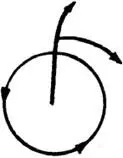
I have to admit that nothing was clear to me. No matter where he went it was possible to connect the dots. And what of that? I told Holmes that, no matter how much I appreciated his brilliant insight, this time there was no crime behind the acts of the maniacal cyclist.
“You are wrong,” Holmes said. “Look more closely. The circle around Trafalgar square, what is that if not the front, large wheel of a bicycle; this was followed by the incident in Carnaby Street, that’s the steering column; the next incident — that’s the beginning of the bicycle frame. My dear Watson, our cyclist wishes to draw an enormous bicycle with his movements and his shooting.”
At that moment, someone rang at the door. It was one of Lestrade’s men, who handed Holmes a letter.
Dear Holmes,
The cyclist has struck again. This time in Abbey Road. He shot at a clock and vanished in an undetermined direction. This case is becoming serious.
Lestrade
“He did not disappear in an undetermined direction,” said Holmes. “Indeed, I can show you with certainty the place where the cyclist will appear on the morrow.”
And with that, Holmes marked another place on the map of London.
Despite Lestrade’s efforts, the affair appeared again in the papers, on the front page, no less. The case from the day before was given in detail. The cyclist was described as a gaunt fellow wearing a hood. In addition, at the bottom of the page, there was the latest news: the bicyclist had been at it again. I suppose it is unnecessary for me to say that he showed up at the place where Holmes had indicated on the map the day before.
“You’re hiding something from me,” I told him.
“No, Watson. I’m not hiding anything. In other words, I still don’t have anything to hide.”
Then he smiled cryptically.
“You see, tonight the cyclist will appear here, make a round and thus complete the silhouette of a bicycle on the streets of London.”
“And we will be waiting for him there and capture him,” I added.
“Far from it, Watson. Far from it. That’s exactly what our cyclist is expecting.”
It was only then that my confusion was complete. If Holmes is right, I thought, then the cyclist is indeed a psychopath. It is impossible for a man in his right mind to break the law in order to be caught.
“But no, my dear Watson. The cyclist is certainly not a psychopath. I would rather say that he is a member of a well organized criminal group. Now it is time for me to reveal the secret to you: all of London is abuzz with the affair of the cyclist. The police have turned their complete attention to him, which is reasonable because public opinion has been aroused. The cyclist will appear tonight at the place where we expect him to, but we will not be there.”
“I don’t understand.”
“The cyclist and his cohorts have not forgotten my acquaintance with Lestrade and my cleverness. Quite correctly they have assumed that I will discover that the cyclist wants to draw attention to the pattern of his movements. But, I must say, they have underestimated me.”
“What do you mean?”
“They thought I would appear tonight to arrest the cyclist who, this evening anyway, will not be the one who has been doing the shooting, but a hired layabout. Nothing could be farther from my mind. Tonight, my dear Watson, we will be with our friend Lestrade at the Gibson Gallery.”
“The Gibson Gallery?”
“Yes. There is an ongoing exhibition of diamonds, among which is the Great Sari. The Gibson Gallery is not far from the place where the cyclist first appeared. Now do you realize…”
It was only then that all the pieces fell into place of this cleverly planned crime. Lured by the cyclist, we were supposed to rush to the opposite side of town while the thieves robbed the Gibson Gallery undisturbed.
I took my revolver, and Holmes took his hunting knife, his weapon of choice. Then we called a cab.
“Incredible,” inspector Lestrade said as we waited, hidden in a broom closet, for the robbers to appear. “I never would have guessed that they are so clever.”
“Inspector,” said Holmes, “you should never forget that criminals also stay in step with times. That’s why it is important for us to stay one step ahead of the times.”
We stood there in the closet for quite a while. How long, we could not even guess, because in the absolute dark our watches were useless. Then someone knocked on the door and we all jumped. It was just one of Lestrade’s men.
“Inspector,” he said, “I’m afraid that we’ve been waiting here for no reason. They just reported that the cyclist appeared in a different place. He’s been riding around all night like crazy, shooting at clocks.”
“Give me a list of the places where he showed up,” Holmes demanded, visibly disturbed for the first time.
Back home (and I should note that we did not utter a word during the ride), Holmes unfolded the map of London and dotted in the cyclist’s latest movements. We were looking at a nonsensical drawing. Something like a cross was sticking up from the handlebars.
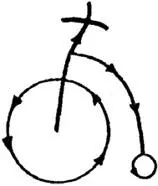
“The Devil take it, Watson, it seems like you and Lestrade were right after all. The chap must be a psychopath.”
Holmes had already composed himself. In no way did he show that he was upset by the fact that his predictions had not come true. Soon after he retired into his room, from where the warm notes of a serenade could be heard.
The next day, he left for Sussex.
SIGMUND FREUD. THE CASE OF ERNEST M
In the pages that follow, I will present an example of a subject who withdrew into the world of dreams, and of the personality split that resulted. The patient, Ernest M., was admitted to Professor Breuer’s clinic after he took a meat mallet and broke all the clocks in the house, then hit his mother with the same object, inflicting serious injury on her. After thirty days of hospitalization, Ernest seemed to be completely healthy, but was also slightly depressed; his mother insisted that the young man be psychoanalyzed and Professor Breuer, knowing that I was working on the book The Interpretation of Dreams , recommended to me in a letter that I study Ernest’s case.
From the patient’s history, I learned that Ernest M. was left without a father early on. He grew up in the home of his maternal grandfather, a strict but fair man, with strong Calvinistic principles. At no time in his childhood did Ernest M. display abnormalities or signs of psychological instability. According to the words of his mother, Mrs. M., he was a completely normal young man, enjoying his friends and entertainment, but also regularly fulfilling all his obligations; he played the violin and was a member of a hiking club. However, at the end of the first year of his studies, Ernest M. suddenly imagined that he was a member of a mystical sect whose followers met in their sleep. Mrs. M. discovered this quite by accident; while cleaning her sons’ room, she found a file containing written portions of poems, texts, and instructions, among which — and this caused the greatest doubt — was also a text ordering the assassination of Archduke Franz Ferdinand. This happened in 1928 — a full fourteen years after the unfortunate misdeed was carried out in Sarajevo. Mrs. M. gave me the abovementioned notebook, from which I offer two stanzas that are significant for psychoanalysts:
1.
When you fall asleep, die
Читать дальшеИнтервал:
Закладка:
Похожие книги на «The Cyclist Conspiracy»
Представляем Вашему вниманию похожие книги на «The Cyclist Conspiracy» списком для выбора. Мы отобрали схожую по названию и смыслу литературу в надежде предоставить читателям больше вариантов отыскать новые, интересные, ещё непрочитанные произведения.












Обсуждение, отзывы о книге «The Cyclist Conspiracy» и просто собственные мнения читателей. Оставьте ваши комментарии, напишите, что Вы думаете о произведении, его смысле или главных героях. Укажите что конкретно понравилось, а что нет, и почему Вы так считаете.