Natashia Deon - Grace
Здесь есть возможность читать онлайн «Natashia Deon - Grace» весь текст электронной книги совершенно бесплатно (целиком полную версию без сокращений). В некоторых случаях можно слушать аудио, скачать через торрент в формате fb2 и присутствует краткое содержание. Год выпуска: 2016, Издательство: Counterpoint, Жанр: Современная проза, на английском языке. Описание произведения, (предисловие) а так же отзывы посетителей доступны на портале библиотеки ЛибКат.
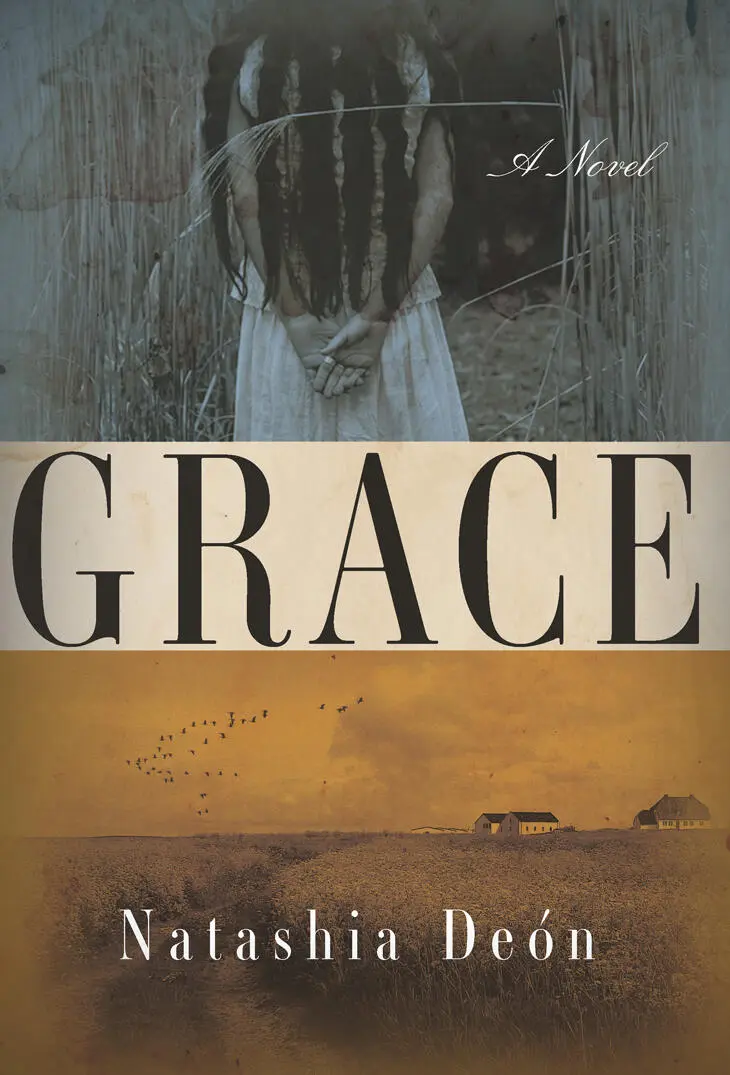
- Название:Grace
- Автор:
- Издательство:Counterpoint
- Жанр:
- Год:2016
- ISBN:нет данных
- Рейтинг книги:5 / 5. Голосов: 1
-
Избранное:Добавить в избранное
- Отзывы:
-
Ваша оценка:
Grace: краткое содержание, описание и аннотация
Предлагаем к чтению аннотацию, описание, краткое содержание или предисловие (зависит от того, что написал сам автор книги «Grace»). Если вы не нашли необходимую информацию о книге — напишите в комментариях, мы постараемся отыскать её.
The product of Naomi and Jeremy’s union is Josey, whose white skin and blonde hair mark her as different from the other slave children on the plantation. Having been taken in as an infant by a free slave named Charles, Josey has never known her mother, who was murdered at her birth. Josey soon becomes caught in the tide of history when news of the Emancipation Proclamation reaches the declining estate and a day of supposed freedom quickly turns into a day of unfathomable violence that will define Josey — and her lost mother — for years to come.
Deftly weaving together the stories of Josey and Naomi — who narrates the entire novel unable to leave her daughter alone in the land of the living—
is a sweeping, intergenerational saga featuring a group of outcast women during one of the most compelling eras in American history. It is a universal story of freedom, love, and motherhood, told in a dazzling and original voice set against a rich and transporting historical backdrop.
Grace — читать онлайн бесплатно полную книгу (весь текст) целиком
Ниже представлен текст книги, разбитый по страницам. Система сохранения места последней прочитанной страницы, позволяет с удобством читать онлайн бесплатно книгу «Grace», без необходимости каждый раз заново искать на чём Вы остановились. Поставьте закладку, и сможете в любой момент перейти на страницу, на которой закончили чтение.
Интервал:
Закладка:
I say, “Cynthia, I don’t have to read it.”
“She didn’t know much about nothing. Was just like you when you came.”
“Cynthia. .”
“Some women hid Shakespeare, mine had Fanny Hill. Wasn’t her choice. A pauper gave it to her and Momma didn’t know no better. It’s all she had for literature. Pornographic novels have story, too. So don’t judge her. It gave her permission, I think, to write what she did.”
“You giving me pornography to read?”
“That ain’t what I said. I said my momma’s a saint.”
She puts the diary in my hand.
I don’t want to read it.
I sit with it on my lap, then open it slowly, turn it to the creased page halfway in and start reading it to myself.
21 October 1818
Dear Diary,
I fear I am with child.
For a bundle of rags — I am.
But I want to remember. Recall every moment of the happening so as to never forget what happiness feels like.
I was drying my hair when the rag salesman rattled my door. I should have covered my head but I did not. It had been a long time since we welcomed company here, over a year since we settled, the first time I had been alone in our home for so long — just over a fortnight.
He stood behind the haze of my screen wearing his out of place business suit, his silly smile, and his almost ugly face, saved only by his pretty blue eyes.
Just twenty-five cents, he said, and pulled from his leather bag a bundle of thick pink cloths.
I opened my screen door though I’d already decided his fee was thievish. But I thought my husband and I could have used some color, some softness, to make us alive again so I agreed he could attempt to sway me.
After a moment of salesmanship, I bent over to look into his bag and — I’m almost ashamed to say, but — I smelled him. Not on purpose, but — I did. Maybe my inhale was, at first, a sigh but I certainly breathed him in and smelled him fresh like jasmine.
I sorted through his bag pretending not to notice, chose the fluffy yellow bunch and smiled. He said, pure cotton.
I liked the sweet smell of his breath. It was not like my husband’s — whiskey laden and cigar stale. His was like honey, his lips full, drawing me in too long. He touched my chin and told me I was pretty.
I dropped his rags and told him I was married. He said he understood and asked if he could show me how well his rags dry. He unfolded a gold one from behind the fastened compartment of his bag. He touched it to my damp hair.
He dried it slowly while I watched his hands squeeze down the length of my brown hair and near my breast. I did not pull away when his slender fingers returned to my cheek, grazing it. . and again. I closed my eyes. Felt the hairs on my cheek rise from his strokes and hold themselves there after his pass. My head rested on his hand.
I allowed him to step through my door and felt the hard and soft of him brush by me. In an instant, he woke the whole of my body.
I closed the solid door and waited there. He dropped his bag, pushed me against the wall. His lips were as sticky-sweet as they promised.
But I had to stop him, told him I could not. He said he understood, adjusted himself and picked up his bag. He said he knew what I needed, said, “I can be your first.”
I had been married since I was thirteen, I told him, ten years since my wedding night — he was too late to be first at anything. I put my hand on the doorknob, ready to pull it open when he took my other hand and kissed it like a gentleman’s good-bye.
When he raised his head from my hand, I was captured by the bliss of his baby blues.
In my hesitation, he pushed me against the door, his tongue pressing on mine, then he released me, asked if I still wanted him to go.
In one motion, I lifted his shirt over his head, let him tear my dress, pressed my body against his, and I crawled up him ’til my legs were tethered around his waist; my backside seated in his hands. His trousers fell away.
I let go of my grip around him, rested my feet gently on the ground, his hand cupped between my legs, my pantaloons the only barrier between us. He tore up their seams, from my knees to the crotch, slid his thumb along the ridge of the torn material at the top of my thighs, dragged what was left of it, over to the side, feeling me wet. I wanted him to touch me again.
His weight on my body was light, his kisses like bites. He ran two fingers between my legs and inside me, tapped my warm spot in short pulses. Felt myself engorge.
My hips found his, surrounded him inside me, his size stretching me to my potential. Suddenly, a pure pleasure paralyzed me and I clinched down around him, my eyes wide, my body releasing everything in this world that’s lovely.
I let it happen once more. And again. The third time, we finished together, rocking in each other’s laps.
I fold the diary closed and say to Cynthia, “I’m sorry.”
“Did you get to July, yet?” she say. “I was six years old.”
“I’ve read enough.”
“Just read July.”
“No. . that’s all right.”
“July,” she say, nudging the book.
I open it again, slump down in my seat, flip through the pages.
8 July 1825
Dear Diary,
More and more my good husband has remarked that our child doesn’t favor him — But of course not, she looks like me, I tell him. At seven years old, her features are still developing.
I don’t think he believes me.
He spent most of last month with varying versions of the same accusation. “We all look alike in my family,” he said. “Men in my family can only have boys.” So I asked him who he thought his sister belonged to? He slapped me — deservingly — I told him I meant that anything was possible and maybe being out here, detached from our community, has put us both on edge.
I think my good husband prefers to keep me isolated. Only in the fall does he allow me to go into the heart of Charles Towne, the nearest temple, for the Days of Awe and occasionally to teach children in return for good favors from the congregation. He is committed that way — he is. But otherwise, he manages his hidden affairs out of their sights, except in those days when he allows everyone to see I am fine.
Today, he told me our child has an “independent spirit” like no woman in his family. I told him, maybe she has mine. But that only confused him because he does not know me. Not even after nineteen years. He thinks he does, but he does not.
Then yesterday, he asked me the question that prompted this entry. “Why in thirteen years of trying had you never been pregnant before? Or since?”
I told him I’d prayed and he should not question a gift that God has seen fit to give.
He stopped asking questions.
I close the book again, this time for good, and hand it back to Cynthia, say, “It must’ve been hard for you not knowing your daddy. White folks tend to know.”
“You’re missing the point,” Cynthia say, opening the diary to the back pages and pulling out a loose piece of folded paper. She unfolds it and hands it to me but I won’t take it. I tell her, “I won’t read no more.”
She draws it back in and starts reading out loud. “‘Seventeenth of September, Eighteen Hundred and Thirty.’ I was eleven.”
Dear Diary,
I am writing to you on this piece of torn-out paper because the good husband found you. He was sitting in the outhouse, taking too long, when I found it missing. He had been reading page after page of my life, taking the shortcuts to secrets he has not bothered to learn from me. Thank God he started from the beginning, our fifth anniversary. When I ripped it away from him he only knew enough to ask, “Who’s this rag salesman? And what happened when he came to our door worth writing about?”
Читать дальшеИнтервал:
Закладка:
Похожие книги на «Grace»
Представляем Вашему вниманию похожие книги на «Grace» списком для выбора. Мы отобрали схожую по названию и смыслу литературу в надежде предоставить читателям больше вариантов отыскать новые, интересные, ещё непрочитанные произведения.








Обсуждение, отзывы о книге «Grace» и просто собственные мнения читателей. Оставьте ваши комментарии, напишите, что Вы думаете о произведении, его смысле или главных героях. Укажите что конкретно понравилось, а что нет, и почему Вы так считаете.