Natashia Deon - Grace
Здесь есть возможность читать онлайн «Natashia Deon - Grace» весь текст электронной книги совершенно бесплатно (целиком полную версию без сокращений). В некоторых случаях можно слушать аудио, скачать через торрент в формате fb2 и присутствует краткое содержание. Год выпуска: 2016, Издательство: Counterpoint, Жанр: Современная проза, на английском языке. Описание произведения, (предисловие) а так же отзывы посетителей доступны на портале библиотеки ЛибКат.
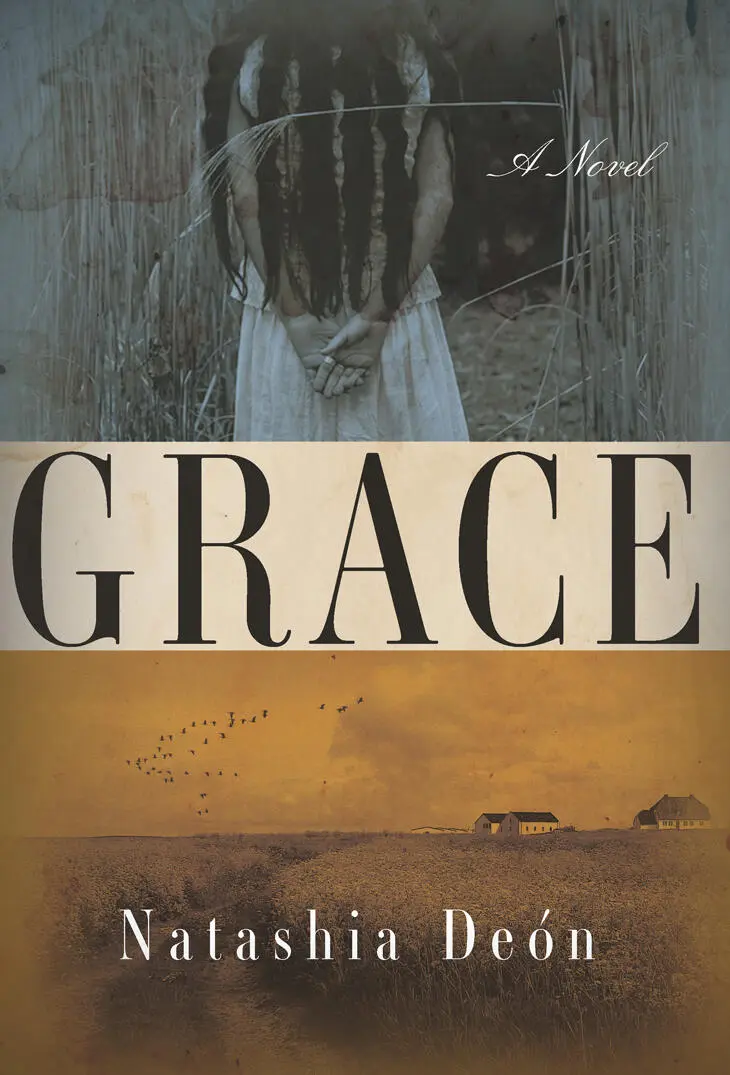
- Название:Grace
- Автор:
- Издательство:Counterpoint
- Жанр:
- Год:2016
- ISBN:нет данных
- Рейтинг книги:5 / 5. Голосов: 1
-
Избранное:Добавить в избранное
- Отзывы:
-
Ваша оценка:
Grace: краткое содержание, описание и аннотация
Предлагаем к чтению аннотацию, описание, краткое содержание или предисловие (зависит от того, что написал сам автор книги «Grace»). Если вы не нашли необходимую информацию о книге — напишите в комментариях, мы постараемся отыскать её.
The product of Naomi and Jeremy’s union is Josey, whose white skin and blonde hair mark her as different from the other slave children on the plantation. Having been taken in as an infant by a free slave named Charles, Josey has never known her mother, who was murdered at her birth. Josey soon becomes caught in the tide of history when news of the Emancipation Proclamation reaches the declining estate and a day of supposed freedom quickly turns into a day of unfathomable violence that will define Josey — and her lost mother — for years to come.
Deftly weaving together the stories of Josey and Naomi — who narrates the entire novel unable to leave her daughter alone in the land of the living—
is a sweeping, intergenerational saga featuring a group of outcast women during one of the most compelling eras in American history. It is a universal story of freedom, love, and motherhood, told in a dazzling and original voice set against a rich and transporting historical backdrop.
Grace — читать онлайн бесплатно полную книгу (весь текст) целиком
Ниже представлен текст книги, разбитый по страницам. Система сохранения места последней прочитанной страницы, позволяет с удобством читать онлайн бесплатно книгу «Grace», без необходимости каждый раз заново искать на чём Вы остановились. Поставьте закладку, и сможете в любой момент перейти на страницу, на которой закончили чтение.
Интервал:
Закладка:
He looks around his shop one-eyed. A line of gray puss is caught on his lashes joining the top and bottom together. He starts huffing and crying.
I say, “I been keeping it clean for you. I plan to do more sewing and hemming work from Cynthia and maybe when you’re healed, you can show me how to do what you do. Make pretty metal. Don’t matter I’m a girl.”
He blinks once, then shakes his head, a little, then forces words out even though he promised not to. “I don’t need no more of your help,” he say.
“Stop talking. You gon’ crack your face and get the infection.”
“You don’t owe me nothing,” he say, his words cracking the skin at his temples. Blood starts running down the side of his face.
Damn.
39/ 1870, Tallassee, Alabama
I BELIEVE IN REDEMPTION.
And Tallassee, Alabama, is redeeming herself, making the bad things that happened here better. Greening it over with her vines folded into walking paths, and climbing them up tall and wide things, erasing the brown of dirt and dead with the living. Full trees and bushes are crowding open skies, turning once-blue spaces to shade. Everything around her is coming back. Sagging limbs and leafs of many kinds — square and round, prickly and straight — are weighty on her branches like jewelry. Her mosses are furs. Tallassee is finding her way. Reclaiming her land. There’s no one to cut her to pieces or temper her spirit now. Five years since freedom, just over four since my grandbabies birth, and now benches and tools are swallowed by her rising tide. Fence posts and garden statues consumed. Redemption is taking place. It’s what happens to a plantation with no slaves. Where there were once fifty bodies and a hundred hands, there are now only four — two hands for Norah and two for Gwen. They’re sharecroppers who used to be slaves and still live on this plantation but get paid with crops and are free to leave.
It’s her time and Tallassee don’t owe nobody nothing.
I follow Josey through her, along a double-wide path worn by possums and prey. Possums, ’cause don’t nothing eat possums but people. Possums have nothing to fear ’til it’s too late.
Josey fast-walks beneath low-hanging branches that have grown back since Jackson’s ax last touched ’em. Their shade makes darkness here now. They’re only cut by white-tailed deer in winter while they’re shedding their antlers for summer horns. In the end, those horns’ll look like the unclenched hand bones of giants.
Josey keeps her head down, pushing forward past pine. She’s got paper stamps hanging out the side of her shoe that she’ll use at market to pay for food. The drought here has lasted too long.
She still got Charles’s three coins that he left her with before he went. She won’t spend it. She’s made her own money trading stamps for things she make with cotton — socks and under clothes. Cotton is everywhere and the cost is free.
A family of wild turkeys spur Josey’s children — almost five now — to get up the path faster, chasing stick legs as they windmill beneath puffy balls of feathers.
The children don’t look like twins.
They are as close looking as two strangers could be. Rachel’s milk-white skin and mousy blonde hair are Josey’s, but Squiggy’s browner like Jackson but with golden-brown eyes and his hair made of big loops of shiny copper.
And he’s slow-learning.
What Squiggy can do puts him about two years behind where he should be. Two years behind Rachel. She stood up to walk before one years old while Squiggy was still scooting at three.
He was just a month old when he started showing signs of his lag-behind. He wouldn’t move his head from one side to the other, or move his body the way Rachel would. And when Josey would lay him on the floor, his legs would splay open like a dead frog. Was mostly expressionless except for the two times he smiled. His limbs would just hang down when she held him. He wouldn’t lift a fist to rub a eye or a cheek, but Rachel would punch your neck from stretching.
He seemed lifeless, but he was breathing, and got so behind in the things Rachel could do easy. There was only one conclusion: “Will he look retarded?” Josey asked herself. Not because she didn’t love him but because she knew what he’d be up against.
THE FAMILY OF wild turkeys escaping the children get swallowed by the brush off the side of the road except for one lone turkey crossing behind Squiggy. Its face is featherless, bright red and puckered blue. A pouch of extra red skin hangs under its neck like a man’s saggy parts. Squiggy goes after it in a clumsy walk. Don’t know how to run yet. Then Rachel goes behind him, slower than she could because she wants to let him catch it and feel a victory. She and Josey have done most things for Squiggy all his life. They’re used to picking him up and walking for him and taking turns talking for him. Josey’ll chew his food to keep him from choking to death on a weak swallow. He always smiles on his own, though. And his good kisses are puckerless.
Josey passes the children up the path, then under an arch of tree branches and over grounded chicken feathers to meet the main road. Sunlight pours over the east field of the Graham plantation — Annie’s new farm store. The Market.
Her children fall behind and that’s good. It’s about time she let ’em go. They’ve already healed her. Some children are born to heal us. To heal the holes we thought were forever or heal the holes we didn’t know we had. Josey’s sickness ebbed because of Squiggy and Rachel. They needed her. Especially Squiggy. And Josey stopped cutting when she decided that his suffering was more important than hers.
When he was born, she didn’t lay him down on his own for months. She carried him in a sheet tied over her neck and it kept him taut against her body because she knew something was wrong with her baby. He was limp like I told you, and when she saw how his muscles were weak, she thought his heart might be weak, too. That maybe it would forget to beat. Maybe his lungs forget to breathe. She wanted him to feel her close, wanted him to mimic her body’s moves. Breathe like she breathed. Beat like she beat. And if God were to take him, he wasn’t gonna die alone like them babies who were laid down for a nap and let go.
“You crazy!” Sissy would tell her.
But some crazy is instinct.
Loud chatter and crowds drown Annie’s market. Rolling wagons leave welts in the grass. A group of children chase a dog under a wagon and through tents. Negro sharecroppers put food baskets on carts same as whites. Two buyers slouch next to a basket sorting collards and cucumbers, figs and something red.
Business is good for Annie. Like Tallassee, she’s growing back, too. Husbandless. Annie don’t say it, but her smile is proof. She rests atop her tan horse — biggest around — watching from behind the sidelines, pleased with what she made, a market for anyone to buy or sell or give free to anyone who needs it.
Josey wanders through the market, unnoticed by Annie, touching onions and ripe okra. She stops at a brown bag of sugar. Her babies can’t eat that. But when they get here, sweets will be the first thing they beg for.
Bantam chickens outnumber the children here. There’re little hens and chickens running around the whole of this market and through the streets. Annie bought two — a boy and a girl — a while back and now fifty of ’em are running all over this place. All her neighbors including negroes got bantams now. Josey and Sissy don’t, though. Chickens too spooked to wander that way and into the darkness of unkept Tallassee. She’s wild.
I cross the main road and back through the gap to the footpath to find my two grandchildren, taking too long. Rachel and Squiggy are laughing as Squiggy pulls hisself out and over the gutter at the side of the road. Rachel’s behind him holding that turkey prisoner.
Читать дальшеИнтервал:
Закладка:
Похожие книги на «Grace»
Представляем Вашему вниманию похожие книги на «Grace» списком для выбора. Мы отобрали схожую по названию и смыслу литературу в надежде предоставить читателям больше вариантов отыскать новые, интересные, ещё непрочитанные произведения.







Обсуждение, отзывы о книге «Grace» и просто собственные мнения читателей. Оставьте ваши комментарии, напишите, что Вы думаете о произведении, его смысле или главных героях. Укажите что конкретно понравилось, а что нет, и почему Вы так считаете.