Natashia Deon - Grace
Здесь есть возможность читать онлайн «Natashia Deon - Grace» весь текст электронной книги совершенно бесплатно (целиком полную версию без сокращений). В некоторых случаях можно слушать аудио, скачать через торрент в формате fb2 и присутствует краткое содержание. Год выпуска: 2016, Издательство: Counterpoint, Жанр: Современная проза, на английском языке. Описание произведения, (предисловие) а так же отзывы посетителей доступны на портале библиотеки ЛибКат.
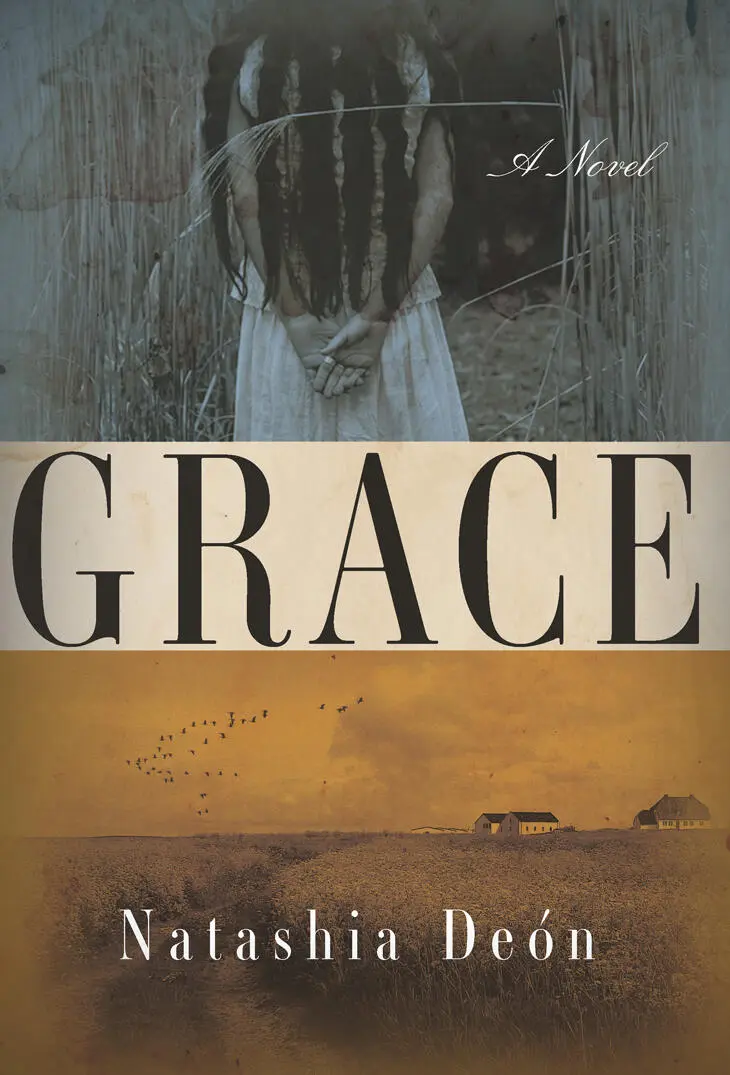
- Название:Grace
- Автор:
- Издательство:Counterpoint
- Жанр:
- Год:2016
- ISBN:нет данных
- Рейтинг книги:5 / 5. Голосов: 1
-
Избранное:Добавить в избранное
- Отзывы:
-
Ваша оценка:
Grace: краткое содержание, описание и аннотация
Предлагаем к чтению аннотацию, описание, краткое содержание или предисловие (зависит от того, что написал сам автор книги «Grace»). Если вы не нашли необходимую информацию о книге — напишите в комментариях, мы постараемся отыскать её.
The product of Naomi and Jeremy’s union is Josey, whose white skin and blonde hair mark her as different from the other slave children on the plantation. Having been taken in as an infant by a free slave named Charles, Josey has never known her mother, who was murdered at her birth. Josey soon becomes caught in the tide of history when news of the Emancipation Proclamation reaches the declining estate and a day of supposed freedom quickly turns into a day of unfathomable violence that will define Josey — and her lost mother — for years to come.
Deftly weaving together the stories of Josey and Naomi — who narrates the entire novel unable to leave her daughter alone in the land of the living—
is a sweeping, intergenerational saga featuring a group of outcast women during one of the most compelling eras in American history. It is a universal story of freedom, love, and motherhood, told in a dazzling and original voice set against a rich and transporting historical backdrop.
Grace — читать онлайн бесплатно полную книгу (весь текст) целиком
Ниже представлен текст книги, разбитый по страницам. Система сохранения места последней прочитанной страницы, позволяет с удобством читать онлайн бесплатно книгу «Grace», без необходимости каждый раз заново искать на чём Вы остановились. Поставьте закладку, и сможете в любой момент перейти на страницу, на которой закончили чтение.
Интервал:
Закладка:
“The night of, I went to my celebration in Cynthia’s dress, painted my face like hers, my hairstyle, hers. And I did a dance that my father will never forget. I was Cynthia.
“By the end of the week, my father had arranged for me to marry a farmer. An old man. My father wanted him to take me away, thought he could save me but it was already too late. I was already lost to her. So on my wedding day, I begged Cynthia not to let that old man take me.
“We ran off together, Cynthia and I. Took with us everything her dead father had left. She spent every penny of it to buy that brothel and to send me to a school for girls just east of here. See, she thought she could save me, too.”
Soledad slouches lazy in her chair. “She should have never taken me.” She lifts her tired eyes to me and say, “I don’t know what she sees in you.”
I don’t say nothin.
“We was lovers. She tell you?” Her breath wafts across the table, strong as onions but smells rotten, turned sour by the liquor. It makes me sick to my stomach.
“May I have some water?” I say.
“Cynthia could never love nobody but herself, Naomi. I don’t care how perfect you say you two are. Isn’t that what you’re saying?”
I shake my head.
“She saved your life! Took you in. Cared for you with her own son. Isn’t that perfect? Funny how somebody can do one wrong thing and suddenly all of the good they’ve ever done is wiped away that minute.” She stands up and pushes her chair in, takes her glass with her to the kitchen, and pours water from a pitcher into it. When she comes back, she sets it in front of me. I drink the water, taste her gin mixed in it.
“You look feverish,” she say, and sits across from me. “Puffy around the jowls.”
I cough in my water, put my glass down.
She eases back in her chair. “I finally got away from her,” she say. “I married Mr. Shepard. He’s a good man but you don’t always know everything about a person when you marry. You want another water?”
“No, thank you, ma’am.”
“Are you saved?”
“Saved, like being a Christian, saved? Yes, ma’am.”
“What scriptures do you know?”
“The Lord is my. .”
“What does John 1:1 say?”
I can’t remember that verse.
“‘In the beginning was the Word,’” she say, “‘And the Word was with God, and the Word was God.’ Romans 6:23?”
I shake my head.
She leans into me and say, “‘For the wages of sin is death.’ Death is the punishment for sin, Naomi. You can’t be saved if you don’t know the Word.” She kneels to the floor and sweeps the fallen pieces of tortilla into her hand, starts praying from there. She stops and looks up at me, and say, “I don’t think I have a bed for you tonight, after all. Since you already have a place with Cynthia in your own bed, I think you should stay there.”
I slide the blanket from my shoulders. “Yes’m,” and get up for the door. When I get there, I turn around to thank her for the food but she’s already got eyes on me.
“Look at you,” she say. “Cynthia doesn’t love you any more than she does me.”
I reach for the knob.
“And, Naomi? No more messengers with orange stripes on their satchels will be coming to your door.”
I let myself out.
34/ JUNE-NOVEMBER 1865, Tallassee, Alabama
I STAYED BESIDE ’EM, Jackson and Josey, as their wagon rocked from side to side, bumping over weak stones making gravel. Charles had tied a yellow ribbon above the back wheels to mark a special day — their wedding made in freedom. It meant they could own their coming babies now. And each other, never parted.
Charles stood with his hand in the air behind them as their wagon rode away. His good-bye faded the further we got away from him, ’til finally he disappeared. Not because he left that spot, I imagine, but because our wheels kept churning. He probably stood there another two days a statue, perched on the edge of his empty nest.
Josey lowered herself down into her seat and hid on the wagon’s floor with her forehead laid on her arm like a child’s counting game while the trees seemed to walk toward us. Their shadows casted themselves across us, staining and restaining us gray with colored-in outlines of leaf bouquets.
We rolled over short hills separating the slaves’ quarters from the Graham plantation house. The house’s white face rose and its windows were like eyes watching us. The broken shutters hung off ’em like the saggy lids of an old man. We veered right at the bottom of the road and the trees around us thickened and our path thinned. This is the way to our new home. Two miles of road patterned after the scribble of an unsteady hand drawing a half circle. Less than a mile in a walking beeline.
Our final slow roll led us into the yard. A place Josey and I had been before, long ago with Ada Mae. The drowned dead garden and worn steps of the house were still there. No longer just the witch’s house. This was ours now.
Jackson started cutting a path out front of the house the morning after they’d first arrived a month ago. It’s wide enough now for no tree, no shadow, no nothing to come near Josey. It’s almost done.
“Another month or two and it’ll be finished for good,” Jackson told Josey and his momma. “A shortcut straight back to the old slaves’ quarters to Charles,” he said and then took them around back to show ’em the space. Stumps of half-cleared trees erased a space ten feet wide by twenty feet deep, leading into the woods.
“In case of fire or any trouble,” Jackson said. “Josey could go out this way. You, too, Momma.”
“Does that make me second?” Sissy said. “An afterthought?”
“Aw, Ma, I’m just talking. You and Josey or Josey and you. .”
“Um hm,” she said.
Sissy was first, she’d been reminding him. First to wipe his nose, his butt, to put clothes on his back. Only yesterday, Sissy told him how she was first to come and see the fishpond he’d built above ground when he was eight years old. She reminded him how he had carried bricks home for months and stacked ’em into a jagged circle and packed the inside of it with mud. Eight-year-old Jackson told his Momma, “Mud is what’s on the bottom of any stream. It’ll stop the leaks!”
The retelling of the story made Sissy laugh.
“‘You gon’ eat fish all year long,’” Sissy said. “Then he filled his pond with water and stocked it with a half dozen fish he caught and brung home alive. He was counting his fish eggs before they hatched. Before they were even laid. But by morning, the water was missing. Cats had eaten all but the heads of two, and the flies were settling on leftovers.”
Sissy laughed loudest about the leftovers, mocking Jackson, “Every Sunday’ll be a fish fry!” But Josey was still proud of him. Proud of Jackson’s trying. For building. Proud of how he wanted to make her happy. But now, to Sissy, it seemed he only wanted to make Josey happy. So she took more notice of the words he’d use and their ordering, and even who he’d first pass the bread to at supper. And now, Sissy sees these cut-down trees they never needed before Josey, and this path Jackson made.
“You an idiot, son, I swear it,” Sissy said. “You ain’t grown from the boy who tried to hold water in sand. Ain’t got the sense God gave you. Cain’t do shit right. What we need is light in this house. Some windows. I shouldn’t have to sit outside all the damn time. When you ready to do something for me, get yourself together, get some training, and help me —the one who raised you — then you let me know.”
Jackson bowed his head like a boy chastised, weak and ashamed of hisself in front of Josey. But Josey held his hand. Told him what he did was beautiful. Couldn’t nobody do it better. And she loved him for it. Would always love him. It’s why Jackson loves her, too. For who she’s not.
Читать дальшеИнтервал:
Закладка:
Похожие книги на «Grace»
Представляем Вашему вниманию похожие книги на «Grace» списком для выбора. Мы отобрали схожую по названию и смыслу литературу в надежде предоставить читателям больше вариантов отыскать новые, интересные, ещё непрочитанные произведения.









Обсуждение, отзывы о книге «Grace» и просто собственные мнения читателей. Оставьте ваши комментарии, напишите, что Вы думаете о произведении, его смысле или главных героях. Укажите что конкретно понравилось, а что нет, и почему Вы так считаете.