Rumaan Alam - Rich and Pretty
Здесь есть возможность читать онлайн «Rumaan Alam - Rich and Pretty» весь текст электронной книги совершенно бесплатно (целиком полную версию без сокращений). В некоторых случаях можно слушать аудио, скачать через торрент в формате fb2 и присутствует краткое содержание. Год выпуска: 2016, Издательство: Ecco, Жанр: Современная проза, на английском языке. Описание произведения, (предисловие) а так же отзывы посетителей доступны на портале библиотеки ЛибКат.
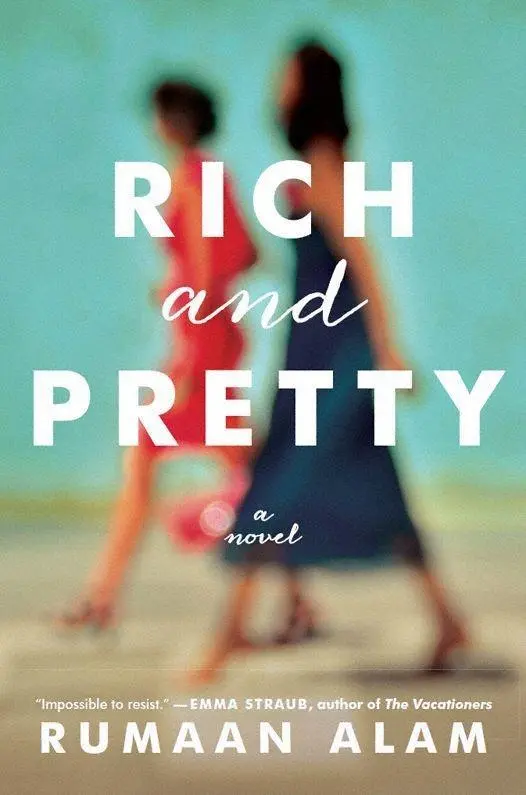
- Название:Rich and Pretty
- Автор:
- Издательство:Ecco
- Жанр:
- Год:2016
- ISBN:нет данных
- Рейтинг книги:3 / 5. Голосов: 1
-
Избранное:Добавить в избранное
- Отзывы:
-
Ваша оценка:
Rich and Pretty: краткое содержание, описание и аннотация
Предлагаем к чтению аннотацию, описание, краткое содержание или предисловие (зависит от того, что написал сам автор книги «Rich and Pretty»). Если вы не нашли необходимую информацию о книге — напишите в комментариях, мы постараемся отыскать её.
As close as sisters for twenty years, Sarah and Lauren have been together through high school and college, first jobs and first loves, the uncertainties of their twenties and the realities of their thirties.
Sarah, the only child of a prominent intellectual and a socialite, works at a charity and is methodically planning her wedding. Lauren — beautiful, independent, and unpredictable — is single and working in publishing, deflecting her parents’ worries and questions about her life and future by trying not to think about it herself. Each woman envies — and is horrified by — particular aspects of the other’s life, topics of conversation they avoid with masterful linguistic pirouettes.
Once, Sarah and Lauren were inseparable; for a long a time now, they’ve been apart. Can two women who rarely see one other, selectively share secrets, and lead different lives still call themselves best friends? Is it their abiding connection — or just force of habit — that keeps them together?
With impeccable style, biting humor, and a keen sense of detail, Rumaan Alam deftly explores how the attachments we form in childhood shift as we adapt to our adult lives — and how the bonds of friendship endure, even when our paths diverge.
Rich and Pretty — читать онлайн бесплатно полную книгу (весь текст) целиком
Ниже представлен текст книги, разбитый по страницам. Система сохранения места последней прочитанной страницы, позволяет с удобством читать онлайн бесплатно книгу «Rich and Pretty», без необходимости каждый раз заново искать на чём Вы остановились. Поставьте закладку, и сможете в любой момент перейти на страницу, на которой закончили чтение.
Интервал:
Закладка:
Of course, she’d swallowed this, fought it, not mentioned it, and gone with Sarah to that appointment at Bergdorf’s. Then another, for good measure, at a smaller salon downtown, then a second appointment at Bergdorf’s. She’s due to go back with her again, for the second fitting. Sarah’s had to confess the pregnancy to the seamstress. The seamstress has seen it all. It comes with the territory. The dress is the right one, though: long but not trailing (what was the sense in that?), sexy but not whorish, modest but not dowdy, modern but not boxy, romantic but not ridiculous. Standing on that little velveteen-covered cube, spinning around, the three-way mirror reflecting her a thousand times over, Sarah looks like a bride, Sarah looks as she should, Sarah looks pretty.
Today: more shopping, and on this, the first sunny day in March, that first day you sense that spring isn’t a delusion but an eventuality. They should be strolling down the West Side on that path overlooking the river, the one that leads to her favorite underattended movie theater in Manhattan. They should buy the paper and then only read the Week in Review and the magazine. They should stop at a diner and order french fries for no reason. That’s the point Lauren and Rob have reached in the relationship; they are not at the clothes-shopping point in the relationship, but here they are.
Rob says he could use a suit. He’s only got one, and it’s harder to button the jacket than it should be. She worries that he’s going to think of her, annoyed, when he’s reckoning with this thousand dollars on his Citibank card. This is about Sarah’s wedding, naturally.
“I like this one?” He sounds unconvinced. The salesman has pinned the pants’ unfinished hem up under itself on his left leg, so they can see how it’ll look. The suit is black, and it looks the same as every other suit he’s tried. They’re all the same, suits; isn’t that the point?
“It’s great,” she says. “It’s the shirt and tie that will make it, I think.”
“And the shoes,” Rob adds. The salesman at the previous store had said this, noting, disapprovingly, Rob’s mottled winter boots.
Later, at his place, the suit paid for and sent away in the stern, capable hands of the Russian woman who will finish the pants and bring the cuffs up at the wrists, Lauren takes off her shoes, curls into a comfortable spot on his bed, watching as he moves around the room, disposing of his new purchases. He moves without a hint of consciousness, with something like grace, a quality you rarely observe in a man. But then this is his room, his home. It’s like watching a chef in his kitchen, an artist in his studio, watching Rob tear little plastic tags off the shirt and ties (he bought three, he said he needed them anyway), slip collar stays out of their tiny pockets.
She’s seen worse boy apartments than Rob’s. It’s true that the sofa is actually a futon, but it’s not too horribly ugly, and the futon has been pressed into service as a sofa because Rob has a real bed, or, actually, a queen-size mattress, on top of a box spring, sitting on the floor. The bedroom is too small, he tells her, to get a bed in there. She thinks the mattress on the floor gives the apartment a bohemian vibe. Rob’s tidy and has been thoughtful about certain things, like stashing the plastic-wrapped quartet of toilet paper rolls inside a closet rather than leaving the whole thing sitting out on the floor of the bathroom. She’d once known a guy — twice fucked a guy — named Jesse whose bathroom floor had been sodden and sticky with what she could only assume was urine, flicked off his and his roommate’s dicks and left to molder on the linoleum. There’s a fuzz of dust under the bookcase, but the books are tidy and organized. Rob’s apartment has gestures that imply the homey: a vintage poster for a Smiths record, framed, on the living room wall, a striped throw pillow on the futon, a reasonably sized television. There are no video games, she noted the first time she went to his home. A lot of men she has known still play video games.
“You’re okay with this, right? The suit, the shoes, fuck, you didn’t have to buy the shoes.”
“I’m okay with it, Lauren. Stop asking.”
“It’s just a lot of money.” It’s a considerable sum, but she’s long been in the habit of spending impulsively. Now, those impulses are a little easier to justify. The raise wasn’t much, not when you stretch it out over twenty-six paychecks, but it is something, and Mary-Beth has said something about a bonus. Lauren’s trying to look at it from his perspective, though.
Now he’s just tidying up. He shakes a crumpled sweater out, lays it on the bed, folds it. “It’s fine. It’s a work thing. Dress for the job you want, and so on.” Rob grins, more to himself than her. “Besides, I want to look awesome at this wedding.”
“Well, it’s a pretty nice suit,” she says.
“Wait until you see my dancing.”
“That bad?”
“A fancy suit will only partially make up for it,” he says.
She shrugs. “I just don’t want you to, I don’t know, feel obligated. You can wear whatever.”
“That is total bullshit, but okay. Seriously, don’t worry about it. My sister will get married eventually. I’ll have to go to funerals. A man can use a black suit.”
“Future funerals, do tell me more.” She picks up one of the tags he’s snipped from one of the shirts, a heavy rectangle of cardboard, and throws it at him. “Maybe I can recommend a good psychiatrist?”
“God, you’re so pretty, you know that?” He drops the sweater on top of the dresser. “You are so pretty.”
Junior year, coming out of a classroom, maybe European history, but her memory can only manage the general feelings, the atmosphere, she heard a snatch of conversation, not directed at her but not necessarily meant to be kept from her. Patrick Adler, finishing something he was saying to someone, some guy named Shane or Shawn. Speaking of her, and Sarah, she knew that, though she can’t remember the context that made it clear that it was them he meant: something to do with a party, a concert, a plan for a coming weekend. “You take rich, I’ll take pretty.” She’s always remembered that. She’s always known which she was. She’s never been quite sure which of them came out better, in the end.
“Thanks,” she says. What can she say?
“You don’t have to thank me. You are.” He hurls himself onto the bed, leaps onto it, like a boy into a pile of leaves. The mattress quakes under the force of him.
She thinks he is going to kiss her, thinks he is going to fuck her, thinks she should suck his dick, do something, he deserves something, he’s spent more than a thousand dollars on something he thinks is going to please her, and done it with a smile on his face. But he doesn’t. He reaches up for her, pulls her down toward him until she’s lying on the bed next to him, the two of them staring up at the ceiling, where a little patch of late winter sunshine still lingers. The apartment is quiet. It smells of him — detergent, maleness, something hard to place. He doesn’t say anything, and neither does she, and after a few minutes she realizes he’s fallen asleep, abruptly. She lies like that, next to him, for what seems a long time, not wanting to wake him.
They lie there, his snore soft, like a baby’s, then she sleeps, then wakes, notices he’s not there. He’s in the kitchen, because they’ve made a plan. He’s promised her a meal, promised to use one of her books, by a celebrity Italian chef, small as a bird, whose signature touch is putting lemon zest into everything.
“Veal,” he says, triumphantly. He sweeps an arm over the counter, proudly, as she comes in from the bedroom. He’s bought the good stuff, wrapped in white paper and tied with twine, from the old-school butcher. Those used to be everywhere in this neighborhood — as well as plumbers, coffee roasters, funeral directors. You still see statuary (the somber virgin, the lamb of God) in front of the homes of the more devout, though most of the old Italians have moved off to Long Island, sold their brownstones to enthusiastic millionaires of no particular faith. One of the churches has been turned into condos.
Читать дальшеИнтервал:
Закладка:
Похожие книги на «Rich and Pretty»
Представляем Вашему вниманию похожие книги на «Rich and Pretty» списком для выбора. Мы отобрали схожую по названию и смыслу литературу в надежде предоставить читателям больше вариантов отыскать новые, интересные, ещё непрочитанные произведения.











Обсуждение, отзывы о книге «Rich and Pretty» и просто собственные мнения читателей. Оставьте ваши комментарии, напишите, что Вы думаете о произведении, его смысле или главных героях. Укажите что конкретно понравилось, а что нет, и почему Вы так считаете.