Rumaan Alam - Rich and Pretty
Здесь есть возможность читать онлайн «Rumaan Alam - Rich and Pretty» весь текст электронной книги совершенно бесплатно (целиком полную версию без сокращений). В некоторых случаях можно слушать аудио, скачать через торрент в формате fb2 и присутствует краткое содержание. Год выпуска: 2016, Издательство: Ecco, Жанр: Современная проза, на английском языке. Описание произведения, (предисловие) а так же отзывы посетителей доступны на портале библиотеки ЛибКат.
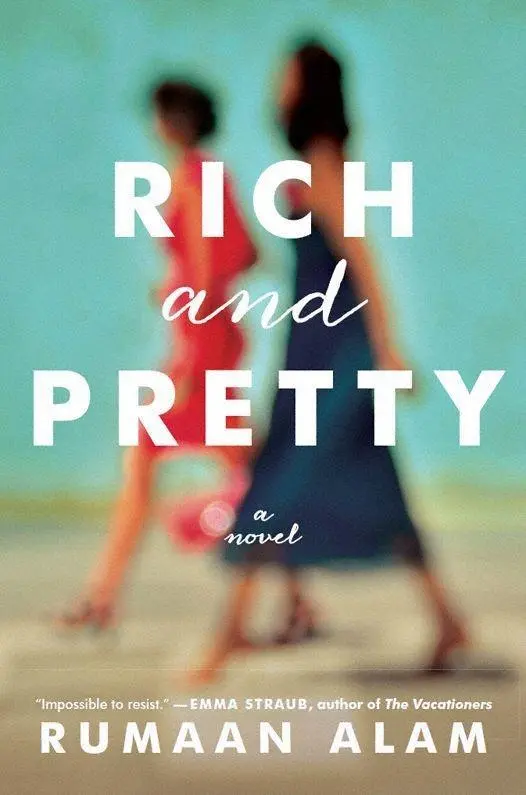
- Название:Rich and Pretty
- Автор:
- Издательство:Ecco
- Жанр:
- Год:2016
- ISBN:нет данных
- Рейтинг книги:3 / 5. Голосов: 1
-
Избранное:Добавить в избранное
- Отзывы:
-
Ваша оценка:
Rich and Pretty: краткое содержание, описание и аннотация
Предлагаем к чтению аннотацию, описание, краткое содержание или предисловие (зависит от того, что написал сам автор книги «Rich and Pretty»). Если вы не нашли необходимую информацию о книге — напишите в комментариях, мы постараемся отыскать её.
As close as sisters for twenty years, Sarah and Lauren have been together through high school and college, first jobs and first loves, the uncertainties of their twenties and the realities of their thirties.
Sarah, the only child of a prominent intellectual and a socialite, works at a charity and is methodically planning her wedding. Lauren — beautiful, independent, and unpredictable — is single and working in publishing, deflecting her parents’ worries and questions about her life and future by trying not to think about it herself. Each woman envies — and is horrified by — particular aspects of the other’s life, topics of conversation they avoid with masterful linguistic pirouettes.
Once, Sarah and Lauren were inseparable; for a long a time now, they’ve been apart. Can two women who rarely see one other, selectively share secrets, and lead different lives still call themselves best friends? Is it their abiding connection — or just force of habit — that keeps them together?
With impeccable style, biting humor, and a keen sense of detail, Rumaan Alam deftly explores how the attachments we form in childhood shift as we adapt to our adult lives — and how the bonds of friendship endure, even when our paths diverge.
Rich and Pretty — читать онлайн бесплатно полную книгу (весь текст) целиком
Ниже представлен текст книги, разбитый по страницам. Система сохранения места последней прочитанной страницы, позволяет с удобством читать онлайн бесплатно книгу «Rich and Pretty», без необходимости каждый раз заново искать на чём Вы остановились. Поставьте закладку, и сможете в любой момент перейти на страницу, на которой закончили чтение.
Интервал:
Закладка:
“You’re stressed.” Dan gets up from the desk, settles onto the sofa beside her.
“I am that,” she says. She looks around the room. The jade plant needs watering.
“What’s on the list?”
“There’s nothing on the list,” she says, though this isn’t the truth. She needs to remind her mother that their cleaning lady will have to come the day before the wedding, and she’ll have to bring a whole team with her. They’ll need someone to help with shifting around some of the furniture. These are things she can’t ask Dan to do, it doesn’t make sense for him to do them. They’re not impositions on her, even, just facts.
“Maybe you should take a day off,” he says. “See a movie, go shopping, walk in the park, it’s nice enough out. Go to the museum. Hell, go to the theater, isn’t that one of the reasons people are always giving for living in New York, the proximity to the theater? We never go to the theater.”
She laughs. “I don’t need to go to the theater, I’m not eighty years old.”
“David, at work? He told me we have to be sure to go to the movies and out to dinner whenever we feel like it, until the baby comes. That after, those things, those small things, those last-minute let’s-go-out-for-Indian-food whims, become impossible.”
“I’ll feel fine when this wedding is done with, I think. Coordinating, it’s fine, it’s what I do.”
“Yes, it is. You’re very good at it. You’re very good with a task.”
“But a meaningful task,” she says. “Not the task of throwing a party, with my mother and father, to celebrate our love.”
He laughs. “We should have eloped. To Paris. Or Vegas, do people still do that?”
“It’ll be fine,” she says. She gathers the pile of bridal magazines, walks to the kitchen, and dumps them into the can under the sink where they keep the recycling, where they land with a satisfying thud. She won’t be needing those anymore.
“Let’s go out.” Dan stands.
“What out? We were going to order Thai and watch that show.”
“Screw that show,” he says. “Screw this presentation, screw the world. Let’s put on our coats and go somewhere. Let’s get a cab. We’ll go to the Odeon.”
“Are you serious?”
“Dead,” he says. He’s already stuffing his feet into his boots. “I’ll even look the other way if you want to take a sip of my martini.”
“Yeah,” she says. He’s right. She’d been looking forward to Thai and TV, but now that’s not what she wants at all. She wants to be out of this apartment, in the cold wintry night. She wants someone to bring her food, then take away the dirty plates. She wants to look around a crowded restaurant and try to imagine the lives of all the people around her. She wants to sit in a taxi, next to Dan, next to the man she loves, and remember that she loves him, and marvel at that, and think about the fact that they’ve made a human being, and that is a miracle. She doesn’t care about her wobbly biceps, she doesn’t care about what she’s wearing, she doesn’t care about the fact that they might run into someone they know; she only washes her hands at the kitchen sink, then wraps herself in her coat, and they go. She doesn’t even bother looking in the mirror by the door.
Chapter 14
She’s relieved to get to February.January is cheap gym memberships and best intentions. It’s atonement. For Lauren, a product of the American educational system, the year begins in September. The Jews had this one right, she remembers her dad saying, which sounds vaguely anti-Semitic in the retelling and so she never retells it. She can’t muster any of this self-improving spirit, because it’s the same instinct as its ostensible inverse, the greed and gluttony of the holidays. Some of the girls in the office brandish their juice fast bottles, numbered, multicolored, as proudly as if they were designer bags. The fridge in the kitchen is full of them, and when she’s getting milk for a cup of tea one particularly overcast Thursday, she briefly thinks about taking out one of the bottles, pouring its contents down the drain, just to see what happens.
Lauren doesn’t love the winter, but accepts that it exists, which makes surviving it much simpler. She’s trying to find something beautiful in the purple of the sky, in the way the city’s ambient lights swell up in the late afternoon. It’s terrible outside, yes, but weather like this, light like this, makes inside seem so much lovelier. Though the workday ends at six, six thirty sometimes, she’s there later tonight: problems with a gluten-free cookbook. She’s the last one there, but that’s okay. It’s her responsibility. Things have changed: Miranda’s corner office is mostly empty, as she’s decamped for the executive floor. There is slack, and Lauren is tasked with picking it up. This feels good, and associating good feelings with work feels new, almost shocking. It’s near eight, and the exhausted-looking cleaning lady shuffles in, emptying the garbage cans and whispering into her cell phone. The bulk of the overhead lights click off, and the office looks so different. In the bathroom, spotless now that the lady has done her thing, Lauren brushes her teeth, tidies herself, and finds a strange satisfaction in knowing she’ll be back in so few hours.
She’s meeting Rob, at a place in the West Village, his choice; she’s never good at picking restaurants. They all seem the same: a cheeseburger for eleven dollars or a cheeseburger for twenty-one dollars. Rob’s not in the office anymore. The journeyman’s life. He’s copyediting a special issue of one of the remaining city magazines, a guide to the boroughs’ best doctors. It’s a paycheck, though he’s optimistic about a prospect at a more literary newspaper, where he’d get to edit a sportswriter he particularly loves. He enjoys reading The New Yorker ’s articles about baseball.
It had started after Thanksgiving, after that tropical hiatus, after the bad blood, after the waiter, whom she’s mostly forgotten. Rob had stopped by her desk in the morning, flimsy cup from the office kitchen in his hand.
“Hey, Lauren,” he said. “Just wanted to touch base on that thing we were working on. It’s all set. I sent you everything. I wrapped it up yesterday.”
“Oh, you did?” She spun around in her chair to look up at him. Then, correcting herself: “Hi.”
“I did. I noticed you weren’t in. But it was kind of a slow day for me so I just finished it up.”
“Cool. Thanks for doing that.” She was practicing sounding like a manager: supportive, grateful, acknowledging.
“Long weekend?”
“Long weekend,” she said.
“Looks like you got some sun,” he nodded at her forearm. “Jealous.”
“Oh, yeah. I was away this year. My friend is getting married, my best friend. Turks and Caicos.”
“Nice. Destination wedding.”
“No, this was just the, you know, the bachelorette weekend or something? I don’t know what you call it. Just girls.”
“Girls’ weekend.” He nodded approvingly. “Sounds fun.”
“Well, it wasn’t exactly a girls’ weekend. I mean, it was but. We didn’t see the Chippendales or anything like that.”
Rob cocked an eyebrow, which had the effect of making him seem like he was grinning, though his face was serious. “Your loss, I’d say.”
“It’s just that I’m not exactly a girls’ weekend kind of person, is all.”
“What kind of person is that?”
“Never mind.” She shook her head. She was blabbering. The truth was: She’d imagined this. Just this, a casual conversation, Rob in his cute shoes, smiling and flirting, that crackle of energy, that sense of possibility. She’d felt it, even then, on the plane, the idea that she was going home, yes, but also going home to him. Rob. Rob Byrne. She knew his last name, and that knowledge felt like a certain kind of progress. Things happen in her mind, and then they come true; it’s discomfiting.
Читать дальшеИнтервал:
Закладка:
Похожие книги на «Rich and Pretty»
Представляем Вашему вниманию похожие книги на «Rich and Pretty» списком для выбора. Мы отобрали схожую по названию и смыслу литературу в надежде предоставить читателям больше вариантов отыскать новые, интересные, ещё непрочитанные произведения.










Обсуждение, отзывы о книге «Rich and Pretty» и просто собственные мнения читателей. Оставьте ваши комментарии, напишите, что Вы думаете о произведении, его смысле или главных героях. Укажите что конкретно понравилось, а что нет, и почему Вы так считаете.