Emma Cline - The Girls
Здесь есть возможность читать онлайн «Emma Cline - The Girls» весь текст электронной книги совершенно бесплатно (целиком полную версию без сокращений). В некоторых случаях можно слушать аудио, скачать через торрент в формате fb2 и присутствует краткое содержание. Год выпуска: 2016, Издательство: Random House, Жанр: Современная проза, на английском языке. Описание произведения, (предисловие) а так же отзывы посетителей доступны на портале библиотеки ЛибКат.
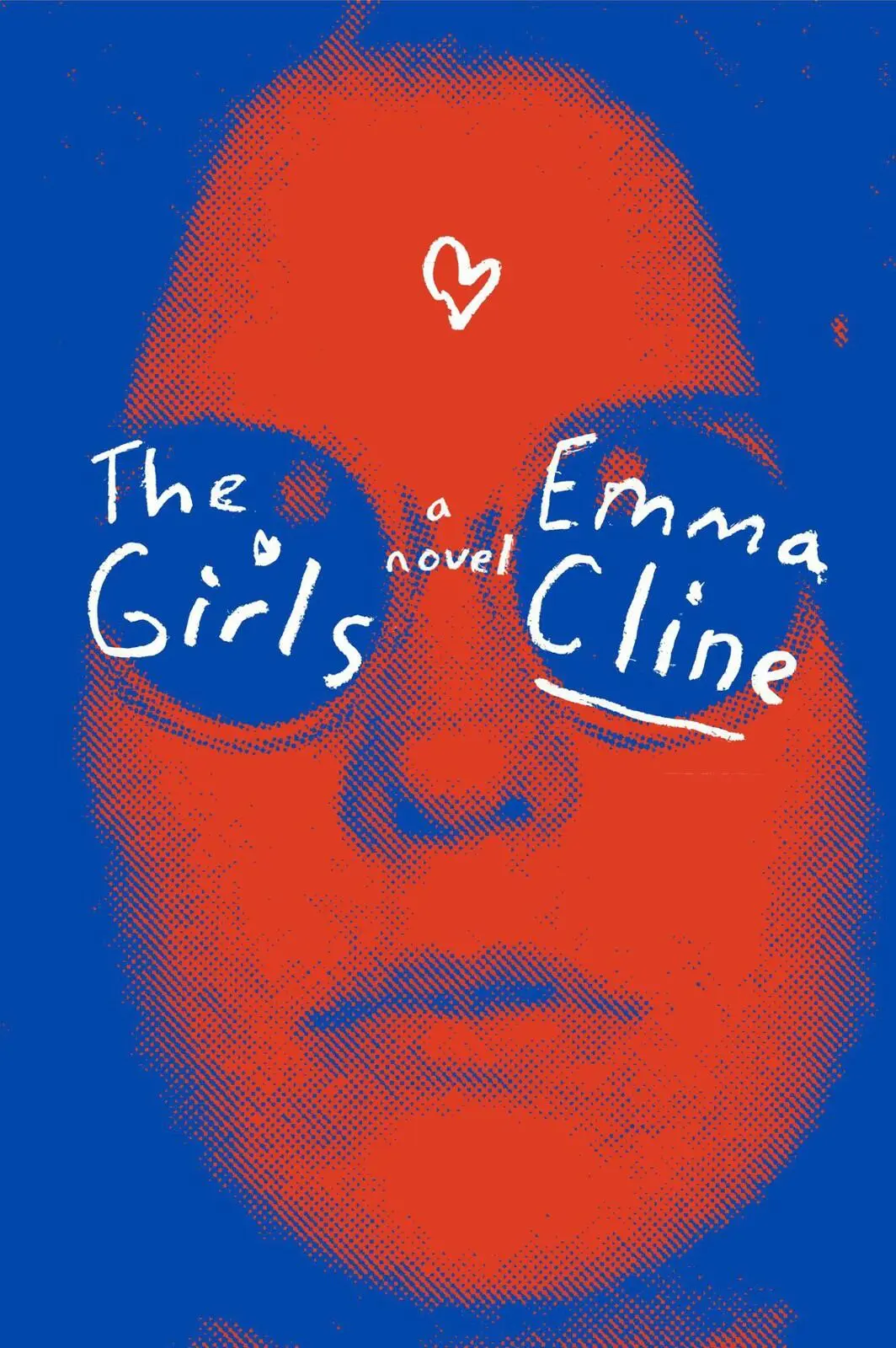
- Название:The Girls
- Автор:
- Издательство:Random House
- Жанр:
- Год:2016
- ISBN:нет данных
- Рейтинг книги:5 / 5. Голосов: 1
-
Избранное:Добавить в избранное
- Отзывы:
-
Ваша оценка:
The Girls: краткое содержание, описание и аннотация
Предлагаем к чтению аннотацию, описание, краткое содержание или предисловие (зависит от того, что написал сам автор книги «The Girls»). Если вы не нашли необходимую информацию о книге — напишите в комментариях, мы постараемся отыскать её.
Northern California, during the violent end of the 1960s. At the start of summer, a lonely and thoughtful teenager, Evie Boyd, sees a group of girls in the park, and is immediately caught by their freedom, their careless dress, their dangerous aura of abandon. Soon, Evie is in thrall to Suzanne, a mesmerizing older girl, and is drawn into the circle of a soon-to-be infamous cult and the man who is its charismatic leader. Hidden in the hills, their sprawling ranch is eerie and run down, but to Evie, it is exotic, thrilling, charged — a place where she feels desperate to be accepted. As she spends more time away from her mother and the rhythms of her daily life, and as her obsession with Suzanne intensifies, Evie does not realize she is coming closer and closer to unthinkable violence, and to that moment in a girl’s life when everything can go horribly wrong.
Emma Cline’s remarkable debut novel is gorgeously written and spellbinding, with razor-sharp precision and startling psychological insight. The Girls is a brilliant work of fiction — and an indelible portrait of girls, and of the women they become.
The Girls — читать онлайн бесплатно полную книгу (весь текст) целиком
Ниже представлен текст книги, разбитый по страницам. Система сохранения места последней прочитанной страницы, позволяет с удобством читать онлайн бесплатно книгу «The Girls», без необходимости каждый раз заново искать на чём Вы остановились. Поставьте закладку, и сможете в любой момент перейти на страницу, на которой закончили чтение.
Интервал:
Закладка:
Hatred was easy. The permutations constant over the years: a stranger at a fair who palmed my crotch through my shorts. A man on the sidewalk who lunged at me, then laughed when I flinched. The night an older man took me to a fancy restaurant when I wasn’t even old enough to like oysters. Not yet twenty. The owner joined our table, and so did a famous filmmaker. The men fell into a heated discussion with no entry point for me: I fidgeted with my heavy cloth napkin, drank water. Staring at the wall.
“Eat your vegetables,” the filmmaker suddenly snapped at me. “You’re a growing girl.”
The filmmaker wanted me to know what I already knew: I had no power. He saw my need and used it against me.
My hatred for him was immediate. Like the first swallow of milk that’s already gone off — rot strafing the nostrils, flooding the entire skull. The filmmaker laughed at me, and so did the others, the older man who would later place my hand on his dick while he drove me home.
None of this was rare. Things like this happened hundreds of times. Maybe more. The hatred that vibrated beneath the surface of my girl’s face — I think Suzanne recognized it. Of course my hand would anticipate the weight of a knife. The particular give of a human body. There was so much to destroy.
Suzanne stopped me from doing what I might be capable of. And so she set me loose into the world like an avatar for the girl she would not be. She would never go to boarding school, but I still could, and she sent me spinning from her like a messenger for her alternate self. Suzanne gave me that: the poster of Hawaii on the wall, the beach and blue sky like the lowest common denominator of fantasy. The chance to attend poetry class, to leave bags of laundry outside my door and eat steaks on parents’ visiting days, sopping with salt and blood.
It was a gift. What did I do with it? Life didn’t accumulate as I’d once imagined. I graduated from boarding school, two years of college. Persisted through the blank decade in Los Angeles. I buried first my mother, then my father. His hair gone wispy as a child’s. I paid bills and bought groceries and got my eyes checked while the days crumbled away like debris from a cliff face. Life a continuous backing away from the edge.
There were moments of forgetting. The summer I had visited Jessamine in Seattle after she had her first child — when I saw her waiting at the curb with her hair tucked into her coat, the years unknit themselves and I felt, for a moment, the sweet and blameless girl I had once been. The year with the man from Oregon, our shared kitchen hung with houseplants and Indian blankets on the seats of our car, covering the rips. We ate cold pita with peanut butter and walked in the wet green. Camping in the hills around Hot Springs Canyon, far down the coast, near a group who knew all the words to The People’s Song Book. A sun-hot rock where we lay, drying from the lake, our bodies leaving behind a conjoined blur.
But the absence opened up again. I was almost a wife but lost the man. I was almost recognizable as a friend. And then I wasn’t. The nights when I flicked off the bedside lamp and found myself in the heedless, lonely dark. The times I thought, with a horrified twist, that none of this was a gift. Suzanne got the redemption that followed a conviction, the prison Bible groups and prime-time interviews and a mail-in college degree. I got the snuffed-out story of the bystander, a fugitive without a crime, half hoping and half terrified that no one was ever coming for me.
—
It was Helen, in the end, who ended up talking. She was only eighteen, still desirous of attention — I’m surprised they stayed out of jail as long as they did. Helen had been picked up in Bakersfield for using a stolen credit card. Just a week in a county jail and they would have let her go, but she couldn’t help bragging to her cellmate. The coin-operated television in the common room showing a bulletin of the ongoing murder investigation.
“The house is way bigger than it looks in those pictures,” Helen said, according to her cellmate. I can see Helen: nonchalant, thrusting her chin forward. Her cellmate must have ignored her at first. Rolling her eyes at the girlish bluster. But then Helen kept going, and suddenly the woman was listening closely, calculating reward money, a reduced sentence. Urging the girl to tell her more, to keep talking. Helen was probably flattered by the attention, unspooling the whole mess. Maybe even exaggerating, drawing out the haunted spaces between words, as in the incantation of a ghost story at a sleepover. We all want to be seen.
—
All of them would be arrested by the end of December. Russell, Suzanne, Donna, Guy, the others. The police descending on their tent encampment in Panamint Springs: torn flannel sleeping bags and blue nylon tarps, the dead ash of the campfire. Russell bolted when they came, as if he could outrun a whole squad of officers. The headlights of the police cruisers glowing in the bleached pink of morning. How pitiful, the immediacy of Russell’s capture, forced to kneel in the scrub grass with his hands on his head. Guy handcuffed, stunned to discover there were limitations to the bravado that had carried him that far. The little kids were herded onto the Social Services van, wrapped in blankets, and handed cold cheese sandwiches. Their bellies distended and scalps boiling with lice. The authorities didn’t know who had done what, not yet, so Suzanne was just one of the skinny jumble of girls. Girls who spit in the dirt like rabid dogs and went limp when the police tried to handcuff them. There was a demented dignity to their resistance — none of them had run. Even at the end, the girls had been stronger than Russell.
It would snow in Carmel that same week, the barest slip of white. Class was canceled, frost crunching thinly under our shoes as we tromped across the quad in our jean jackets. It seemed like the last morning on earth, and we peered into the gray sky as if more of the miracle were coming, though it all melted into a mess in less than an hour.
—
I was halfway back to the beach parking lot when I saw the man. Walking toward me. Maybe a hundred yards away. His head was shaved, revealing the aggressive outline of his skull. He was wearing a T-shirt, which was strange — his skin flushed in the wind. I didn’t want to feel as uneasy as I did. A helpless accounting of the facts: I was alone on the sand. Still far from the parking lot. There was no one else around but me and this man. The cliff, starkly outlined, each striation and pulse of lichen. The wind lashing my hair across my face, dislocating and vulnerable. Rearranging the sand into furrows. I kept walking toward him. Forcing myself to keep my gait.
The distance between us fifty yards, now. His arms were honeycombed with muscle. The brute fact of his naked skull. I slowed my pace, but it didn’t matter — the man was still heading briskly in my direction. His head was bouncing as he walked, an insane rhythmic twitch.
A rock, I thought crazily. He’ll pick up a rock. He’ll break open my skull, my brain leaking onto the sand. He’ll tighten his hands around my throat until my windpipe collapses.
The stupid things I thought of:
Sasha and her briny, childish mouth. How the sun had looked in the tops of the trees lining my childhood driveway. Whether Suzanne knew I thought of her. How the mother must have begged, at the end.
The man was bearing down on me. My hands were limp and wet. Please, I thought. Please. Who was I addressing? The man? God? Whoever handled these things.
And then he was in front of me.
Oh, I thought. Oh. Because he was just a normal man, harmless, nodding along to the white headphones nested in his ears. Just a man walking on the beach, enjoying the music, the weak sun through the fog. He smiled at me as he passed, and I smiled back, like you would smile at any stranger, any person you didn’t know.
Читать дальшеИнтервал:
Закладка:
Похожие книги на «The Girls»
Представляем Вашему вниманию похожие книги на «The Girls» списком для выбора. Мы отобрали схожую по названию и смыслу литературу в надежде предоставить читателям больше вариантов отыскать новые, интересные, ещё непрочитанные произведения.






Обсуждение, отзывы о книге «The Girls» и просто собственные мнения читателей. Оставьте ваши комментарии, напишите, что Вы думаете о произведении, его смысле или главных героях. Укажите что конкретно понравилось, а что нет, и почему Вы так считаете.