Edward Jones - All Aunt Hagar's Children
Здесь есть возможность читать онлайн «Edward Jones - All Aunt Hagar's Children» весь текст электронной книги совершенно бесплатно (целиком полную версию без сокращений). В некоторых случаях можно слушать аудио, скачать через торрент в формате fb2 и присутствует краткое содержание. Год выпуска: 2006, Издательство: Amistad, Жанр: Современная проза, на английском языке. Описание произведения, (предисловие) а так же отзывы посетителей доступны на портале библиотеки ЛибКат.
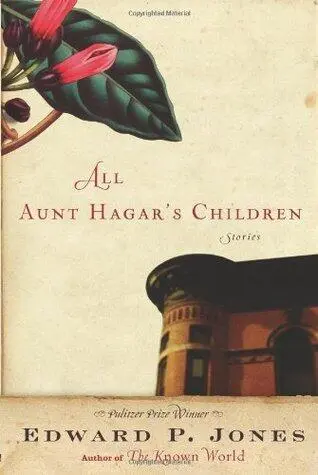
- Название:All Aunt Hagar's Children
- Автор:
- Издательство:Amistad
- Жанр:
- Год:2006
- ISBN:нет данных
- Рейтинг книги:4 / 5. Голосов: 1
-
Избранное:Добавить в избранное
- Отзывы:
-
Ваша оценка:
All Aunt Hagar's Children: краткое содержание, описание и аннотация
Предлагаем к чтению аннотацию, описание, краткое содержание или предисловие (зависит от того, что написал сам автор книги «All Aunt Hagar's Children»). Если вы не нашли необходимую информацию о книге — напишите в комментариях, мы постараемся отыскать её.
, the bestselling and Pulitzer Prize-winning author of
shows that his grasp of the human condition is firmer than ever.
Returning to the city that inspired his first prizewinning book,
, Jones has filled this new collection with people who call Washington, D.C., home. Yet it is not the city's power brokers that most concern him but rather its ordinary citizens.
turns an unflinching eye to the men, women, and children caught between the old ways of the South and the temptations that await them further north, people who in Jones's masterful hands, emerge as fully human and morally complex, whether they are country folk used to getting up with the chickens or people with centuries of education behind them.
In the title story, in which Jones employs the first-person rhythms of a classic detective story, a Korean War veteran investigates the death of a family friend whose sorry destiny seems inextricable from his mother's own violent Southern childhood. In "In the Blink of God's Eye" and "Tapestry" newly married couples leave behind the familiarity of rural life to pursue lives of urban promise only to be challenged and disappointed.
With the legacy of slavery just a stone's throw away and the future uncertain, Jones's cornucopia of characters will haunt readers for years to come.
All Aunt Hagar's Children — читать онлайн бесплатно полную книгу (весь текст) целиком
Ниже представлен текст книги, разбитый по страницам. Система сохранения места последней прочитанной страницы, позволяет с удобством читать онлайн бесплатно книгу «All Aunt Hagar's Children», без необходимости каждый раз заново искать на чём Вы остановились. Поставьте закладку, и сможете в любой момент перейти на страницу, на которой закончили чтение.
Интервал:
Закладка:
Sharon, ecstatic, did not get to Mary Lavin’s Tales from Bective Bridge that evening as she had planned. She could think of nothing else but an evening with Terence. She tried sleeping, but found it was no use and so got up from bed and sat in the dark at her window, which, like the one in her parents’ bedroom, faced 8th Street. She would be at the window three nights before Christmas, near about midnight, when she saw Neil Bennington, carrying a small package that was bright even in the dark, dash across the street to her house, take the steps two at a time, and then dash back across the street to his place, his hands now apparently empty. It would be a rare cold night for that December, and she was tempted not to go downstairs. But she did. She opened the main door to find a small gift-wrapped package on the threshold between the door and the storm door. It had her name on it. With anxious fingers, just inside the living room, she tore open the shiny wrapping and found in a velvet-covered box a figure of brown wood, nearly perfectly carved, a figure of a little girl no more than an inch and a half, in a dress that came down to her feet. She had on a bonnet. When Sharon held the figure to the light of the lamp on a table in the living room, the girl’s nose told her unmistakably that the figure was of a black girl. The child seemed somehow recognizable, but for years she was never able to recall where she had seen it. One of the girl’s arms was extended somewhat, and there was a bracelet on it. Through the bracelet ran a gold-like chain; that the chain was shining told it might be gold, that it was from a boy of no means from across the street told her that it might not be.
She was disappointed because she did not want Neil to think that there could ever be anything between them, and such a thing, with such intricacy, with a compellingly quiet beauty, told her that was what he was thinking. But she did not want to hurt his feelings by returning the gift. Adorable people should not be hurt. She thought for a day and decided to give him a book, and she chose a small paperback edition of Ann Petry’s The Street. She came up to him as he stood at his locker at school, his head cocked to the side as if he was trying to decide what was needed for the final period of the day. Terence was picking her up after school. Neil Bennington seemed genuinely surprised. “I didn’t get you anything,” he said, blushing and blinking. “This is straight-up embarrassin.”
“That doesn’t matter,” Sharon said. “It’s the season for giving. What are neighbors for?”
“I’ll get you somethin, I promise,” he said, biting his lip.
“If you do, I’ll think you’ll be trying to reciprocate, and you’ll hurt my feelings.”
“All right,” Neil said. “All right, but I won’t forget this. Ever.”
In more than three years after that day, on her way to becoming a nurse, she would attend a party at the home of one of her Georgetown University professors. Her husband would not be able to be with her that night, but that was the way it had become. She would spend a good part of the evening near a corner with a glass of ginger ale; none of the food would appeal to her. Just as she was about to excuse herself and leave, a white woman of some seventy years would come up to her.
“I have been admiring that wondrous thing you’re wearing,” the white woman said. “Even from across the room, you can see how unique it is.” She looked closer. “The carver must have used up all his eyesight making it. You have exquisite taste.” The woman smiled, not at Sharon but at the Christmas gift that she would only recently have unearthed from a trunk in her parents’ basement.
“It’s not much. Someone gave it to me. It isn’t very much.”
“It is much in that other way,” the woman said. “I know a place down on F Street that would give you five hundred dollars for it…. Please. May I?” and the woman raised a tentative hand, and Sharon nodded and the woman took up the little girl in the bonnet and rested it between her fingers and then looked fully into Sharon’s eyes. “If the carver lost his sight, he may well have thought it was well worth it.” That evening, for the first time, Sharon would notice the initials down in one of the folds of the girl’s dress. No, she said to herself, I would not sell it. I don’t even know if the carver is living anymore.
It was actually Amanda Bennington who first got into it with Terence Stagg, which led to something that ultimately allowed the whole neighborhood to see the Benningtons for what they were. She and her brother Derek had come from the Safeway late on a Saturday morning in mid-January. They parked in front of the Staggs’ house, across the street at 1407. Derek took bags of groceries into their house while Amanda looked to be tidying up the car.
Sharon Palmer was watching from her bedroom next door to the Staggs’. Nothing had really been spoken, but it might as well have been said that she and Terence Stagg were a couple. Neighbors all said what a nice couple they made; she and Terence had driven up in his father’s Cadillac one evening the week before and she saw Neil watching from his porch. She waved and he waved back. They were not walking home as much as they had been, but they still shared books. Derek came out and stood beside Neil as Terence walked Sharon into her house.
Terence, that Saturday morning, was heading out his door when he saw Amanda fussing around in the trunk of Derek’s Ford, which was parked in the same spot his father, Lane Stagg, had been parking his Cadillacs in since even before Terence knew what good things life had in store for him. It may as well be said that his father owned that dot of public real estate. Before his family had awakened, Lane had gone out on an errand that morning, purring quietly away about seven thirty in that new tan Cadillac that had less than three thousand miles on it.
“Hey, you,” Terence said to Amanda and came down the steps to the sidewalk, too upset to even take full notice of her behind as she bent over and puttered in the trunk. He was to excel in anatomy and dermatology when he got to Howard’s medical school, but genetics and neurology would nearly cost him his future. Amanda took her head out of the trunk, holding jumper cables, and looked Terence up and down. “Hey! You know you parked in my father’s space?” Then, watching Amanda toss the cables back in the trunk and try to clean the dirt from her hands with a Kleenex she pulled from her back pocket, he pointed to the space her car was in and said: “Hey, do you know that you are parked in my father’s space?” Since the first month at Howard as a freshman, he had stopped referring to Lane as “my daddy” when talking to a third party.
“Hay for horses, not for people. Go down Hecht’s and get em cheaper,” Amanda said. Words of a child of eight or nine, and they upset Terence even more. “It’s a free country, man,” Amanda said. “We all got a right to park where we wanna park.” She pulled another bunched-up Kleenex from the back pocket of her jeans and tried to wipe her hands with it. She was dark and pretty, and in another universe Terence would have been able to appreciate that. “And besides”—she turned and pointed with the hand with the Kleenex across the street—“somebody’s got my brother’s regular spot.” The Forsythes at 1408 next door to the Benningtons were already fed up with them and showed it by parking in front of their house as often as they could, though the Benningtons had never complained. That Saturday, the Forsythes had company from out of town and the visitors’ Trans Am was where Derek’s Ford would have gone, on a spot covered in oil that was forever leaking from his car. “We had stuff to take and it whatn’t no use parkin way down at the corner. Maybe that Trans Am’ll move before your daddy gets back.”
Читать дальшеИнтервал:
Закладка:
Похожие книги на «All Aunt Hagar's Children»
Представляем Вашему вниманию похожие книги на «All Aunt Hagar's Children» списком для выбора. Мы отобрали схожую по названию и смыслу литературу в надежде предоставить читателям больше вариантов отыскать новые, интересные, ещё непрочитанные произведения.








Обсуждение, отзывы о книге «All Aunt Hagar's Children» и просто собственные мнения читателей. Оставьте ваши комментарии, напишите, что Вы думаете о произведении, его смысле или главных героях. Укажите что конкретно понравилось, а что нет, и почему Вы так считаете.