Edward Jones - All Aunt Hagar's Children
Здесь есть возможность читать онлайн «Edward Jones - All Aunt Hagar's Children» весь текст электронной книги совершенно бесплатно (целиком полную версию без сокращений). В некоторых случаях можно слушать аудио, скачать через торрент в формате fb2 и присутствует краткое содержание. Год выпуска: 2006, Издательство: Amistad, Жанр: Современная проза, на английском языке. Описание произведения, (предисловие) а так же отзывы посетителей доступны на портале библиотеки ЛибКат.
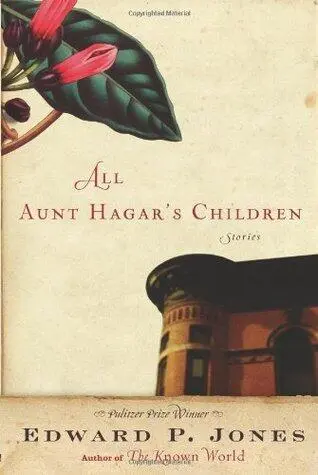
- Название:All Aunt Hagar's Children
- Автор:
- Издательство:Amistad
- Жанр:
- Год:2006
- ISBN:нет данных
- Рейтинг книги:4 / 5. Голосов: 1
-
Избранное:Добавить в избранное
- Отзывы:
-
Ваша оценка:
All Aunt Hagar's Children: краткое содержание, описание и аннотация
Предлагаем к чтению аннотацию, описание, краткое содержание или предисловие (зависит от того, что написал сам автор книги «All Aunt Hagar's Children»). Если вы не нашли необходимую информацию о книге — напишите в комментариях, мы постараемся отыскать её.
, the bestselling and Pulitzer Prize-winning author of
shows that his grasp of the human condition is firmer than ever.
Returning to the city that inspired his first prizewinning book,
, Jones has filled this new collection with people who call Washington, D.C., home. Yet it is not the city's power brokers that most concern him but rather its ordinary citizens.
turns an unflinching eye to the men, women, and children caught between the old ways of the South and the temptations that await them further north, people who in Jones's masterful hands, emerge as fully human and morally complex, whether they are country folk used to getting up with the chickens or people with centuries of education behind them.
In the title story, in which Jones employs the first-person rhythms of a classic detective story, a Korean War veteran investigates the death of a family friend whose sorry destiny seems inextricable from his mother's own violent Southern childhood. In "In the Blink of God's Eye" and "Tapestry" newly married couples leave behind the familiarity of rural life to pursue lives of urban promise only to be challenged and disappointed.
With the legacy of slavery just a stone's throw away and the future uncertain, Jones's cornucopia of characters will haunt readers for years to come.
All Aunt Hagar's Children — читать онлайн бесплатно полную книгу (весь текст) целиком
Ниже представлен текст книги, разбитый по страницам. Система сохранения места последней прочитанной страницы, позволяет с удобством читать онлайн бесплатно книгу «All Aunt Hagar's Children», без необходимости каждый раз заново искать на чём Вы остановились. Поставьте закладку, и сможете в любой момент перейти на страницу, на которой закончили чтение.
Интервал:
Закладка:
They came in the middle of October, the Benningtons, bringing children—a bunch of five or so, from a two-year-old to a girl on the verge of being a teenager. Children who sometimes played outside on Friday and Saturday nights until at least nine thirty. And they were loud children, loud in a neighborhood where most of the children were now in their teens and did no more harm than play their portable radios too loudly as they washed their parents’ cars. And the Benningtons came with a few men who sat on the porch on a legless couch with a cheap bedspread, drinking from containers in paper bags. Grace Bennington appeared to be the matriarch; she could have been fifty, but with her broad weight and gray hair, it was difficult for anyone to be certain. On a good day, her 8th Street neighbors might have been able to say forty or forty-five, but on a bad day, and the Benningtons seemed to have not a few bad days, seventy-five would not have been an unfair number. Only one thing was certain—she, in face and body, had known hard work. She moved about on stubby legs, favoring the outsides of her feet as she walked, so that all her shoes had soles run down on those sides. The soles of her shoes on the inside were almost as new as the day she brought them out of the store. There was a man—always bringing groceries—far older than Grace, tallish, a less flashy dresser than most of the men in the rest of the family; he came and went, always in the uniform of a man who worked in the railroad yards. A woman who could have been a bit younger than Grace was rarely seen, and when she was, the children would be holding her hand as they took her for a walk. She wore coats and sweaters even on the warmest day, and that fall and winter saw many good days. She might have been beautiful, but no one could tell because she was always wearing sunglasses and a scarf pulled around to cover most of her face. Then there was Amanda, no more than seventeen, Amanda in her tight blue jeans. The oldest male the neighbors saw most often was Derek, a man in his early twenties, a well-built and too often shirtless loudmouth, who seemed to go off, maybe to some job, whenever he could get his nineteen-year-old Ford to run, the kind of car most of the men in the neighborhood had owned on their way up to where they were now. There were two or three men in that family, but they also came and went. Only Derek was constant.
It was the quietness of Neil Bennington that caused Sharon Palmer—who had noticed in his demeanor even across 8th Street in those first weeks after the clan moved in—to introduce herself to him at his locker in the hall at Cardozo High School. He was in the tenth grade, small for his age and somewhat awkward, unlike his brother Derek. Sharon Palmer, who lived at 1409 directly across 8th from the Benningtons, was to witness the fracas between Derek and Terence Stagg, and seeing the fight, which was actually far less than that, she would begin to think her father and most of their neighbors might not be so wrong about most of those Benningtons. By then she would have had her third date with Terence, and he would have kissed her five times, twice surprising her as he thrust his tongue into her mouth. She mistook what she felt at that moment for blossoming love.
A senior, Sharon had, in the eleventh grade, become aware of her effect on boys—almost all of them (Terence Stagg, whom she had long had eyes and heart for, was a week or so from paying her any attention). And Sharon, coming rather late to an awareness of her womanhood, had begun to take some delight in seeing boys wither as they stood close enough to smell the mystery that had nothing to do with perfume and look into her twinkling brown eyes she had inherited from a grandmother who had seen only the morning, afternoon, and evening of a cotton field.
Neil was bent over into his locker, and when she said Hello, he rose slowly as though he knew all too well the accidents that came with quick movements. He seemed more befuddled than taken with her femaleness after she told him who she was, and the innocence of him made her wish that just this once she could turn down all that mystery that transformed boys into fools. He squinted and blinked, and with each blink he appeared to get closer to knowing just who she was. And as the brief conversation went on, it occurred to her that he was very much like one of her younger brothers—Neil and the brother had the forever look of true believers who had to start every morning learning all over again that the Easter bunny and Santa Claus did not exist.
That day of the first conversation, she saw him walking alone down 11th Street after school and she separated from her friends to go with him the rest of the way home. She thought Neil, like her brother, was adorable, a word she had started using just after the New Year. Her father, Hamilton Palmer, saw them turn the corner from P and thought nothing about it. As the morning and afternoon supervisor at the main post office at North Capitol Street, he was home most days by three thirty. He was watering plants on his porch, and Neil said good-bye to his daughter and Hamilton opened the little gate on the porch that had been installed ages ago when his children and the puppy were too small to know all the ways the world beyond the gate could hurt them.
It was three weeks later, more than a month after the Benningtons moved in, that Sharon’s father Hamilton began to think something might be amiss. Thanksgiving had come and gone, and people all over Washington were complaining that it just didn’t feel like Christmas weather. Who could think of Christmas with people still in their fall sweaters and trees threatening to bud again? Neil and Sharon turned the corner again, this time accompanied by three other students who lived farther down 8th. Before the four left Sharon in front of her house, Hamilton’s daughter touched Neil’s shoulder, and the boy smiled. It was not the touch so much as the smile that bothered him. He had been thinking that his Sharon and Terence Stagg might be a good match some time down the line when they had finished their education. Hamilton noticed for the first time that Derek was watching everything from across the street. He could not tell for certain, but he thought he saw Derek Bennington smirking.
Two days later the Prevosts up the street at 1404 had their place burgled, with a television being the most expensive thing taken. No one said anything, but the neighbors knew it had to be Derek. The next week the Thorntons at 1414 had their car stolen. The car was only a Chevy. Five years old, but that was not the point, said Bill Forsythe at 1408 next door to the Benningtons. His wife, Prudence, had complained about what a noisy heap the Thornton car was and the neighborhood was well rid of it. A man’s property is a man’s property, Bill said, even if it’s one skate with three wheels. After the car was taken, someone called the police and they came out and spoke for some fifteen minutes to the Benningtons in their house. No one knew what went down, as the police came out and left without talking to any of the neighbors. Derek walked out soon afterward and stood on his porch, smoking a cigarette. He was alone for a good while, and then his mother Grace came and said something that made him put out the cigarette in the ashtray. She continued talking to him, and for every second she was speaking, he was nodding his head slightly.
More than a month before the January fracas between Derek and Terence Stagg, Sharon Palmer returned to Neil a book she had borrowed from him. It was a Saturday afternoon, and she went up the steps to the Bennington home at 1406 and saw that the screen door was shut but that the main door was open. There was no one she could see from the threshold and she called “Hello” and “Neil,” and then, with no answer after moments, she knocked on the wood of the screen door. The radio and the television were playing. She did not want to think it, but she felt it said something about them, maybe not Neil but all the rest of them. She waited about two minutes and after she again called for Neil, she opened the screen and stepped into the house, saying “Hello, hello, hello” all the way. On the couch the woman in the sunglasses was watching her, and when Sharon asked for Neil, the woman said nothing. There were two small children on either side of her and they were watching a black-and-white television. Sharon immediately thought about the Prevosts’ television, but she did not know if it had been color or black-and-white.
Читать дальшеИнтервал:
Закладка:
Похожие книги на «All Aunt Hagar's Children»
Представляем Вашему вниманию похожие книги на «All Aunt Hagar's Children» списком для выбора. Мы отобрали схожую по названию и смыслу литературу в надежде предоставить читателям больше вариантов отыскать новые, интересные, ещё непрочитанные произведения.











Обсуждение, отзывы о книге «All Aunt Hagar's Children» и просто собственные мнения читателей. Оставьте ваши комментарии, напишите, что Вы думаете о произведении, его смысле или главных героях. Укажите что конкретно понравилось, а что нет, и почему Вы так считаете.