Carmen Boullosa - Cleopatra Dismounts
Здесь есть возможность читать онлайн «Carmen Boullosa - Cleopatra Dismounts» весь текст электронной книги совершенно бесплатно (целиком полную версию без сокращений). В некоторых случаях можно слушать аудио, скачать через торрент в формате fb2 и присутствует краткое содержание. Год выпуска: 2004, Издательство: Grove Press, Жанр: Современная проза, на английском языке. Описание произведения, (предисловие) а так же отзывы посетителей доступны на портале библиотеки ЛибКат.
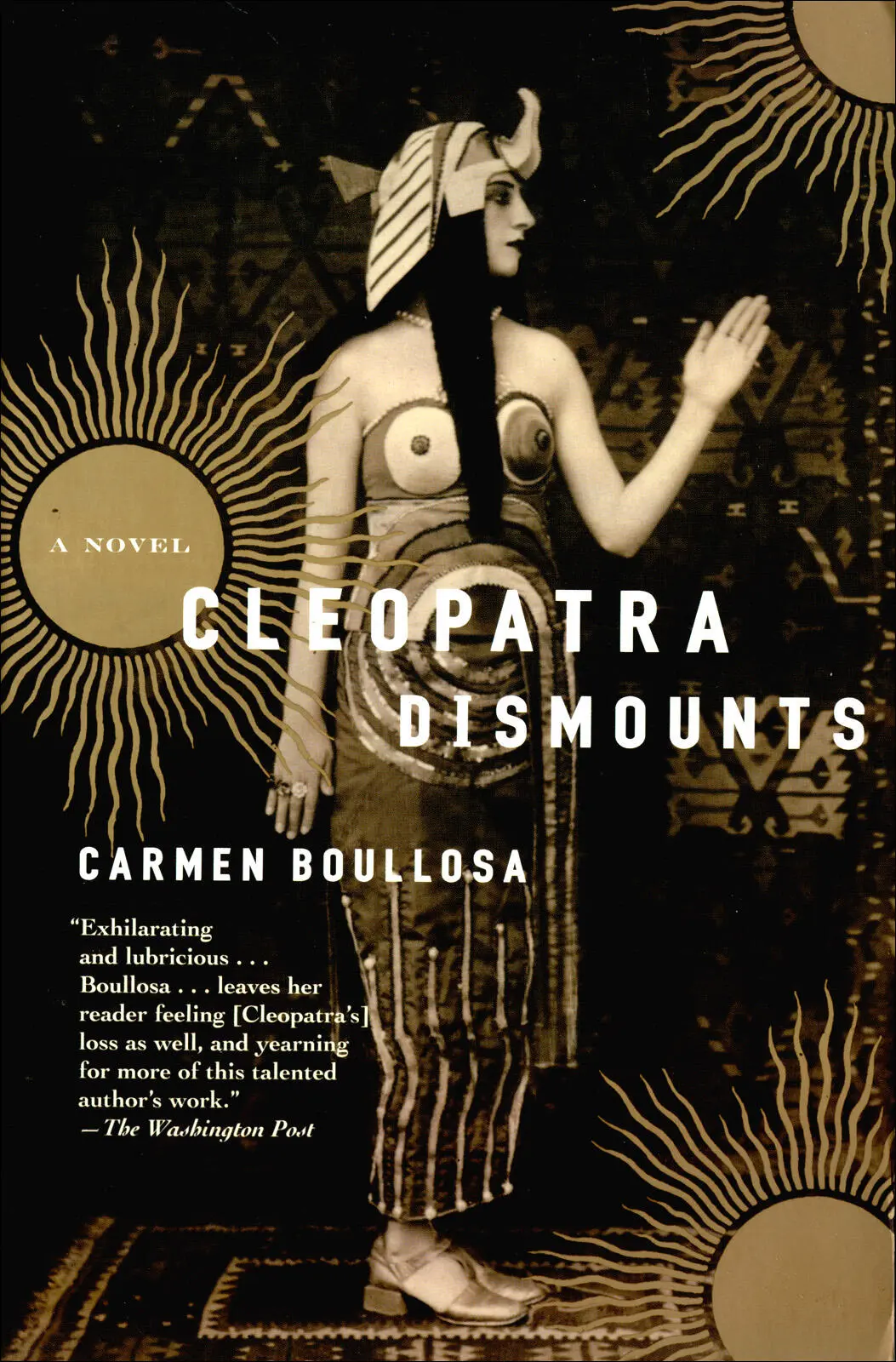
- Название:Cleopatra Dismounts
- Автор:
- Издательство:Grove Press
- Жанр:
- Год:2004
- ISBN:нет данных
- Рейтинг книги:3 / 5. Голосов: 1
-
Избранное:Добавить в избранное
- Отзывы:
-
Ваша оценка:
Cleopatra Dismounts: краткое содержание, описание и аннотация
Предлагаем к чтению аннотацию, описание, краткое содержание или предисловие (зависит от того, что написал сам автор книги «Cleopatra Dismounts»). Если вы не нашли необходимую информацию о книге — напишите в комментариях, мы постараемся отыскать её.
Through the intervention of Cleopatra's scribe and informer Diomedes, Boullosa creates two deliriously wild other lives for the young monarch — a girl escaping the intrigues of royal society to disguise herself and take up residence with a band of pirates; and the young queen who is carried across the sea on the back of a magical bull, to live among the Amazons.
Magical, multifaceted, and rippling with luminous imagination, Cleopatra Dismounts is a work that recalls Jeanette Winterson’s Sexing the Cherry and confirms Carmen Boullosa as an important international voice.
Cleopatra Dismounts — читать онлайн бесплатно полную книгу (весь текст) целиком
Ниже представлен текст книги, разбитый по страницам. Система сохранения места последней прочитанной страницы, позволяет с удобством читать онлайн бесплатно книгу «Cleopatra Dismounts», без необходимости каждый раз заново искать на чём Вы остановились. Поставьте закладку, и сможете в любой момент перейти на страницу, на которой закончили чтение.
Интервал:
Закладка:
My plan at first silenced the hostile talk against Cleopatra. The impressive royal barge traversed the Nile, inspiring confidence with its show of gold and purple. Ahead lay Thebes where the people adored me. But behind my back, Alexandria, spurred on by the Ruling Council, deposed me.
I ruled from Upper Egypt, preparing my land army with the same zeal and care I had earlier bestowed on my fleet. Alexandria had robbed me of the name of queen; now we would force it back into their mouths by a pincer-movement from land and sea.
The Ruling Council sent an ambassador to my court to sue for peace. Ptolemy, they claimed, wanted to fulfill the wishes of our father. They invited me to return to Alexandria, offering me a share of the throne they themselves had stolen from me, and protested their undying loyalty, complaining about the instability of the mob, as if they had not: stoked the fires of its rage.
We were divided in our opinions about how to react. It was an act of treasonous perfidy, a plan to lure me back and assassinate me, said the High Priest Psheneriptah, the Master of the Hunt, the Lord High Steward, and my doctor Olympus. My chief minister Protarcus and I thought otherwise. The fact was that the Ruling Council was scared; it had lost control of Egypt. For the second year in a row the harvest had been disastrous, hunger was fomenting rebellion in Alexandria, but not against Cleopatra — against the Lagids, the court, the merchants, the landowners, the craftsmen, and the Jews. Now they were faced with my pincer attack.
My decision overruled the High Priest. We undertook the return to Alexandria. On the royal boats would travel my court and my bodyguards. (These were not the four hundred Gauls that Antony would one day present me with.) The army would follow us by land to protect us against possible betrayal. With three hundred men, we figured, we could hold out until the rest of my troops reinforced us.
When our boats arrived at Heliopolis, at the delta of the Nile, spies informed me that we were walking into a trap, that the royal army was readying itself to attack us as we landed. The High Priest had been right. They intended to block any retreat to Pelusium, for the numerous cavalry of Ptolemy was on the point of attacking ours, while its rearguard was waiting for our boats. We landed safely and immediately fled on horseback, galloping through the night without sleeping, stopping only to change mounts and grab a mouthful of food, on toward Ascalon, the Philistine city we had protected from the ravenous greed of the king of Judaea. In its recent issue of coins, it declared its allegiance to me, placing the image of Cleopatra on both faces. Messenger pigeons flew off to warn my army of the impending arrival of Ptolemy’s troops and of our change of destination, and to advise our allies in Ascalon of our arrival.
The garrison from Pelusium joined up with us in the desert. They could protect us from a surprise attack, though the risk of one was minimal, since we had spent two full days in the saddle. Even so, I refused to relax. It was midnight and royal tents had been prepared to receive me, with a banquet on the point of being served. But I rejected any rest. I wanted, before all else, to get behind the walls of Pelusium or, better still, sail for Ascalon.
We left behind the musicians and the steaming plates. In no time at all, with fresh horses pulling our light, open chariots, we saw the torches and the enormous campfires of our army vanish into the distant night. The darkness was not total; the sky was unclouded and the enormous full moon of September lit our path. The earth, empty apart from us, flew beneath our feet, and the moon followed us. We had not slept a wink when dawn broke. In the green patch of an oasis, there in the white desert, stood four small towers, protecting it. Under its green cover fresh horses, water, wine, and food awaited us. My maids and I freshened up, and the priests chanted prayers for the gods’ blessings. The scribes left messages in the care of pigeons. I half-heard the murmur of the prayers but attended to nothing fully. Palm trees shaded us and a damp coolness wrapped us round. But I was obsessed by the acid, grating breath of the desert. The desert breeze rustled incessantly, a menacing, dizzying restlessness. Ignorant of trees and flowers, it threatened the green and blue silence of the oasis with its low moanings. Nothing in the desert stayed in place. The desert knew nothing of roots and foundations. The desert was only motion. The sand danced by day and by night, tirelessly. At first glance, the sky seemed to refract only the light of the sun and stars, but a more careful scrutiny revealed it shone with sand as well, a sand of light, fine blue sand, of black, white, and golden sands.
With renewed vigor we resumed our flight in the speedy chariots. In my chariot, its fine fittings removed to make it faster for the last lap of our race, I now traveled with the Jewish general, Aristarchus, the head of the garrison in Pelusium. I intended that the city see us together. In the wink of an eye — compared to the long stretch of territory we had already covered — we were at Pelusium. The company of Aristarchus was a delight for that one particular feature of his person, the rose-like odor emanating from his mouth, so intense that even the air stirred up by our speed did not disperse it. Thanks to it, I did not need to fake a smile to persuade the citizens of Pelusium that we were allies. I shook off any trace of weariness, enlivened by that perfume from his mouth. On the road were gathering witnesses of our passing. Those roses made a visible bond between me and Aristarchus. If the presence of onlookers had not deterred me, I would have yielded to that perfume and plucked a rose from his mouth in the form of a kiss.
As I told you earlier, night still had not fallen when we reached the city gates. The sun, round and enormous, seemed to support itself on the horizon. The main thoroughfare had been cleared for our passing. The caravans had been shifted aside and a carpet of flower petals had been laid on the stones of the road. At the foot of the high gates, a reception committee greeted us with standards, and musicians and dancers, exquisitely adorned, celebrated our arrival.
This port is the key to Egypt, with its nonstop handling of all kinds of merchandise. Pelusium never experienced hunger and the scarcity common throughout the rest of Egypt, even in those dark days. The approach to the city was cluttered with travelers, mostly merchants, loaded with many kinds of goods, the typical exports of Egypt: papyrus, linen, perfumes, ivory, and stones for building or sculpting.
A storm in the Mediterranean, common in the region, had confined a multitude of merchants to the city, along with their endless variety of goods. This was the first day of good weather, after two weeks of storms. Fed up with delays, they had improvised a market at the gates to the city. There were exhibited loads of precious emeralds, metal tools, many of them of silver, imported into Egypt for our craftsmen to form into finely designed pieces. There were vessels of glass decorated with gilding or watercolors, blown glass being a recent invention that had caught the fancy of Rome, along with grotesque figurines from Alexandria, an extensive selection of ceramic ware. There, too, was the merchandise of Quintus Ovinius, which came from my wool workshops.
On both sides of the road rolled carts crammed with hens, pigs, and sheep. Wild beasts in cages growled and roared above the squeaking wheels, lions and panthers among them. A recalcitrant elephant was giving its handlers trouble. The music with which we were received was mingled with the hubbub of the travelers and the cries of animals. If Egypt were to be judged by Pelusium, it was the richest country on earth. Here were slaves, black ones from Nubia, white ones from cities fallen on bad times, there goats, over there donkeys, horses of all sorts, and camels adorned with fine trappings topped by a seat.
Читать дальшеИнтервал:
Закладка:
Похожие книги на «Cleopatra Dismounts»
Представляем Вашему вниманию похожие книги на «Cleopatra Dismounts» списком для выбора. Мы отобрали схожую по названию и смыслу литературу в надежде предоставить читателям больше вариантов отыскать новые, интересные, ещё непрочитанные произведения.






Обсуждение, отзывы о книге «Cleopatra Dismounts» и просто собственные мнения читателей. Оставьте ваши комментарии, напишите, что Вы думаете о произведении, его смысле или главных героях. Укажите что конкретно понравилось, а что нет, и почему Вы так считаете.