Carmen Boullosa - Cleopatra Dismounts
Здесь есть возможность читать онлайн «Carmen Boullosa - Cleopatra Dismounts» весь текст электронной книги совершенно бесплатно (целиком полную версию без сокращений). В некоторых случаях можно слушать аудио, скачать через торрент в формате fb2 и присутствует краткое содержание. Год выпуска: 2004, Издательство: Grove Press, Жанр: Современная проза, на английском языке. Описание произведения, (предисловие) а так же отзывы посетителей доступны на портале библиотеки ЛибКат.
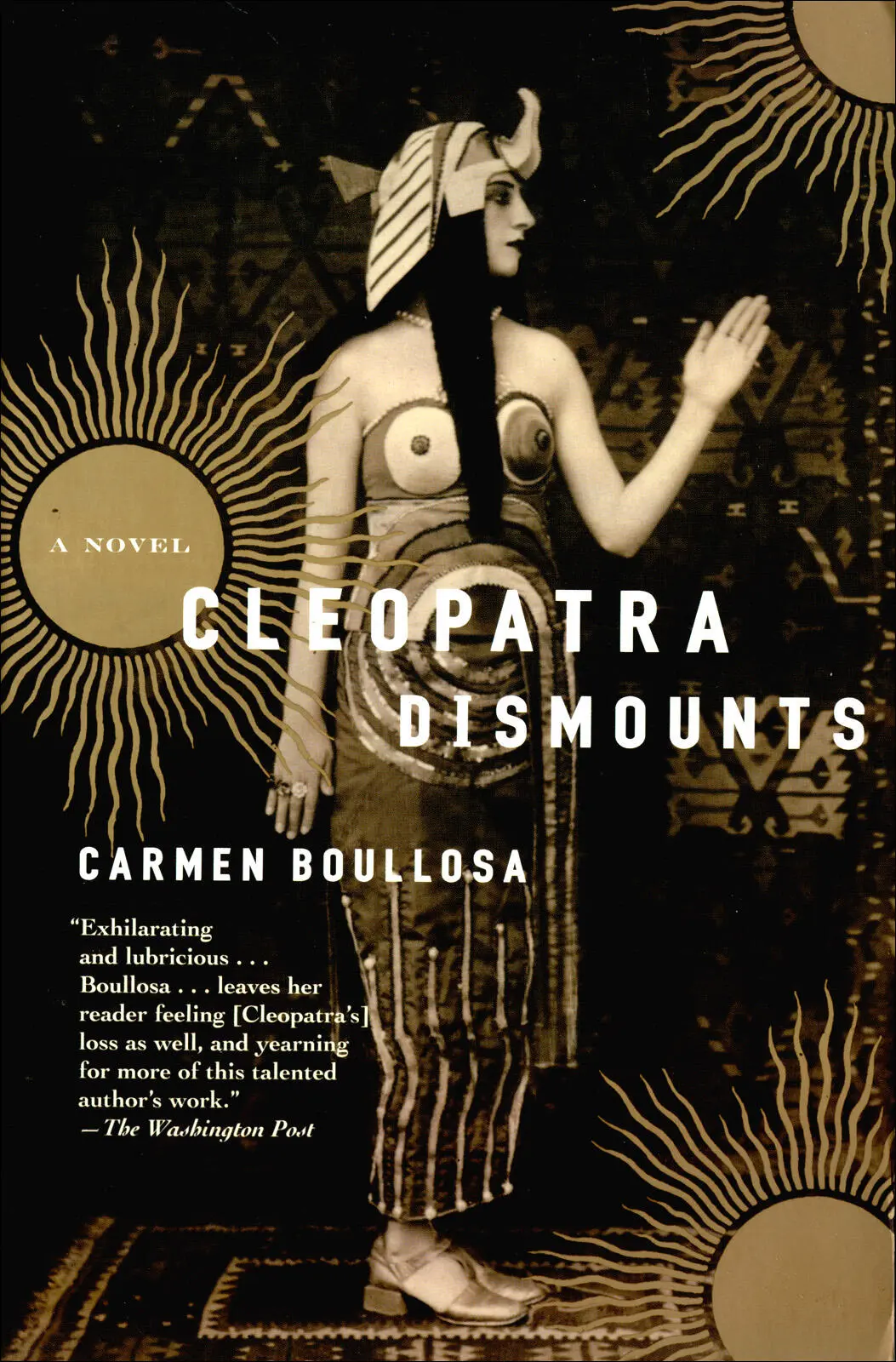
- Название:Cleopatra Dismounts
- Автор:
- Издательство:Grove Press
- Жанр:
- Год:2004
- ISBN:нет данных
- Рейтинг книги:3 / 5. Голосов: 1
-
Избранное:Добавить в избранное
- Отзывы:
-
Ваша оценка:
Cleopatra Dismounts: краткое содержание, описание и аннотация
Предлагаем к чтению аннотацию, описание, краткое содержание или предисловие (зависит от того, что написал сам автор книги «Cleopatra Dismounts»). Если вы не нашли необходимую информацию о книге — напишите в комментариях, мы постараемся отыскать её.
Through the intervention of Cleopatra's scribe and informer Diomedes, Boullosa creates two deliriously wild other lives for the young monarch — a girl escaping the intrigues of royal society to disguise herself and take up residence with a band of pirates; and the young queen who is carried across the sea on the back of a magical bull, to live among the Amazons.
Magical, multifaceted, and rippling with luminous imagination, Cleopatra Dismounts is a work that recalls Jeanette Winterson’s Sexing the Cherry and confirms Carmen Boullosa as an important international voice.
Cleopatra Dismounts — читать онлайн бесплатно полную книгу (весь текст) целиком
Ниже представлен текст книги, разбитый по страницам. Система сохранения места последней прочитанной страницы, позволяет с удобством читать онлайн бесплатно книгу «Cleopatra Dismounts», без необходимости каждый раз заново искать на чём Вы остановились. Поставьте закладку, и сможете в любой момент перейти на страницу, на которой закончили чтение.
Интервал:
Закладка:
The legionaries that Aulus Gabirius had left in Egypt to protect the throne of the reinstated Auletes had enjoyed five years of the easy life of Egypt. My lasting seduction of Upper Egypt and my momentary and partial appeasement of Alexandria sat badly with their airy pretensions to imperial status. It was the visit of Gnaius Pompey that broke the spell I had cast over the city. He had come to ask for help in the civil war against Caesar. Along with Ptolemy’s Ruling Council, we sat down behind closed doors and deliberated on whether to help him or not. While we were meeting, the young Ptolemy fell asleep from all the wine they had poured into him, polluting my air with all kinds of gastric discharges. As had happened with Auletes my father under different circumstances, the wretches had bloated the boy-king physically and mentally, flattering and corrupting him, poisoning his mind with frequent stories of how I was refusing to let him exercise his powers as commander in chief and husband.
Despite our deliberations we reached no easy accord. The only thing that passed off with moderate ease was Ptolemy’s falling asleep, but finally we reached the conclusion it would be wise to help Pompey. We would send out with all speed sixty ships and the soldiers of Gabirius. But exactly how many of them? Potinus and Achilles, the boy-king’s key advisors, wanted to keep the number laughably small. Given a choice, they would have sent none. They had secret links with the restless legionaries, by now half-Roman, half-Alexandrian, and counted on their support, based as it was on their joint hatred of Cleopatra. Protarcus, my chief minister, handled the matter adroitly. We sent ships and food supplies, along with five hundred of the finest men of Gabirius, those who would obey Achilles without discussion.
The Ruling Council and the Court of Ptolemy broadcast this support to the four winds, attributing it solely to me, inflating the numbers and setting the people of Alexandria against me. Their slanders painted me as a Rome-loving traitor to Egypt, terming me a liar because, they claimed, I said one thing and did another. My earlier wooing of Alexandria was made to work against me.
The remaining soldiers of Gabirius greedily stoked the fires of revolt. This was exactly what they had been waiting for. If their Roman leanings had predisposed them against me when I preached against the scandalous bloodletting of their fellow countrymen, they had declared themselves my open enemies since the first days of my mandate, over their bitter dispute with Marcus Calpurnius Bibulus. It occurred at the time the Parthians routed the troops of Crassus, who had then been assassinated. Marcus Calpurnius Bibulus had just been appointed governor of Syria. The Parthians were poised to swoop down over the frontier and he had only a handful of men to defend it. There were no reinforcements in Syria. Bibulus sent his two sons to Egypt, to recruit, in the name of Imperial Rome, the urgently needed soldiers of Gabirius.
They were two remarkable youngsters, only a couple of years older than Ptolemy. What a difference! Ptolemy was incapable of deciding between two figs. I don’t exaggerate. One day he hurled himself to the floor in a tantrum of despair after his servants had removed the tray of figs he had been unable to select from, despite a whole morning’s pondering. But the sons of Bibulus were as decisive as lightning. While Ptolemy was prematurely jaded, these boys with their avid curiosity were interested in whatever was happening. If Ptolemy had difficulty in marshaling his thoughts on the simplest of topics, the boys applied their minds to any problem with astonishing effectiveness. Where Ptolemy was fat, they were needle-thin. If Ptolemy chortled with laughter at the scurrilous jokes of the eunuchs, the boys controlled themselves and brought smiles to the faces of others with their tales of life in Syria that poked fun at Romans and Seleucids alike. They confided to Olympus, my doctor, that their father’s surgeon was such a medical genius that he applied poultices to the humps of the first camels he saw. One of my cats, they nicknamed “Syrian-slayer” and when I asked why, they answered, “Syrians are so chickenhearted that even the mildest-mannered cat is enough to scare them all to death.”
I was happy to let them have Gabirius’s men, for they were only a nuisance to me. I acted alone at this point, because the Ruling Council of Ptolemy had not yet started to function, or rather dysfunction. It suited me to put distance between me and those soldiers. After staying with me and reaching this favorable conclusion, the sons of Bibulus went over to the barracks of the soldiers to give them their marching orders.
These troops of Gabirius, once legionaries but now mercenaries, felt no urge to go chasing Parthians. Married to Alexandrian women and made affluent by the outlandish generosity of my father, they had become habituated to a life of ease, to the facile, gossipy, unrivaled pleasures of Alexandria. Instead of being willing to appreciate the true caliber of Bibulus’s sons, and carrying out orders duly given them in the name of Rome, they turned treasonously on the two boys and without giving them a chance to defend themselves, murdered them.
That act was not merely military disobedience. It was a slap in the face of Cleopatra. I could not let it pass. The queen of Egypt herself had sent them the sons of Bibulus. The order was tantamount to a decree from me; the young men were my personal friends. The murder demanded that the throne of the Lagids pay them back in full for their cruelty and insubordination. I imprisoned the killers of the boys, two Romans rapidly gone to seed in easygoing Alexandria, as fat as Ptolemy himself, continually drunk, stinking of rotten meat, rendered so impotent by food and drink that the best they could do was to molest little girls, or fall asleep before they were buggered by handsome male dancers, the kinaidos. Egypt’s life of luxury and self-indulgence had returned these Romans to their cradles. These depraved creatures, sucking on alcohol instead of mother’s milk, had grown enraged at the fine spirits of these two youngsters and somewhere in their greasy softness had found enough energy to kill them. Pale from sleeping day and night, they grasped daggers in their puffy fists and slaughtered the two birdlike boys. In the words of Cleisthenes, the court poet:
Two baby birds were sleeping.
Two drunken thugs came creeping
And stabbed them in their nest.
Two daggers without feeling
Two guileless fates were sealing.
The worst had slain the best.
Tell me why, ye gods above,
Such metals felt no hint of love,
Though forged at Hate’s behest?
Alas! how could that cruel steel
No touch of tender mercy feel
For two such chicks at rest?
It was not up to Egypt to judge them. To do so would be to admit such scum belonged with us. To remove any doubt that they were Romans, I had them sent to Bibulus. Then the legionaries, I need hardly say, exploded with rage and accused me of being a “Roman lackey” because of my actions.
But I have wandered off topic again, led astray by the mention of Gabirius and his soldiers. Let me get back to the fury that was felt in Alexandria when the Ruling Council broadcast my support of Pompey. I had hoped to find a chance to ingratiate myself with Egypt when the sacred bull, Bakis, adored as the living soul of Ammon Ra, died in Hermonthis. I intended to take the new Bakis to the temple, to accompany it in person down the Nile, to attend the ceremony, and thereby win for myself some popularity with the people.
“The Queen, mistress of the Two Lands, the goddess who loves her father, rowed the boat of Ammon and took it to Hermonthis to place the bull, Bakis, in its temple.” So said the inscription in the chapel of Bakis. “The Queen Cleopatra is our monarch, she is our absolute sovereign, she holds dominion over Upper and Lower Egypt. The bull Bakis accompanied Isis as she rowed the Nile.”
Читать дальшеИнтервал:
Закладка:
Похожие книги на «Cleopatra Dismounts»
Представляем Вашему вниманию похожие книги на «Cleopatra Dismounts» списком для выбора. Мы отобрали схожую по названию и смыслу литературу в надежде предоставить читателям больше вариантов отыскать новые, интересные, ещё непрочитанные произведения.








Обсуждение, отзывы о книге «Cleopatra Dismounts» и просто собственные мнения читателей. Оставьте ваши комментарии, напишите, что Вы думаете о произведении, его смысле или главных героях. Укажите что конкретно понравилось, а что нет, и почему Вы так считаете.