Gyula Krúdy - Life Is A Dream
Здесь есть возможность читать онлайн «Gyula Krúdy - Life Is A Dream» весь текст электронной книги совершенно бесплатно (целиком полную версию без сокращений). В некоторых случаях можно слушать аудио, скачать через торрент в формате fb2 и присутствует краткое содержание. Год выпуска: 2010, Издательство: Penguin Classics, Жанр: Современная проза, на английском языке. Описание произведения, (предисловие) а так же отзывы посетителей доступны на портале библиотеки ЛибКат.
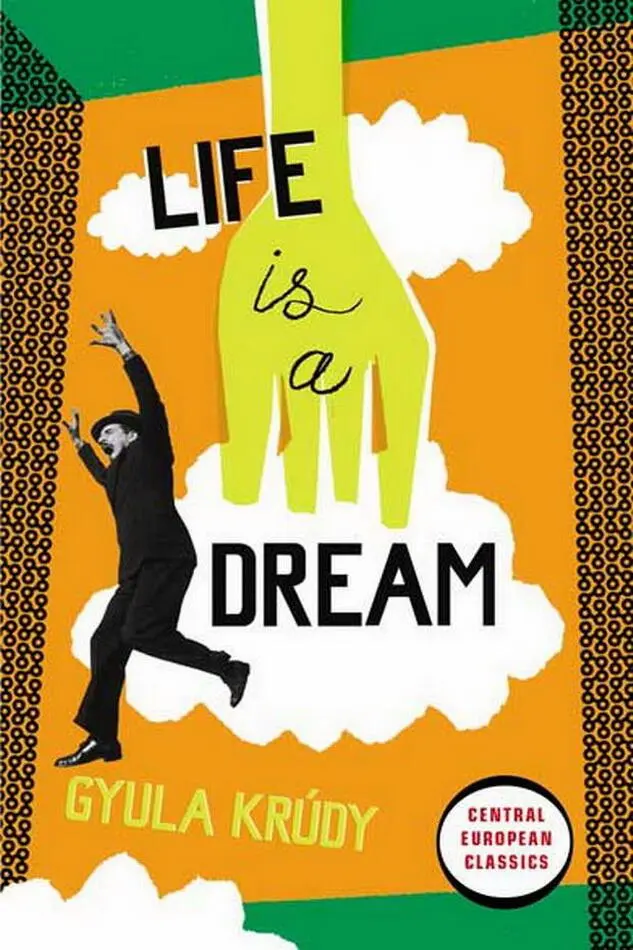
- Название:Life Is A Dream
- Автор:
- Издательство:Penguin Classics
- Жанр:
- Год:2010
- ISBN:нет данных
- Рейтинг книги:3 / 5. Голосов: 1
-
Избранное:Добавить в избранное
- Отзывы:
-
Ваша оценка:
Life Is A Dream: краткое содержание, описание и аннотация
Предлагаем к чтению аннотацию, описание, краткое содержание или предисловие (зависит от того, что написал сам автор книги «Life Is A Dream»). Если вы не нашли необходимую информацию о книге — напишите в комментариях, мы постараемся отыскать её.
Life is a Dream
Life Is A Dream — читать онлайн бесплатно полную книгу (весь текст) целиком
Ниже представлен текст книги, разбитый по страницам. Система сохранения места последней прочитанной страницы, позволяет с удобством читать онлайн бесплатно книгу «Life Is A Dream», без необходимости каждый раз заново искать на чём Вы остановились. Поставьте закладку, и сможете в любой момент перейти на страницу, на которой закончили чтение.
Интервал:
Закладка:
It did not escape his attention that Kerschantz, a taciturn, red-moustachioed Schwabian, who measured out his wines at the counter as carefully as an apothecary his potions, this silent man now favoured Finedwell’s new hat and umbrella-cane with a decidedly appreciative glance. Could he have thought that some day this umbrella-cane was bound to end up in his possession? Who can read a tavern-keeper’s mind? Only customers who are broke imagine that the proprietor always has an eye on them lest they leave the premises without paying.
Finedwell asked for the bill of fare from the pint-size waiter whom the owner alerted to the arrival of a new guest with a softly spoken ‘Janos!’ This, too, was a first in Titusz Finedwell’s experience. There is no denying it: tavern-keepers can see into the customer’s pockets.
Janos crossed himself when he glimpsed Mr Finedwell at the corner table. He approached hesitantly as if he had seen a ghost.
‘Sir, I heard you were shot in a duel.’
‘Ah, ’tis but the music of the future,’ Titusz replied with a laugh, speaking in the manner that journalists in those days adopted towards waiters. ‘Yes, Janos, ’tis but the music of the future. Next time you should pay more attention when you’re eavesdropping at Marich’s table.’
Janos’s face, unable to keep a secret, now registered even greater consternation. ‘For sure, last night the printers at Marich’s table were saying your life, sir, wasn’t worth a wooden nickel. That you were a goner …’
In the inner sanctum of the arcaded tavern there stood a long table where the regulars, typesetters all, had placed a sign that read, in beautiful large lettering: ‘MARICH’S TABLE’. (Mr Marich was a highly regarded typesetter of his day, who could boast of having set in type Ferenc Deák’s famous ‘Easter article’.) Mr Marich, a tall, dignified and distinguished-looking gentleman showed up each night round about midnight to preside over his table.
Titusz was flattered by his affair being discussed even at the Marich table, frequented by the most respected typesetters, but he pretended not to notice the excitement of the waiter who stood there slapping his own knees with his napkin as if to rouse himself from a dream.
‘We have sour lungs,’ he said at last, as if vaguely recalling that whenever Titusz appeared at the tavern he usually ordered this humble dish that belonged, along with tripe, in the least expensive category. Titusz always requested half a lemon with his meal, and never failed to praise the cook for taking the trouble to dice the lungs into small square pieces to make sure they were well done.
Titusz ignored the waiter’s suggestion, merely muttering something about Janos planning to get him ‘pickled again’ — as if his stomach, profession, and whole life weren’t sour enough already. ‘I feel like eating a rooster!’ Titusz exclaimed, after noting that this was the most expensive item on the modest menu.
‘A chicken fricassee, coming right up.’
‘I said rooster, didn’t I, a cock that hasn’t been gelded before his time, like certain incompetent editors, but remained a rooster all his life and lived to chase young serving girls and maybe even pecked at a nursemaid or two.’
Who knows how long our hero would have gone on lauding the rooster he was about to consume tonight, calling out after the retreating waiter to make sure to serve the rooster’s spurs, not to mention liver and gizzard, when a red moustache appeared at the tavern’s threshold.
Now there are all sorts of red moustaches. Most of them are angry, malevolent, neglected emblems of manhood, unworthy of grooming, if for no other reason than their colour. But this red moustache happened to be one out of a hundred, the red moustache that radiated good humour, cheer, satisfaction and joie de vivre, as if under that moustache the corners of the mouth were elevated into a permanent smile. This red moustache had earned the right to grow full, to be twirled to a point and often caressed like some faithful hound. Above the moustache the round eyeglasses with tortoise frames, balanced on the tip of the nose, and secured by a ribbon to the ears, belonged to that class of happy spectacles behind which the eyes always seem benevolent. Below the moustache the necktie drew attention, for although it was a hand-tied blue ‘lavaliere’ with white polka dots, it still had a tiepin in the form of a wild boar’s head with ruby eyes.
Indeed, the owner of the pin was a dealer in venison and game by the name of Andor Aureate, a name that dated back to his days as a journalist, before he entered the profession of dealer in venison and game.
‘Glad to find you here, Titusz,’ said the former journalist, who frequently came to the tavern from his nearby house on Bastion Street, ‘just to catch a whiff of the printer’s shop’ as he put it. For not even as a dealer in venison and game could he forget the scent of fresh newsprint. ‘I read in the papers that you are in contact with the aristocracy, the counts, the National Casino. May I call to your attention my old Salon Almanack , which I edited back at a time when I tried to bring Hungarian writers together with members of the aristocracy. You know, one writer followed by one count — a poetess, followed by a countess … That was how I compiled my Almanack , alternating stories and poems with portraits.’
‘Not a bad concept,’ replied the journalist. ‘But right now I find myself sentenced to death.’
But Aureate was not a man to be dissuaded so easily from the scheme that made him leave his house on Bastion Street so late at night. ‘I don’t like the path literature is taking these days. Lajos Czete, all he writes about is railway employees, ever since he created the character Adam Boor in his humorous magazine. What can he see in conductors and switchmen? It makes more sense to write about counts and countesses. There will never be a Hungarian literature as long as the literary world and the world of magnates are not on a par.’
‘On a par, well put,’ replied Finedwell. ‘As I said, right now I stand sentenced to death. And I am drinking a “Czete-wayo”.’
‘See, that’s precisely what’s wrong,’ said Aureate, editor of the quondam Salon Almanack , flashing his watch-chain that featured a wild boar’s tusk, set in silver of course. ‘The tavern-keepers named a spritzer after Lajos Czete, and not after Count Andrassy or Prince Festetics. That’s why you modern writers will never get anywhere! We old-timers would have known how to steer literature in the right direction. But you have knocked the pen out of our hands, you’ve put us down, and here you are now, up against the Casino, up against the whole aristocracy!’
Titusz answered cynically: ‘This “Czete-wayo” is a fabulous concoction. One part wine, one part mineral water, one part seltzer.’
At such pig-headedness the literary venison dealer could only shake his head in disapproval. ‘I for one have kept up my contacts with the aristocracy, and never regretted it. To this day I obtain my pheasants from Count Berchtold’s game preserve.’
‘I never eat pheasant,’ replied Finedwell like a true anarchist.
‘All the hares shot at Count Degenfeld’s estate come my way as I have a contract with the estate.’
‘I’ve been doing just fine without roast hare.’
The dealer in venison and game now noticed the Tyrolean hat bedecked with chamois-beard and eagle’s claw, hanging on the rack, and instantly commented upon it: ‘I don’t know, brother, judging by your hat one would think you belonged to genteel society …’
‘I don’t want to belong anywhere,’ replied Titusz, casting a scornful look at the tell-tale hat, and at the dealer in venison.
Читать дальшеИнтервал:
Закладка:
Похожие книги на «Life Is A Dream»
Представляем Вашему вниманию похожие книги на «Life Is A Dream» списком для выбора. Мы отобрали схожую по названию и смыслу литературу в надежде предоставить читателям больше вариантов отыскать новые, интересные, ещё непрочитанные произведения.








Обсуждение, отзывы о книге «Life Is A Dream» и просто собственные мнения читателей. Оставьте ваши комментарии, напишите, что Вы думаете о произведении, его смысле или главных героях. Укажите что конкретно понравилось, а что нет, и почему Вы так считаете.