Gyula Krúdy - Life Is A Dream
Здесь есть возможность читать онлайн «Gyula Krúdy - Life Is A Dream» весь текст электронной книги совершенно бесплатно (целиком полную версию без сокращений). В некоторых случаях можно слушать аудио, скачать через торрент в формате fb2 и присутствует краткое содержание. Год выпуска: 2010, Издательство: Penguin Classics, Жанр: Современная проза, на английском языке. Описание произведения, (предисловие) а так же отзывы посетителей доступны на портале библиотеки ЛибКат.
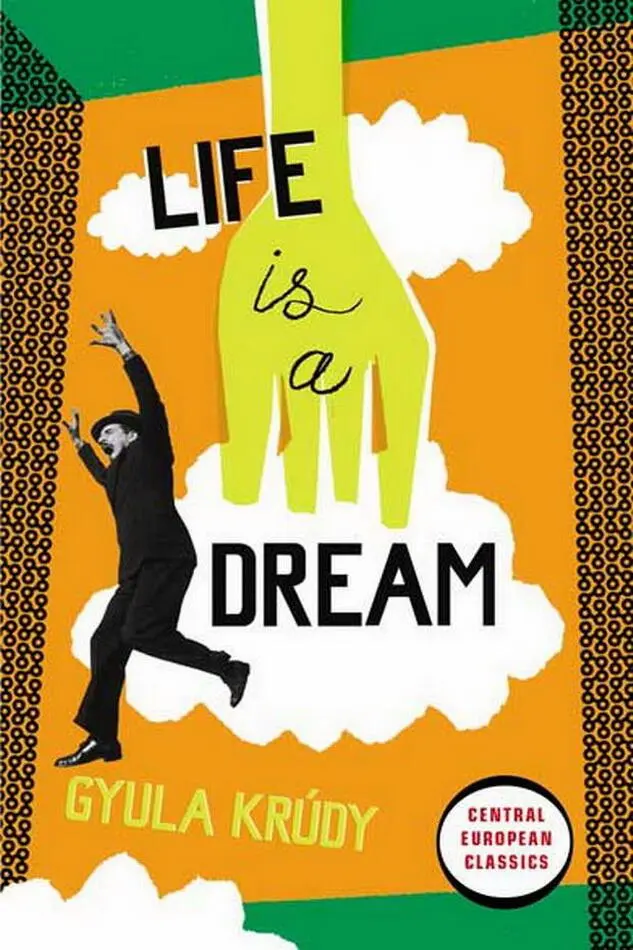
- Название:Life Is A Dream
- Автор:
- Издательство:Penguin Classics
- Жанр:
- Год:2010
- ISBN:нет данных
- Рейтинг книги:3 / 5. Голосов: 1
-
Избранное:Добавить в избранное
- Отзывы:
-
Ваша оценка:
Life Is A Dream: краткое содержание, описание и аннотация
Предлагаем к чтению аннотацию, описание, краткое содержание или предисловие (зависит от того, что написал сам автор книги «Life Is A Dream»). Если вы не нашли необходимую информацию о книге — напишите в комментариях, мы постараемся отыскать её.
Life is a Dream
Life Is A Dream — читать онлайн бесплатно полную книгу (весь текст) целиком
Ниже представлен текст книги, разбитый по страницам. Система сохранения места последней прочитанной страницы, позволяет с удобством читать онлайн бесплатно книгу «Life Is A Dream», без необходимости каждый раз заново искать на чём Вы остановились. Поставьте закладку, и сможете в любой момент перейти на страницу, на которой закончили чтение.
Интервал:
Закладка:
Suddenly, without any transition, the red moustache revealed its true colours, all the insidious venom hidden in it, as in every red moustache. ‘Well then, consider this visit never happened. And I came here solely for your sake!’
And the dealer in venison, fully aware of his importance, prestige and munificence, took his leave, wagging his head after seeing that his attempt at reconciling Hungarian literature and the aristocracy had failed. At home he probably told his wife all about the ingratitude of Hungarian writers towards people who want to help them.
Finedwell, too, felt a certain unease in finding himself at the corner table alone with the waiter and the pullet fricassee. Perhaps he had missed his final opportunity of making peace with his opponent … Who can foretell the fickle ways of fate? Perhaps it would have been better to work as an editor for the Salon Almanack if it meant surviving tomorrow?
‘I told you I wanted a rooster,’ Finedwell said to the solicitous waiter who, for lack of other customers, stood by the reporter’s side and watched in apparent amazement as the dead man took one bite after another from the chicken drumstick.
Janos did not reply for he had nothing to say, so Finedwell went on, grumpily: ‘You can’t get good service even at Kerschantz’s any more. Things being as they are, the only alternative is to stop going to restaurants. I, thank God, will have the best of reasons for staying away. Bang!’ yelled Finedwell, raising a salt stick to his temple.
‘Bang!’ the little waiter repeated and sidled away from the customer as if he had misgivings about standing near him.
Finedwell, deprived of a conversational partner, was left alone with his depressing thoughts.
We shall not attempt to describe these thoughts but merely note that prominent among them was the image of a galloping bay mare ridden by a horseman wearing pinstriped trousers and a top hat; the inscription under the framed picture was: ‘Life Flies By’. Wouldn’t it be wiser for him, Finedwell, to be flying as well, instead of stepping in front of the deadly pistol barrel?
He had already kneaded a respectable number of pellets from breadcrumbs on the table when the door opened once more, again admitting visitors for Finedwell.
I seem to bring business to this tavern, Finedwell reflected, recognizing the newcomers as the two gentlemen he had requested to be his seconds. They had nothing to do with journalism but were so-called gentlemen of leisure. Seeing them gave Finedwell such a painful spasm in the region of his diaphragm that it took a determined effort to hold down the food just consumed. Every single nerve fibre seemed to be jangling, a deathly cold shiver ran over his whole body and his face froze at the sight of these two men who now greeted him cheerfully, announcing they had looked for him ‘all over town’, until told at the editorial office that if the journalist was not at this tavern then he must have fled the city.
‘Who would say such a thing?’ asked Finedwell somewhat absent-mindedly, as if beginning to think that skipping town was not such a bad idea.
‘Aladar Szolyvai,’ replied one of the men.
This Aladar Szolyvai had been Finedwell’s perennial rival ‘at the paper’, who resented that the latter’s name appeared in print more often than his own.
‘Well, Szolyvai lied again, as so many times before!’ exclaimed the journalist with a well-timed burst of outrage that restored his spirits for the moment.
‘But others have voiced similar opinions,’ chimed in the other duelling second. ‘They say that Titusz Finedwell is not waiting out the hour of the duel but is running away from the capital. Alas, that would make no sense whatsoever, since the colonel’s friends, all army officers, are obliged to hunt you down anywhere in the world and hack you into smithereens, according to their code of honour.’
The man who said this was a lanky, pockmarked, big-nosed gentleman who spoke with a Slovakian accent. In civilian life he was a painter, but his name was cited more often in connection with duelling affairs than pictures at an exhibition. He spent the greater part of his life at various restaurant tables where he entertained the assembled company by telling horrifying tales of duels. For the past two decades he had something to do with just about every duel fought in Hungary.
The other second was a most dangerous manikin with a hunchback, whose pale face with its thin black beard, ever-present dinner jacket and tall cylindrical hat, pair of double-barrelled pistols carried in his pockets, sword-cane, large hunting knife in a vest pocket, and provocative behaviour were notorious all over the capital wherever affairs of honour were at stake.
The hunchback was a figure straight out of a novel. Noticing Finedwell’s umbrella-cane in the corner he eyed it contemptuously. ‘One slash of my sword-cane would crack that parson’s stick in two. That sort of thing is only suitable for a mild-mannered parish priest,’ he announced and placed his own stick, clattering with steel, as far as possible from Finedwell’s proud possession.
As regards his profession, the hunchback was a teacher of stenography, but he had little time for teaching because his friends all ‘dumped on him’ their affairs of honour. His name was Steepletippy, and he boasted that this extraordinary name had been bestowed on the family by Queen Maria Theresa herself.
Steepletippy took up a position with his back to the wall after looking left and right to ascertain from which direction some treacherous attack might be expected, be it an assault by a drunk, the approach of a bully, some unexpected insult, or a slap in the face. This man was always prepared for the event that some place, some time, he would get a beating. After seating himself, he pulled one of his pistols from a pocket, then the other one, and made sure they were loaded.
‘We are dealing here with the National Casino, and we know that their arms are far-reaching,’ said the diminutive duelling second in a muffled voice, his eyes, those of a consumptive, flashing enigmatically. ‘I do not presume any unchivalrous behaviour on your part, gentlemen, but we can never be certain if some servitor, some lackey, some waiter or footman or coachman might not decide to take vengeance with his own hands, in his master’s name? … Hm, what do you say, Loczi, am I not right? The other day that fat editor who wrote all that unpleasantness about a count’s mistress was badly beaten up by street porters who hang around in the neighbourhood of the Casino.’
The pockmarked gentleman named Loczi nodded in assent, for he did not like to argue over inconsequential details. He loved discussing duels, not brawling coachmen. So Loczi, in his Slovakian accent, went on with the story heard probably more than once by Steepletippy (with whom he was seen night and day in various restaurants), a story that he had begun to tell on the way here:
‘As I was saying, the wound seemed lethal. Upon my word of honour, I wouldn’t have given a plugged nickel for Count Pinchy’s life, for Count Bimby’s bullet had perforated the liver. The liver of a high-liver … Meanwhile those autumn flies never let up pestering me like mad, the stables were near the site of the duel … We had to go in search of a priest so Count Pinchy could die a good Catholic … You know I always cared about religion, my uncle was a dean in Rosemont … But I’m telling you those flies were unstoppable … ’
‘Those flies can be devils,’ admitted Steepletippy, now that Loczi spiced up the oft-told tale with this new motif of the flies. He had never mentioned flies before, Mr Loczi, and flies do like to harass duellers.
The gentlemen were soon done with their business at the tavern, as if they had come expressly to make sure that Finedwell had not fled from town. They were not true pub-crawlers, who are content to spend hour upon hour in slow tippling and silent reverie at a tavern. No, these two were merely visitors, who went to taverns only for the sake of daily arguments, and once there, cared not a whit about what they ate or drank, minding only what was said. They would have sat around in a tavern forever, if it were a matter of relating some heroic adventure, especially if they were able to weave themselves into the ramifications of the narrative.
Читать дальшеИнтервал:
Закладка:
Похожие книги на «Life Is A Dream»
Представляем Вашему вниманию похожие книги на «Life Is A Dream» списком для выбора. Мы отобрали схожую по названию и смыслу литературу в надежде предоставить читателям больше вариантов отыскать новые, интересные, ещё непрочитанные произведения.





Обсуждение, отзывы о книге «Life Is A Dream» и просто собственные мнения читателей. Оставьте ваши комментарии, напишите, что Вы думаете о произведении, его смысле или главных героях. Укажите что конкретно понравилось, а что нет, и почему Вы так считаете.