Gyula Krúdy - Life Is A Dream
Здесь есть возможность читать онлайн «Gyula Krúdy - Life Is A Dream» весь текст электронной книги совершенно бесплатно (целиком полную версию без сокращений). В некоторых случаях можно слушать аудио, скачать через торрент в формате fb2 и присутствует краткое содержание. Год выпуска: 2010, Издательство: Penguin Classics, Жанр: Современная проза, на английском языке. Описание произведения, (предисловие) а так же отзывы посетителей доступны на портале библиотеки ЛибКат.
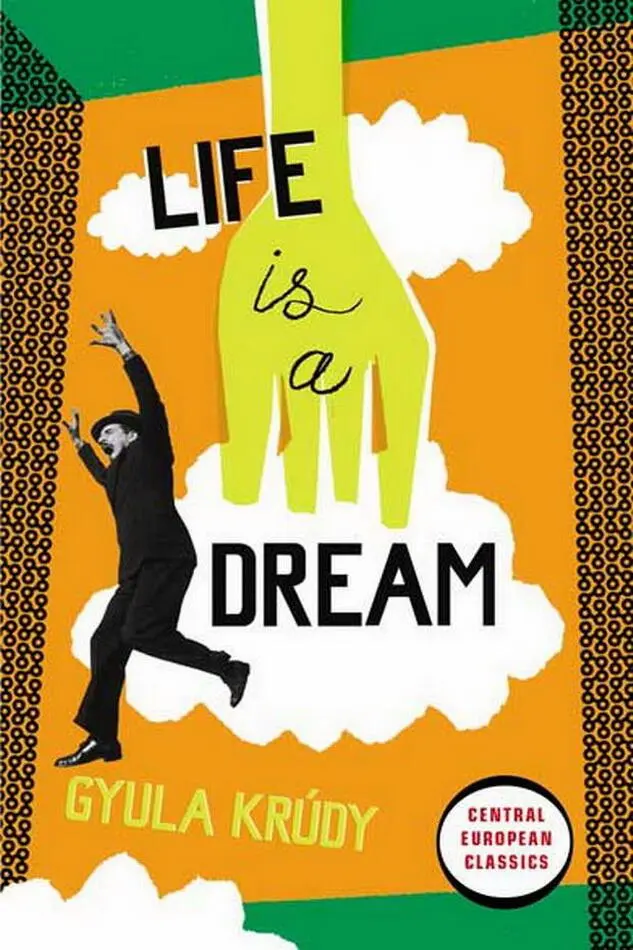
- Название:Life Is A Dream
- Автор:
- Издательство:Penguin Classics
- Жанр:
- Год:2010
- ISBN:нет данных
- Рейтинг книги:3 / 5. Голосов: 1
-
Избранное:Добавить в избранное
- Отзывы:
-
Ваша оценка:
Life Is A Dream: краткое содержание, описание и аннотация
Предлагаем к чтению аннотацию, описание, краткое содержание или предисловие (зависит от того, что написал сам автор книги «Life Is A Dream»). Если вы не нашли необходимую информацию о книге — напишите в комментариях, мы постараемся отыскать её.
Life is a Dream
Life Is A Dream — читать онлайн бесплатно полную книгу (весь текст) целиком
Ниже представлен текст книги, разбитый по страницам. Система сохранения места последней прочитанной страницы, позволяет с удобством читать онлайн бесплатно книгу «Life Is A Dream», без необходимости каждый раз заново искать на чём Вы остановились. Поставьте закладку, и сможете в любой момент перейти на страницу, на которой закончили чтение.
Интервал:
Закладка:
‘The widow Mrs Titusz Finedwell,’ said Olga and produced a pencil to write it on the edge of a cash till receipt: widow Mrs Titusz Finedwell. She circled the name as if to remember it forever.
Titusz warbled on enthused, as those men do who seize a rare occasion to speak of themselves. ‘Not even a cat will be left behind, after I’m dead … My name will be in the papers for a day or two, and then it will never be mentioned again in this land. Not even accidentally. But if there were to be a widowed Mrs Finedwell to visit my grave once in a blue moon, I would feel ever so much better down below. People would say that Finedwell was not such a bad fellow after all, before he died he honoured the promise he’d made so often to the cashier lady at the Café Ferenci. My memory would be shrouded by a certain aura, proving that I had not lived frivolously, from moment to moment, hand to mouth, but I had some purpose in this world, some goal that I had realized.’
These sentimental words did indeed have their effect, for Olga reached up with one hand towards the brandy bottles while the other hand flashed a small glass that she made sure was clean. ‘I believe this is the Passover plum brandy that orthodox Jews like to drink. The boss never drinks anything else.’
With a weary smile of farewell, Finedwell tossed back the drink. The brandy warmed his innards, and he would have liked to have talked some more. But Olga gave him a serious look and sent him home before Finedwell had a chance to be carried away by another attack of sentimentality. ‘We’ll continue our talk tomorrow.’
His voice hoarse with the brandy, Titus replied: ‘Is that what you think?’
‘Yes, I have a feeling we shall,’ was Olga’s answer. And she held out her hand to Finedwell.
Were the green Tyrolean hat and the umbrella-cane surprised when they arrived, after a lengthy hike, at Finedwell’s quarters?
At daybreak Finedwell usually flung himself upon his bed as if he had returned from the world of the dead, to become an infant again, lying in the foetal position under an obituary in a black frame that hung on the wall right next to the sleeper’s head. This obituary — or ‘funeral notice’, as they said in those days — stated that Mrs Robert Finedwell had passed away at age thirty-two after a prolonged illness. This Mrs Robert Finedwell was Titusz’s mother, and the obituary was his only possession. Not much of a fortune, but just enough for a sentimental man.
Shall we describe Finedwell’s room? It was about the size of a hazelnut with a hole. But the keyhole, through which one might peek into the room, was always stuffed with a rag. On the outside of the door a slip of paper was kept in perpetual motion by the draught in the corridor of this ancient Inner City building. The sign said ‘I’ll be right back!’ — but the tenant never was.
The journalist, half-asleep, had a number of visitors. First, a shoemaker’s apprentice lad, clutching a piece of paper that looked dirty enough to have been with him since birth. He stood in front of the door for a while, staring at its odd message as if seeing it for the first time, before his fevered glance was attracted towards the building’s courtyard, where he presently joined the procession accompanying a blind street singer from house to house.
The journalist was well acquainted with the footfalls of his tailor who kept dropping in on him like some lovelorn admirer and, if allowed to slip through the door, always began by saying that he just happened to chance this way, and he certainly wouldn’t want to trouble Mr Finedwell on account of a trifling sum. The tailor’s sighs practically blew through the door as he squatted in front of the keyhole and yelled all sorts of terms of endearment at the journalist: ‘I only wanted to see you, my good sir, just to wish you luck. And to hear some reassurance, that sooner or later you’ll get to me. Let me in, my dear Mr Editor, I swear I didn’t even bring a bill with me.’
But Titusz burrowed all the deeper under his quilt, and failed to respond even to the craftiest cajoling. After all it was not for nothing that he had written ‘I’ll be right back!’ on the door. Let the tailor wait if he felt like it.
The tailor went away, but suddenly returned and indignantly shouted through the keyhole: ‘God help me I’ll take you to court if you don’t let me in this very instant!’
The tailor waited. But Finedwell did not budge, even though he was beginning to regret putting that fatal sign on the door.
And Finedwell (who was, after all, a decent sort) suffered pangs of guilt on hearing the tailor’s dejected footfalls growing fainter, retreating from the door. He never intended to hurt the good man, but he could not make an exception of him.
But now the building started to quake with steps approaching on the spiral stairs that linked the ground floor of this ancient house to the first floor. Seeing these winding stairs Titusz had often wondered: how did they ever take a coffin out of here. The approaching footfalls heralded danger, a ferocious attack, charging towards Titusz’s door as if at the very least announcing the bearer of a court summons. Merciless, feral steps, like those of a bailiff closing in on the victim.
The journalist knew the perpetrator of these steps: it was Mr Munk, the debt-collector, whose manner of dealing with his customers was as rough as sandpaper. Mr Munk was a heavy-set, red-haired man whose aim in life was to have each resident of the capital pay instalments to him. Mr Munk’s laughter on seeing the sign on the door was scornful and highly audible. ‘Very well, my dear Mr Editor, very well indeed!’
And he could be heard snorting and gnashing his teeth as he rubbed his sweating forehead with a large linen kerchief. ‘This is scandalous!’ he kept repeating, and having found a chair somewhere he planted himself in front of the door.
The journalist racked his brains trying to figure out which of his enemies could have given the chair to Munk. Possibly the building’s janitor … or was it the midwife next door, who resented the fact that she could hope for no business from Titusz? People are wicked and like to gloat at another’s misfortune, Titusz thought gloomily, beneath the obituary, as if it had been his own. He felt not an ounce of strength left to take on Mr Munk; he felt himself so helpless that it actually felt good, for at least he did not have to make the smallest effort, like a patient in critical condition yielding to his fate, at most hoping for a miracle. But no miracle would work against Mr Munk, who had settled in front of this door, and all his wheezing, hawking and belching could be clearly heard inside the room, as if Mr Munk used the time of waiting to rehearse the ways he could make himself even more repulsive. He rustled a newspaper; next he leafed through his pocket notebook, the squeaking of his pencil clearly audible as he corrected his notes. Every life has horrible moments such as these, when you are unable to shake off some exasperating burden that weighs over your heart. Mr Munk was quite a sizeable burden.
Half dead with these torments, the journalist lay in bed not daring to move, hoping that at best Mr Munk would believe that he was asleep and would not sound off that terrifying, aggressive, unbearable voice of his that he employed to drive debtors to their graves.
At this moment our journalist would much rather have faced the colonel’s pistol than Mr Munk’s custody. It took but a moment for the pistol to fire (as he had witnessed earlier that night), but Mr Munk was capable of sitting around for hours in front of the door. Nor was Mr Munk the least bit bored, as one would have imagined. He coughed. Softly, as city folks do. Then, in the manner of a villager who wants to find some enjoyment even in coughing. He scratched his itching parts. He scratched his palms, his head; he dug into his ears with a matchstick, an operation that made him groan with pleasure — then he rubbed his calves against each other. Some people are never bored, they always find something about their bodies to keep them busy. Munk, when he could no longer find anything else to do, kicked off his boots and sat in his socks.
Читать дальшеИнтервал:
Закладка:
Похожие книги на «Life Is A Dream»
Представляем Вашему вниманию похожие книги на «Life Is A Dream» списком для выбора. Мы отобрали схожую по названию и смыслу литературу в надежде предоставить читателям больше вариантов отыскать новые, интересные, ещё непрочитанные произведения.







Обсуждение, отзывы о книге «Life Is A Dream» и просто собственные мнения читателей. Оставьте ваши комментарии, напишите, что Вы думаете о произведении, его смысле или главных героях. Укажите что конкретно понравилось, а что нет, и почему Вы так считаете.