Evald Flisar - My Father's Dreams
Здесь есть возможность читать онлайн «Evald Flisar - My Father's Dreams» весь текст электронной книги совершенно бесплатно (целиком полную версию без сокращений). В некоторых случаях можно слушать аудио, скачать через торрент в формате fb2 и присутствует краткое содержание. Год выпуска: 2015, Издательство: Istros Books, Жанр: Современная проза, на английском языке. Описание произведения, (предисловие) а так же отзывы посетителей доступны на портале библиотеки ЛибКат.
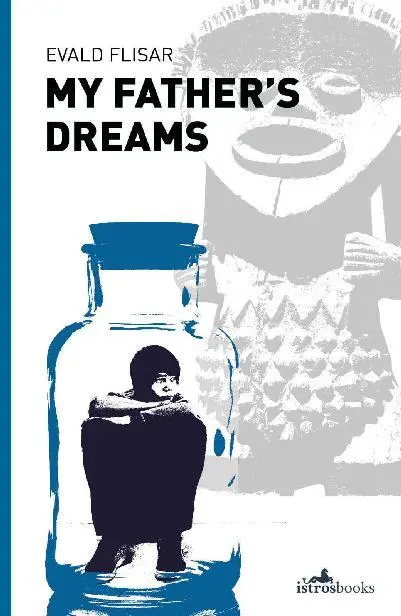
- Название:My Father's Dreams
- Автор:
- Издательство:Istros Books
- Жанр:
- Год:2015
- ISBN:нет данных
- Рейтинг книги:4 / 5. Голосов: 1
-
Избранное:Добавить в избранное
- Отзывы:
-
Ваша оценка:
My Father's Dreams: краткое содержание, описание и аннотация
Предлагаем к чтению аннотацию, описание, краткое содержание или предисловие (зависит от того, что написал сам автор книги «My Father's Dreams»). Если вы не нашли необходимую информацию о книге — напишите в комментариях, мы постараемся отыскать её.
My Father's Dreams — читать онлайн бесплатно полную книгу (весь текст) целиком
Ниже представлен текст книги, разбитый по страницам. Система сохранения места последней прочитанной страницы, позволяет с удобством читать онлайн бесплатно книгу «My Father's Dreams», без необходимости каждый раз заново искать на чём Вы остановились. Поставьте закладку, и сможете в любой момент перейти на страницу, на которой закончили чтение.
Интервал:
Закладка:
After all these years my memory of that meeting is still surprisingly clear. Although I had only come to understand certain expressions and phrases through my prolific reading later on, I can say with some certainty that I had been forced to listen to a lot of animated drivel about archetypes and symbols, analogies between my dreams and ancient myths, suppressed sexual leanings towards my Father, which in my dreams I conveniently projected onto a pretty young girl, and the like. I had to listen to lengthy arguments in support of the view that most, if not all, objects in my dreams, the snake, human bone, frog-head and especially the rooster had phallic connotations, and that my dreams were quite clearly an expression of my inferiority complex with regard to my schoolmates, for they represented at least one domain which was mine alone, and in which I was the undisputed king. I had to listen to emphatic propositions about the possibility of addiction to erotic images, which might not be dreams at all, but daydreams, for how could they be dreams, since not a single such case had been registered in the whole of psychoanalytic literature!
One of the invited experts spoke about my neurosis as being the consequence of an exaggerated care of my Mother, who probably enjoyed an unsatisfactory love life with my Father, and so projected all her love and care onto her son, without letting him grow up and free himself from her influence. This meant that the only way the son could escape her was through dreams, in which he was punishing the possessive Mother by betraying her, not alone, of course, but by using his father as a proxy, the very one who, with his denial of love and support, had forced Mother into the role of Jocasta in the first place. And so on, all spoken in earnest and with true scientific zeal. I did not catch everything, because in between I managed to doze off a number of times.
My attention intensified only once: when one of the invited guests, a young man who looked like a student, although the others referred to him as doctor, unfolded colour photocopies of what he called two major works of art. The first one, from he seventeenth century, was painted by Hendrick Sorgh. The picture showed a man sitting at a table and playing the lute, with a dog lying at his feet and gnawing a bone. The painting was realistic, finished to the smallest detail, with all parts of the composition clearly recognisable.
The other painting was created by Joan Miró and represented some sort of artistic plagiarism, with the components of Sorgh’s picture shifted into a completely different, surrealist style. Everything that Sorgh painted was still there, but broken up into colour fragments, with the lute player having no torso, the dog much smaller, and the lute having the shape of an unfamiliar animal; in other words, reality had evaded the rules of ordinary perception and moved into the realm of imagination and dreams.
Something similar, continued the young doctor, had happened to me. I no longer perceived reality the way it was perceived by the author of the first painting, and was perceived by and large by everybody else. I perceived it more the way it was perceived by the author of the second painting, with shapes and meanings and events slightly out of focus or in double focus. The question, therefore, is not whether I keep having the same dreams all the time, the question is whether my dreams are dreams at all, or perhaps reality which is so shocking that I can only absorb it Miró-like, transfigured into dream images, which on the one hand I probably find sexually exciting, while on the other I am released from any blame for what I dream about. This could also be more than a credible explanation for why my dreams appear so tenacious.
The next question, perhaps even more important, is the nature of my shifts from one type of reality to another: to what extent am I aware of them, to what extent do I control them, and how great is the danger that both of these pictures will join into one, which will be neither the first nor the second, but a third — a mature psychosis. This, concluded the young doctor, is what we should talk about, not about Freud’s phallic symbols or Jung’s mysticism.
He rolled up the two paintings and quietly returned to his chair. There was a silence. Then it came like a landslide; it sounded as if he had been pounced on by everybody at the same time. I was overcome by complete exhaustion, I don’t remember whether I fainted or fell asleep, but the last thing I recall was slowly sliding off the chair onto the floor, from where I must have been carried to my room, where I later awoke in my bed.
A look out the window told me that evening was not far away. The cascading woods were suddenly very dark, as if the trees had lost all their leaves in a single day. Darkness was creeping up from the valley, from down below and from somewhere inside me, slowly, inexorably. For the first time I began to suspect that I was seriously ill. And for the first time since coming to the mountain holiday home I felt desperately lonely, wanting to return home.
I dared not even think that this could ever happen, at least not for many years. But only three days later I was summoned to the manager’s office. He wanted to know how I was. I said I was a little tired, but otherwise quite all right; mental gymnastics must have done me a lot of good.
“I’m glad to hear that,” he said rather cagily, as if not completely convinced I was telling the truth. “What about dreams?”
“Dreams?” I asked. “What dreams?”
He looked at me as if I were playing some childish game.
“Dreams because of which you are here, boy,” he said with a touch of impatience.
“I’ve stopped having them, sir.”
“What do you mean, you’ve stopped having them?”
I shrugged. “Those dreams stopped as soon as I came here.”
“Just like that?”
“Just like that, sir. You said yourself that the mountain air was very healthy.”
He winced. “Are you making fun of me?”
“Not at all, sir.”
And I shook my head vigorously.
“Why didn’t you say so before?”
“No one asked me, sir,” I said quietly, secure in the knowledge that I was telling the truth.
“Your smile is gone, too,” he said approvingly. After a short reflection he added, “Almost no reason for you to stay any more.”
“No, sir,” I nodded, making sure I did not sound too eager.
For a few moments he drummed with his fingers on the table. Then he opened my file and wrote something on a sheet of paper.
“Well,” he said with a smirk of satisfaction, “we’re continuously reproached that we don’t really cure anybody.” He crossed his arms and smiled at me almost gratefully. “Hardly so, is it, Albert?”
“Adam,” I said.
21
It was All Saints’ Day when I left the “home for people who have gone bonkers”. The train was almost empty, so I stretched out on the bench and dozed off, waking just in time to alight at the right station. I looked around for Father, who was supposed to pick me up, but he wasn’t there; he must have been held up by an urgent case. I thought of telephoning him from the nearby inn, but just before reaching the entrance I turned and walked past it. The telephone was probably at the bar, the waiter and other guests would overhear the conversation, and I simply had no strength for exposing myself like that. The simplest thing was to walk home through the woods.
A light drizzle soon turned to rain, and as I walked among the trees with an umbrella in my left hand and my suitcase in the right, water soon penetrated my shoes, which began to make squishy noises. I listened to the rustling of fallen leaves under my feet, but the sound was not harsh, it was dull and soft, which I found comforting. The wood spread around me like a smooth-combed and shivering beast, with branches mutely curved downwards with heavy moisture, and with ominous shadows lurking in the depth of its eyes. It seemed to be afraid of me, an old acquaintance whose footsteps were suddenly so much slower, stickier and more careful than they used to be.
Читать дальшеИнтервал:
Закладка:
Похожие книги на «My Father's Dreams»
Представляем Вашему вниманию похожие книги на «My Father's Dreams» списком для выбора. Мы отобрали схожую по названию и смыслу литературу в надежде предоставить читателям больше вариантов отыскать новые, интересные, ещё непрочитанные произведения.








Обсуждение, отзывы о книге «My Father's Dreams» и просто собственные мнения читателей. Оставьте ваши комментарии, напишите, что Вы думаете о произведении, его смысле или главных героях. Укажите что конкретно понравилось, а что нет, и почему Вы так считаете.