Evald Flisar - My Father's Dreams
Здесь есть возможность читать онлайн «Evald Flisar - My Father's Dreams» весь текст электронной книги совершенно бесплатно (целиком полную версию без сокращений). В некоторых случаях можно слушать аудио, скачать через торрент в формате fb2 и присутствует краткое содержание. Год выпуска: 2015, Издательство: Istros Books, Жанр: Современная проза, на английском языке. Описание произведения, (предисловие) а так же отзывы посетителей доступны на портале библиотеки ЛибКат.
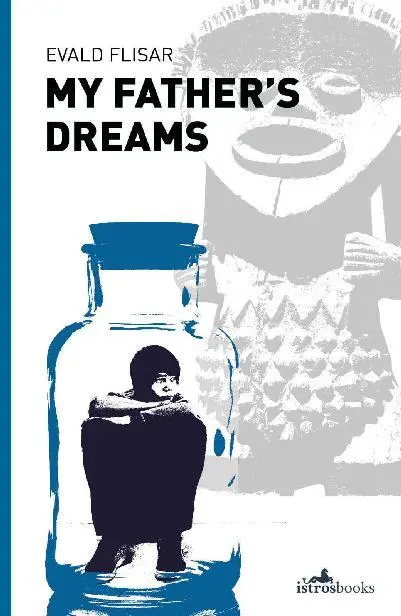
- Название:My Father's Dreams
- Автор:
- Издательство:Istros Books
- Жанр:
- Год:2015
- ISBN:нет данных
- Рейтинг книги:4 / 5. Голосов: 1
-
Избранное:Добавить в избранное
- Отзывы:
-
Ваша оценка:
My Father's Dreams: краткое содержание, описание и аннотация
Предлагаем к чтению аннотацию, описание, краткое содержание или предисловие (зависит от того, что написал сам автор книги «My Father's Dreams»). Если вы не нашли необходимую информацию о книге — напишите в комментариях, мы постараемся отыскать её.
My Father's Dreams — читать онлайн бесплатно полную книгу (весь текст) целиком
Ниже представлен текст книги, разбитый по страницам. Система сохранения места последней прочитанной страницы, позволяет с удобством читать онлайн бесплатно книгу «My Father's Dreams», без необходимости каждый раз заново искать на чём Вы остановились. Поставьте закладку, и сможете в любой момент перейти на страницу, на которой закончили чтение.
Интервал:
Закладка:
The next morning Mother began to pack. I watched her movements without fully understanding what they meant, or even realising that they were in any way connected with me. For that reason I did not pay any attention to the fact that she stuffed my suitcase full of clothes, while she herself took no more than a small bag. Before driving us to the station, Father gave her a sealed envelope: he explained that it contained a personal plea to the manager of the mountain resort to take special care of us. I thought this was going a touch too far; since we were neither handicapped nor incapacitated in other ways, we had no right to expect more than other guests. But Mother placed the envelope in her handbag as if entrusted with an important document.
During the train journey I remained detached. I sat by the window. The clatter of wheels underneath the carriage turned the passing landscape into a series of rhythmic waves and hops, with an iridescence of colours and shapes that began to bring to my mind a flux of memories of recent events, especially those at Grandpa Dominic’s house. “Whenever you think of me you must smile! That’s an order!” It was an order that I found impossible to resist. It was only by smiling that I could remain in touch with the girl who was prepared to take me on a journey into the land of never-encountered bliss; the girl who would forever remain the queen of my dreams.
Mother left me in peace; she was well aware of the risk of upsetting me. She must also have been ashamed of me, for the carriage was filled with a motley collection of passengers most of whom were staring at me quite openly. In the glass-covered photograph affixed to the wall of the opposite bench I occasionally caught sight of my face, especially clearly when the sun dipped behind clouds for a moment or two. It was the face of a circus clown, with the mouth extended and curved upward in the most stupid grin imaginable. My hair, too, had become strangely rebellious, projecting into the air in twisted tufts like the bristles of an old brush. Our fellow passengers in the carriage could be forgiven for thinking that I was a retarded boy who was being escorted by his Mother back to the home for the mentally handicapped.
Ten minutes before we were due to arrive I went to the lavatory. It was small and filthy, and it smelled so badly that I nearly fainted.
Then I noticed a small mirror above the sink. I was shocked to discover that my face had gained an unhealthy red, almost crimson colour, and was developing gaps, not only in the skin, but in the flesh, too, and that these gaps were growing as fast as I could follow the process with my eyes. The smile was no longer the problem; suddenly, something worse appeared to be happening. I began to feel very hot all over my body, as if blood had started to boil in my veins, and I was assailed by the fear of losing my face. I utilised all my remaining strength to get away from the mirror, I even forgot the pressure in my bladder which had brought me there, but some devilish force kept me glued to my reflection: I was obliged to watch how parts of my face vanished before my eyes.
First the hair disappeared as if melting away, and my scalp turned shiny white; then a dark hollow appeared in my forehead, or, to put it more accurately, the hollow did not appear in my forehead but simply replaced it; then my lower jaw began to wobble and melt like butter in a hot frying pan. Then, one after another, the remaining parts of my face disappeared; they did not fall off or crumble, they simply paled and sank into themselves, became less and less visible, until they turned into vibrating air. In the end only eyes remained on top of the brain stem jutting out from my trunk, large, wide-open, tear-swollen eyes.
20
No one ever told me how I managed to get from the filthy train lavatory to the bottom of the wide stairs which leading up to the entrance of the mountain resort. A golden October afternoon was sinking into the embrace of a chilly evening above the roof of the imposing building, which looked more like a palace than a mountain holiday home. Below me, the gilded woods of birch and elm cascaded into the valley like a sea of colour which an earthquake had turned into a huge waterfall. Wherever I looked, whether at the cool sky or the leaf-strewn lawns in front of the building, I felt creeping anxiety which made me dizzy.
“Adam,” Mother took me by the elbow and pulled me towards the entrance. “They’re waiting for us.”
No one was waiting for us, quite the contrary: we had to march up and down long corridors for almost an hour, with surly officials sending us from office to office as if this was what they were being paid for, and everywhere Mother protested, complaining that she could not understand how things could have gone so horribly wrong after the place had been so clearly reserved. In the end it was all sorted out and we got a nice room with a view of the casca ding woods and the valley bellow. But the room was too small for both of us, it had only one, very narrow bed, so Mother said that she would get another room for herself, I should unpack and relax, and we would see each other at breakfast.
Why not at dinner, I wanted to ask, but Mother’s steps had already drawn away down the corridor. I saw her neither at dinner nor at breakfast the following morning, and not even at lunch. I did not see her at all, and when I asked what they had done with her I was told that she had gone home. This was confirmed by the manager of the holiday home, who called me into his office and spent quite a long time reading Father’s recommendation letter. He found parts of it so interesting that he went over them twice.
“Well, my goodness,” he muttered as he was nearing the end.
He placed the letter into a folder on which someone had already scrawled my name. I had no idea why it was necessary to keep files on the guests of a mountain holiday home, but they were obviously well organised here, and clean, too; why else would many of the staff walk around in white coats. The manager, too, was wearing a white coat, very much like Father’s, but for some reason he reminded me more of an assistant in a delicatessen shop, probably because of his rosy, puffed-up face.
“Albert,” he gave me a superficial smile. Then his eyes were drawn to the name on the folder. “Sorry, Adam. You are Adam, aren’t you?”
I nodded.
“Let me tell you what we’re going to do, Adam. We’re going to wipe that smile off your face. And then, if you allow me a little pun, you’ll be able to go home with a smile on your face. What?” And he laughed, expecting me to do the same.
“But I don’t have a face anymore,” I said.
I told him briefly what happened on the train.
He pushed back his chair, rose to his feet and beckoned me to follow him to the mirror on the side wall next to the door. “Come, come,” he became impatient.
I joined him in front of the mirror, but dared not look into it; the thought of what I might see was enough to make me feel weak in the knees. But the manager placed his hand under my chin and jerked my head upward; before I could close my eyes I caught sight of my face in the mirror, and, miraculously, my face was again in its place, completely normal, fully restored, including the smile, which had become an inseparable part of me.
“You don’t have a face?” the manager asked.
I explained that for some inexplicable reason it had come back.
“There you are,” he said. “You’ve only just arrived, and already we’re noting improvements. The mountain air appears to be good for you.”
That may have been so, but certainly not with regard to some other guests, who appeared to be in a far worse state than I. If they didn’t emit piercing shrieks or bang on the walls, they would stand around like statues, staring into the air or at the floor in front of their feet. Some of them never got out of their pyjamas, and not once did I see anyone setting off for a walk in the woods, a normal sight in mountain holiday homes. Some walked up and down, engaged in endless arguments with themselves, while others crawled around on all fours as if looking for a lost button. Very few guests behaved as if they were on holiday.
Читать дальшеИнтервал:
Закладка:
Похожие книги на «My Father's Dreams»
Представляем Вашему вниманию похожие книги на «My Father's Dreams» списком для выбора. Мы отобрали схожую по названию и смыслу литературу в надежде предоставить читателям больше вариантов отыскать новые, интересные, ещё непрочитанные произведения.







Обсуждение, отзывы о книге «My Father's Dreams» и просто собственные мнения читателей. Оставьте ваши комментарии, напишите, что Вы думаете о произведении, его смысле или главных героях. Укажите что конкретно понравилось, а что нет, и почему Вы так считаете.