Evald Flisar - My Father's Dreams
Здесь есть возможность читать онлайн «Evald Flisar - My Father's Dreams» весь текст электронной книги совершенно бесплатно (целиком полную версию без сокращений). В некоторых случаях можно слушать аудио, скачать через торрент в формате fb2 и присутствует краткое содержание. Год выпуска: 2015, Издательство: Istros Books, Жанр: Современная проза, на английском языке. Описание произведения, (предисловие) а так же отзывы посетителей доступны на портале библиотеки ЛибКат.
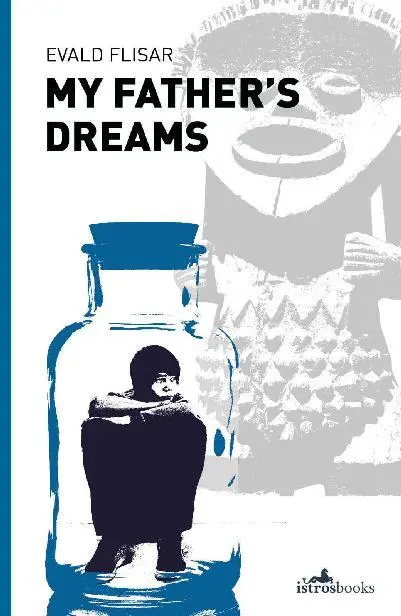
- Название:My Father's Dreams
- Автор:
- Издательство:Istros Books
- Жанр:
- Год:2015
- ISBN:нет данных
- Рейтинг книги:4 / 5. Голосов: 1
-
Избранное:Добавить в избранное
- Отзывы:
-
Ваша оценка:
My Father's Dreams: краткое содержание, описание и аннотация
Предлагаем к чтению аннотацию, описание, краткое содержание или предисловие (зависит от того, что написал сам автор книги «My Father's Dreams»). Если вы не нашли необходимую информацию о книге — напишите в комментариях, мы постараемся отыскать её.
My Father's Dreams — читать онлайн бесплатно полную книгу (весь текст) целиком
Ниже представлен текст книги, разбитый по страницам. Система сохранения места последней прочитанной страницы, позволяет с удобством читать онлайн бесплатно книгу «My Father's Dreams», без необходимости каждый раз заново искать на чём Вы остановились. Поставьте закладку, и сможете в любой момент перейти на страницу, на которой закончили чтение.
Интервал:
Закладка:
Father rejected her supposition, but failed to offer a viable explanation. I could see that my strange behaviour got him worried, perhaps even more so than Mother. I had no doubt that my Father loved me and would do anything to help me keep sane. He had proved that a number of times, not only by discussing my case with Dr. Kleindienst, but also by denying to the police that he had any idea who might have broken into the surgery. It certainly wasn’t me, he insisted. Yes, the ampoules had been found at Grandpa Dominic’s house, but I had nothing to do with it. Yes, the girl was an addict, and he gave her maintenance doses whenever she came to visit her grandfather. But he was obliged to do so as a doctor, to prevent her from experiencing a withdrawal shock. Yes, someone had broken into the surgery and stolen the ampoules, but who it was was anybody’s guess and for the police to find out. It certainly wasn’t me. Much more likely it was the girl herself. In any case her father, who deserves a slap on the face rather than a medal for parenthood, had taken her home now, and that was the end of the matter as far as he was concerned.
Why would my Father lie to protect me if not for the only possible reason that he loved me? He must have known pretty well who the culprit was. Even Abortus agreed with me, when I read him my diary record of events. He must have found the whole thing quite engrossing, because in the end he seemed to be smiling in much the same way I did.
When my grinning became so much a part of me that I wasn’t aware of it any more, an event took place which made me realise with a shock that all was not well. One morning at school, during an interval, I bumped into a physics teacher who unexpectedly stepped out of a classroom into the corridor. He slapped my face. Although he was no less astonished at his reaction than I was, I couldn’t wait for him to apologise; I ran into the toilet and locked myself in one of the cabins. To suppress the violent sobbing that was rising toward my throat, I stepped out again to walk up and down. One of the taps was dripping and I thought it might be a good idea to splash some water on my face.
There was a mirror above the sink, and no matter how hard I tried to avoid catching sight of my reflection, that was exactly what happened. My chest was nearly bursting with grief, but my face was twisted into the stupidest smile imaginable. Every few moments my mouth would relapse into a pouting expression of torment, but only for a split second, then it would again spread out into a picture of vacant joy and benevolence. Only the eyes never changed, remaining turned inward, as if living a life of their own, unconnected with me.
When the first wave of horror passed, I tried to mobilise my facial muscles to create the expression that would convey my true feelings. But whether I extended or contracted the muscles, the smile would return as soon as I relaxed them. I tried to lengthen the interval between con bouts of smiling, but as soon as I batted an eyelid or twitched the corner of my mouth, the smile would return in spite of my efforts to affect a sombre expression. The pressure in my chest ebbed away and was replaced by a dull burden of humiliation.
I decided to return to the classroom. But in the corridor I realised that I couldn’t really do that; I had simply run out of strength to cope with the discomfort of the teachers and the smirking of my schoolmates. I turned and ran down the stairs and out into the courtyard. It was there that I realised I had left my bag in the classroom. But I no longer cared, I ran all the way home, keeping as much as possible to the wood, to meet as few people as possible. I locked myself in my room and decided never to come out again.
Late in the afternoon I smashed the wall mirror and climbed into bed, pulling the duvet over my head. I did that partly to hide and partly to muffle the sounds of Mother’s whining and scolding. When she realised that I had locked myself in, she came to bang on the door and demand that I come out.
“Leave him,” I heard Father’s disgruntled voice, “let him be, for God’s sake.”
Mother withdrew and did not return. From time to time I heard them talking to each other in the living room, with Father trying to prove a point and Mother crying. Late in the evening, as I cautiously unlocked the door to sneak to the toilet, I found a plate of spaghetti on the doorstep. I ate the food and put the plate back where I found it. The next morning it wasn’t there anymore. There was another, with two fried eggs and a piece of bread. Every so often I would hear the creaking of steps in the corridor, as Mother walked up and down, paused at the door every so often and quietly begged me to come out. “Adam, please, say something, let me hear your voice.”
She dared not leave the house, she was afraid I might do something to myself. She took indefinite sick leave.
I don’t remember how many days I spent in the room. After a while all days merged into one, especially when it started to rain and everything became suffused with damp mist. It was difficult to tell morning from afternoon, the daylight hardly varied. Everything around me had frozen into an endlessly repeating pattern: the cautious creaking of Mother’s steps in front of my door, the steady drizzle of rain outside the window, water dripping from trees in the orchard, raindrops bouncing off the fallen leaves on the ground.
The monotony finally sucked me in as if into a swamp. I stopped opening the door and taking in plates of food; I no longer felt hungry. As for thirst, I would open the window every so often and catch into cupped hands some drops of water falling from a leaking gutter. And I stopped sneaking out to the toilet; I peed out of the window. As for the other thing, there was no need; everything in my bowels had come to a standstill.
Then one day it stopped raining, and the heavy clouds began to disperse. They hung about for another two days as if regrouping for a comeback, but eventually the sun broke through and made the air almost vibrate with the cleansed colours of nature. The weather became my great healer, with the sun bouncing off all the surfaces, and flowing among the trees in the orchard like a river of gold. I unlocked the door and ventured out into the courtyard. I sat on a bench near the garage and tried to reconnect with my innermost feelings. The idea of food no longer repelled me; in fact I would have given anything for a piece of Mother’s apple pie, my favourite. I mentioned this to Mother in passing, as if the thing was of no consequence, really, but if she did happen to have one ready I wouldn’t mind trying a piece. And I mumbled on as if ashamed of expressing a wish that seemed almost childish.
But Mother, delighted with my apparent return to normality, immediately cycled down to the shop to buy the ingredients. Then she set to work and had the pie ready for the oven in half an hour. While waiting for it to be baked she mentioned as if in passing that the weather was just right for a short holiday in the mountains, among the pine forests and meadows, where we could hike at leisure in complete solitude, regaining peace and energy for the school year ahead. We had not been to the mountains for years, she stressed, clinching her case with the least convincing argument. But I felt no resistance to the suggestion; in fact I found the idea of a train journey, and of wandering through pine forests alone, with no one to face or hide from, quite appealing.
Mother pretended not to see the grinning mask on my face. Only Father would gaze at me across the dining table with a look that expressed an equal measure of fatherly concern and professional confusion. At least that’s how I remember interpreting what I saw in his eyes, but perhaps, judging by his relentless gaze, there was more: resentment, anger, guilt, all of it mixed into a new, unfamiliar emotion in which I could no longer feel the unconditional affection I had always been sure of. He, too, was of the opinion that a few days in the mountains would do me good.
Читать дальшеИнтервал:
Закладка:
Похожие книги на «My Father's Dreams»
Представляем Вашему вниманию похожие книги на «My Father's Dreams» списком для выбора. Мы отобрали схожую по названию и смыслу литературу в надежде предоставить читателям больше вариантов отыскать новые, интересные, ещё непрочитанные произведения.









Обсуждение, отзывы о книге «My Father's Dreams» и просто собственные мнения читателей. Оставьте ваши комментарии, напишите, что Вы думаете о произведении, его смысле или главных героях. Укажите что конкретно понравилось, а что нет, и почему Вы так считаете.