Nathan Hill - The Nix
Здесь есть возможность читать онлайн «Nathan Hill - The Nix» весь текст электронной книги совершенно бесплатно (целиком полную версию без сокращений). В некоторых случаях можно слушать аудио, скачать через торрент в формате fb2 и присутствует краткое содержание. Год выпуска: 2016, Издательство: Knopf, Жанр: Современная проза, на английском языке. Описание произведения, (предисловие) а так же отзывы посетителей доступны на портале библиотеки ЛибКат.
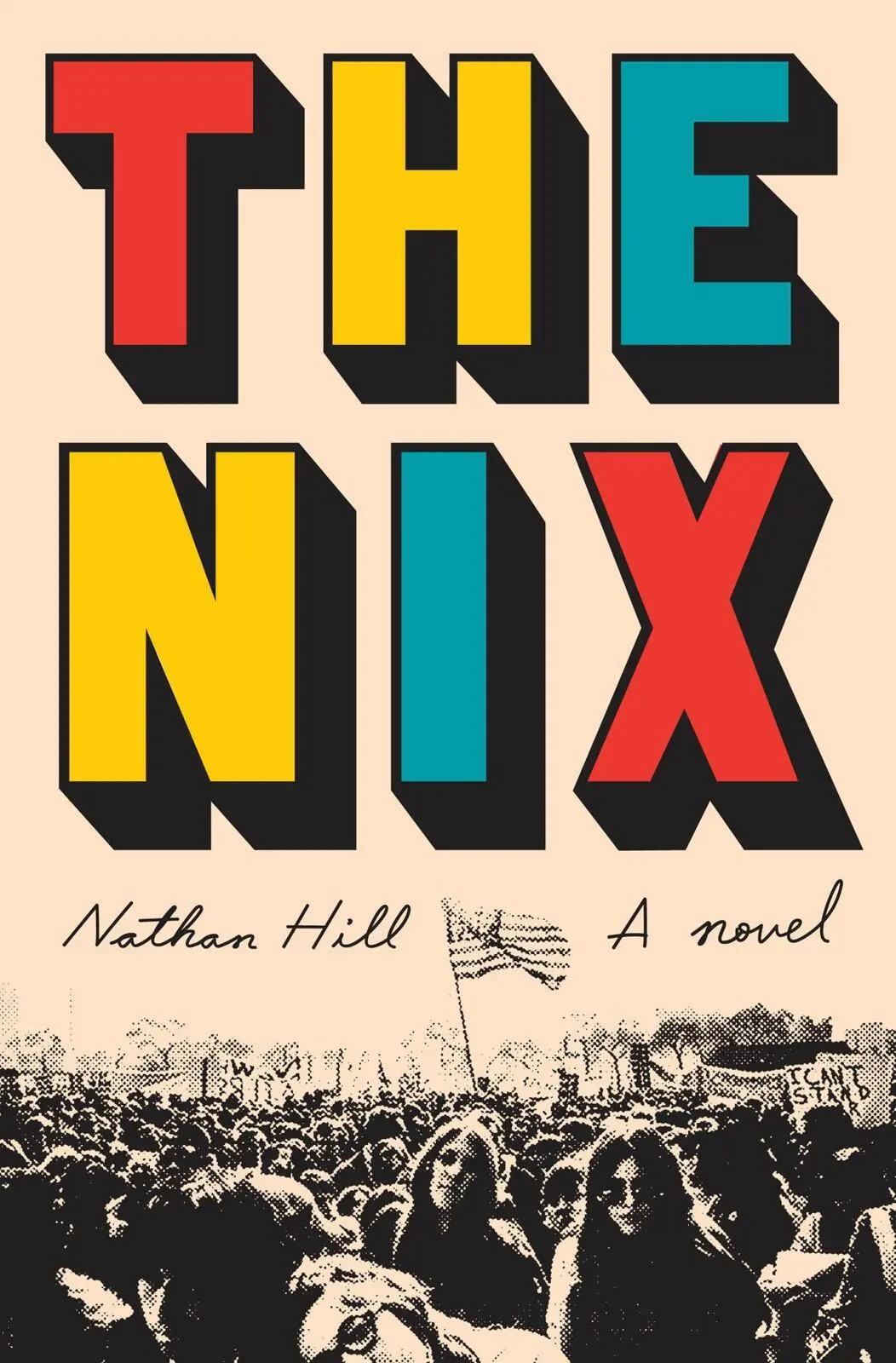
- Название:The Nix
- Автор:
- Издательство:Knopf
- Жанр:
- Год:2016
- ISBN:нет данных
- Рейтинг книги:5 / 5. Голосов: 1
-
Избранное:Добавить в избранное
- Отзывы:
-
Ваша оценка:
The Nix: краткое содержание, описание и аннотация
Предлагаем к чтению аннотацию, описание, краткое содержание или предисловие (зависит от того, что написал сам автор книги «The Nix»). Если вы не нашли необходимую информацию о книге — напишите в комментариях, мы постараемся отыскать её.
As Samuel begins to excavate her history, the story moves from the rural Midwest of the 1960s to New York City during the Great Recession and Occupy Wall Street to the infamous riots at the 1968 Chicago Democratic National Convention, and finally to Norway, home of the mysterious Nix that his mother told him about as a child. And in these places, Samuel will unexpectedly find that he has to rethink everything he ever knew about his mother — a woman with an epic story of her own, a story she kept hidden from the world.
The Nix — читать онлайн бесплатно полную книгу (весь текст) целиком
Ниже представлен текст книги, разбитый по страницам. Система сохранения места последней прочитанной страницы, позволяет с удобством читать онлайн бесплатно книгу «The Nix», без необходимости каждый раз заново искать на чём Вы остановились. Поставьте закладку, и сможете в любой момент перейти на страницу, на которой закончили чтение.
Интервал:
Закладка:
Outside the amphitheater were the slaughterhouses — the famous stockyards of Chicago, where the police heard the screams of animals, the last wails of cattle and hogs. Some of the cops, interested, peered over fences and saw carcasses torn off the ground by hooks and trolleys, pulled to death, dismembered, floors covered in entrails and shit, men hacking tirelessly at limbs and throats — it all seemed appropriate. The butchers’ curved knives offered the police a kind of clarity, a kind of purity of intent that gave their jobs a helpful, if unspoken, guiding metaphor.
They listened and wrote down anything, any indictable threat, calls to violence, outside agitating, communist propaganda, and tonight they were given something special — a name, one never mentioned before, someone new: Faye.
They glanced over at the new guy, standing in the corner, legal pad in hand, recently promoted from beat cop to the Red Squad: Officer Charlie Brown. He nodded. He wrote it down.
The Red Squad was the Chicago PD’s covert antiterrorist intelligence unit that was created in the 1920s to spy on union organizers, expanded in the 1940s to spy on communists, and concentrated now on threats to the domestic peace posed by radical leftists, mostly the students and the blacks. It was a glamorous job, and Brown was aware that some of the other officers, the older officers, were skeptical of him and his promotion: He was young, nervous as all hell, had a brief career that as yet lacked distinction — he had, so far, mostly busted screwed-up hippie kids for minor infractions. Loitering. Jaywalking. Curfew. The vague statute against public lewdness. His goal as a beat cop was to become such an annoyance they simply gave up, the hippies, gave up and moved along to some other precinct or, better, some other city. Then Chicago wouldn’t have to deal with what was roundly agreed to be the worst generation ever. Easily the worst, even though it was his generation too. He wasn’t much older than the kids he busted. But the uniform made him feel older, the uniform and crew cut and wife and child and preference for quiet things like bars without too much music where the only thing you heard was the murmur of conversation and the occasional sharp thwack of billiard balls. And church. Going to church and seeing the other beat cops there: It was a brotherhood. They were Catholic guys, neighborhood guys. You slapped them on the back when you saw them. They were good guys, they drank but not too much, they were kind to their wives, fixed up their houses, built things, played poker, paid their mortgages. Their wives knew each other, their kids played together. They’d been living on the block since forever. Their fathers had lived here, grandfathers too. They were Irish, Poles, Germans, Czechs, Swedes, but now thoroughly Chicagoans. They had city pensions that made them a good catch for the neighborhood ladies looking to settle down. They loved each other, loved the city, loved America, and not in an abstract way like kids asked to pledge allegiance but way down to their core — because they were happy, they were doing it, living, being successful, working hard, raising kids, sending kids to goddamn school. They had watched their own fathers raise them and, like most boys, they worried about measuring up. But here they were, doing it, and they thanked God and America and the city of Chicago for it. They hadn’t asked for much, but what they’d asked for, they’d gotten.
It was hard not to feel personal about all this. When some new bad element moved into the neighborhood, it was hard not to take it personally. It was personal. Officer Brown’s own grandfather had moved to this neighborhood as a very young man. He was Czeslaw Bronikowski until he reached Ellis Island, where he was given the name Charles Brown, a name then bestowed on the family’s firstborn sons each generation since. And even though Officer Brown could have done without the teasing this name prompted when kids began reading that goddamn comic strip circa first grade, still he loved it — it was a good name, an American name, a consolidation of his family’s past and its future.
It was a name that fit in.
So when some out-of-town doper, some punk peacenik, some longhaired hippie freak sat on the sidewalk all day scaring the daylights out of the old ladies, it was, indeed, personal. Why couldn’t they just fit in? With the Negroes it was at least reasonable. If the blacks didn’t particularly appreciate America, well, he could wrap his head around that one. But these kids, these middle-class white kids with their anti-America slogans — what gave them the right?
And so his job was simple: Target and annoy the bad elements in the city as far as the law allowed. As far as he could go without risking his pension or publicly embarrassing the city or the mayor. And yeah, sometimes somebody appeared on TV, usually some East Coast idiot with no idea what the fuck he was talking about, who said the cops in Chicago were harsh or brutal or obstructing people’s First Amendment rights. But nobody paid much attention to that. There was a saying: Chicago problems, Chicago solutions.
For example, if a beatnik was walking through his precinct at two o’clock in the morning, it was a pretty easy matter to bust him for curfew violation. It was well known that most of these types did not carry any form of identification, so when they said “The curfew doesn’t apply to me, pig,” he could say “Prove it,” and they absolutely could not. Simple. So they spent an uncomfortable few hours in a holding pen while the message sunk in: You are not welcome here.
And that had been an acceptable job for Officer Brown — he was aware of his own talents and limitations, he was not ambitious. He was content as a beat cop until, almost by accident, he got to know and earn the trust of a certain hippie leader, and when he told his bosses that he had “made contact with a leading student radical” and now had “access to the underground’s inner sanctum” and asked to be assigned to the Red Squad — specifically the division investigating anti-American activity at Chicago Circle — they reluctantly agreed. (Nobody else on the force had been able to infiltrate Circle — those college kids could sniff out a fake easy. )
The Red Squad wiretapped rooms and telephones. They took covert photos. They tried to be as generally disruptive as they could be to the antiwar fringe. He saw it as a simple amplification of what he did on the street — annoying and detaining hippies — only now it was done in secret, using tactics that pushed the boundaries of what was, at face value, legal. For example, they raided the office of Students for a Democratic Society, stole files, broke typewriters, and spray-painted “Black Power” on the walls to throw the kids off. That seemed a bit questionable, yes, but the way he thought about it was that the only change between his old job and his new one was the method. The moral calculus, he figured, was the same.
Chicago problems, Chicago solutions.
And now he had been given the gift of a new name to investigate, some new fringe element recently arrived at Circle. He wrote the name down in his notebook. Put a star next to it. He would get to know this Faye very soon.
3
FAYE, OUTDOORS, in the grass, back leaning against a building, in the shade of a small campus tree, gently placed the newspaper on her lap. She smoothed its crinkles. She bent the corners where they’d begun to curl. The paper did not feel like ordinary newsprint — stiffer, thicker, almost waxy. Ink smeared off the page and onto her fingertips. She wiped her hands on the grass. She looked at the masthead— Editor in Chief: Sebastian —and she smiled. There was something both brazen and triumphant about Sebastian using only his first name. He had achieved enough renown that he was publicly mononymous, like Plato or Voltaire or Stendhal or Twiggy.
Читать дальшеИнтервал:
Закладка:
Похожие книги на «The Nix»
Представляем Вашему вниманию похожие книги на «The Nix» списком для выбора. Мы отобрали схожую по названию и смыслу литературу в надежде предоставить читателям больше вариантов отыскать новые, интересные, ещё непрочитанные произведения.






Обсуждение, отзывы о книге «The Nix» и просто собственные мнения читателей. Оставьте ваши комментарии, напишите, что Вы думаете о произведении, его смысле или главных героях. Укажите что конкретно понравилось, а что нет, и почему Вы так считаете.