Nathan Hill - The Nix
Здесь есть возможность читать онлайн «Nathan Hill - The Nix» весь текст электронной книги совершенно бесплатно (целиком полную версию без сокращений). В некоторых случаях можно слушать аудио, скачать через торрент в формате fb2 и присутствует краткое содержание. Год выпуска: 2016, Издательство: Knopf, Жанр: Современная проза, на английском языке. Описание произведения, (предисловие) а так же отзывы посетителей доступны на портале библиотеки ЛибКат.
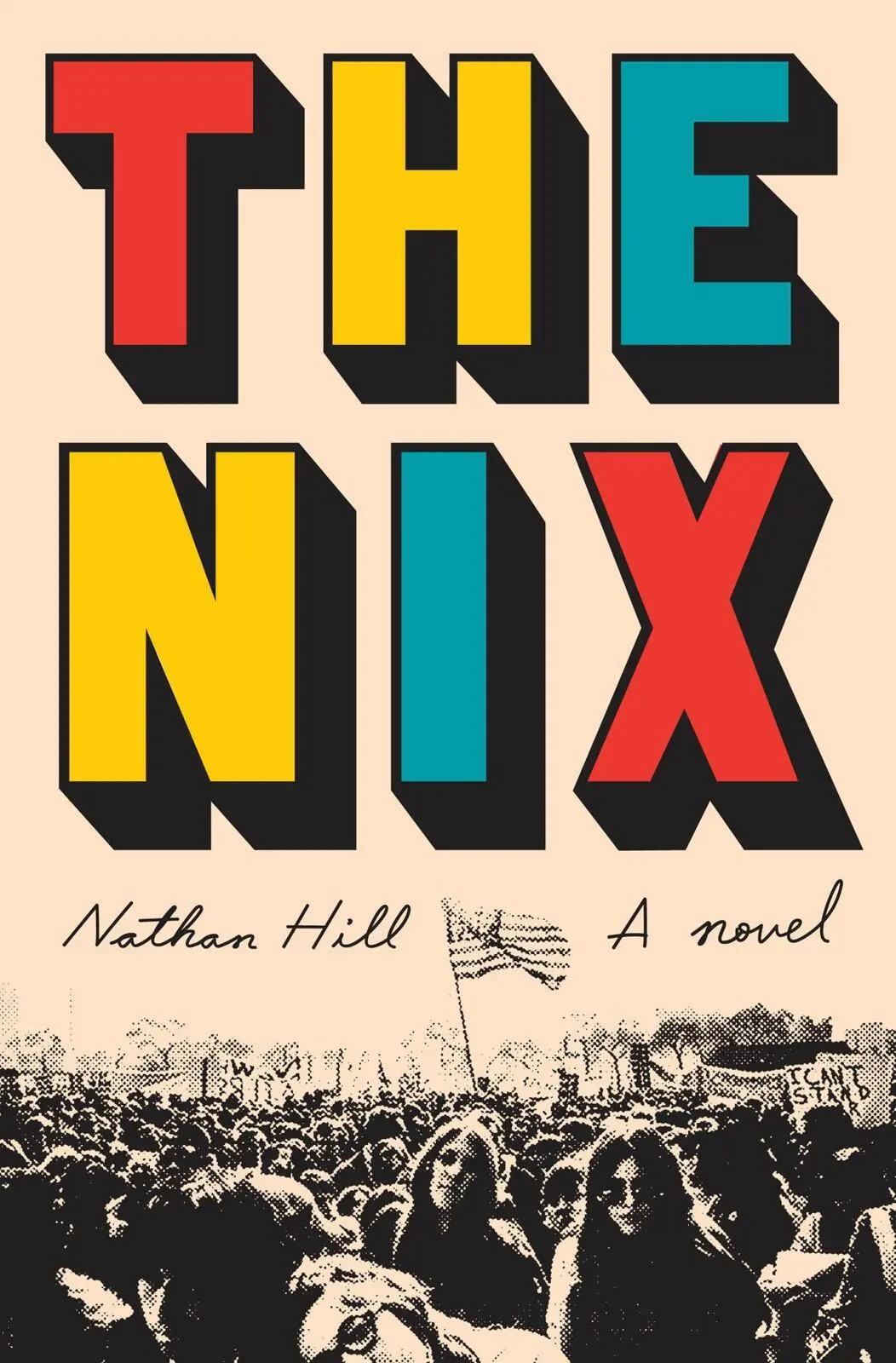
- Название:The Nix
- Автор:
- Издательство:Knopf
- Жанр:
- Год:2016
- ISBN:нет данных
- Рейтинг книги:5 / 5. Голосов: 1
-
Избранное:Добавить в избранное
- Отзывы:
-
Ваша оценка:
The Nix: краткое содержание, описание и аннотация
Предлагаем к чтению аннотацию, описание, краткое содержание или предисловие (зависит от того, что написал сам автор книги «The Nix»). Если вы не нашли необходимую информацию о книге — напишите в комментариях, мы постараемся отыскать её.
As Samuel begins to excavate her history, the story moves from the rural Midwest of the 1960s to New York City during the Great Recession and Occupy Wall Street to the infamous riots at the 1968 Chicago Democratic National Convention, and finally to Norway, home of the mysterious Nix that his mother told him about as a child. And in these places, Samuel will unexpectedly find that he has to rethink everything he ever knew about his mother — a woman with an epic story of her own, a story she kept hidden from the world.
The Nix — читать онлайн бесплатно полную книгу (весь текст) целиком
Ниже представлен текст книги, разбитый по страницам. Система сохранения места последней прочитанной страницы, позволяет с удобством читать онлайн бесплатно книгу «The Nix», без необходимости каждый раз заново искать на чём Вы остановились. Поставьте закладку, и сможете в любой момент перейти на страницу, на которой закончили чтение.
Интервал:
Закладка:
“I know what napalm is,” Faye said. “I just didn’t know ChemStar made it.”
That Faye’s childhood and education were funded by paychecks from ChemStar was something she could not bear to tell Sebastian now, or ever.
Sebastian, meanwhile, watched the protest. He did not seem to notice her anxiety. (He had stopped seeing her maarr. ) Rather, he watched the two journalists on the periphery of the mob — a writer and a photographer. The writer wasn’t writing anything, and the photographer wasn’t shooting.
“Not enough people showed up,” he said. “It won’t get in the newspaper.”
The crowd was maybe three dozen strong, and loud, and walking in a circle holding signs and chanting “Murderers, murderers.”
“A few years ago,” Sebastian said, “a dozen picketing people would get you a few inches on page six. But now, after so many protests, the criteria have changed. Each new protest makes the next protest more usual. It’s the great flaw of journalism: The more something happens, the less newsworthy it is. We have to follow the same trajectory as the stock market — sustained and unstoppable growth.”
Faye nodded. She was thinking about the ChemStar billboard back home: MAKING OUR DREAMS COME TRUE.
“I guess there’s one way to make sure it gets into the paper,” Sebastian said.
“What’s that?”
“Someone has to be arrested. Works every time.” He turned to her. “It’s been very nice talking to you, Faye,” he said.
“Thank you,” she said, distractedly, for she was still thinking about her father, about the way he smelled when he came home from work: like gasoline and something else, some heavy and suffocating smell, like car exhaust, hot asphalt.
“I hope to see you again soon,” Sebastian said. And then he took off running toward the crowd.
Startled, Faye cried “Wait!” but he kept going, sprinting toward a police car parked near the mob. He bounded onto its hood, leaped onto the roof, and raised both fists into the air. The students cheered wildly. The photographer began shooting. Sebastian jumped up and down, denting the top of the car, then turned and looked at Faye. He smiled at her, and held her gaze until the police reached him, which they did quickly, and wrestled him down and put him in handcuffs and took him away.
4
WHEN SEBASTIAN LANDED on the police car, he landed hard. On his jaw. The police were brutal. Faye imagined him in jail right now, a lump of bruise. He would need someone to rub ice on that jaw, maybe change a bandage, massage a sore back. Faye wondered if he had someone who could do that for him, someone special. She found herself hoping he did not.
Her schoolwork was spread out across her bed. She was reading Plato. The Republic. The dialogues. She had finished the required reading, had swallowed everything about Plato’s allegorical cave, the allegorical people living in the allegorical cave and seeing only shadows of the real world and believing the shadows were the real world. Plato’s basic point being that our map of reality and actual reality sometimes do not match.
She had finished the homework and was reading the only chapter in the whole book the professor had not assigned, which seemed curious. But now, halfway through reading it, Faye understood. In this chapter, Socrates was teaching a bunch of old men how to attract very young boys. For sex.
What was his advice? Never praise the boy, Socrates said. Do not attempt romance, do not sweep him off his feet. When you praise a beautiful boy, he said, the boy is filled with such a high opinion of himself that he becomes more difficult to catch. You are a hunter who shoos your prey away. The person who calls an attractive person attractive only becomes more ugly. Better not to praise him at all. Better, maybe, to be a little mean.
Faye wondered if that was true. She knew every time Henry called her beautiful she tended to think he was more pathetic. She hated this about herself, but maybe Socrates was right. Maybe desire was best left unspoken. She didn’t know. Sometimes Faye wished she lived another life parallel to this one, a life exactly the same but for the choices she made. In this other life, she wouldn’t have to worry so much. She could say anything, do anything, kiss boys and not worry about her reputation, watch movies with abandon, stop obsessing about tests or homework, shower with the other girls, wear far-out clothes and sit at the hippie table for kicks. In this other more interesting life, Faye would live consequence-free, and it seemed beautiful and lovely and, as soon as she thought about it objectively for ten seconds, ridiculous. Totally beyond her reach.
Which was why today’s great success — her pleasant and honest embarrassment with Sebastian — was such a breakthrough. That she’d embarrassed herself in front of a boy and laughed about it. That she had smeared ink all over her face and didn’t react with horror, did not yet feel horror, was not obsessing over it right now, was not disgusted by it, was not replaying it, reliving it again and again. She needed to know more about Sebastian, she decided. She didn’t know what she’d say, but she needed to know more. And she knew where to go.
Alice lived next door, in a corner suite by the fire exit, a spot that had become a haven for far-out students, mostly women, mostly of the kind Faye had encountered at the meeting, who stayed up late screaming to the record player and smoking grass. When Faye peeked into the room (the door was almost always open), several faces swiveled to look at her, none of them Alice’s. They suggested she might be found at People’s Law, where Alice held an unpaid position keeping the books.
“What’s People’s Law?” Faye asked, and the girls looked at each other and smirked. Faye realized she’d embarrassed herself, that the question revealed she was square. This happened to her all the time.
“They help people arrested for protesting,” one of the girls explained.
“Help them get out of jail,” another added.
“Oh,” Faye said. “Would they be able to help Sebastian?”
They smiled again. The same way. Some new conspiracy. Another bit of the world obvious to everyone but Faye.
“No,” said one of the girls. “He has his own methods. You don’t have to worry about Sebastian. He gets arrested, he’s back out in an hour. No one knows how he does it.”
“He’s a magician,” another of the girls added.
They gave her the address of People’s Law, which turned out to be a hardware store crammed into the first floor of a creaky and hot two-story apartment building, a building that might have seen a previous existence as a resplendent Victorian home but had since been cut up into this live/work retail puzzle. Faye looked for some kind of sign or door, but only found shelves crammed with your typical hardware things: nails, hammers, hoses. She wondered if the girls had given her the wrong address, if they were putting her on. The wooden floor squeaked, and she felt how it rippled and sloped down toward the heaviest shelves. She was about to leave when the proprietor, a tall and thin white-haired man, asked if he could help her find anything.
“I’m looking for People’s Law?” she said.
He looked at her for an uncomfortable moment, seemed to inspect her.
“You?” he said at last.
“Yes. Is it here?”
He told her it was in the basement of the building, accessible through a door out back, via the alley. So Faye found herself tapping on a wooden door with a simple “PL” painted on it in an alley that was empty save for about half a dozen dumpsters cooking in the sun.
The woman who answered — probably no older than Faye herself — said she hadn’t seen Alice that day but suggested Faye could find her at a place called Freedom House. And thus Faye had to endure the whole ritual again, the admission that she did not in fact know what Freedom House was, the awkward look, the embarrassment at not knowing something everyone else knew, the explanation from the girl telling her that Freedom House was a shelter for runaway girls and that Faye was forbidden to give the location to any man ever.
Читать дальшеИнтервал:
Закладка:
Похожие книги на «The Nix»
Представляем Вашему вниманию похожие книги на «The Nix» списком для выбора. Мы отобрали схожую по названию и смыслу литературу в надежде предоставить читателям больше вариантов отыскать новые, интересные, ещё непрочитанные произведения.





Обсуждение, отзывы о книге «The Nix» и просто собственные мнения читателей. Оставьте ваши комментарии, напишите, что Вы думаете о произведении, его смысле или главных героях. Укажите что конкретно понравилось, а что нет, и почему Вы так считаете.