Nathan Hill - The Nix
Здесь есть возможность читать онлайн «Nathan Hill - The Nix» весь текст электронной книги совершенно бесплатно (целиком полную версию без сокращений). В некоторых случаях можно слушать аудио, скачать через торрент в формате fb2 и присутствует краткое содержание. Год выпуска: 2016, Издательство: Knopf, Жанр: Современная проза, на английском языке. Описание произведения, (предисловие) а так же отзывы посетителей доступны на портале библиотеки ЛибКат.
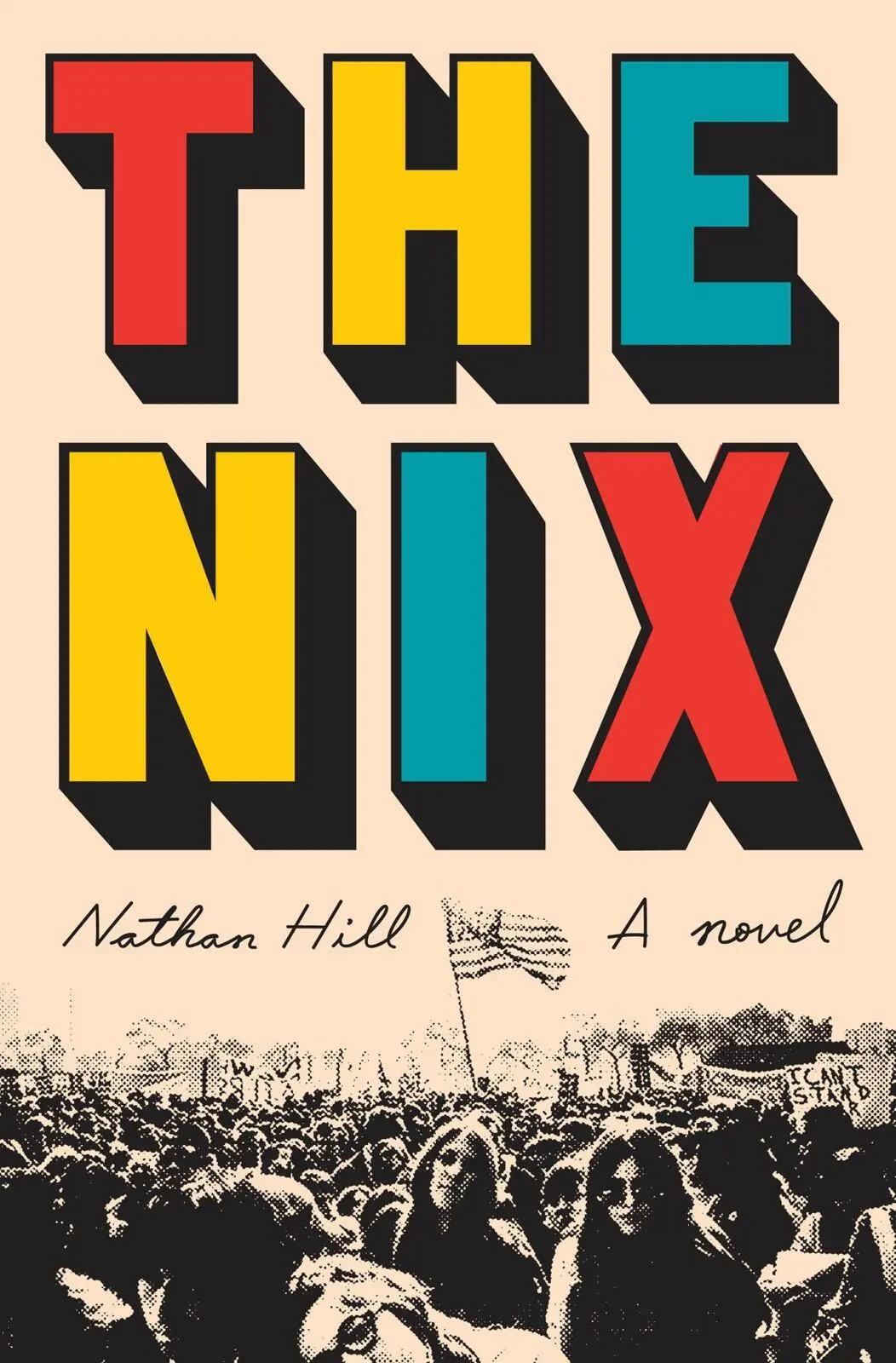
- Название:The Nix
- Автор:
- Издательство:Knopf
- Жанр:
- Год:2016
- ISBN:нет данных
- Рейтинг книги:5 / 5. Голосов: 1
-
Избранное:Добавить в избранное
- Отзывы:
-
Ваша оценка:
The Nix: краткое содержание, описание и аннотация
Предлагаем к чтению аннотацию, описание, краткое содержание или предисловие (зависит от того, что написал сам автор книги «The Nix»). Если вы не нашли необходимую информацию о книге — напишите в комментариях, мы постараемся отыскать её.
As Samuel begins to excavate her history, the story moves from the rural Midwest of the 1960s to New York City during the Great Recession and Occupy Wall Street to the infamous riots at the 1968 Chicago Democratic National Convention, and finally to Norway, home of the mysterious Nix that his mother told him about as a child. And in these places, Samuel will unexpectedly find that he has to rethink everything he ever knew about his mother — a woman with an epic story of her own, a story she kept hidden from the world.
The Nix — читать онлайн бесплатно полную книгу (весь текст) целиком
Ниже представлен текст книги, разбитый по страницам. Система сохранения места последней прочитанной страницы, позволяет с удобством читать онлайн бесплатно книгу «The Nix», без необходимости каждый раз заново искать на чём Вы остановились. Поставьте закладку, и сможете в любой момент перейти на страницу, на которой закончили чтение.
Интервал:
Закладка:
“Excuse me!” Faye yelped, for it was one of those girls —Alice was her name. Faye’s neighbor. Long-haired, mean-looking Alice, silver-framed sunglasses settled halfway down her nose so at this moment she stared over them directly and curiously and terribly at Faye.
“Excuse you for what?” Alice said.
Faye shut off the water and wrapped herself in her robe.
“Man,” Alice said, smiling, “you are too much.”
She was the craziest of them all, this Alice. Green camo jacket and black boots, wild brunette Buddha girl seen in the cafeteria sitting cross-legged on a table chanting gibberish. Faye had heard stories about Alice — how she hitchhiked to Hyde Park on weekend nights, met boys, scored drugs, entered strange bedrooms and emerged more complicated.
“You’re so quiet all the time,” Alice said. “Always alone in your room. What do you do in there?”
“I don’t know. I read.”
“You read. What do you read?”
“Lots of things.”
“You read your homework?”
“I guess.”
“You read what your teachers tell you. Get good grades.”
Faye saw her up close now, her eyes bloodshot, hair tangled, clothes wrinkled and reeking, that funky cocktail of tobacco, pot, and perspiration. Faye understood now that Alice had not yet slept. Six in the morning and Alice had just returned from whatever free-love odyssey these girls chased at night.
“I read poetry,” Faye said.
“Yeah? What kind?”
“All kinds.”
“Okay. Say me a poem.”
“Huh?”
“Say me a poem. Recite one. Should be easy if you read so much. Come on.”
There was a splotch on Alice’s cheek that Faye had never noticed before — a trace of red and purple gathered just beneath the surface. A bruise.
“Are you okay?” Faye said. “Your face.”
“I’m fine. Great. What’s it to you?”
“Did someone hit you?”
“How about you mind your own business.”
“Fine,” Faye said. “Never mind. I gotta go.”
“You’re not very friendly,” Alice said. “Are you down on us or something?”
Those lyrics again. “Down on Me.” They played that damn song every night. “Everybody in this whole round world!” They sang it four or five off-key times in a row. “They’re down on me!” As if the girls needed them — all these other people in the world — needed them to be down and thus give a reason for singing.
“No, I’m not down on you,” Faye said. “I’m just not going to apologize to you.”
“Apologize for what?”
“For doing my homework. Being good at school. I’m sick of feeling bad about it. Good day.”
Faye left the bathroom, flop-flopped back to her room, put on her clothes, and felt so full of poison and abstract anger that she sat on her bed and held her knees and rocked. She had a headache. She pulled her hair back and put on her big round glasses that looked to her suddenly like some elaborate Venetian disguise. She frowned into the mirror. She was gathering her books into her backpack when Alice knocked on the door.
“I’m sorry,” Alice said. “That wasn’t in the spirit of sisterhood. Please accept my apology.”
“Forget it,” Faye said.
“Let me make it up to you. I’ll take you out tonight. There’s a meeting. I want you to come.”
“I don’t think that’s necessary.”
“It’s sort of a secret. Don’t tell anyone.”
“Really, it’s okay.”
“I’ll be here at eight,” Alice said. “See you then.”
Faye closed the door and sat on her bed. She wondered what Alice had seen her doing, back there in the shower, when Fay had been thinking about Henry: his hands on her. What a treacherous thing a body was, how it so blatantly acted out the mind’s secrets.
Henry’s letter was hidden in her bedside table, in the bottom drawer, way in the back. She had tucked it inside a book. Paradise Lost.
2
THEY ASSEMBLED in the office of the Chicago Free Voice, a small, irregularly printed handbill that called itself “the newspaper of the street.” Into a dark alley, through an unmarked door, up a narrow set of stairs, Alice led Faye to a room with a sign at the entrance that read: TONIGHT! WOMEN’S SEXUALITY AND SELF-DEFENSE.
Alice tapped the sign with her finger and said, “Two sides of the same coin, eh?”
She had not made any effort to hide the bruise on her cheek.
The meeting had already begun when they arrived. The room, crowded with maybe two dozen women, smelled of tar and kerosene, old paper and dust. A warm mist of ink and glue and spirits hung in the air. Odors drifted in and out of perception — shoe polish, linseed oil, turpentine. The sting of solvents and oil reminded Faye of the garages and toolsheds of Iowa, where her uncles spent long afternoons fiddling with cars that hadn’t been driven in decades — hot rods bought cheap at auctions and slowly restored, part by part, year by year, whenever the uncles could find time and motivation. But whereas her uncles decorated their garages with sports logos and pinup girls, this office had a Vietcong flag on the largest wall, the smaller nooks covered with broadsides of past Free Voice editions: CHICAGO IS A CONCENTRATION CAMP said one headline; IT IS THE YEAR OF THE STUDENT said another; FIGHT THE PIGS IN THE STREET and so on. A fine dark soot coated the walls and floor, a sheath of carbon that turned the light in the room to a gray-green smog. Faye’s skin felt clammy and covered with grit. Her sneakers quickly stained.
The women sat in a circle — some on folding chairs, some leaning against the wall. White girls and black girls all wearing sunglasses and army jackets and combat boots. Faye sat down behind Alice and listened to the woman presently talking.
“You slap him,” she said, a finger pointed into the air, “you bite him, you scream as loud as you can and when you do you scream fire. You break his kneecaps. Box his ears to pop his eardrums. Stiffen your fingers and jab his eyes out. Be creative. Ram his nose into his brain. Your keys and knitting needles can be weapons if held tightly. Find a nearby rock and bash his head in. If you know kung fu, use your kung fu. It goes without saying that you should be kneeing him in the groin repeatedly”—and women in the circle nodded, clapped, encouraged the speaker with oh yeahs and right ons —“knee him in the groin and yell, You are not a man! Break his will. Men attack you because they think they can. Knee him in the groin and yell, You cannot do this! Don’t rely on other men to help you. Every man in his heart wants you to be raped. Because it confirms your need for his protection. Armchair rapists, that’s what they are.” And Alice shouted “Hell yeah!” and other women whooped and Faye didn’t know how to compose herself. She felt stiff and nervous, and she looked around at the women and tried to enact their casually bad posture while the speaker wrapped it up: “Since men have their potency and masculinity vicariously confirmed through rape, they will never do anything to stop it. Unless we force them to. So I say we take a stand. No more husbands. No more weddings. No more children. Not until rape is extinguished. Once and for all. A total reproductive boycott! We will grind civilization to a halt.” And to this the woman got great applause, the others standing and patting her on the back, and Faye was about to join the ovation when from a far dark corner of the room came a loud gnashing of metal. Everyone turned to look, and that’s when Faye saw him for the first time.
His name was Sebastian. He wore a white apron covered in pitch, smudged gray where he’d rubbed his hands, his shaggy bowl of black hair flopping in front of his eyes as he looked back sheepishly at the group and said, “Sorry!” He stood behind a machine that seemed built like a train — all black cast metal, shining with oil, silver spindles and toothy gears. The machine hummed and vibrated, the occasional tock of metal falling down chutes somewhere in its innards, like pennies dropped onto a table. The man — he was young, olive-skinned, a hangdog look — pulled a sheet of paper from the machine and Faye realized the contraption was a printing press, the sheet a copy of the Free Voice. Alice called out to him: “Hey, Sebastian! What’s cooking?”
Читать дальшеИнтервал:
Закладка:
Похожие книги на «The Nix»
Представляем Вашему вниманию похожие книги на «The Nix» списком для выбора. Мы отобрали схожую по названию и смыслу литературу в надежде предоставить читателям больше вариантов отыскать новые, интересные, ещё непрочитанные произведения.







Обсуждение, отзывы о книге «The Nix» и просто собственные мнения читателей. Оставьте ваши комментарии, напишите, что Вы думаете о произведении, его смысле или главных героях. Укажите что конкретно понравилось, а что нет, и почему Вы так считаете.