Nathan Hill - The Nix
Здесь есть возможность читать онлайн «Nathan Hill - The Nix» весь текст электронной книги совершенно бесплатно (целиком полную версию без сокращений). В некоторых случаях можно слушать аудио, скачать через торрент в формате fb2 и присутствует краткое содержание. Год выпуска: 2016, Издательство: Knopf, Жанр: Современная проза, на английском языке. Описание произведения, (предисловие) а так же отзывы посетителей доступны на портале библиотеки ЛибКат.
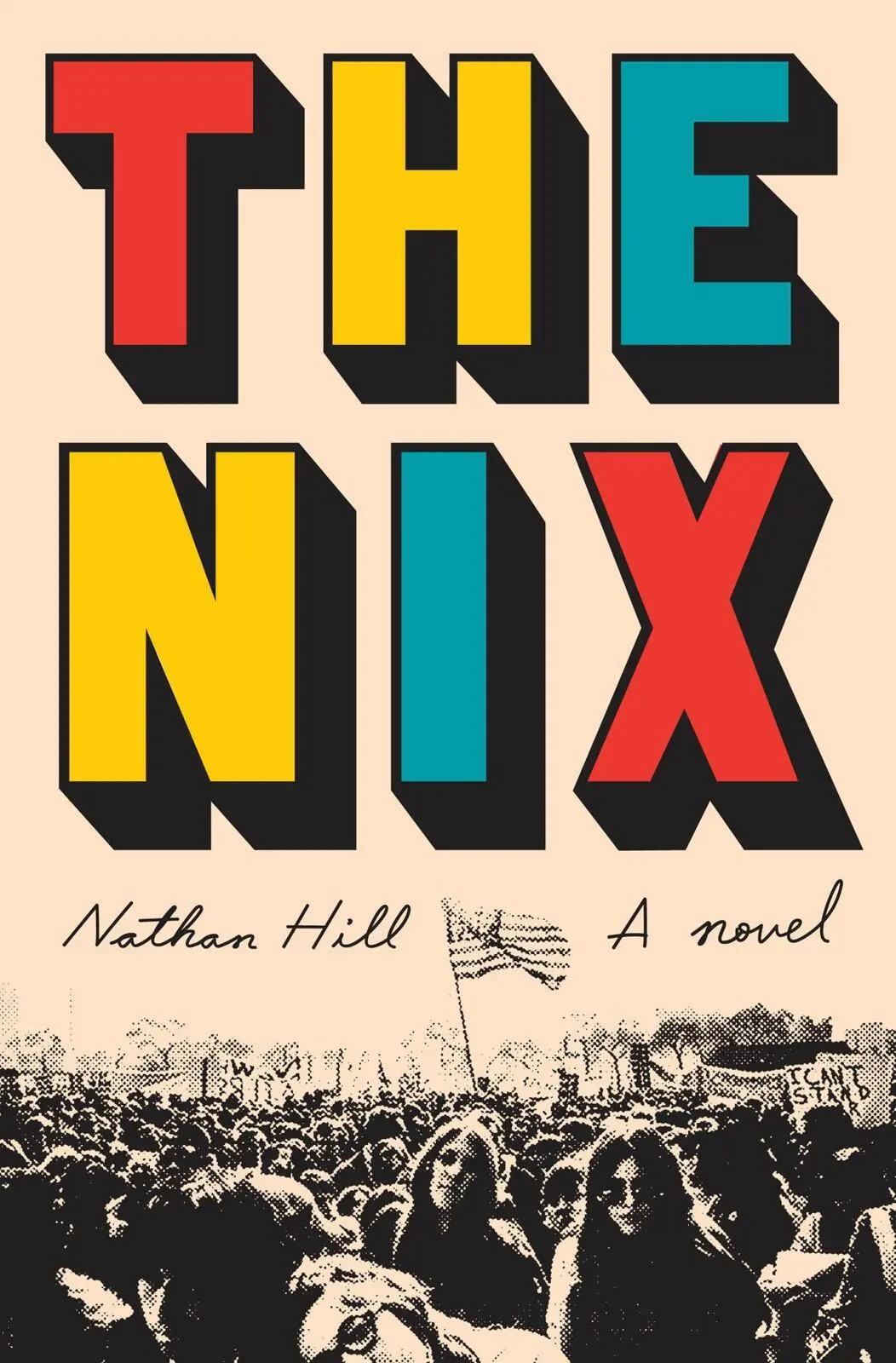
- Название:The Nix
- Автор:
- Издательство:Knopf
- Жанр:
- Год:2016
- ISBN:нет данных
- Рейтинг книги:5 / 5. Голосов: 1
-
Избранное:Добавить в избранное
- Отзывы:
-
Ваша оценка:
The Nix: краткое содержание, описание и аннотация
Предлагаем к чтению аннотацию, описание, краткое содержание или предисловие (зависит от того, что написал сам автор книги «The Nix»). Если вы не нашли необходимую информацию о книге — напишите в комментариях, мы постараемся отыскать её.
As Samuel begins to excavate her history, the story moves from the rural Midwest of the 1960s to New York City during the Great Recession and Occupy Wall Street to the infamous riots at the 1968 Chicago Democratic National Convention, and finally to Norway, home of the mysterious Nix that his mother told him about as a child. And in these places, Samuel will unexpectedly find that he has to rethink everything he ever knew about his mother — a woman with an epic story of her own, a story she kept hidden from the world.
The Nix — читать онлайн бесплатно полную книгу (весь текст) целиком
Ниже представлен текст книги, разбитый по страницам. Система сохранения места последней прочитанной страницы, позволяет с удобством читать онлайн бесплатно книгу «The Nix», без необходимости каждый раз заново искать на чём Вы остановились. Поставьте закладку, и сможете в любой момент перейти на страницу, на которой закончили чтение.
Интервал:
Закладка:
“And?”
“Zilch.”
“Well, she wasn’t in college very long,” Henry said. “Maybe a month? I’m not surprised you can’t find anything.”
“I don’t know what else to do.”
“When you saw her, at her apartment, did she seem, I don’t know, happy?”
“Not really. More like quiet and guarded. With a hint of hopeless resignation.”
“That sounds familiar.”
“Maybe I should go see her again,” Samuel said. “Drop by sometime when her lawyer’s not there.”
“That is a terrible idea,” Henry said.
“Why?”
“For one? She doesn’t deserve it. She has given you nothing but problems all your life. And two? The crime. It’s way too dangerous.”
“Oh, c’mon.”
“Seriously! What’s the address again?”
Samuel told him and watched as his father typed this into his laptop. “It says here,” Henry said, staring at his screen, “there’ve been sixty-one crimes in that neighborhood.”
“Dad.”
“Sixty-one! In the last month alone. Simple assault. Simple battery. Forcible entry. Vandalism. Motor vehicle theft. Burglary. Another simple assault. Criminal trespass. Theft. Another simple assault. On the sidewalk, for Pete’s sake.”
“I’ve been there already. It’s fine.”
“On the sidewalk in the middle of the day. Broad daylight! Guy just hits you with a crowbar and takes your wallet and leaves you for dead.”
“I’m sure that won’t happen.”
“That did happen. That happened yesterday.”
“I mean, it won’t happen to me.”
“Attempted theft. Here’s a weapons violation. Found person, which I think is a goddamn kidnapping.”
“Dad, listen—”
“Simple assault on the bus. Aggravated battery.”
“Okay, fine. I’ll be careful. Whatever you want.”
“Whatever I want? Great. Then don’t go. Don’t go at all. Stay home.”
“Dad.”
“Let her fend for herself. Let her rot.”
“But I need her.”
“You do not.”
“It’s not like we’re going to start spending Christmases together. I only need her story. I’m going to be sued by my publisher if I don’t figure it out.”
“This is a very bad idea.”
“You know what my alternative is? Declaring bankruptcy and moving to Jakarta. That’s my choice.”
“Why Jakarta?”
“It’s just an example. The point is, I need to get Mom talking.”
Henry shrugged and chewed his chicken and made notes on his laptop. “You see the Cubs game last night?” he said, still staring at his screen.
“I’ve been a little distracted lately,” Samuel said.
“Hm,” Henry said, nodding. “Good game.”
This was how they usually related to each other — through sports. It was the topic they fled to whenever conversation lulled or became dangerously personal or sad. After Faye left, Samuel and his father rarely talked about her. They grieved independent of each other. Mostly what they talked about were the Cubs. After she left, both of them found within themselves a sudden and surprisingly powerful and devotional all-consuming love for the Chicago Cubs. Down came the framed reproductions of incomprehensible works of modern art from Samuel’s bedroom walls, down came the nonsensical poetry broadsides hung there by his mother, and up went posters of Ryne Sandberg and Andre Dawson and Cubs pennants. Broadcasts on WGN weekday afternoons, Samuel literally praying to God — on his knees on the couch looking up to the ceiling — praying and crossing his fingers while actually making deals with God in exchange for one home run, one late-inning victory, one winning season.
Occasionally they took trips into Chicago for Cubs games — always during the day, always preceded by an elaborate ritual where Henry packed the car with enough supplies to get them through any roadside catastrophe. He packed extra jugs of water for drinking or radiator malfunction. Spare tire, sometimes two. Flares, emergency hand-crank CB radio. Walking maps of Wrigleyville on which he’d written notes from previous trips: where he’d found parking spots, where he’d encountered beggars or drug dealers. Particularly rough-seeming neighborhoods he etched out completely. He brought a fake wallet in case of mugging.
When they crossed the boundary into Chicago and the traffic congealed around them and the neighborhoods started to change, he said “Doors locked?” and Samuel jiggled the handle and said “Check!”
“Eyes peeled?”
“Check!”
And together they remained vigilant and watchful for crime until returning home again.
Henry had never worried like this before. But after Faye disappeared, he became preoccupied with disasters and muggings. The loss of his wife had convinced him that even more loss was imminent and near.
“I wonder what happened to her,” Samuel said, “in Chicago, in college. What made her leave so quickly?”
“No idea. She never talked about it.”
“Didn’t you ask?”
“I was so happy she came back I didn’t want to jinx it. Don’t look a gift horse in the mouth, you know? I let the matter drop. I thought I was being very modern and compassionate.”
“I have to find out what happened to her.”
“Hey, I need your opinion. We’re launching a new line. Which logo do you prefer?”
Henry slid two glossy pieces of paper across the table. One said FARM FRESH FROZENS, the other, FARM FRESH FREEZNS.
“I’m glad you’re so concerned about your son’s well-being,” Samuel said.
“Seriously. Which do you like better?”
“I’m glad my personal crisis is so very important to you.”
“Stop being dramatic. Pick a logo.”
Samuel studied them for a moment. “I guess I’d vote FROZENS ? When in doubt, spell words correctly.”
“That’s what I said! But the advertising folks said FREEZNS made the product seem funner. That’s the word they actually used. Funner. ”
“Of course I’d also argue that FROZENS isn’t a proper word either,” Samuel said. “More like a word that is not a noun conscripted to dress like one.”
“My son the English professor.”
“Which I guess there’s some precedent for. Take the tuna melt. Or the corn pop. ”
“The advertising folks do that kind of thing all the time. They tell me that thirty years ago you could get away with saying something simple and declarative: Tastes Great! Be Happy! But consumers these days are way more sophisticated, so you have to get tricky with the language. Taste the Great! Find Your Happy! ”
“I have a question,” Samuel said. “How can something be both farm fresh and frozen?”
“That’s something that way fewer people stop and think about than you would expect.”
“Once it’s frozen isn’t it, by definition, no longer farm fresh?”
“It’s a trigger word. When they want to advertise to hipster foodies, they use farm fresh. Or maybe artisanal. Or local. For millennials, they use vintage. For women, they use skinny. And don’t even get me started on the quote-unquote farm where all this farm-fresh stuff comes from. I’m from Iowa. I know farms. That place is not a farm.”
Samuel’s phone dinged with a new text message. He made a reflexive move to his pocket, then stopped and folded his hands on the table. He and Henry stared at each other for a moment.
“You gonna get that?” Henry said.
“No,” Samuel said. “We’re talking.”
“Mighty big of you.”
“We’re talking about your work.”
“Not really talking. More like you’re listening to me complain about it, again.”
Читать дальшеИнтервал:
Закладка:
Похожие книги на «The Nix»
Представляем Вашему вниманию похожие книги на «The Nix» списком для выбора. Мы отобрали схожую по названию и смыслу литературу в надежде предоставить читателям больше вариантов отыскать новые, интересные, ещё непрочитанные произведения.







Обсуждение, отзывы о книге «The Nix» и просто собственные мнения читателей. Оставьте ваши комментарии, напишите, что Вы думаете о произведении, его смысле или главных героях. Укажите что конкретно понравилось, а что нет, и почему Вы так считаете.