Nathan Hill - The Nix
Здесь есть возможность читать онлайн «Nathan Hill - The Nix» весь текст электронной книги совершенно бесплатно (целиком полную версию без сокращений). В некоторых случаях можно слушать аудио, скачать через торрент в формате fb2 и присутствует краткое содержание. Год выпуска: 2016, Издательство: Knopf, Жанр: Современная проза, на английском языке. Описание произведения, (предисловие) а так же отзывы посетителей доступны на портале библиотеки ЛибКат.
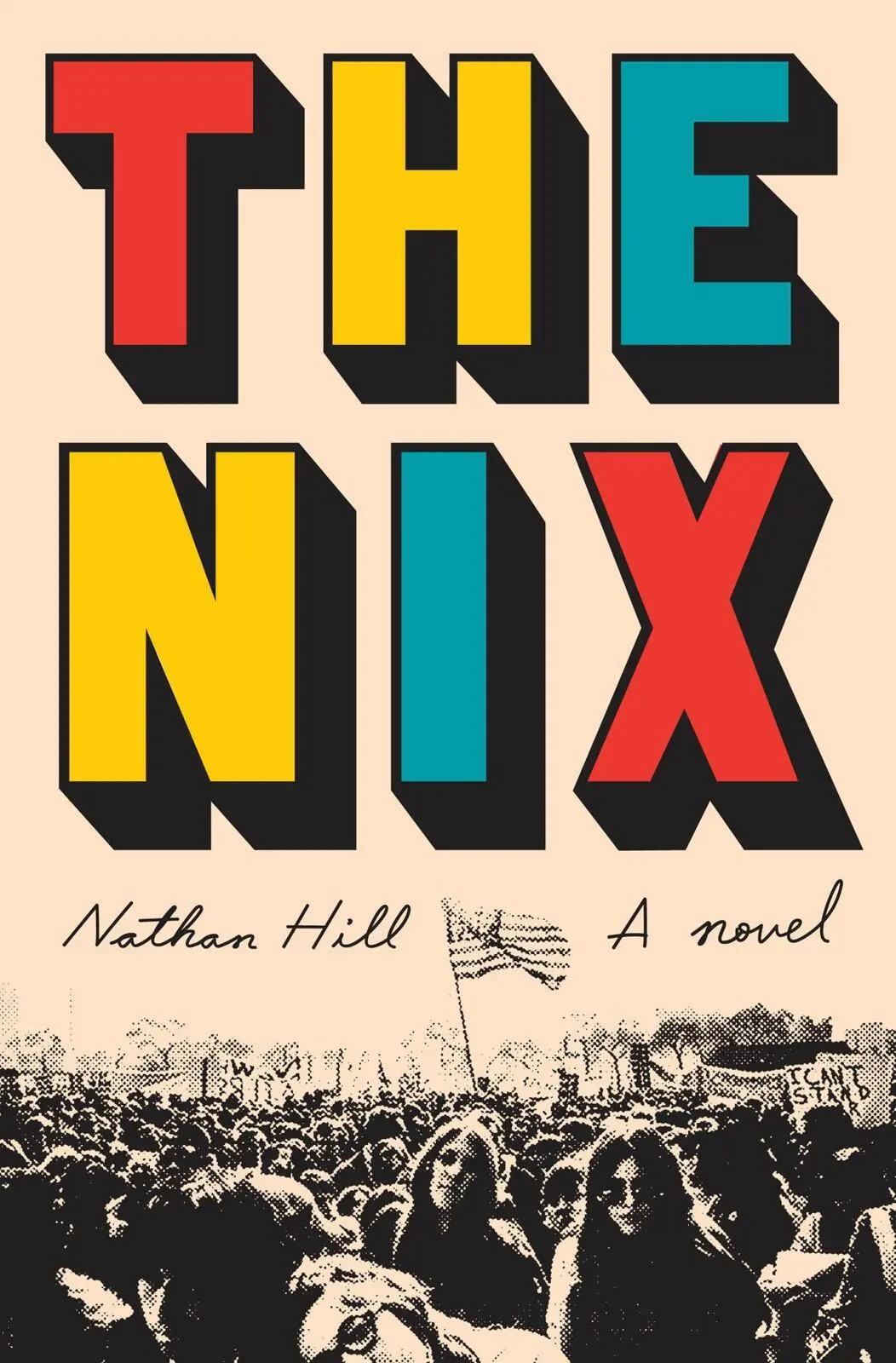
- Название:The Nix
- Автор:
- Издательство:Knopf
- Жанр:
- Год:2016
- ISBN:нет данных
- Рейтинг книги:5 / 5. Голосов: 1
-
Избранное:Добавить в избранное
- Отзывы:
-
Ваша оценка:
The Nix: краткое содержание, описание и аннотация
Предлагаем к чтению аннотацию, описание, краткое содержание или предисловие (зависит от того, что написал сам автор книги «The Nix»). Если вы не нашли необходимую информацию о книге — напишите в комментариях, мы постараемся отыскать её.
As Samuel begins to excavate her history, the story moves from the rural Midwest of the 1960s to New York City during the Great Recession and Occupy Wall Street to the infamous riots at the 1968 Chicago Democratic National Convention, and finally to Norway, home of the mysterious Nix that his mother told him about as a child. And in these places, Samuel will unexpectedly find that he has to rethink everything he ever knew about his mother — a woman with an epic story of her own, a story she kept hidden from the world.
The Nix — читать онлайн бесплатно полную книгу (весь текст) целиком
Ниже представлен текст книги, разбитый по страницам. Система сохранения места последней прочитанной страницы, позволяет с удобством читать онлайн бесплатно книгу «The Nix», без необходимости каждый раз заново искать на чём Вы остановились. Поставьте закладку, и сможете в любой момент перейти на страницу, на которой закончили чтение.
Интервал:
Закладка:
So anyway, Pwnage sent Axman the photograph along with a quick note: “Spam the Chicago boards. I want to know who this woman is.”
And Pwnage sat back and felt really excellent about this. And even though it took him maybe a minute or two tops, he felt mentally exhausted by the effort: coming up with the plan, executing the plan. He felt spent, done for the day, stressed out. He tried logging on to Elfscape, but the servers were still down.
He looked out the front window at the mailbox. He sat down in a chair to decide what to do next, then stood and sat in a different chair, because the other one was sort of uncomfortable. He stood again and walked to the center of the room and played a quick little game in his mind where he tried to stand in the room’s exact middle, perfectly equidistant from all four walls. He abandoned this game before he got to the point where he felt like getting out the tape measure to verify his accuracy. He thought about watching a movie, but he’d seen them all before, his entire collection, many times. He thought about buying and downloading some new movies, but the effort of looking seemed like it would make him feel tired. He walked to the back of the house, then to the front, hoping something in the house would trigger a thought. There was something in the kitchen he needed to do, he was sure of it. He could feel the memory of it dancing beyond his grasp. He opened the oven, then closed it. Opened the dishwasher, then closed it. He opened the refrigerator, certain there was something in here that would remind him of the thing he was supposed to remember about the goddamn kitchen.
2
THE THING IS? Is that Laura Pottsdam had the feeling she was feeling a brand-new emotion. Like something she’d never felt before. Which was totally weird! She sat alone in her messy dorm room and fiddled with her iFeel app and waited for Larry to arrive and felt, for the first time, this new thing: doubt.
Doubt about many things.
Doubt right now about the iFeel app itself, which would not let her express her doubt, “Doubt” not being one of the fifty standard emotions available on iFeel. The app was letting her down. For the very first time, iFeel didn’t know how she felt.
iFeel Horrible, she wrote, then decided no, she did not feel that way. That wasn’t quite accurate. “Horrible” was what she felt after she hurt her mother’s feelings again, or after she ate. She did not feel “Horrible” now. She deleted it.
iFeel Lost, she wrote, but that sounded stupid and cheesy and definitely not a Laura thing to say. People who were “Lost” were people with no direction in life, and she had direction in life, Laura did: Successful future vice president of communications and marketing, hello? Successful business major? Elite college student? She deleted “Lost.”
iFeel Upset was wrong too, due to not seeming important enough. Delete.
The thing about iFeel was that she could broadcast how she felt at any given moment to her huge network of friends, and then their apps could auto-respond to her feelings with whatever message was appropriate given the emotion she expressed. And Laura usually loved this, how she could post iFeel Sad and within seconds her phone lit up with encouragement and support and pick-me-ups that made her feel actually less sad. She could select an emotion from the fifty standard emotion choices and post a little explanatory note or photo or both, then watch the support roll in.
But now, for the first time, the fifty standard emotion choices seemed, to Laura, limited. For the first time, she did not seem to feel any of the standard emotions, and this was really surprising to her because she’d always thought fifty choices were sort of a lot. And indeed there were some emotions she had never expressed feeling. She had not once ever written iFeel Helpless, even though “Helpless” was right there among the fifty standard emotions. She had never written iFeel Guilty or iFeel Ashamed. She had never written iFeel Old, obviously. She wasn’t quite “Sad,” nor was she “Miserable.” It was more that she felt a kind of doubt that what she was thinking and feeling and doing wasn’t exactly, totally right. And this was really uncomfortable because it contradicted the primary message of her life — that everything she did was correct and praiseworthy and whatever she wanted she should have because she deserved it, which was the more or less constant message from her mother, whom Laura called after the meeting with her Intro to Lit professor: “He thinks I cheated! He thinks I plagiarized a paper!”
“Did you?” her mother asked.
“No!” Laura said. Then, after a long pause: “Actually, yes. I did cheat.”
“Well, I’m sure you had a good reason for it.”
“I had an excellent reason for it,” she said. Her mother had always done this, supplied her with good excuses. Once when she was fifteen and she came home at three in the morning obviously drunk and maybe also a little stoned, dropped off by three very loud, very much older boys who had recently either graduated high school or dropped out of it, the hair on the back of her head tangled and disheveled from what had obviously been vigorous friction against the backseat upholstery of a car, in a state so near comatose that when her mother said “Where have you been?” she could not think of anything to say and just stood there and dumbly wobbled, even then her mother had bailed her out.
“Are you sick?” she asked Laura, who, taking the bait, nodded her head. “You’re sick, aren’t you. You’re coming down with something. You were probably taking a nap and lost track of time, right?”
“Yes,” Laura said. “I don’t feel well.” Which of course required her to play hooky the next day to keep up the lie, claiming an unbearable cold-and-flulike illness, which was not too much of a stretch given the top-shelf hangover she woke up with.
The weirdest thing about these interactions was how much her mother seemed to believe them.
It wasn’t only that she was covering for her daughter; she seemed to be willfully hallucinating about her. “You’re a strong woman and I’m proud of you,” she’d tell Laura afterward. Or: “You can have anything you want.” Or: “Don’t let anyone get in your way.” Or: “I gave up my career for you and so your success literally means everything in the world to me. ” Or whatever.
But now Laura also felt doubt, which was not one of the fifty allowable emotions according to iFeel, which itself made her doubt that it was doubt she was feeling, a kind of mind-bending paradox she tried not to spend too much mental time with.
She could not fail her Intro to Lit course. That much was clear. There were too many things at stake — internships, summer jobs, grade point average, a besmirched permanent record. No, that could not happen, and she felt mistreated and wronged by her professor, who was willing to effectively take away her future because of one stupid assignment, which seemed to her a response all out of proportion to the crime she’d committed.
But, okay, even this she doubted, because if it didn’t matter if she cheated on any single assignment, then by extension it would be okay if she cheated on every assignment. Which struck her as at least a little weird because the agreement she’d reached with herself in high school when all the cheating started was that it was okay to cheat on every assignment now as long as sometime in the future she stopped cheating and began doing the actual work, as soon as the assignments started to matter. Which had not yet happened. In four years of high school and one year of college, she had not done anything that registered even remotely as mattering. So she cheated. On everything. And lied about it. All the time. And did not feel one ounce of regret.
Читать дальшеИнтервал:
Закладка:
Похожие книги на «The Nix»
Представляем Вашему вниманию похожие книги на «The Nix» списком для выбора. Мы отобрали схожую по названию и смыслу литературу в надежде предоставить читателям больше вариантов отыскать новые, интересные, ещё непрочитанные произведения.










Обсуждение, отзывы о книге «The Nix» и просто собственные мнения читателей. Оставьте ваши комментарии, напишите, что Вы думаете о произведении, его смысле или главных героях. Укажите что конкретно понравилось, а что нет, и почему Вы так считаете.