Павел Хюлле - Cold Sea Stories
Здесь есть возможность читать онлайн «Павел Хюлле - Cold Sea Stories» весь текст электронной книги совершенно бесплатно (целиком полную версию без сокращений). В некоторых случаях можно слушать аудио, скачать через торрент в формате fb2 и присутствует краткое содержание. Город: London, Год выпуска: 2012, ISBN: 2012, Издательство: Comma Press, Жанр: Современная проза, на английском языке. Описание произведения, (предисловие) а так же отзывы посетителей доступны на портале библиотеки ЛибКат.
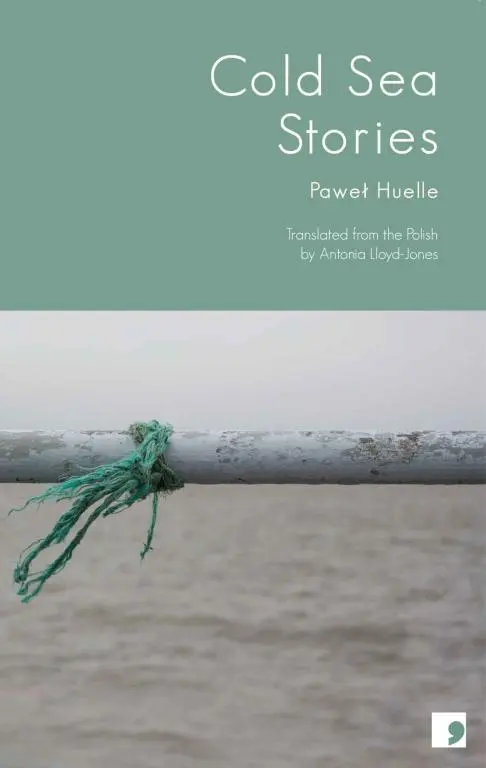
- Название:Cold Sea Stories
- Автор:
- Издательство:Comma Press
- Жанр:
- Год:2012
- Город:London
- ISBN:978-1-905-58339-3
- Рейтинг книги:3 / 5. Голосов: 1
-
Избранное:Добавить в избранное
- Отзывы:
-
Ваша оценка:
Cold Sea Stories: краткое содержание, описание и аннотация
Предлагаем к чтению аннотацию, описание, краткое содержание или предисловие (зависит от того, что написал сам автор книги «Cold Sea Stories»). Если вы не нашли необходимую информацию о книге — напишите в комментариях, мы постараемся отыскать её.
A shepherd watches, unseen, as a strange figure disembarks from a pirate ship anchored in the cove below, to bury a chest on the beach that later proves empty…
A prisoner in a Berber dungeon recounts his life’s story – the failed pursuit of the world’s very first language – by scrawling in the sand on his cell floor…
The characters in Paweł Huelle’s mesmerising stories find themselves, willingly or not, at the heart of epic narratives; legends and histories that stretch far beyond the limits of their own lives. Against the backdrop of the Baltic coast, mythology and meteorology mix with the inexorable tide of political change: Kashubian folklore, Chinese mysticism and mediaeval scholarship butt up against the war in Chechnya, 9-11, and the struggle for Polish independence.
Central to Huelle’s imagery is the vision of the refugee – be it the Chechen woman carrying her newborn child across the Polish border (her face emblazoned on every TV screen), the survivor of the Gulag re-appearing on his friends’ doorstep, years after being presumed dead, or the stranger who befriends the sole resident of a ghostly Mennonite village in the final days of the Second World War. Each refugee carries a clue, it seems, or is in possession or pursuit of some mysterious text or book, knowing that only it – like the Chinese ‘Book of Changes’ – can decode their story. What we do with this text, this clue, Huelle seems to say, is up to us.
Independent Foreign Fiction Prize Nominee for Longlist (2013)
Cold Sea Stories — читать онлайн бесплатно полную книгу (весь текст) целиком
Ниже представлен текст книги, разбитый по страницам. Система сохранения места последней прочитанной страницы, позволяет с удобством читать онлайн бесплатно книгу «Cold Sea Stories», без необходимости каждый раз заново искать на чём Вы остановились. Поставьте закладку, и сможете в любой момент перейти на страницу, на которой закончили чтение.
Интервал:
Закладка:
Hersz put his hat straight. ‘The right question,’ he said, ‘is the question: which person does the Lord God forget about? And why does He forget about him?’
Once Hersz had left the inn, Polanke shrugged. Why should he care about the salesman’s pearls of wisdom? His licence was in order. Now, as the Jew drove his two-wheel trap towards Zabrody, and the strange woman huddled in the broom bushes, Gendarme Polanke was devising a plan to ensnare Squire Gulgowski. The wind was raging over the Wilderness, casting waves of rain onto the land, the scrub was plunged into darkness, and the publican Gasiński had put a bottle of vodka and some snacks on the table. Before the salesman reached the turn in the road where the thick, tall broom bushes grew, a little more time went by. Polanke was already surrounding the house at Wdzydze with a cordon of iron helmets, the rifles were cocked and the whistles were at the ready. The seventh glass kicked off the start of the action. At the eighth Hersz cracked his whip, and Squire Gulgowski was already behind bars in the local lock-up. As the Landrat himself was delivering his commendation, Hersz was passing the stone marking the way. At the ninth glass, which was like a judicial seal on the verdict, the salesman slowed his horse down a bit, because here the road dipped and the wagon was bouncing dangerously in the potholes. The tenth glass was heralded by fanfares. The gendarmes’ orchestra played the anthem as the Landrat pinned a shining medal on Polanke’s chest. That was just when Hersz all but fell out of the trap, and almost paid for that moment with his life. His heart was in his mouth and the reins nearly fell from his hands. If he had seen the glittering knives of bandits or the barrel of a handgun facing him he could not have been more terrified. Out of the thick bushes on the roadside something black came crawling, something that wasn’t an animal, but wasn’t human either. Then this something grew to human dimensions, and stood there, evidently waiting for him, Hersz, who was only a travelling salesman, who respected the Lord God and had never cheated anyone. If it is the dybbuk, he thought feverishly, I am lost. For there could be nothing worse than the spirit who wanders the roads and lurks in wait for human souls. A ghost returning from the world beyond could enter his body, and from then on Hersz would no longer be Hersz, but someone completely different. Nevertheless, as though another man’s mind were guiding his hand, Hersz reined in the horse and, shouting loudly at it, stopped the trap. What he saw calmed him down at once – he might have been afraid of spirits, but not of a woman who was lost and needed help. Streaming wet and shivering with cold, there she stood in front of him, in a black headscarf which covered her hair, so haggard and wretched that Hersz, who had seen plenty of poverty in the world, felt a sharp stab in the region of his heart.
‘Where do you want to go?’ he asked, shouting over the wind and rain. She said nothing, as if his words were incomprehensible. ‘Well, where were you going to?’ he went on shouting. ‘Where were you trying to get to?’ There was no need to be afraid of Hersz. Not even children were afraid of him. But she gave no reply. The salesman could see her face and her eyes, fixed intently on his person, and suddenly he felt fear embrace his soul. For if the creature he was addressing would not speak, she might in fact be a spirit or a phantom. Just to make sure, he decided to touch her arm, against his better judgement – and once again something strange happened. Instead of retreating or disappearing, the woman took a step forwards and slumped to the ground, right at Hersz’s feet, making the mud splash. He leaned over her face and asked again where she was going and what she was called, but even when he shouted right into her ear, ‘Who are you?’ and shook her shoulders, she did not offer a single word in answer. Only now did Hersz notice that the strange woman’s brow was burning and her body was being consumed by a high fever. He picked her up and laid her in the trap like a child. He swiftly fetched a travel rug out of the box and covered her body with it so she wouldn’t be drenched a moment longer. Now he was racing at top speed to Zabrody, without sparing the whip or the exhortations. As he passed Herr Knitter’s cottage, at the point where the hamlet began, Gendarme Polanke was already on his thirteenth glass of anise and, propped up by the publican, was entering the imperial palace to receive a special nomination from the hands of the Kaiser himself. The guardsman in the sentry box gave a formal salute, and in the corridors and halls that followed he could hear the whisper of the courtiers, most pleasing to the ear: ‘Here’s Polanke! The very same! What Polanke is this? The Polanke who keeps the eastern provinces in check! Is he really that Polanke? No other - he’s the one going to see the Kaiser!’ As Hersz lashed his horse next to the Konkels’ house, for Dutch courage before his audience with the Kaiser, the gendarme knocked back his fourteenth glass. And as the salesman drove up a small rise, and at the spreading oak trees turned into the Zabrodzkis’ manor, the doors opened before Polanke and His Imperial Highness himself, Kaiser Wilhelm, rose from his armchair, waved a hand benevolently and from a crystal decanter, as a mark of his regal benevolence, poured his guest the fifteenth glass, with fine strips of gold floating in it. Before Polanke had managed to stand to attention and drink it, Hersz had driven up to the porch, which had brick foundations and small wooden columns crowned with a gable roof. The barking of dogs and the shouts of people were drowned in streams of rain as Mr Zabrodzki gave the farmhands some swift instructions, the women prepared hot water and a herbal spirit, Hersz waddled about in the hall, the wind roared over the Water, and Gendarme Polanke swallowed the contents of the fifteenth glass, threadlike slivers of gold and all. This time however he did not put down his glass, though the butler held out a silver tray, which was dancing around him like mad. The glass fell from his hand and hit the floor with a crash, and although Polanke saw it happen, he could no longer hear a sound. For a terrible thing had happened. The Kaiser’s face quivered into a familiar grimace. The monarch’s moustache was growing more and more like another moustache, well-known and hated. Yes, it was not the Kaiser, but the squire from the sandy farmlands, Gulgowski, who was standing in front of Polanke as large as life, handing him a cigar, and laughing in a genial bass. Suddenly everything went quiet and Polanke was falling into a deep chasm, where there was no more Kaiser, Gulgowski, sand, stones, Landrat, shepherds’ and fishermen’s dialect, Corporal Szulc, reports, or silent conspiracy by the local residents. It is possible that Polanke was falling into the abyss of the lake, deep and unfathomable, until finally he settled at the very bottom, down where there is no longer any memory or anything at all. The publican laid his massive body on a bench in the alcove, rested his rifle and helmet against it and, stooping over the flickering light of the tallow candle, browsed with interest through the gendarme’s latest reports, written in sloping, calligraphic Sütterlin script. At the very same time Mr Zabrodzki was chatting to Hersz about grain prices, the approaching winter, and what they were saying in the papers nowadays. Next door in the kitchen, where the fire was roaring away, old Mrs Zabrodzka was rubbing the unconscious woman with spirit and, with Hanka’s help, was wrapping her body in a heated sheet. Once they were ready to call the men, and once they had carried the insensible stranger to a side room, old Mrs Zabrodzka sat down on a stool and gazed at the fire. The woman was young and lovely. The mistress at Zabrody had never seen such a beautiful girl before. This thought stabbed at her heart like an invisible pin.
Читать дальшеИнтервал:
Закладка:
Похожие книги на «Cold Sea Stories»
Представляем Вашему вниманию похожие книги на «Cold Sea Stories» списком для выбора. Мы отобрали схожую по названию и смыслу литературу в надежде предоставить читателям больше вариантов отыскать новые, интересные, ещё непрочитанные произведения.



Обсуждение, отзывы о книге «Cold Sea Stories» и просто собственные мнения читателей. Оставьте ваши комментарии, напишите, что Вы думаете о произведении, его смысле или главных героях. Укажите что конкретно понравилось, а что нет, и почему Вы так считаете.