Павел Хюлле - Cold Sea Stories
Здесь есть возможность читать онлайн «Павел Хюлле - Cold Sea Stories» весь текст электронной книги совершенно бесплатно (целиком полную версию без сокращений). В некоторых случаях можно слушать аудио, скачать через торрент в формате fb2 и присутствует краткое содержание. Город: London, Год выпуска: 2012, ISBN: 2012, Издательство: Comma Press, Жанр: Современная проза, на английском языке. Описание произведения, (предисловие) а так же отзывы посетителей доступны на портале библиотеки ЛибКат.
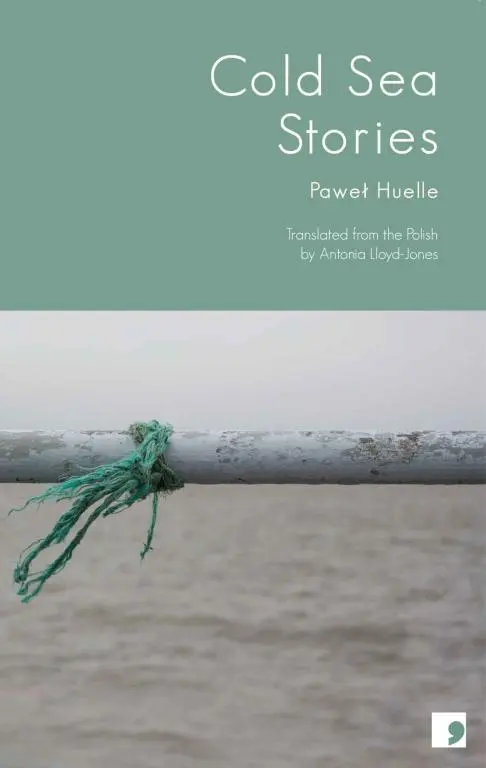
- Название:Cold Sea Stories
- Автор:
- Издательство:Comma Press
- Жанр:
- Год:2012
- Город:London
- ISBN:978-1-905-58339-3
- Рейтинг книги:3 / 5. Голосов: 1
-
Избранное:Добавить в избранное
- Отзывы:
-
Ваша оценка:
Cold Sea Stories: краткое содержание, описание и аннотация
Предлагаем к чтению аннотацию, описание, краткое содержание или предисловие (зависит от того, что написал сам автор книги «Cold Sea Stories»). Если вы не нашли необходимую информацию о книге — напишите в комментариях, мы постараемся отыскать её.
A shepherd watches, unseen, as a strange figure disembarks from a pirate ship anchored in the cove below, to bury a chest on the beach that later proves empty…
A prisoner in a Berber dungeon recounts his life’s story – the failed pursuit of the world’s very first language – by scrawling in the sand on his cell floor…
The characters in Paweł Huelle’s mesmerising stories find themselves, willingly or not, at the heart of epic narratives; legends and histories that stretch far beyond the limits of their own lives. Against the backdrop of the Baltic coast, mythology and meteorology mix with the inexorable tide of political change: Kashubian folklore, Chinese mysticism and mediaeval scholarship butt up against the war in Chechnya, 9-11, and the struggle for Polish independence.
Central to Huelle’s imagery is the vision of the refugee – be it the Chechen woman carrying her newborn child across the Polish border (her face emblazoned on every TV screen), the survivor of the Gulag re-appearing on his friends’ doorstep, years after being presumed dead, or the stranger who befriends the sole resident of a ghostly Mennonite village in the final days of the Second World War. Each refugee carries a clue, it seems, or is in possession or pursuit of some mysterious text or book, knowing that only it – like the Chinese ‘Book of Changes’ – can decode their story. What we do with this text, this clue, Huelle seems to say, is up to us.
Independent Foreign Fiction Prize Nominee for Longlist (2013)
Cold Sea Stories — читать онлайн бесплатно полную книгу (весь текст) целиком
Ниже представлен текст книги, разбитый по страницам. Система сохранения места последней прочитанной страницы, позволяет с удобством читать онлайн бесплатно книгу «Cold Sea Stories», без необходимости каждый раз заново искать на чём Вы остановились. Поставьте закладку, и сможете в любой момент перейти на страницу, на которой закончили чтение.
Интервал:
Закладка:
Until one day he read in a Berlin paper about the language of a tribe related to the Berbers, the mysterious Saharan No people. According to Wieland, it was there, in their speech, that the kernel of all other possible combinations lay. Not in Sanskrit, not in Hebrew either. In the desert, at an oasis also called No, there were supposed to be three standing stones with inscriptions. No one had seen them, but Pliny and Herodotus wrote about them. These inscriptions contained the universal pattern for all alphabets and languages – the ancient speech of Eve, Adam, Gilgamesh, the Teutons, the Slavs and the Tatars.
He sold the estate. He made deposits at banks. Finally he reached Genoa, from where he was to sail on a British freighter to Alexandria. On the café terrace he talked to an insurance agent, a Russian called Goncharski. Thanks to his contacts, this man was to arrange the journey. ‘In the desert, Herr von Kotwitz,’ he repeated, ‘once you are riding with those savages, please tell them you are a Greek from London, let’s say Ariston Nikiforos, and that you are looking for ancient sculptures and souvenirs: that will be best.’
He said he was a Greek from London, looking for sculptures and souvenirs. It was no use: robbed, beaten and tied up, he spent a few days travelling with the robber caravan to the city where now he was writing down the book of his life instead of the failed elegies.
If they kill me, he mused, or if I expire here, nothing will be left of me. Who was I? Someone who read a few articles by German philologists that inspired him to set off on a journey. Isn’t that proof of the power of philology? Or of my own weakness. How stupid. The people holding me here have never even heard of such a person as Abulafia. Adam and Eve certainly didn’t talk in their language. Abulafia finally proclaimed himself the Messiah. But nothing changed after his death. And even less will change after mine. Nothing at all.
Amid such thoughts, he gradually finished his book. Each day he recited it from the beginning. He did not make any amendments. Changes might bring undesirable confusion into his memory.
One morning two messengers entered his cell. They undid the chain and gave him a new burnous. Then all three set off on horseback across the desert. He was not tied up, but where was he to escape to? After two days and nights, when the landscape took on a rocky aspect, they told him to get off his horse, gave him a supply of water, then pointed to the nearest, low hill and rode away. He walked onwards, exhausted. In a small gully he saw a spring, with a tent pitched nearby. Inside, three old women were sitting on stools at a spinning wheel.
‘So that’s how it looks,’ he thought. ‘There are always three old hags at the end.’
He watched as the thin thread wound around the spindle. Then he lay down by the spring and gazed at the stars. He fell asleep. At dawn, when the sun was already blazing down mercilessly, he noticed that the tent had gone. He was alone, in total, perfect silence. He could smell the sweet scent of grass, clover, mint and wind, mixed with the familiar odour of seaweed, wet sand and fish. He had never been so happy.
In the chronicle of Pomeranian Junkers it says that as the last of the von Kotwitz clan, Joachim set off on a journey to the Sahara in 1899 and went missing there, probably murdered by one of the Berber tribes. The chronicler does not say a word about Abulafia and the universal language, the one spoken by Adam and Eve. Nor about Joachim von Kotwitz’s mother, née Obuchowska. In a second-hand bookshop I once found an essay from their manor-house library, by a Professor Mangoldt, on ‘Dante and Abulafia’, published in Berlin in 1869. Umberto Eco brings up its main points in several chapters of his book, The Search for the Perfect Language . So Joachim’s alleged madness inspired by Mangoldt’s pamphlet would be the antithesis of Eco’s rational discourse. But that’s quite another story…
The Flight into Egypt
AS THE WOMAN with the child in her arms alighted from the bus and walked towards the border guards’ cabin, a sudden gust of wind raised her headscarf. At that moment on the television screen he saw the beautiful, delicate face of a young mother, maybe about twenty years old. She walked the last few metres to the border at a rapid, determined pace, slightly bowed, avoiding the television cameras. But the cameramen had sensed a good story. In the procession of some fifty people, she was the only one carrying a child, which was bundled in a blanket. She briefly handed it to the officer so she could fetch her documents from under her coat – a passport and a loose sheet of paper, printed and stamped. Just then, for a few seconds, all the lenses caught her glance. There was something ineluctable in it: a deathly exhaustion and – only just managing to shine out from under it, nurtured for weeks on end for this very moment – a small ray of hope.
A day later, when all the newspapers printed a portrait of the woman in the headscarf on their front pages, he noticed another thing too: even though it showed uncertainty, her expression had enormous strength of pride in it. The article described the refugee camp in Ingushetia, a journey lasting several months and several paragraphs across various borders, at the end of which they got out of a Ukrainian bus and quite literally walked – because they had no transport – into Poland. Anyone who had been through all that should not have to regard the immigration officer as if he were God, ready to frustrate the entire ghastly ordeal at a stroke by sending them back. And indeed, she didn’t – instead her eyes were saying, ‘I wouldn’t go back now even if you drew a gun on me.’ But of course there was no question of drawing a gun; the officer merely checked her documents – maybe taking a bit long over it, but not long enough to stop the refugees from reaching their destination that same day, towards evening, a former Soviet army training centre thirty kilometres from the capital.
Over the next couple of hours, as he took his usual daily walk, now and then he was conscious of the fact that his thoughts were centred on the Chechen woman. She intrigued him. Once in the tram, he tried to imagine her voice. Perhaps in contrast to her facial features, which were slightly sharp, her voice was soft, almost velvety, and surely only when she sang one of those ancient mountain songs with the other women did it sound like a blade cutting the air in two. On the dunes, as he gazed at the forlorn greyness of the November sea, he also wondered what their first meeting would be like. He was sure they would speak in Russian.
‘ Zdrastvuytye ,’ he practised greeting her, bowing gallantly as he swept aside some sand and dried leaves with the tip of his shoe, ‘ menya zavoot Andrei Stanislavovich, a vam? – My name is Andrei Stanislavovich – what’s yours?’ But perhaps, he thought, as he stood on the very edge of the shore, it’s correct to ask ‘ a vas? ’, not ‘ a vam? ’ He spent much longer speculating about her name, but finally for lack of even the slightest knowledge of any Caucasian language, his efforts ended in failure. Only once he was in the local shop for his daily groceries did he sober up a bit. ‘My God, ancient mountain songs – what on earth am I thinking? What if she lived in a tower block in Grozny, loves disco music, and her voice has gone hoarse from smoking and drinking?’
But once he had cut her picture out of the newspaper, that sort of doubt seemed absurd. He knew about people’s faces, and could tell how far the look in someone’s eyes conceals the goodness or badness in their soul. With some difficulty he searched a storage space in the ceiling for some brushes, tubes of paint and primer he hadn’t used for years. He spent a good quarter of an hour in the cellar fetching out an easel and a dusty canvas stretcher from under a pile of junk. As the lift was out of order again, he carried them up the stairs to his seventh-floor flat. To have a good spot by the window, he moved the sofa bed and the television. Finally he fixed up the stretcher and primed the canvas, carefully, taking his time, and concentrating extremely hard, as if this simple activity were more than just a technical preparation. Then he did his first sketches on some sheets of wrapping paper. The oily smell of the primer soon pervaded the little flat, bringing him an unexpected throng of memories. The academy he no longer attended, the studio he no longer possessed, the wife he had left, friends he no longer saw, exhibitions he had long since forgotten – it all came back in a chaotic stream of sounds and images. He had no regrets, not even those dreadful mornings at the Actors’ Club when, with savage hangovers and not a penny between them, he and a few friends would emerge onto the grey street, only to bump into an army patrol just around the corner. His present life, solitary and well-ordered, was no escape. If the desert had stretched away just beyond the city boundaries, he would have settled right there, to have a daily view of nothing but endless plains that seemed to converge on the horizon. What still bothered him, when he finally set aside the sketches a few hours later, were not the memories, but the fact that after fifteen years he was going to start painting again.
Читать дальшеИнтервал:
Закладка:
Похожие книги на «Cold Sea Stories»
Представляем Вашему вниманию похожие книги на «Cold Sea Stories» списком для выбора. Мы отобрали схожую по названию и смыслу литературу в надежде предоставить читателям больше вариантов отыскать новые, интересные, ещё непрочитанные произведения.


Обсуждение, отзывы о книге «Cold Sea Stories» и просто собственные мнения читателей. Оставьте ваши комментарии, напишите, что Вы думаете о произведении, его смысле или главных героях. Укажите что конкретно понравилось, а что нет, и почему Вы так считаете.