Павел Хюлле - Cold Sea Stories
Здесь есть возможность читать онлайн «Павел Хюлле - Cold Sea Stories» весь текст электронной книги совершенно бесплатно (целиком полную версию без сокращений). В некоторых случаях можно слушать аудио, скачать через торрент в формате fb2 и присутствует краткое содержание. Город: London, Год выпуска: 2012, ISBN: 2012, Издательство: Comma Press, Жанр: Современная проза, на английском языке. Описание произведения, (предисловие) а так же отзывы посетителей доступны на портале библиотеки ЛибКат.
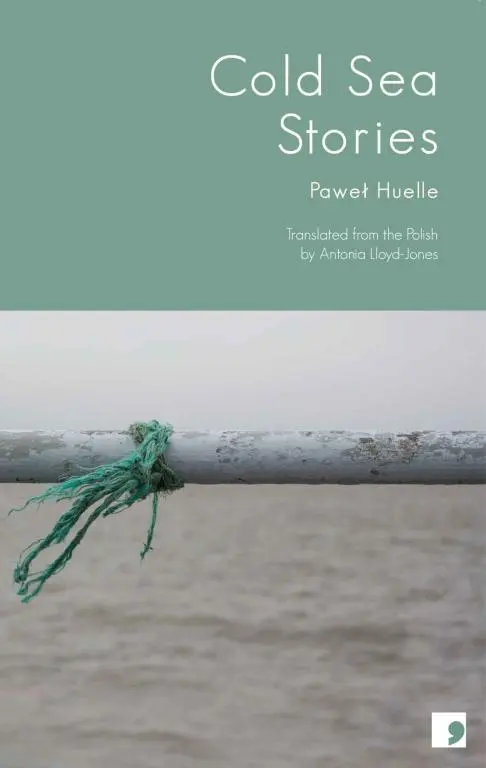
- Название:Cold Sea Stories
- Автор:
- Издательство:Comma Press
- Жанр:
- Год:2012
- Город:London
- ISBN:978-1-905-58339-3
- Рейтинг книги:3 / 5. Голосов: 1
-
Избранное:Добавить в избранное
- Отзывы:
-
Ваша оценка:
Cold Sea Stories: краткое содержание, описание и аннотация
Предлагаем к чтению аннотацию, описание, краткое содержание или предисловие (зависит от того, что написал сам автор книги «Cold Sea Stories»). Если вы не нашли необходимую информацию о книге — напишите в комментариях, мы постараемся отыскать её.
A shepherd watches, unseen, as a strange figure disembarks from a pirate ship anchored in the cove below, to bury a chest on the beach that later proves empty…
A prisoner in a Berber dungeon recounts his life’s story – the failed pursuit of the world’s very first language – by scrawling in the sand on his cell floor…
The characters in Paweł Huelle’s mesmerising stories find themselves, willingly or not, at the heart of epic narratives; legends and histories that stretch far beyond the limits of their own lives. Against the backdrop of the Baltic coast, mythology and meteorology mix with the inexorable tide of political change: Kashubian folklore, Chinese mysticism and mediaeval scholarship butt up against the war in Chechnya, 9-11, and the struggle for Polish independence.
Central to Huelle’s imagery is the vision of the refugee – be it the Chechen woman carrying her newborn child across the Polish border (her face emblazoned on every TV screen), the survivor of the Gulag re-appearing on his friends’ doorstep, years after being presumed dead, or the stranger who befriends the sole resident of a ghostly Mennonite village in the final days of the Second World War. Each refugee carries a clue, it seems, or is in possession or pursuit of some mysterious text or book, knowing that only it – like the Chinese ‘Book of Changes’ – can decode their story. What we do with this text, this clue, Huelle seems to say, is up to us.
Independent Foreign Fiction Prize Nominee for Longlist (2013)
Cold Sea Stories — читать онлайн бесплатно полную книгу (весь текст) целиком
Ниже представлен текст книги, разбитый по страницам. Система сохранения места последней прочитанной страницы, позволяет с удобством читать онлайн бесплатно книгу «Cold Sea Stories», без необходимости каждый раз заново искать на чём Вы остановились. Поставьте закладку, и сможете в любой момент перейти на страницу, на которой закончили чтение.
Интервал:
Закладка:
‘Where are you going?’ he asked in German. But the woman did not take the slightest notice of him. ‘Can’t you hear what I’m saying to you?’ shouted Polanke, blocking her way. ‘Are you deaf?’ But at once he regretted his words and his insistence. The stranger stopped half a pace in front of the horse and looked up, staring at Polanke. In her eyes there was something that prompted instant anxiety. The gendarme did not know how to define it, but somewhere in the small of his back he felt an unpleasant tingling. ‘Only witches look at you like that,’ he thought, ‘or criminals.’ But he didn’t say that, of course, because the moment was dragging on unbearably and her gaze, not his, demanded a response. There they stood facing each other, she in shabby rags, he in his shiny helmet with the black eagle, she with a bundle tied on a stick of pine, he with his Mannlicher rifle slung over his shoulder; the golden dust continued to fall on the Wilderness, heavy rain clouds were drawing in from over the Water, and high overhead they could hear the cry of a hawk. Today it is hard to say who spoke first. But the main thing is that the words that followed – for they did say something to each other – were uttered in a harsh, grating language which Polanke did in fact know, but found repulsive: the dialect of fishermen and shepherds. He burst out laughing when she said she was looking for work and a place to stay. The work was out there, in the north and in the west, in the cities or at the houses of the vulgar rich, but not here, where not even potatoes could flourish in the sandy soil and where the only thing not in short supply was stones.
‘Admit what you have stolen at once,’ he said, leaning out of the saddle. But she answered that she hadn’t stolen anything. ‘In that case you’ve run away from your husband,’ he said even louder. She replied that she had never had a husband. At this point Gendarme Polanke adjusted the strap under his chin, sat up straight and delivered a speech – about the fact that wherever the imperial authority reached, no crime would ever escape justice. And as he, Polanke, was the natural extension of that authority in the local area, all vagrants and suspicious types who appeared in the Wilderness, in Zabrody or by the Lake should be on their guard. The gendarme turned his horse towards the Zabrody inn and without a word of farewell, without even looking at the stranger, rode away. Meanwhile the woman set off in the opposite direction. A few moments later she was standing at that point on the plateau where the view opens onto the thatched roofs of Zabrody, hidden among the hills, and further, as far as the eye can see, to the great Water cut across by the contours of islands and the woods on its borders. Here she halted beside a field - stone marking the way. She sat down and extracted a piece of dry bread from her bundle. Now she was tearing at it with her teeth, steadily working her jaw to chew it up. There was no more golden dust in the air, because the sun had dropped low behind the woods. As Gendarme Polanke approached the inn, the woman finished eating. She gathered all the crumbs from her skirt, scooped them out of her cupped hand with her tongue and set off straight ahead, along the road to Zabrody. And she surely would have found room in an abandoned barn or a fishing shed right on the Lake, or maybe she would even have been offered a warmer corner to sleep in at one of the cottages, if not for the sudden wind that fell on the Wilderness from all directions, driving in clouds heavy with rain and cold. She had to shelter anywhere she could, and at the edge of the scrubland it was not easy. She ran on, until at a turn in the road she came upon a thick clump of broom. She hesitated, wondering whether to flee further, but then the wind, raising twigs and leaves into the air, almost knocked her off her feet, so she crawled into the tangle of roots. As she tucked her head into her arms to hide from the lashing rain, Gendarme Polanke was knocking back his first glass of anise. In the dark chamber of the inn, empty and lit by a tallow candle, Gasiński the publican was leaning over his guest, telling him how two days ago Mr Samp and Mr Skórzewski had been coming home this way along the road to Juszki. They had been to the moustachioed Pole’s place in Wdzydze, but not for a name-day party or a family celebration. They had stopped a while at the inn, to give the horses a rest, had each drunk a glass of vodka and chatted in hushed voices, over there in the corner. Only a few words had reached the publican’s ears, rather odd and devious ones; oh no, it wasn’t a conversation about business – these words did not concern leasing, taxes, buying or selling. Then the gentlemen had parted and each gone his own way. Polanke downed the second glass of anise. Yes, he would very much like to know what sort of words they were. But Gasiński did not remember them well, so the gendarme drank a third glass and remembered the strange woman on the Wilderness. At the very thought of the look in her eyes, a shudder ran through his body. No, she had not come through this way, or at any rate she had not called at the pub. Gasiński laughed and shook his head. He didn’t give credit to beggars and tramps – he’d have sent a woman like that to the four winds, and that was that. What could she be looking for here?
‘That’s no ordinary beggar,’ said Polanke after a pause for thought. ‘Vagabonds don’t have that sort of look in their eyes.’ After the fourth and fifth glasses, which the gendarme downed in quick succession, he tried his best to explain to the publican what that look was like. But he said nothing specific. If that woman had stared at him for longer, she could certainly have driven him to an attack of fury. A look like that deserves a smack across the face, or to be locked up in jail. For not only does it go against imperial power, it is also an affront to the entire order established by the Creator. Gasiński sighed understandingly. He guessed the woman had said something offensive. Yet in any case he did not ask for details, he merely poured the next glass of liquor. Before Polanke had managed to tip it down his throat, there in the doorway, dripping wet, stood the bearded Hersz, a travelling salesman. Usually, if night caught up with him on his way to Zabrody, he stayed here and set off at first light across the Wilderness. Today he wanted to go further. If Gasiński had any business in Zabrody or Wiele, where Hersz would be heading the next morning, let him say quickly, for time was short. Although Gasiński had no business for the people of Zabrody or those of Wiele, he did wish to invite Hersz in; he poured the Jew a drink and encouraged him to stay, especially in weather like this. Why put your wagon and your goods at risk? No more than three weeks ago some robbers had attacked Czapiewski as he was coming back to Wieprznica from the city. They had taken all his money and his watch. Hersz nodded. Water was dripping from the brim of his felt hat and from matted wisps of his hair. He agreed that Gasiński was right – it was dangerous to travel at night in such a bad storm. On the other hand, if it were God’s will, not a hair would fall from his head. But then if it were His will, the horse would bolt in broad daylight and Hersz would break his neck in the nearest ditch. It was all predestined, up there on high.
‘But which God is Hersz talking about?’ asked Polanke, raising his head from the table top. The Jew was already approaching the door, but he did not want to show the gendarme any disrespect.
‘That’s not the right question,’ he said after some thought. ‘But there is another question, on that topic, that is the right one.’
‘Well?’ said Polanke, knocking back his sixth glass, which he hadn’t yet emptied, ‘so how would it sound?’
Читать дальшеИнтервал:
Закладка:
Похожие книги на «Cold Sea Stories»
Представляем Вашему вниманию похожие книги на «Cold Sea Stories» списком для выбора. Мы отобрали схожую по названию и смыслу литературу в надежде предоставить читателям больше вариантов отыскать новые, интересные, ещё непрочитанные произведения.


Обсуждение, отзывы о книге «Cold Sea Stories» и просто собственные мнения читателей. Оставьте ваши комментарии, напишите, что Вы думаете о произведении, его смысле или главных героях. Укажите что конкретно понравилось, а что нет, и почему Вы так считаете.