Павел Хюлле - Cold Sea Stories
Здесь есть возможность читать онлайн «Павел Хюлле - Cold Sea Stories» весь текст электронной книги совершенно бесплатно (целиком полную версию без сокращений). В некоторых случаях можно слушать аудио, скачать через торрент в формате fb2 и присутствует краткое содержание. Город: London, Год выпуска: 2012, ISBN: 2012, Издательство: Comma Press, Жанр: Современная проза, на английском языке. Описание произведения, (предисловие) а так же отзывы посетителей доступны на портале библиотеки ЛибКат.
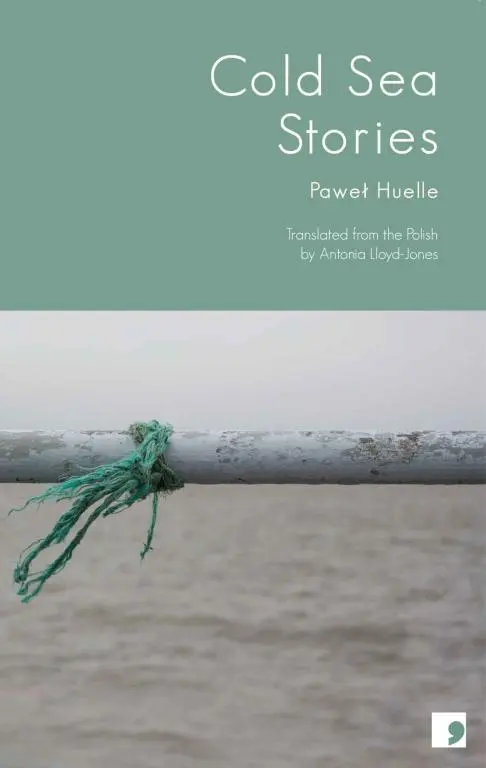
- Название:Cold Sea Stories
- Автор:
- Издательство:Comma Press
- Жанр:
- Год:2012
- Город:London
- ISBN:978-1-905-58339-3
- Рейтинг книги:3 / 5. Голосов: 1
-
Избранное:Добавить в избранное
- Отзывы:
-
Ваша оценка:
Cold Sea Stories: краткое содержание, описание и аннотация
Предлагаем к чтению аннотацию, описание, краткое содержание или предисловие (зависит от того, что написал сам автор книги «Cold Sea Stories»). Если вы не нашли необходимую информацию о книге — напишите в комментариях, мы постараемся отыскать её.
A shepherd watches, unseen, as a strange figure disembarks from a pirate ship anchored in the cove below, to bury a chest on the beach that later proves empty…
A prisoner in a Berber dungeon recounts his life’s story – the failed pursuit of the world’s very first language – by scrawling in the sand on his cell floor…
The characters in Paweł Huelle’s mesmerising stories find themselves, willingly or not, at the heart of epic narratives; legends and histories that stretch far beyond the limits of their own lives. Against the backdrop of the Baltic coast, mythology and meteorology mix with the inexorable tide of political change: Kashubian folklore, Chinese mysticism and mediaeval scholarship butt up against the war in Chechnya, 9-11, and the struggle for Polish independence.
Central to Huelle’s imagery is the vision of the refugee – be it the Chechen woman carrying her newborn child across the Polish border (her face emblazoned on every TV screen), the survivor of the Gulag re-appearing on his friends’ doorstep, years after being presumed dead, or the stranger who befriends the sole resident of a ghostly Mennonite village in the final days of the Second World War. Each refugee carries a clue, it seems, or is in possession or pursuit of some mysterious text or book, knowing that only it – like the Chinese ‘Book of Changes’ – can decode their story. What we do with this text, this clue, Huelle seems to say, is up to us.
Independent Foreign Fiction Prize Nominee for Longlist (2013)
Cold Sea Stories — читать онлайн бесплатно полную книгу (весь текст) целиком
Ниже представлен текст книги, разбитый по страницам. Система сохранения места последней прочитанной страницы, позволяет с удобством читать онлайн бесплатно книгу «Cold Sea Stories», без необходимости каждый раз заново искать на чём Вы остановились. Поставьте закладку, и сможете в любой момент перейти на страницу, на которой закончили чтение.
Интервал:
Закладка:
He thought he ought to leave this place, but at the very thought of a journey he felt utterly despondent. He wrote a diplomatic e-mail to Dr Esterhagen, asking if he would like to take up a conversation on some completely new topics, but the analyst didn’t answer. Luckily, towards the end of November there was heavy snowfall, and a new occupation distracted him. He bought some cross-country skis and, with a map and a thermos of hot tea in his backpack, he set off on long daily outings, identifying the old routes of his suburban hikes among the forest tracks and clearings. He was particularly fond of the places that gave a clear view of the city and the bay. This was just how he wanted to spend the approaching Christmas Eve: a couple of hours on a ski run, come home, have supper, and then head off to Midnight Mass. Besides, it was better than being alone in that apartment, where everything reminded him of Sophie. But then came a sudden thaw, and there was no question of skiing. When he looked out at the meadow that morning, not a single patch of snow was covering the tawny-grey grass. Rain was drizzling out of heavy, low-drifting clouds. But in the very same spot as before, the same tent had been pitched. Calmly, as if he were just off to the corner shop, he put on his hooded jacket and boots and left the house.
‘Is there anyone there?’ he asked, standing outside the loosely laced-up entrance. ‘Should I speak in English?’
‘No, I can speak in any language,’ he heard someone say. ‘Please come into the vestibule.’
Inside an extremely cramped space a small spirit lamp was burning. His host’s face looked unfamiliar, though it may have been the same man he had seen through the lens.
‘So you are Doctor Cheng? Did you place an announcement in the newspaper?’
‘Yes.’
‘Why are you looking for me? What do you want from me? Why are you hounding me?’
‘I want you to believe.’
‘In what? Trading in dreams? Predictions? It’s nonsense.’
‘I do not sell dreams, I merely offer them. Do you remember your hexagram, in which the element of fire warned against climbing?’
‘That still doesn’t prove a thing.’
‘I am tired. I have little time. If you want to try, say yes.’
‘Try what?’
‘A dream is not a daydream. Or a reflection. It is the other side of your shirt.’
‘But what am I supposed to believe in?’
‘In what you will see.’
‘All right. So what do I have to do?’
Doctor Cheng gently moved him half a pace aside and put out the lamp. Suddenly he raised the inner tent flap. It looked just as if inside, beyond an invisible threshold, there was a very different space. He saw a mountain stream, a footbridge, and some distant peaks. If it was an illusion, it was perfect. The stream was thundering over the rocks, and he could feel a fine mist of water spraying his face. Clean air filled his lungs. The doctor gave him a small push forwards, and suddenly he found himself inside the scene that seconds earlier he had been watching. Some people were calling to him from the other side of the footbridge, and soon after he recognised them as his parents. His mother was signalling to him, and his father was smiling, as ever. He crossed to their side of the bridge; they shook hands and chatted. He understood that in a while they would want to move onwards, but without him. They had backpacks and suitable boots, but he didn’t have any. Now he realised how he had got here, but he looked around in vain: neither the meadow outside his new home nor even the tent he had entered were anywhere in sight. His mother and father were already far away; he could see their tiny figures on a rocky path, waving goodbye to him. He bathed his face in cold stream water, and then he caught sight of the inner tent flap closing in front of him.
‘Beautiful,’ he said to Doctor Cheng, ‘but it’s just a trick. I saw them, I touched them, but they aren’t alive. You cannot resurrect them.’
‘If you know something, speak of it. If you do not know, do not speak. That is the principle. And indeed you do not know what they desire.’
The doctor lit the lamp again, and put it out again.
This time he was in Chinatown, in the spot where Sophie had died. But it was she who was leaning over him, not he over her. He could see her tears and her lips rapidly uttering the words of a prayer that he couldn’t hear. An excruciating pain in the region of his sternum was making any kind of movement or response impossible. Finally, once the spasm had abated, in total darkness he felt her hand on his face and heard her whisper – better me, better me than him, me, not him, O God, O God …
‘What is the point of your mission?’ he asked, when he found himself back in the vestibule again. ‘What is it meant to prove?’
‘I really have very little time now. Others are waiting. Sometimes it is better to break free of one’s thoughts and accept reality. If you had come the first time, you would have learned far more. Do not seek me here, or anywhere else. You can only meet me once.’
As he said this, Doctor Cheng drew aside the outer flap of the vestibule and pushed him out of the tent. He must have spent a long time inside it, because the meadow was now in darkness and a lot of snow had fallen. Evidently, on leaving the house, he hadn’t flicked the light switch, because he could see bright light shining in his windows. He walked towards it, with the feeling that everything that had happened really had occurred. Just like that Christmas Eve when he and his father had stopped outside the Chinese cottage. And suddenly he remembered the name from that book: Pai Chi Wo – he kept shouting at the top of his voice, overjoyed, until people on their way to Midnight Mass started anxiously looking round at him. Then he ran fast, not realising that a crack of blinding light, ever brighter, going deep into the earth, was engulfing him.
The Fifteen Glasses of Gendarme Polanke
IN THE YEAR 1909 or 1910 golden dust was falling on the Wilderness, slowly and idly, heralding a severe winter. Gendarme Polanke was riding his horse across the fields, but before he noticed the strange woman, he was thinking back to yesterday’s visit to the chief official, the Landrat. This matter could brook no delay. Squire Gulgowski, ‘that damned Pole’, had been riding about the local villages ever since he arrived from Danzig, distributing some sort of news-sheets and leaflets to the peasants, as well as the landowners (of whom there were not in fact many hereabouts). Polanke did not actually know the nature of these publications, for each person interrogated on this circumstance had held his tongue and shrugged his shoulders, but there could be no doubt it was a political matter, which he, Polanke, must immediately report to the Landrat. All the more, since the police station at Wiele was not trustworthy. Corporal Szulc took no notice of any reports at all. It was a known fact that instead of demonstrating a spirit of vigilance, Corporal Szulc held intense carousals every night, in which Kosterke the butcher and Blum the shopkeeper also took part. If only Polanke had access to a search warrant and several men to help. Meanwhile ‘that moustachioed Pole’ had set the dogs on him. But he, Polanke, had not failed to notice the plaque above the threshold, which was not there before, saying: ‘No entry for German cockroaches or any other vermin.’ That was what was written there. In Polish. If only the Landrat would wish to give it his consideration… Polanke gave a deep sigh. He adjusted his helmet and took in the reins. That was when he noticed the strange woman. He could tell at once that she was not local, and immediately spurred on his horse to cut across her path at the roadside crucifix, from where a path led off to Herr Knitter’s cottage. It did not take long.
Читать дальшеИнтервал:
Закладка:
Похожие книги на «Cold Sea Stories»
Представляем Вашему вниманию похожие книги на «Cold Sea Stories» списком для выбора. Мы отобрали схожую по названию и смыслу литературу в надежде предоставить читателям больше вариантов отыскать новые, интересные, ещё непрочитанные произведения.

Обсуждение, отзывы о книге «Cold Sea Stories» и просто собственные мнения читателей. Оставьте ваши комментарии, напишите, что Вы думаете о произведении, его смысле или главных героях. Укажите что конкретно понравилось, а что нет, и почему Вы так считаете.