Sofka Zinovieff - Putney
Здесь есть возможность читать онлайн «Sofka Zinovieff - Putney» весь текст электронной книги совершенно бесплатно (целиком полную версию без сокращений). В некоторых случаях можно слушать аудио, скачать через торрент в формате fb2 и присутствует краткое содержание. Город: Toronto, Год выпуска: 2018, ISBN: 2018, Издательство: Alfred A. Knopf Canada, Жанр: Современная проза, на английском языке. Описание произведения, (предисловие) а так же отзывы посетителей доступны на портале библиотеки ЛибКат.
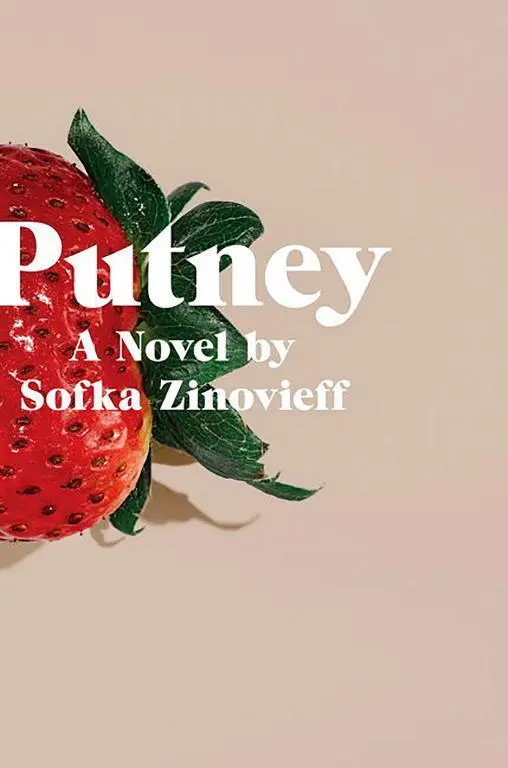
- Название:Putney
- Автор:
- Издательство:Alfred A. Knopf Canada
- Жанр:
- Год:2018
- Город:Toronto
- ISBN:978-0-73527-530-0
- Рейтинг книги:3 / 5. Голосов: 1
-
Избранное:Добавить в избранное
- Отзывы:
-
Ваша оценка:
Putney: краткое содержание, описание и аннотация
Предлагаем к чтению аннотацию, описание, краткое содержание или предисловие (зависит от того, что написал сам автор книги «Putney»). Если вы не нашли необходимую информацию о книге — напишите в комментариях, мы постараемся отыскать её.
A rising star in the London arts scene of the early 1970s, gifted composer Ralph Boyd is approached by renowned novelist Edmund Greenslay to score a stage adaptation of his most famous work. Welcomed into Greenslay’s sprawling bohemian house in Putney, an artistic and prosperous district in southwest London, the musical wunderkind is introduced to Edmund’s beautiful activist wife Ellie, his aloof son Theo, and his nine-year old daughter Daphne, who quickly becomes Ralph’s muse.
Ralph showers Daphne with tokens of his affection – clandestine gifts and secret notes. In a home that is exciting but often lonely, Daphne finds Ralph to be a dazzling companion. Their bond remains strong even after Ralph becomes a husband and father, and though Ralph worships Daphne, he does not touch her. But in the summer of 1976, when Ralph accompanies thirteen-year-old Daphne alone to meet her parents in Greece, their relationship intensifies irrevocably. One person knows of their passionate trysts: Daphne’s best friend Jane, whose awe of the intoxicating Greenslay family ensures her silence.
Forty years later Daphne is back in London. After years lost to decadence and drug abuse, she is struggling to create a normal, stable life for herself and her adolescent daughter. When circumstances bring her back in touch with her long-lost friend, Jane, their reunion inevitably turns to Ralph, now a world-famous musician also living in the city. Daphne’s recollections of her childhood and her growing anxiety over her own young daughter eventually lead to an explosive realization that propels her to confront Ralph and their years spent together.
Masterfully told from three diverse viewpoints – victim, perpetrator, and witness – Putney is a subtle and enormously powerful novel about consent, agency, and what we tell ourselves to justify what we do, and what others do to us.
Putney — читать онлайн бесплатно полную книгу (весь текст) целиком
Ниже представлен текст книги, разбитый по страницам. Система сохранения места последней прочитанной страницы, позволяет с удобством читать онлайн бесплатно книгу «Putney», без необходимости каждый раз заново искать на чём Вы остановились. Поставьте закладку, и сможете в любой момент перейти на страницу, на которой закончили чтение.
Интервал:
Закладка:
Threading her needle, Daphne began to sew the elements for the Thames. Instead of flat water, she was creating twisting textile tubes, stuffed so they looked like snakes or bulging entrails – a living river. Taking some gulps from her wine, she tried to understand why she had been so shaken by the dancing girls, by Libby’s sudden transformation. It wasn’t that she hoped to prevent Lib from becoming a sexual being – far from it. But from her perspective, it was obvious that her daughter and Paige had been performing a game of sexiness. It was not supposed to be taken seriously, not so dissimilar to boys engaging in war games. But you wouldn’t give them live ammunition. With girls, however, the painted lips and shiny shoes look like the real thing, rather than the equivalent of toy guns. Of course, the sexual awakening was true too – she’d never deny that. But she now saw with clarity how adolescent awakening cuts both ways, between new bewildering longings and the playgrounds of childhood.
As Daphne made minute stitches on her writhing river, she thought about herself at Libby’s age. It was impossible not to compare her own experiences to her daughter’s. She’d never deny that she loved Ralph, but a bright spotlight now gave that era a different appearance. She had been far too young to understand what was happening when she was swept into the deep waters of a love affair. Unlike Libby, Daphne hadn’t used the props of make-up or stripper’s gear for her game but, looking back, she could see that twelve or thirteen or even fifteen are not ages for being taken seriously by men of thirty. And certainly not for being taken into their beds. Who had been there to protect her?
She often wondered what it would have been like to have Ellie around later – when her daughter was born, when she had an exhibition, when she’d nearly given up. Losing her mother had changed so much, it was hard to imagine how it would be if Ellie had been there to make her study, to get her to university, to scream and shout about the marriage to Constantine. Ellie would have dragged her by the hair to get her out of the clutches of Constantine’s family. Or perhaps she would just have repeated her old adage, ‘Learn your own lessons,’ and that would have been enough to open Daphne’s eyes. Ellie might not have been the mother waiting at home each day after school, but she was unwaveringly loving. She was also an example of a powerful woman pursuing what she believed was important. Daphne hoped she had passed on these priorities to Libby: make your own way, never rely on a man, go out and see the world.
After Ellie died, Daphne took her jewellery from the leather box in her bedroom. ‘She’d want you to have it,’ said Ed, but she saw he was miserable when she wore almost everything at once, piling necklaces until they hung heavy on her neck and adding the bangles and bracelets to her own, so she clanked like a prisoner. Most of it wasn’t valuable – lots of Indian beads and turquoise earrings – but there were a few precious items, including a diamond ring from Ellie’s grandmother and a gold bracelet Ed had bought in an extravagant mood. Within a few years, Daphne had lost the lot. Several of the necklaces broke at a party and there were too many drunk people dancing to scoop up all the beads. She didn’t even know what happened to the ornate, Byzantine-style bracelet her father had given her mother; one day she merely couldn’t find it.
The end of Ellie’s jewels had been like another, more minor bereavement – a reminder that there was nothing left of her mother. Nothing tangible or solid. Not even a gravestone. The only comfort was the idea of Ellie’s cells continuing – she often saw reminders of her mother when she caught her reflection by surprise. And of course, Ellie was also there in Libby.
Ellie’s diamond ring fell off when Daphne was swimming in Greece with Constantine. She’d met him two years after her mother’s death. They were on an Olympic Airlines flight from London to Athens and she spotted him before they boarded, interested in the unusual mix in his handsome face of potential for danger and lazy indulgence – a panther resting. Later, she thought of him more like a snake that would devour you whole and then rest quietly for days while the digesting took place. When they were airborne he came to find her, having arranged that she could sit next to him in the business section. She changed her plans, spending the summer on the Cycladic island of Andros, where his family had a magnificent villa, surrounded by flowering gardens and groves of lemon trees and olives.
Their decision to marry in the autumn was a continuation of the absurd, drugged-up fantasy that should have remained a misjudged holiday romance. He was thirty and she was twenty. Later, she wondered if it was a longing to connect with Greece after the trauma of losing her mother. There was an undeniable pleasure in lying in bed with someone and speaking Greek, as she had done as a child with Ellie. It was so hard to make sense of the murky motives of youth. Constantine had the physical daring and shapely limbs of the bull-leapers on the Minoan frescoes at Knossos. Danger, beauty and youth, backed up by a family whose wealth was intimidatingly vast and assumed by them to be a solution to everything.
If moving to Greece had initially felt like embracing her mother’s country, it wasn’t long before she’d lost it. And lost a baby. She blamed herself for that. A summer of such concentrated partying that she forgot to take the pill – up all night at clubs, taking whatever looked good, staying awake with coke, sleeping all day. She didn’t notice she was pregnant for ages, by which time it was probably already doomed. The implausible marriage had already disintegrated. She returned like a soldier traumatised by war to her father’s England. Except that Ed had gone by then – moved to France. If she bought The Times , she was able to read his numerous book reviews, but she hardly ever saw him. Theo was already doing something in nanotechnology, and earning fabulous money in Boston. So there was no family left. During that terrible time, Daphne felt orphaned, emptied, robbed.
Skimming through her teenage diaries in search of ideas for Putney , she was shocked by how unhappy she’d been, especially when Ralph went to America for a year. She had regularly got drunk on her parents’ brandy and bottles of wine, convinced that all meaning had been snatched away from her life. Of course, she dissembled about why she was in such a bad way. Her parents may have been thinking about other things, but they loved her and noticed her misery. Once, they’d been playing a record of Ralph’s music on the kitchen gramophone as the family gathered for supper. This was not unusual. Indeed, his music had been a sort of soundtrack to her life – cropping up by chance on the radio or at friends’ houses, actively sought out in occasional concerts, and sometimes chosen by her to listen to at home. But this time, hearing Into the Woods , the woodwind piece he said represented their first kisses in the green glade, it was too much to bear. She fled from the room and refused to come down to eat. Later, Ellie brought her a plate of spaghetti bolognese and sat on her bed, stroking her, telling her it was never easy being a teenager, that she could always talk to her about anything. Daphne longed to confide in her mother, to be held and comforted, but it was impossible. The pact of secrecy between Ralph and her was their foundation stone. She knew that if she confessed, she would never see him again.
It was all very well, she thought, Ellie acting the part from time to time. She never doubted that her mother was devoted to her. But it was the veering from one extreme to another that was so hard to deal with as a daughter, so that she never knew whether Ellie would be too engrossed with a project to speak to her children or whether she’d come to Daphne’s bed and lie there with her for hours singing Greek songs and making up mad stories.
Читать дальшеИнтервал:
Закладка:
Похожие книги на «Putney»
Представляем Вашему вниманию похожие книги на «Putney» списком для выбора. Мы отобрали схожую по названию и смыслу литературу в надежде предоставить читателям больше вариантов отыскать новые, интересные, ещё непрочитанные произведения.




Обсуждение, отзывы о книге «Putney» и просто собственные мнения читателей. Оставьте ваши комментарии, напишите, что Вы думаете о произведении, его смысле или главных героях. Укажите что конкретно понравилось, а что нет, и почему Вы так считаете.