C Hribal - The Company Car
Здесь есть возможность читать онлайн «C Hribal - The Company Car» весь текст электронной книги совершенно бесплатно (целиком полную версию без сокращений). В некоторых случаях можно слушать аудио, скачать через торрент в формате fb2 и присутствует краткое содержание. Город: New York, Год выпуска: 2005, ISBN: 2005, Издательство: Random House, Жанр: Современная проза, на английском языке. Описание произведения, (предисловие) а так же отзывы посетителей доступны на портале библиотеки ЛибКат.
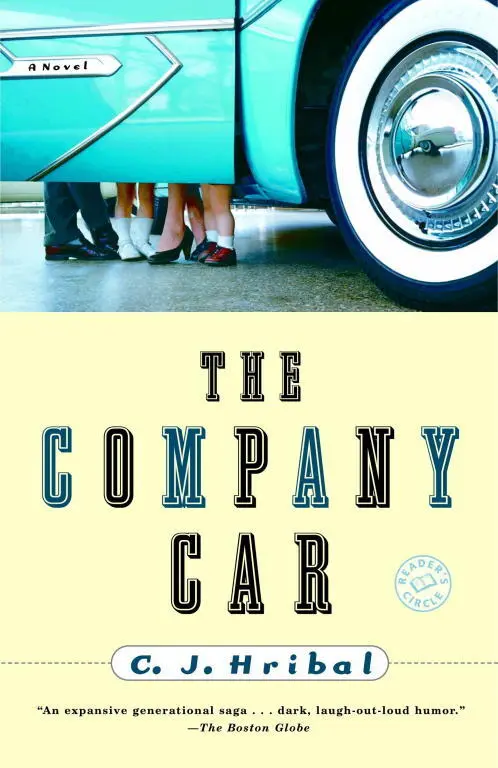
- Название:The Company Car
- Автор:
- Издательство:Random House
- Жанр:
- Год:2005
- Город:New York
- ISBN:1-58836-468-2
- Рейтинг книги:3 / 5. Голосов: 1
-
Избранное:Добавить в избранное
- Отзывы:
-
Ваша оценка:
The Company Car: краткое содержание, описание и аннотация
Предлагаем к чтению аннотацию, описание, краткое содержание или предисловие (зависит от того, что написал сам автор книги «The Company Car»). Если вы не нашли необходимую информацию о книге — напишите в комментариях, мы постараемся отыскать её.
“Are we there yet?” It’s the time-honored question of kids on a long family car trip—and Emil Czabek’s children are no exception. Yet Em asks himself the same thing as the family travels to celebrate his parents’ fiftieth wedding anniversary, and he wonders if he has escaped their wonderfully bad example.
The midwestern drive is Em’s occasion to recall the Czabek clan’s amazing odyssey, one that sprawls through the second half of the twentieth century. It begins with his parents’ wedding on the TV show It’s Your Marriage, and careens from a suburban house built sideways by a drunken contractor to a farm meant to shelter the Czabeks from a country coming apart. It is the story of Em’s father, Wally—diligent, distant, hard-drinking—and his attempts to please, protect, or simply placate his nervous, restless, and sensual wife, Susan, all in plain sight of the children they can’t seem to stop having.
As the tumultuous decades merge in his mind like the cars on the highway, Em must decide whether he should take away his parents’ autonomy and place them in the Heartland Home for the Elders. Beside him, his wife, Dorie, a woman who has run both a triathlon and for public office, makes him question what he’s inherited and whether he himself has become the responsible spouse of a drifting partner—especially since she’s packing a diaphragm and he’s had a vasectomy.
Wildly comic and wrenchingly poignant, The Company Car is a special achievement, a book that drives through territory John Irving and Jonathan Franzen have made popular to arrive at a stunning destination all its own.
The Company Car — читать онлайн бесплатно полную книгу (весь текст) целиком
Ниже представлен текст книги, разбитый по страницам. Система сохранения места последней прочитанной страницы, позволяет с удобством читать онлайн бесплатно книгу «The Company Car», без необходимости каждый раз заново искать на чём Вы остановились. Поставьте закладку, и сможете в любой момент перейти на страницу, на которой закончили чтение.
Интервал:
Закладка:
Kind, quiet, gentle Mr. Plewa responded to his wife’s infidelity and some setbacks at work—being passed over for promotion was one rumor, receiving a lateral move that effectively ended his career was another—by going into his basement laboratory one fine March day, and while Wanda was out bicycling and Mrs. Plewa was out shopping, drinking a sulfuric-acid-and-arsenic highball.
“A chemist doing that? That combination? Jesus, he must have really wanted to suffer,” said our father when our mother told him, sotto voce, over dinner.
“Wally, please.”
“I mean, I can see punishing her for wanting a divorce after she was the one that went and cheated on him, but punishing her for wanting a divorce by drinking sulfuric acid? Jesus.”
“Wally, please.”
“What happens when you drink sulfuric acid?” we wanted to know.
“Horrible things,” said our mother. “Now be quiet.”
“But what things?”
“Your throat and stomach are completely eaten away, and so are the rest of your insides. It’s a terrible way to die.”
“But why would Mr. Plewa want to die like that?”
“Because his wife cheated on him, then wanted to divorce him.”
“Wally!”
“Okay, okay,” said our father. “Beats me. He wanted to die, and he wanted to suffer.”
“Doing that to your wife and your little girl, my God,” said our mother.
“He killed Mrs. Plewa and Wanda too?”
“I mean for him to kill himself like that, knowing they’d find him. He thought he was punishing Mrs. Plewa for wanting to divorce him, but he was really only hurting himself and Wanda. It’s a terrible thing, thinking things are so bad you want to kill yourself. You must never think that, never. You must never give up hope, Emmie,” said our mother. Her eyes were glistening. “All of you. You must never give up hope.”
Besides never giving up hope, there was another lesson in this for us: if people were unhappy, they downed tranquilizers and stomach antacids and sulfuric acid, but they did not, repeat, did not divorce.
Ah, but they did. The Duckwas that spring were getting a divorce. We had heard about it, but our parents hadn’t said anything to us directly. The extent of their explanation about this series of tragedies that had occurred in Nomi’s bed and in the hall closet and who knew where else on our property—the severed halves of our father’s boat?—was our father taking us aside one Sunday after a Mass in which one of the readings had been about the woman accused of adultery who’d been saved by Jesus—the famous “he who is without sin” speech—and asking us if we knew what adultery was. We didn’t. Our focus during the readings had been on wondering what it felt like to get stoned. To actually die from rocks being thrown at you. Our father explained to us that adultery was cheating. It was wrong. Cheating on your spouse was wrong.
Said our father, “I want to make one thing clear to you. I have never cheated on your mother, and I’m not about to start now.” We were relieved to hear this. It would have been terrible, after all our father had said about playing fair, to find out that he cheated on our mother when he played cribbage or Parcheesi or euchre. It was good to know that we now had a big-league word for this. When our friends tried to miscount in Monopoly and land just beyond Park Place with our hotel on it, we could accuse them of committing adultery.
Mr. Duckwa had moved out, but Patty and Mrs. Duckwa were still around. Patty looked different. Haggard, haunted. She had dropped out of college. All that winter and spring her belly swelled and circles grew under her eyes. Pregnant and alone (our mother explained to me what “knocked up” meant; Ollie Cicerelli helped me understand, in a crude way, the mechanics of it), Patty Duckwa had entered the pantheon of instructional tragedies. Even as her belly swelled, we bonded. We had shared something. I had been there when Patty had her little breakdown while trick-or-treating, the two of us had both heard Nomi’s “Good God,” and I had been there when Patty saw both her parents in flagrante with other people. And I had said nothing. I never told my siblings—never told anyone—what I’d seen, or what Patty herself had told me that night. As Nomi said, some things are best left private.
One of the things Patty told me that winter: “I just wanted someone to like me. I thought they—he—cared.”
I didn’t ask about the shift in pronouns. I didn’t say anything. That was our deal. She’d come over to the little hedge that separated our backyard from her driveway, kick at the snow, a coat pulled loosely over her burgeoning belly, and try to smile. “Hey, Emcee,” she’d say, and I’d say, “Hey, Patty,” and then she would talk and I would shut up about it.
The baby was going to be put up for adoption. That was what she and her mom had decided. She didn’t look too sure about it. “I just thought I wanted a baby,” she’d say. “I thought if there were something to love in my life, then my life would be filled with love. That makes sense, doesn’t it?” She’d get this faraway look in her eyes then, as though the answers to her questions were to be found someplace beyond the backyards and the Monopoly-house-looking garages and the diseased elms. There sure weren’t any answers coming from me. What I could offer came from my father, and it wasn’t something I could say: “Be careful what you pray for.”
That spring while Patty Duckwa was waiting for her baby and Mrs. Plewa and Wanda were burying Mr. Plewa, our parents were taking trips to Wisconsin, leaving us on the weekends in the care of Artu and Nomi. What were they doing? we wondered. And what was with all the hushed and drawn-out conversations in the kitchen?
One day in April we found out. “Okay, you kids, get in the car.” We piled in and started driving north up Highway 41, the same route we took for our family vacations.
“Where are we going? What are we going to see?” we kept asking.
“We shall see what we shall see,” said our father.
We looked at farmhouses, windswept fields. The land undulated like the back of a snake. Most of the snow was melted. The earth was bare, brown and black. What pockets remained looked like white scabs.
“What are we supposed to see?” we wondered.
Our father and mother looked at each other and smiled. Or at least our father did. “One of these—someplace—is your new home,” our father announced, grinning. Our mother looked out the window, her lips puckered back inside her mouth.
“Which one?” We had been through this before, on vacation. Our father pointing out houses in the woods, telling us that one of these could have been Al Capone’s secret hideaway.
“We don’t know yet. We’re still looking.” Our father looked at our mother. “Should we tell them, honey?”
Our mother, still with her lips tucked inside her mouth, nodded assent.
“I’m changing jobs and we’re moving. To Wisconsin. We’re going to be Wisconsinites!”
This announcement was not met with the general acclaim which our father expected. Cinderella groaned. “My life is over! Daddy, how could you?”
“How could I what?”
“I’m starting high school next year. How could you do this to me?”
“Do what?”
“Tear me away from my friends, Daddy! How could you?”
The teary accusations and the flustered, then angry, parental defense that followed is an old conversation, and need not be given here. Our father was rendered nearly speechless. He was about to do what he had always wanted to do, what he had dreamed of doing, really, since those days he stood in an alleyway in Cicero, Illinois, and watched Al Capone’s cars speed by, off for grand adventures in the great north woods. How could we not want what he wanted? How could our mother not want it? It was what he’d prayed for. That was how he ended that discussion. “It’s what I’ve prayed for, goddammit!”
Читать дальшеИнтервал:
Закладка:
Похожие книги на «The Company Car»
Представляем Вашему вниманию похожие книги на «The Company Car» списком для выбора. Мы отобрали схожую по названию и смыслу литературу в надежде предоставить читателям больше вариантов отыскать новые, интересные, ещё непрочитанные произведения.




Обсуждение, отзывы о книге «The Company Car» и просто собственные мнения читателей. Оставьте ваши комментарии, напишите, что Вы думаете о произведении, его смысле или главных героях. Укажите что конкретно понравилось, а что нет, и почему Вы так считаете.