C Hribal - The Company Car
Здесь есть возможность читать онлайн «C Hribal - The Company Car» весь текст электронной книги совершенно бесплатно (целиком полную версию без сокращений). В некоторых случаях можно слушать аудио, скачать через торрент в формате fb2 и присутствует краткое содержание. Город: New York, Год выпуска: 2005, ISBN: 2005, Издательство: Random House, Жанр: Современная проза, на английском языке. Описание произведения, (предисловие) а так же отзывы посетителей доступны на портале библиотеки ЛибКат.
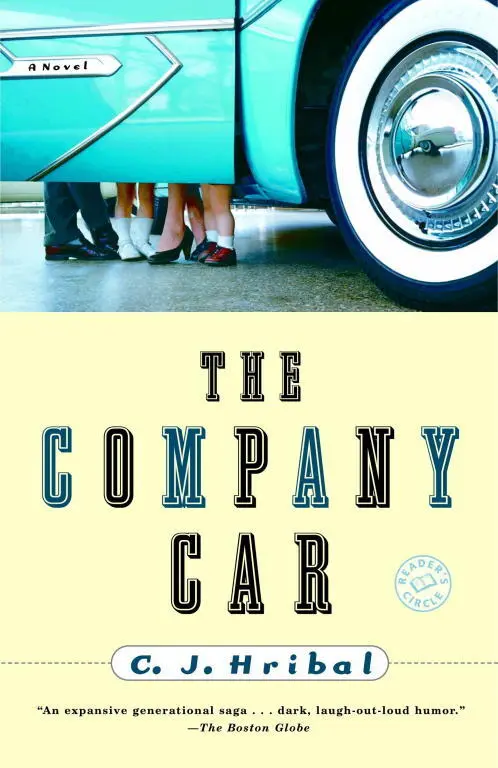
- Название:The Company Car
- Автор:
- Издательство:Random House
- Жанр:
- Год:2005
- Город:New York
- ISBN:1-58836-468-2
- Рейтинг книги:3 / 5. Голосов: 1
-
Избранное:Добавить в избранное
- Отзывы:
-
Ваша оценка:
The Company Car: краткое содержание, описание и аннотация
Предлагаем к чтению аннотацию, описание, краткое содержание или предисловие (зависит от того, что написал сам автор книги «The Company Car»). Если вы не нашли необходимую информацию о книге — напишите в комментариях, мы постараемся отыскать её.
“Are we there yet?” It’s the time-honored question of kids on a long family car trip—and Emil Czabek’s children are no exception. Yet Em asks himself the same thing as the family travels to celebrate his parents’ fiftieth wedding anniversary, and he wonders if he has escaped their wonderfully bad example.
The midwestern drive is Em’s occasion to recall the Czabek clan’s amazing odyssey, one that sprawls through the second half of the twentieth century. It begins with his parents’ wedding on the TV show It’s Your Marriage, and careens from a suburban house built sideways by a drunken contractor to a farm meant to shelter the Czabeks from a country coming apart. It is the story of Em’s father, Wally—diligent, distant, hard-drinking—and his attempts to please, protect, or simply placate his nervous, restless, and sensual wife, Susan, all in plain sight of the children they can’t seem to stop having.
As the tumultuous decades merge in his mind like the cars on the highway, Em must decide whether he should take away his parents’ autonomy and place them in the Heartland Home for the Elders. Beside him, his wife, Dorie, a woman who has run both a triathlon and for public office, makes him question what he’s inherited and whether he himself has become the responsible spouse of a drifting partner—especially since she’s packing a diaphragm and he’s had a vasectomy.
Wildly comic and wrenchingly poignant, The Company Car is a special achievement, a book that drives through territory John Irving and Jonathan Franzen have made popular to arrive at a stunning destination all its own.
The Company Car — читать онлайн бесплатно полную книгу (весь текст) целиком
Ниже представлен текст книги, разбитый по страницам. Система сохранения места последней прочитанной страницы, позволяет с удобством читать онлайн бесплатно книгу «The Company Car», без необходимости каждый раз заново искать на чём Вы остановились. Поставьте закладку, и сможете в любой момент перейти на страницу, на которой закончили чтение.
Интервал:
Закладка:
That was why things weren’t going well for Uncle Louie. He couldn’t find somebody “to settle down with.” Every time we went to visit he was dating a different woman, but our mother was right, they all seemed the same: women with big hair and brassy jewelry, women who laughed too loud and who wore too much makeup and not enough clothing. “Barmaids and cocktail waitresses,” said our mother. She and our father discussed Uncle Louie’s latest “find” on the drive home, when we were supposed to be asleep or not paying attention. “If that’s his ‘find,’ ” continued our mother, “I’d throw her back. Honestly, where does he find them? Never mind, I know exactly where he finds them. He just looks through the bottom of a bourbon bottle and there they are.”
Myself, I could see Uncle Louie’s attraction to these brassy, overweight, and invariably full-chested women. They always looked slightly disheveled, as though they hadn’t quite put themselves together from what they’d been doing just before we arrived. Sitting next to Uncle Louie on the limestone hearth surrounding the circular fireplace, tall glasses of Seven & Seven in their hands, they seemed possessed of a sleepy, satisfied-yet-forlorn look, as though they were wondering, having just risen from the bed, Is that all there is? And though their lips—big, generous, and outlined in red—seemed ready to take in the world as they smiled and pursed over their drinks, there was also something desperate about them, incomplete. They reminded me of Mrs. Duckwa, and of that woman we met at the Office, the woman who wrote her name—Shirley—in the unguent smeared over my father’s sunburn. Women who hadn’t quite gotten what they wanted out of life and felt they were due.
No wonder they always seemed to end up hurting Uncle Louie. “You have to tell him, Wally,” said our mother after one such visit. “He’s your closest friend in the whole world—”
“Besides you,” interjected our father.
“Besides me.” Our mother smiled. “You have to tell him he can’t keep on letting these women hurt him. He leaves himself wide open for that. Drinking himself silly and dating cocktail waitresses is not going to help him get over Helen. Helen was one of a kind.”
“Yeah,” said our father, “but what kind?”
Conversations like these happened when Uncle Louie was “between engagements.”
“Engagements.” Our mother snorted. “That’s just what he says to make himself feel better over the fact that he’s sleeping with them.”
“I doubt he has to make himself feel better about that.”
“You know what I mean. You’re just defending him because you want to see him get laid. Those chinchillas aren’t the only things breeding around here. He’s just lucky he hasn’t been any more successful at reproducing than they have.”
When Uncle Louie was “seeing somebody” (which made it sound like he was blind the rest of the time), he drank too much, laughed a lot, treated us all to fish dinners at the Rockford Moose Club. The adults sat at the bar, and we kids were essentially forgotten, which was fine with us. In high spirits, Uncle Louie or our father told stories of being in the service, and all we had to do was show up, tug on their sleeves, and in a matter of moments a fresh kiddie cocktail was handed to us, the maraschino cherries impaled on plastic red buccaneer’s swords, which we used in our games of make-believe or later inserted into each other’s anuses in the privacy of our room. Rockford’s Moose Hall was identical to the ones in Lombard and Villa Park: an open hall done in a style best described as “Tudor gymnasium”—dark polyurethaned picnic tables, a tiny bandstand, and doorways that led to the bar and bathrooms. The bar area was done up with weird green carpeting and dark green or royal blue or red drapes. Or maybe it was red carpeting, and royal blue or seaweed green drapes. After seven or eight Shirley Temples it was hard to remember. We ate our fish fry, then went to see the moose head enshrined on the far wall, wondering what it was thinking behind its glassy eyes. Then we wandered between tables, hiding under the unused ones, remaining perfectly still as our hiding place filled in around us with thick calves and peasant ankles in hose and pumps and cuffed pants with wingtips or crepe-soled shoes. Once or twice we were shocked with a view of someone’s garters and crotch, but we remained quiet, and eventually snuck out the far end of the table, shaking our heads over what we had seen.
The highlight of these evenings was when the band set up—a piano player or someone with a Hammond organ, a small drum kit, an upright bass. Men in gold lamé suits with crushed velvet collars and black trim on the pockets took the platform—you hesitated to call it a stage—and started tickling the ivories, plucking the bass, and—our favorite of all—brushing the snare drum: Ch-che-che, ch-che-che, ch-che-che. We stood in front of the band, or sat as near them as we could, and watched them do low-voltage dance tunes, songs the beef-faced and thick-ankled adults glided over the floor to, dreaming of when these songs were new and they were young. We watched the couples, too, dancing cheek to cheek, their eyes misting over with memories. You could see it in our parents’ eyes when they danced: they were thinking of a time before we came along and changed everything. Not that they regretted it, we knew, but still.
That was when Uncle Louie was in a good mood, when he was “in love” and happy. When he wasn’t, when Uncle Louie was “between engagements,” he stayed home, built huge fires that he let burn down to nothing while drinking bourbon and playing his Ray Charles: Modern Sounds in Country and Western Music album over and over again on the hi-fi, tickling the ivories right along with Ray, and shaking his head, eyes closed, plaintively singing along to “Born to Lose.” He was miserable (our father’s pronouncement), godforsaken (Uncle Louie’s), and wallowing (our mother’s). “The music consoles him,” said our father. “It’s his only solace, to listen to Ray sing those sweet sad tunes.” Said our mother, “His only solace is when he gets his thingie between the sad sweet legs of some barmaid.”
“Little pitchers,” said our father.
“Really, the way he douses himself with alcohol, it’s amazing he gets his bottle rocket to go off in the first place. Or maybe those women have a low tolerance for fireworks.”
“The rocket’s red glare,” said our father.
“The bombs bursting in air,” said our mother, and they laughed, and squeezed hands, and I felt sorry for Uncle Louie, all alone in his house except for when a new and no doubt temporary Alice or Maggie or Trish or Debby came over and he could serenade her with songs of how miserably the previous woman had treated him.
To be fair, he often did the same thing when he was in a good mood, when things were blossoming between him and his latest find, only then when he sang along he was just pretending to be sad and lonely, a loser. You could hear it in his voice; he was enjoying the heartbreak because his heart wasn’t breaking. It was the voice of a man who’d been through all that, and who was hoping this time it would be different—it would be different this time around, baby, wouldn’t it?—and the Joyces and the Monicas and the Louises would clearly be touched by his vulnerability and playfulness, and touch his forehead with their fingers, or even kiss him and say, There there, there there, it’ll be different this time, sugar, I promise.
I admit I liked it either way. Uncle Louie’s female problems were my own. Like Uncle Louie, who pined for his lost Helen while simultaneously pining for whatever woman had left most recently, I was in love with two women at the same time. One was nineteen, the other nine. The nine-year-old was Marie Hemmelberger. The older woman was the already mentioned Duckwa daughter. Home from college that summer, the Duckwa daughter spent every day sunbathing in her parents’ backyard. She had a proud, haughty, sullen face and hair so brightly blond—like incandescent lemons—that it had to have come from a bottle. She set up shop on a lawn chair, dozing or flipping through pages of her magazines, which she kept stacked on a white rattan ottoman next to her. She wore bikinis—sometimes green, sometimes yellow polka-dotted. She wasn’t even all that pretty, really, just sexy because she was so casual about baring so much flesh. Vast amounts of oiled, limber, toned, tanned, silky, exquisite flesh. She was oblivious to us, too, unfastening her bra strap when she was on her stomach, and she wasn’t too particular about fastening it again when she turned over, flipping herself like an omelet, her hand holding the bra cups in place. She didn’t seem to care who saw her. Maybe she was taunting us, pleased to be giving all the little boys a show, giving us tiny little erections like the first shoots off a sapling, erections we didn’t even know what to do with. She was an icon, as remote from us as if she were on display in a museum, an invisible velvet rope separating her from us peons. The mere possibility that I might see something I wasn’t supposed to kept me at the edge of the Duckwa driveway. When she was on her stomach dozing, her back to me, the soles of her feet filled my soul with their delicateness. She knew, I think, that I was there, my eyes the size of dinner plates, my heart folding in on itself inside my chest. For the longest time I had no name for her. She was the Duckwa Daughter, as mysterious to me as the Man in the Iron Mask was to all of France.
Читать дальшеИнтервал:
Закладка:
Похожие книги на «The Company Car»
Представляем Вашему вниманию похожие книги на «The Company Car» списком для выбора. Мы отобрали схожую по названию и смыслу литературу в надежде предоставить читателям больше вариантов отыскать новые, интересные, ещё непрочитанные произведения.












Обсуждение, отзывы о книге «The Company Car» и просто собственные мнения читателей. Оставьте ваши комментарии, напишите, что Вы думаете о произведении, его смысле или главных героях. Укажите что конкретно понравилось, а что нет, и почему Вы так считаете.