Харуки Мураками - First Person Singular - Stories
Здесь есть возможность читать онлайн «Харуки Мураками - First Person Singular - Stories» весь текст электронной книги совершенно бесплатно (целиком полную версию без сокращений). В некоторых случаях можно слушать аудио, скачать через торрент в формате fb2 и присутствует краткое содержание. Город: New York, Год выпуска: 2021, ISBN: 2021, Издательство: Alfred A. Knopf, Жанр: Современная проза, на английском языке. Описание произведения, (предисловие) а так же отзывы посетителей доступны на портале библиотеки ЛибКат.
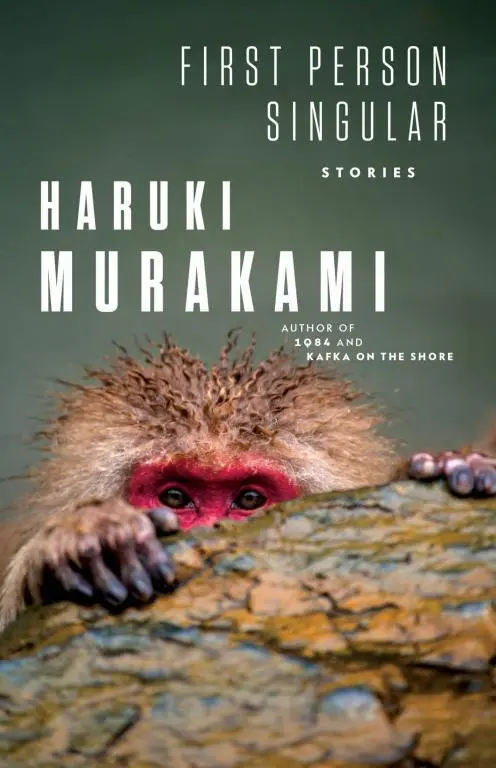
- Название:First Person Singular: Stories
- Автор:
- Издательство:Alfred A. Knopf
- Жанр:
- Год:2021
- Город:New York
- ISBN:978-0-59331-807-2
- Рейтинг книги:3 / 5. Голосов: 1
-
Избранное:Добавить в избранное
- Отзывы:
-
Ваша оценка:
First Person Singular: Stories: краткое содержание, описание и аннотация
Предлагаем к чтению аннотацию, описание, краткое содержание или предисловие (зависит от того, что написал сам автор книги «First Person Singular: Stories»). Если вы не нашли необходимую информацию о книге — напишите в комментариях, мы постараемся отыскать её.
First Person Singular: Stories — читать онлайн бесплатно полную книгу (весь текст) целиком
Ниже представлен текст книги, разбитый по страницам. Система сохранения места последней прочитанной страницы, позволяет с удобством читать онлайн бесплатно книгу «First Person Singular: Stories», без необходимости каждый раз заново искать на чём Вы остановились. Поставьте закладку, и сможете в любой момент перейти на страницу, на которой закончили чтение.
Интервал:
Закладка:
“I’m glad to hear it,” I said.
“I know this is quite forward of me, but I was wondering if you’d be kind enough to allow me to give my own personal opinion on the subject of love.”
“Of course,” I said.
The monkey blinked widely several times. His long eyelashes waved up and down like palm fronds in the breeze. He took a big, slow breath, the kind of deep breath a long jumper takes before he starts to run.
“I believe that love is the indispensable fuel that allows us to go on living. Someday that love may end. Or it may never amount to anything. But even if love fades away, even if it’s unrequited, you can still hold on to the memory of having loved someone, of having fallen in love with someone. And that’s a valuable source of warmth. Without that heat source a person’s heart—and a monkey’s heart, too—would turn into a bitterly cold, barren wasteland. A place where not a ray of sunlight falls, where the wildflowers of peace, the trees of hope, have no chance to grow. I treasure the names of those seven beautiful women I loved here in my heart.” At this, the monkey laid a palm on his chest. “I plan to use these memories as my own little fuel source I burn on cold nights to keep me warm as I live out what’s left of my own personal life.”
The monkey chuckled again, and lightly shook his head a few times.
“That’s a strange way of putting it, isn’t it,” he said. “ Personal life. When I’m a monkey, not a person . Hee hee…”
IT WAS ELEVEN THIRTY when we finally finished drinking the two large bottles of beer. I should be going, the monkey said. “I started feeling so good I ran off at the mouth, I’m afraid. My apologies.”
“No, I found it an interesting story,” I said. Maybe interesting wasn’t the right word. I mean, sharing a beer and chatting together with a monkey was a pretty unusual experience. Add to that the fact that this particular monkey loved Bruckner and stole women’s names because he was driven to do so by sexual desire (or perhaps love), and interesting didn’t begin to describe it. It was the most incredible thing I’d ever heard. But I didn’t want to stir the monkey’s emotions any more than necessary, so I chose this more calming, neutral expression.
As we said goodbye, I handed the monkey a ¥1,000 bill as a tip. “It’s not much, but please buy yourself something good to eat.”
At first the monkey refused, but I insisted and he finally accepted it. He folded the bill and carefully slipped it into the pocket of his sweatpants.
“It’s very kind of you,” he said. “You’ve listened to my absurd life story, treated me to beer, and now this kind gesture. I can’t tell you how much I appreciate it.”
The monkey put the empty beer bottles and glasses on the tray and carried it out of the room.
THE NEXT MORNING, I checked out of the inn and went back to Tokyo, but I didn’t see the monkey anywhere. At the front desk, the creepy old man with no hair or eyebrows was nowhere to be seen, and neither was the aged cat with the nose issues. Instead, a fat, surly middle-aged woman was manning the front, and when I said I’d like to pay for the additional charges for last night’s beer, she said, emphatically, that there were no incidental charges on my bill. All we have here is canned beer from the vending machine, she insisted. We never provide bottled beer.
Once again, I was confused. It felt like bits of reality and unreality were randomly changing places. But I had definitely shared two large bottles of Sapporo beer with the monkey as I listened to his life story.
I was going to bring up the monkey with the middle-aged woman, but decided against it. Maybe the monkey didn’t really exist, and it was all an illusion, the product of a brain pickled after soaking too long in the hot springs. Or maybe what I had seen was a long, strange, realistic dream. So if I said something like “You have an employee who’s an elderly monkey who can speak, right?” things might go sideways, and, worst-case scenario, they’d think I was insane. Another possibility was that the monkey was an off-the-books employee, and the inn couldn’t mention it publicly, not wanting the tax office or health department to catch wind of it—a real possibility.
On the train ride back home, I mentally replayed everything the monkey had told me. I jotted down all the details, as best I could remember, in a notebook I used for work, thinking that when I got back to Tokyo I’d write down the whole thing from start to finish.
If the monkey really did exist—and that’s the only way I could see it—I wasn’t at all sure how much I should accept of what he had told me over beer. It was hard to judge it fairly. Was that really possible? To steal women’s names and possess them yourself? Was this some unique ability that only the Shinagawa monkey was given? Maybe the monkey was a pathological liar. Who could say? Naturally I’d never heard of a monkey with mythomania before, but if a monkey could speak human language as skillfully as he did, it wouldn’t be beyond the realm of possibility for him to also be a habitual liar.
I’d interviewed numerous people as part of my work, and had become pretty good at sniffing out who you could believe and who you couldn’t. After someone talks for a while, you pick up some subtle hints and certain signals the man (or woman) sends out, and you get an intuitive sense of whether or not they’re believable. And I just didn’t get the feeling that what the Shinagawa monkey told me was a made-up story. The look in his eyes and his expression, the way he’d ponder things every once in a while, his pauses, gestures, the way he’d get stuck for words—nothing about it seemed artificial or forced. And above all was the total, even painful, honesty of his confession.
My relaxed solo journey over, I returned to the whirlwind routine of the city. Even without any major work-related assignments, somehow as I get older I find myself busier than ever. And time seems to steadily speed up. In the end I never told anyone about the Shinagawa monkey, or wrote anything about him. Why try if no one would ever believe me? People would only end up saying I was just “making up stuff again.” I also couldn’t figure out what format to use. It was way too bizarre to write about it as if it were real, and as long as I couldn’t provide proof—proof, that is, that the monkey actually existed—no one would ever buy it. That said, if I wrote about it as fiction, it lacked a clear focus, or a point. I could well imagine, even before I started writing about it, my editor’s puzzled expression after reading the manuscript, and the question that would follow: “I hesitate to ask you, since you’re the author, but—what’s the theme of this story supposed to be?”
Theme? Can’t say there is one. It’s just about an old monkey who speaks human language, in a tiny town in Gunma Prefecture, who scrubs guests’ backs in the hot springs, enjoys cold beer, falls in love with human women, and steals their names. Where’s the theme in that? Or moral?
And as time passed, the memory of that hot springs town began to fade. No matter how vivid memories may be, they can’t win out against the power of time.
BUT NOW, five years later, I’ve decided to write about it, based on the notes I scribbled down in my notebook back then. All because of something that happened recently that got me thinking. If that incident hadn’t taken place, I might well not be writing this.
I had a work-related appointment in the coffee lounge of a hotel in Akasaka. The person I was meeting was an editor of a travel magazine. She was a very attractive woman, around thirty or so, petite, with long hair, a lovely complexion, and large, fetching eyes. She was also quite an able editor. And still single. We’d worked together quite a few times, and got along well. After we’d taken care of work, we sat back and chatted over coffee for a while.
Читать дальшеИнтервал:
Закладка:
Похожие книги на «First Person Singular: Stories»
Представляем Вашему вниманию похожие книги на «First Person Singular: Stories» списком для выбора. Мы отобрали схожую по названию и смыслу литературу в надежде предоставить читателям больше вариантов отыскать новые, интересные, ещё непрочитанные произведения.








Обсуждение, отзывы о книге «First Person Singular: Stories» и просто собственные мнения читателей. Оставьте ваши комментарии, напишите, что Вы думаете о произведении, его смысле или главных героях. Укажите что конкретно понравилось, а что нет, и почему Вы так считаете.