Kiran Desai - The Inheritance of Loss
Здесь есть возможность читать онлайн «Kiran Desai - The Inheritance of Loss» весь текст электронной книги совершенно бесплатно (целиком полную версию без сокращений). В некоторых случаях можно слушать аудио, скачать через торрент в формате fb2 и присутствует краткое содержание. Жанр: Современная проза, на английском языке. Описание произведения, (предисловие) а так же отзывы посетителей доступны на портале библиотеки ЛибКат.
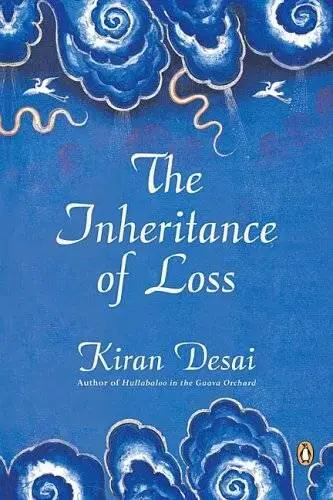
- Название:The Inheritance of Loss
- Автор:
- Жанр:
- Год:неизвестен
- ISBN:нет данных
- Рейтинг книги:3 / 5. Голосов: 1
-
Избранное:Добавить в избранное
- Отзывы:
-
Ваша оценка:
The Inheritance of Loss: краткое содержание, описание и аннотация
Предлагаем к чтению аннотацию, описание, краткое содержание или предисловие (зависит от того, что написал сам автор книги «The Inheritance of Loss»). Если вы не нашли необходимую информацию о книге — напишите в комментариях, мы постараемся отыскать её.
***
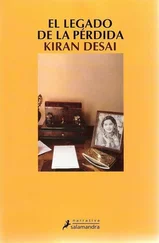
Desai's second novel is set in the nineteen-eighties in the northeast corner of India, where the borders of several Himalayan states – Bhutan and Sikkim, Nepal and Tibet – meet. At the head of the novel's teeming cast is Jemubhai Patel, a Cambridge-educated judge who has retired from serving a country he finds "too messy for justice." He lives in an isolated house with his cook, his orphaned seventeen-year-old granddaughter, and a red setter, whose company Jemubhai prefers to that of human beings. The tranquillity of his existence is contrasted with the life of the cook's son, working in grimy Manhattan restaurants, and with his granddaughter's affair with a Nepali tutor involved in an insurgency that irrevocably alters Jemubhai's life. Briskly paced and sumptuously written, the novel ponders questions of nationhood, modernity, and class, in ways both moving and revelatory.
The Inheritance of Loss — читать онлайн бесплатно полную книгу (весь текст) целиком
Ниже представлен текст книги, разбитый по страницам. Система сохранения места последней прочитанной страницы, позволяет с удобством читать онлайн бесплатно книгу «The Inheritance of Loss», без необходимости каждый раз заново искать на чём Вы остановились. Поставьте закладку, и сможете в любой момент перейти на страницу, на которой закончили чтение.
Интервал:
Закладка:
The ICS was becoming Indianized and they didn’t like it, some of these old servants, but what could you do? He’d even had a rival for the position, a man who appeared with tattered recommendations inherited from his father and grandfather to indicate a lineage of honesty and good service.
The cook’s father, who had made his way through his career without such praise, had bought recommendations on the servant chittie exchange for his son, some so antiquated they mentioned expertise in the dhobi pie and country captain chicken.
The judge looked them over: "But his name is not Solomon Pap-piah. It is not Sampson. It is not Thomas."
"They liked him so much, you see," said the cook’s father, "that they gave him a name of their own people. Out of love they called him Thomas."
The judge was disbelieving.
"He needs to be trained," the father admitted finally and dropped his demand for twenty rupees for his son, "but that is why he will come cheap. And in puddings there is nobody to beat him. He can make a new pudding for each day of the year."
"What can he make?"
"Bananafritterpineapplefritterapplefritterapplesurpriseapple-charlotteapplebettybreadandbutterjamtartcaramelcustardtipsypudding
Rumtumpuddingjamrolypolygingersteamdatepuddinglemonpancakeegg
custardorangecustardcoffeecustardstrawberrycustardtriflebakedalaskamangosoufflélemonsoufflécoffeesouffléchocolatesoufflégooseberrysouffléhotchocolatepuddingcoldcoffeepuddingcoconutpuddingmilkpuddingrumbabarumcakebrandysnappearstewguavastewplumstewapplestewpeachstewapricotstewmangopiechocolatetartappletartgooseberrytartlemontartjamtartmarmaladetartbebincafioatingislandpineappleupsidedownappleupsidedowngooseberryupsidedownplumupsidedownpeachupsidedownraisinupsidedown – "
"All right. All right."
Twelve
So Sai’s life had continued in Kalimpong – Lola and Noni, Uncle Potty and Father Booty, the judge and cook… until she met Gyan.
She met Gyan because one day, when Sai was sixteen, Noni found she could no longer teach her physics.
It had been an overhot summer afternoon and they sat on the Mon Ami veranda. All over the mountainside, the heat had reduced the townspeople to a stupor. Tin roofs sizzled, dozens of snakes lay roasting on the stones, and flowers bloomed as plushly and perfectly as on a summer outfit. Uncle Potty sat looking out on the warmth and sheen, the oil brought forth upon his nose, upon the salami, the cheese. A bite of cheese, a bite of salami, a gulp of icy Kingfisher. He leaned back so his face was in the shade and his toes were in the sun, and sighed: all was right with the world. The primary components were balanced, the hot and cold, the liquid and solid, the sun and shade.
Father Booty in his dairy found himself transported to a meditative state by the hum of his cows’ chewing. What would yak-milk cheese taste like…?
Nearby the Afghan princesses were sighing and deciding to eat their chicken cold.
Mrs. Sen, undefeated by the heat, started up the road to Mon Ami, propelled by the latest news from her daughter, Mun Mun, in America: she was to be hired by CNN. She reflected happily on how this would upset Lola. Hah, who did Lola Banerjee think she was? Putting on airs… always showing off about her daughter at the BBC…
Unsuspecting of the approaching news, Lola was in the garden picking caterpillars off the English broccoli. The caterpillars were mottled green and white, with fake blue eyes, ridiculous fat feet, a tail, and an elephant nose. Magnificent creatures, she thought, studying one closely, but then she threw it to a waiting bird that pecked and a green stuffing squiggled out of the caterpillar like toothpaste from a punctured tube.
On the Mon Ami veranda, Noni and Sai sat before an open text book: neutrons… and protons… electrons… So if – then -???
They were yet unable to grasp the question but were taunted by the sight, beyond the veranda, of a perfect sunlit illustration of the answer: speck insects suspended in a pod within which they jigged tirelessly, bound by a spell that could not be undone.
Noni felt a sudden exhaustion come over her; the answer seemed attainable via miracle not science. They put the book aside when the baker arrived at Mon Ami as he did each afternoon, lifting his trunk from his head and unlatching it. Outside the trunk was scuffed; inside it glowed like a treasure chest, with Swiss rolls, queen cakes, and, taught to him by missionaries on the hillside, peanut butter cookies evocative of, the ladies thought, cartoon America: gosh, golly, gee whiz, jeepers creepers.
They picked out pink and yellow queen cakes and began to chat.
"So, Sai, how old are you now? Fifteen?"
"Sixteen."
It was hard to tell, Noni thought. Sai looked far older in some ways, far younger in some.
Younger, no doubt, because she’d lived such a sheltered life and older, no doubt, because she spent all her time with retired people. She might always look like this, girlish even when she was old, old even when she was young. Noni looked her over critically. Sai was wearing khaki pants and a T-Shirt that said "Free Tibet." Her feet were bare and she wore her short hair in two untidy braids ending just before her shoulders. Noni and Lola had recently discussed how bad it was for Sai to continue to grow up like this: "She won’t pick up social skills… nobody her own age… house full of men…"
"Don’t you find it difficult living like that with your grandfather?"
"The cook talks so much," said Sai, "that I don’t mind."
The way she’d been abandoned to the cook for years… If it wasn’t for Lola and herself, Noni thought, Sai would have long ago fallen to the level of the servant class herself.
"What does he talk about?"
"Oh, stories about his village, how his wife died, his court case with his brother… I hope Biju makes a lot of money," reflected Sai, "they are the poorest family in the village. Their house is still made of mud with a thatch roof."
Noni didn’t think this was suitable information for the cook to share. It was important to draw the lines properly between classes or it harmed everyone on both sides of the great divide. Servants got all sorts of ideas, and then when they realized the world wasn’t going to give them and their children what it gave to others, they got angry and resentful. Lola and Noni constantly had to discourage their maid, Kesang, from divulging personal information, but it was hard, Noni acknowledged, to keep it that way. Before one knew it one could slide into areas of the heart that should be referred to only between social equals. She thought of an episode not so long ago when the sisters had been too fascinated to stop their maid telling them of her romance with the milkman:
"I liked him so much," Kesang said. "I am a Sherpa, he is a Rai, but I lied and told my parents he was a Bhutia so they agreed to let us marry. It was a very nice wedding. His people, you have to give so much, pork, money, this and that, whatever they ask for you have to give, but we didn’t have a wedding like that. He looked after my parents when they were ill and right from the beginning we made a vow that he wouldn’t leave me and that I wouldn’t leave him. Both things. Neither of us will leave each other. He will never die and leave me and I will never die and leave him. We made this vow. From before we got married we said this."
And she began to cry. Kesang with her crazy brown teeth going in different directions and her shabby stained clothes and funny topknot perched precariously on the nob of her head. Kesang, whom they had taken in untrained as a kindness and taught to make an Indonesian sate with peanut butter and soy sauce, a sweet-sour with ketchup and vinegar, and a Hungarian goulash with tomatoes and curd. Her love had shocked the sisters. Lola had always professed that servants didn’t experience love in the same manner as people like themselves – "Their entire structure of relationships is different, it’s economic, practical – far more sensible, I’m sure, if only one could manage it oneself." Even Lola was forced to wonder now if it were she who had never experienced the real thing; never had she and Joydeep had such a conversation of faith over the plunge – it wasn’t rational, so they hadn’t. But therefore might they not have had the love? She buried the thought.
Читать дальшеИнтервал:
Закладка:
Похожие книги на «The Inheritance of Loss»
Представляем Вашему вниманию похожие книги на «The Inheritance of Loss» списком для выбора. Мы отобрали схожую по названию и смыслу литературу в надежде предоставить читателям больше вариантов отыскать новые, интересные, ещё непрочитанные произведения.








Обсуждение, отзывы о книге «The Inheritance of Loss» и просто собственные мнения читателей. Оставьте ваши комментарии, напишите, что Вы думаете о произведении, его смысле или главных героях. Укажите что конкретно понравилось, а что нет, и почему Вы так считаете.