Li Cunxin - Mao's Last Dancer
Здесь есть возможность читать онлайн «Li Cunxin - Mao's Last Dancer» весь текст электронной книги совершенно бесплатно (целиком полную версию без сокращений). В некоторых случаях можно слушать аудио, скачать через торрент в формате fb2 и присутствует краткое содержание. Жанр: Современная проза, на английском языке. Описание произведения, (предисловие) а так же отзывы посетителей доступны на портале библиотеки ЛибКат.
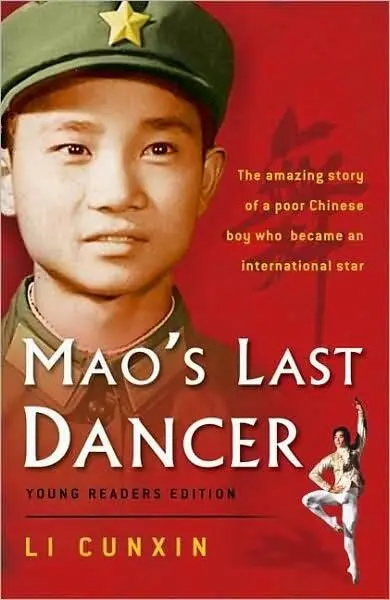
- Название:Mao's Last Dancer
- Автор:
- Жанр:
- Год:неизвестен
- ISBN:нет данных
- Рейтинг книги:3 / 5. Голосов: 1
-
Избранное:Добавить в избранное
- Отзывы:
-
Ваша оценка:
Mao's Last Dancer: краткое содержание, описание и аннотация
Предлагаем к чтению аннотацию, описание, краткое содержание или предисловие (зависит от того, что написал сам автор книги «Mao's Last Dancer»). Если вы не нашли необходимую информацию о книге — напишите в комментариях, мы постараемся отыскать её.
Mao's Last Dancer — читать онлайн бесплатно полную книгу (весь текст) целиком
Ниже представлен текст книги, разбитый по страницам. Система сохранения места последней прочитанной страницы, позволяет с удобством читать онлайн бесплатно книгу «Mao's Last Dancer», без необходимости каждый раз заново искать на чём Вы остановились. Поставьте закладку, и сможете в любой момент перейти на страницу, на которой закончили чтение.
Интервал:
Закладка:
By the end of our six-week stay I had started to relax. I began to make friends among the students, the dancers in the company, the balletomanes and even some board members. Each weekend we had to report to the Chinese consulate officials. One of the senior consuls was Zhang Zongshu, and his wife was a translator in the consulate. They were assigned to look after us.
It turned out that Ben had decided to ask Consul Zhang if I could come back to work with the company again.
Once more Ben's influence worked. Consul Zhang and the Chinese consulate sent a favourable report to the Ministry of Culture. I was granted permission to return for a whole year to work with the Houston Ballet, only two months after my scheduled return to China. There were also discussions about the possibility of Zhang Weiqiang's return too.
The thought of being able to come back to America made me happy, but really it sounded completely unbelievable. I was so grateful to the Chinese government. I felt that they really cared for me. For me, a peasant boy. Communism truly was great.
For our last few days in America, Ben took Zhang and me to Washington DC and New York. We didn't do much in Washington except pose for photos in front of the White House and the Kennedy Center. In some ways I was disappointed. I had expected to see a massive number of security guards with machine guns around the gate and the fence, just like I'd seen in Beijing on my first day there. But there were only a few guards standing by a small gate, looking rather relaxed. They even let us stand next to the fence to have our pictures taken.
We stayed with two close friends of Ben's while we were in New York. They were involved with television and they had two skinny, funny-looking dogs that sang while one of them played the piano. Those dogs would be eaten back in Qingdao too.
Ben rushed Zhang and I around like mad to see as many of the great sites of New York as possible-the twin towers, the Empire State Building, the Statue of Liberty, Central Park, the theatre district: I was in awe of this hustling, bustling city. Everything surprised and impressed me-the gigantic buildings, the number of cars, the cleanliness compared to Beijing. But it was the little things that left deeper impressions on me. A friend of Ben's showed us a thing called an ATM. I was speechless when twenty-dollar bills began spewing out. I'd seen a lot of electrical appliances in Houston but to see money coming out of a wall was beyond my wildest imaginings.
Just like any tourist, with our limited money we bought a few souvenirs such as "I Love New York " buttons, postcards, and mugs with big apples on them. My favourite was a T-shirt which had my face and "I Love New York " printed on it, a present from Ben. But we found New York scarily expensive. I couldn't stop comparing everything to China and thinking about my family's poor life back home.
After New York we returned to Houston for our last two days before heading back to China. People gave us farewell gifts. My heart filled with ambivalence with each goodbye. Ben had made our stay such a positive experience and he was proud to have arranged for the first two Chinese cultural exchange students to come to America. He had been thoughtful and generous, protective and kind. He had poured special interest into our dancing. I knew I could never repay him. So by the time Zhang and I said our final goodbye to Ben at the airport, we felt sad to be leaving a special friend.
On the plane I thought of the possibility of returning to Houston in only two months time. I thought of how I'd felt about America and its people before I came. I laughed when I remembered my initial suspicions.
But most of all I thought of those dark, scary images of capitalist society and how they had now been replaced by an entirely different picture in my mind. China 's most hated enemy and the system it represented had given me something that was my heart's desire. Now I was frightened. Now I was confused. What should I believe? What communism had taught me? What I'd seen and experienced? Why had Chairman Mao, Madame Mao and the Chinese government told its people all those lies about America? Why were we so poor in China? And why was America so prosperous?
I kept resisting my doubts all the way home on the plane back to China. I tried to tell myself that my strong communist faith was still unshakeable, but I knew I was lying to myself. I knew I had to believe what the Chinese government wanted me to believe, or at the least I had to pretend to. All this made me even more afraid. I was never supposed to question my communist beliefs and I never, ever thought that I would. So I kept telling myself that I was happy to return to China, because that's where my parents, brothers, friends and teachers were. That's where my roots were. I'm the fish and China is the pond. I can't exist anywhere other than China.
But still the doubts persisted. I had now tasted freedom, and I couldn't lie to myself about that.
19 Goodbye China
The first thing I did when I returned to the Beijing Dance Academy was to tell Teacher Xiao, Zhang Shu, the Bandit and all my friends about my new discoveries in dance: the Gershwin pas de deux, the Martha Graham technique, the body conditioning classes. I simply couldn't hide my excitement and enthusiasm. I had decided, however, that I wouldn't say anything at all about how much I liked America. I especially wouldn't mention the sense of freedom I had experienced. I desperately wanted to but I knew it would give the authorities reason enough to deny me permission to return to America. I wouldn't take that risk. As an old Chinese saying goes, "The wind will carry the words to other people's ears."
The freedom I'd experienced in America occupied my mind constantly. In China, Chairman Mao and his government's absolute authority could never have been challenged. We didn't have individual rights. We were told what to do, how long to work each day, how much we would be paid, where we would live and how many children we were allowed to have. I struggled with my communist beliefs: memories of America were so fresh. What if I were to have that same freedom? What could I do with my ballet then?
Eventually I talked myself into believing that if I had stayed in America any longer I would surely have seen so many bad things about capitalism that I wouldn't have liked America at all. Even so, I was surprised that I was wavering after spending only six weeks there. How could eighteen years of communism be so easily influenced by six short weeks of capitalism? Without Chairman Mao I was lost. He was my god. Would I still die for Chairman Mao? Now I wasn't sure.
I also started to question certain aspects of our ballet training in China. I became frustrated at the lack of freedom in my teachers' thinking. I began to feel once again like a trapped animal. I couldn't wait for the two months to pass so I could go back to America and continue my learning.
As soon as we returned, Zhang and I had to report to Director Song of our academy and to the Ministry of Culture who required a written report from us about our American trip.
"Would you like to meet this evening to work on the report with me?" I asked Zhang.
"Why don't you just write it yourself," replied Zhang. "I trust you."
But I told him that I needed his help because our report would require a certain degree of deception if we were to avoid any suspicion from the officials.
"Write what you have to write. I will understand," Zhang said.
I was happy that Zhang trusted me to complete this task but I found it very difficult to write bad things about America. I simply couldn't think of any. So I made up some bad things about "rotten capitalist influences". First I described the daily routine at the Houston Ballet Academy and the new experiences in Ben's ballet classes. I emphasised the goodwill Zhang and I had generated for China. Then I put a considerable amount of time and effort into describing the diseased aspects of America. I described the restaurant owner from Taiwan as one of our class enemies, with her strong perfume smell, her thick makeup and her plastic smile. I described a black neighbourhood in Houston, the decaying houses and leaking roofs. I said it was infested with flies and mosquitoes and that people slept outside on mats on a dirt floor. Only a privileged few lived in air-conditioned luxury homes. I expressed sorrow for the poor black people of America. I emphasised our superior communist system and Chairman Mao's valued principles.
Читать дальшеИнтервал:
Закладка:
Похожие книги на «Mao's Last Dancer»
Представляем Вашему вниманию похожие книги на «Mao's Last Dancer» списком для выбора. Мы отобрали схожую по названию и смыслу литературу в надежде предоставить читателям больше вариантов отыскать новые, интересные, ещё непрочитанные произведения.



Обсуждение, отзывы о книге «Mao's Last Dancer» и просто собственные мнения читателей. Оставьте ваши комментарии, напишите, что Вы думаете о произведении, его смысле или главных героях. Укажите что конкретно понравилось, а что нет, и почему Вы так считаете.