Li Cunxin - Mao's Last Dancer
Здесь есть возможность читать онлайн «Li Cunxin - Mao's Last Dancer» весь текст электронной книги совершенно бесплатно (целиком полную версию без сокращений). В некоторых случаях можно слушать аудио, скачать через торрент в формате fb2 и присутствует краткое содержание. Жанр: Современная проза, на английском языке. Описание произведения, (предисловие) а так же отзывы посетителей доступны на портале библиотеки ЛибКат.
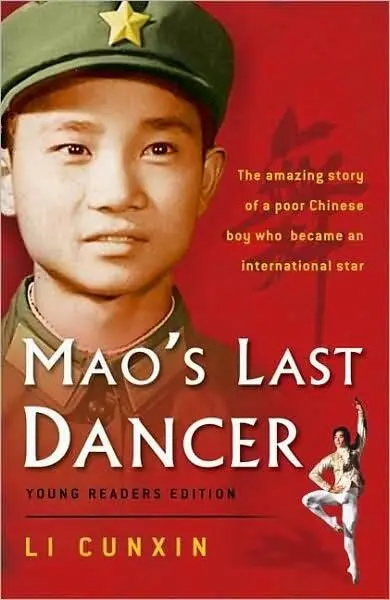
- Название:Mao's Last Dancer
- Автор:
- Жанр:
- Год:неизвестен
- ISBN:нет данных
- Рейтинг книги:3 / 5. Голосов: 1
-
Избранное:Добавить в избранное
- Отзывы:
-
Ваша оценка:
Mao's Last Dancer: краткое содержание, описание и аннотация
Предлагаем к чтению аннотацию, описание, краткое содержание или предисловие (зависит от того, что написал сам автор книги «Mao's Last Dancer»). Если вы не нашли необходимую информацию о книге — напишите в комментариях, мы постараемся отыскать её.
Mao's Last Dancer — читать онлайн бесплатно полную книгу (весь текст) целиком
Ниже представлен текст книги, разбитый по страницам. Система сохранения места последней прочитанной страницы, позволяет с удобством читать онлайн бесплатно книгу «Mao's Last Dancer», без необходимости каждый раз заново искать на чём Вы остановились. Поставьте закладку, и сможете в любой момент перейти на страницу, на которой закончили чтение.
Интервал:
Закладка:
I shook my head. "Haven't you heard the rumours about her male concubines?"
"Do you believe them?"
"No, but if there are rumours like this in Madame Mao's own academy, just think what people are hearing all over China."
A month after Mao's death, on 6 October 1976, our academy received another enormous shock. The news came casually. Madame Mao was arrested along with the other members of the Gang of Four. I felt like an abandoned child.
The Gang of Four were removed quickly and easily. Neither the military nor the police backed them. At our academy we carried on our normal routines, except when the political heads were removed, which meant no more political studies and more time to practise our dancing.
Hua Guofeng made no attempts to change the direction which Chairman Mao had set for the country. For the first six months of his government, it was business as usual. But everyone could feel that change was inevitable. The military may have adopted a low profile but few people knew what was really going on.
In the meantime, my dancing had caught Vice-Director Zhang Ce's attention. All of a sudden, not only was I Teacher Xiao and Zhang Shu's targeted student, but now Zhang Ce's favourite. The end-of- year exam was so enjoyable that I could have done it again and again, even with all the future uncertainties in China. I had found my confidence at last.
15 The Mango
I was nearly sixteen by now. It was the time when our academy doctor told me that I had to have my tonsils removed. I'd had repeated infections over the years, so I was placed on a threemonth waiting list.
On the day I went to hospital I was not allowed to eat or drink anything. The scheduled time for the operation was 9 a.m. but the doctor didn't see me until noon. Then a nurse poked some acupuncture needles into my body-the Chinese anaesthetic. I had no idea what to expect.
During the hour-long operation I could feel the pain, the cutting sensation, and I lay there as the blood gushed down my throat. It felt as though the doctor was using a very dull knife. I thought of the poor pigs in my home town and how I used to watch them being slaughtered on my way to and from school.
I was exhausted when I was wheeled out of the operating room. I could not talk and my throat was so swollen that it felt as if there was a big hot ball stuffed down it.
The nurse took me back to my room where the Bandit, Fu Xijun and Xiongjun were waiting for me. They'd sneaked out of the academy to visit me, and they'd brought me two thermoses full of popsicles. I loved popsicles but I didn't feel like eating them that day. My throat throbbed relentlessly. Still, the Bandit insisted I eat at least two to keep the swelling down. He'd had his tonsils out the year before and he said I should be thankful -both medical technology and doctors' skills had improved significantly since last year, he said.
What significantly improved technologies? The useless needles? The dull knife? I couldn't imagine anything worse than what I'd just been through. But I didn't say anything-it was too painful to talk.
That night I couldn't sleep. The pain was excruciating and there weren't any painkillers. How I wished my niang was there to comfort me.
July 1977: our sixth year at the Beijing Dance Academy. We were allowed to go home for our three-week mid-term summer holiday this year, but we had a choice: we could stay back and practise if we wanted to.
I wrote to my parents and told them I had decided to stay. Of course I dearly wanted to see my family and I missed them: the thought of the cricket sounds, catching dragonflies, eating my niang's dumplings, all seemed so tempting, but this was the first time I felt happy staying on.
During these three weeks a campaign to apprehend the followers of the Gang of Four started. The Vice-Minister for Culture along with all other key cultural ministers were arrested. Our vice- director, Zhang Ce, and Director Xiao of our academy were also apprehended. I will never forget Zhang Ce's desperate face as he walked out of the academy gate. He had done nothing wrong except be appointed by one of Madame Mao's followers.
Now he was disgraced. Tension and uncertainty floated in the air.
I was determined, however, not to let these events distract me from my practice. I had to concentrate. Zhang Shu and several other teachers stayed back at the academy too and I asked them to coach me.
One day Teacher Xiao suddenly appeared in the studio when I was practising my turns. "How are you, Cunxin?" he asked.
"Fine. I thought you wouldn't be here this holiday?"
"I just thought of something that might help you with your pirouettes," he said. I was still working on five consecutive pirouettes and was having tremendous problems breaking this crucial barrier. Teacher Xiao knew I was going to work on it throughout the holidays, but after less than half an hour of practice, my pirouettes were getting worse and I was getting increasingly frustrated.
"Why am I so stupid! Why can't I do five?" I slumped onto the floor.
"If five pirouettes were that easy to achieve wouldn't every dancer in the world be doing it? Cunxin, have you ever tasted a mango?"
"No." I wondered what he was talking about this time.
"Mango is the most wonderful fruit with the most unique taste! One can only get it in certain parts of the world and only for a short season. I want you to treat pirouettes like a mango. If I gave you a mango now, what would you do with it?" he asked.
"Eat it," I replied.
He laughed. "You deprived boy!"
"Why? Wouldn't you?" I asked.
"Why so impatient? I can understand that you want to taste the mango eagerly but the fun is in the process. First I would admire the unique shape, notice the colour, enjoy the smell. I would feel the weight, cut the skin and savour the fragrance.
Perhaps I would taste the skin and even the nut if I were daring. Now comes the ultimate satisfaction, the pulp. Yes, you need to enjoy every step of the process, taste the many layers of the fruit and enjoy it for its full value. I want you to treat pirouettes in the same way. Be daring! Discover the secret and essence of pirouettes. If you don't go all the way and taste the pulp, someone else will. I dare you!"
Teacher Xiao and his mango triggered my imagination and I challenged myself to go a step further, to experiment with new feelings. I poured my passion into it and I started to enjoy each step of the process.
This was the first time I had three weeks to myself at the academy. I spent most of my time practising, slept late some mornings, skipped breakfast often; I went to Taoranting Park, ran around the lake and watched people practising tai chi. I played Chinese chess and card games with a few other remaining students, and I visited the Chongs. I even had the shower room all to myself for a whole half an hour one day.
The three weeks allowed me time to think about the future and to reflect on the past. Now I laughed at the image of that sad, introverted little boy who'd been so afraid to stand on his toes all day in a pair of pointe shoes. I couldn't believe that now, less than six years later, I was the vice-captain of our class and one of the heads of the Communist Youth Party. Now I pursued excellence in my dancing. I took pride in my own challenges.
The three weeks passed quickly. I enjoyed every minute. I couldn't wait for the second half of the year because I had set myself even higher hurdles now, and I was desperate for the chance to try to overcome them.
The rest of the students returned from the holidays and our study resumed as normal. Later that term a former graduate of the Beijing Dance Academy and a close friend of Teacher Xiao's, Yu Fangmei, returned from Japan and brought back a television, a video player (something so new that we'd never even heard of one before) and some video tapes as gifts to the ballet department. There were videos of Baryshnikov, Nureyev, Margot Fonteyn, even two American-trained dancers including Gelsey Kirkland. At first these videotapes were shown to the academy officials and teachers as "reference" only. Students were not allowed to be exposed to such bad Western influences.
Читать дальшеИнтервал:
Закладка:
Похожие книги на «Mao's Last Dancer»
Представляем Вашему вниманию похожие книги на «Mao's Last Dancer» списком для выбора. Мы отобрали схожую по названию и смыслу литературу в надежде предоставить читателям больше вариантов отыскать новые, интересные, ещё непрочитанные произведения.





Обсуждение, отзывы о книге «Mao's Last Dancer» и просто собственные мнения читателей. Оставьте ваши комментарии, напишите, что Вы думаете о произведении, его смысле или главных героях. Укажите что конкретно понравилось, а что нет, и почему Вы так считаете.