Li Cunxin - Mao's Last Dancer
Здесь есть возможность читать онлайн «Li Cunxin - Mao's Last Dancer» весь текст электронной книги совершенно бесплатно (целиком полную версию без сокращений). В некоторых случаях можно слушать аудио, скачать через торрент в формате fb2 и присутствует краткое содержание. Жанр: Современная проза, на английском языке. Описание произведения, (предисловие) а так же отзывы посетителей доступны на портале библиотеки ЛибКат.
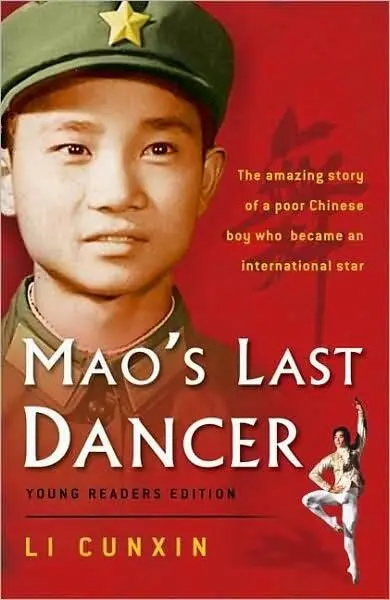
- Название:Mao's Last Dancer
- Автор:
- Жанр:
- Год:неизвестен
- ISBN:нет данных
- Рейтинг книги:3 / 5. Голосов: 1
-
Избранное:Добавить в избранное
- Отзывы:
-
Ваша оценка:
Mao's Last Dancer: краткое содержание, описание и аннотация
Предлагаем к чтению аннотацию, описание, краткое содержание или предисловие (зависит от того, что написал сам автор книги «Mao's Last Dancer»). Если вы не нашли необходимую информацию о книге — напишите в комментариях, мы постараемся отыскать её.
Mao's Last Dancer — читать онлайн бесплатно полную книгу (весь текст) целиком
Ниже представлен текст книги, разбитый по страницам. Система сохранения места последней прочитанной страницы, позволяет с удобством читать онлайн бесплатно книгу «Mao's Last Dancer», без необходимости каждый раз заново искать на чём Вы остановились. Поставьте закладку, и сможете в любой момент перейти на страницу, на которой закончили чтение.
Интервал:
Закладка:
I lost control then. I tried to stop the tears but the harder I tried the more they welled up and I covered my face with my handkerchief.
"What's wrong?" Several of my classmates became very concerned.
I didn't know what to tell them. "I just want to be left alone," I said.
I found myself trying to answer Cunyuan's unanswerable questions. I thought of the dying cricket trying to escape from his tormentor with neither the will nor the physical condition to do so. I felt sick. I felt an enormous swell of compassion for my poor, trapped brother.
My grief for Cunyuan continued to overwhelm me all through my journey back to Beijing. "There has to be a solution! There has to be a solution!" I kept telling myself. But I knew there was none. Poverty itself was his problem and I began to realise how enormously privileged I was to have got out of Qingdao. For my brothers it wouldn't matter how hard they worked or how long they persisted, little would change in the end. They would most likely be in the same situation, twenty, thirty or fifty years from now.
When the sun set and the stars began to appear I felt exhaustion overwhelm me. I asked my friend Fu Xijun to swap seats with me so I could sit against the window.
I knew now, with sudden shock, that I could never go back to the life I used to have. I would always miss my parents' love and my brothers' company, but I knew deep in my heart that my future now lay ahead, not behind. This trip home had once and for all stripped off the fantasy of the ideal countryside life I'd always thought was possible. What my second brother was going through in his mind was far worse than the lack of food, the starvation. His soul was dying. If I hadn't got out I too would have faced the same fate.
I fell in and out of sleep throughout that trip back to Beijing. We kept swapping seats so each of us could have a turn leaning against the window, but for the last three hours of the trip I was wide awake. I thought about the year ahead. I was looking forward to facing the challenges. A mysterious voice sounded in my ears: "Cunxin, you are privileged. You are lucky. Go forward. Don't be afraid and don't look back. There is nothing back there, only your family's unconditional love and that will always propel you forwards."
But now, for the first time, this voice wasn't my brother's voice. It wasn't my dia's. It wasn't even my beloved niang's. This voice was my own.
13 Teacher Xiao's Words
In the spring of 1974, when I was thirteen, the Beijing Dance Academy was invited to go to Tiananmen Square to hear our beloved Chairman Mao speak.
This was an opportunity beyond my wildest dreams! I was so excited I didn't sleep at all the night before. I'd only ever heard Chairman Mao's voice over a loudspeaker in our commune or on a radio at the academy. I had memorised so many of his sayings from his Red Book and I had four large volumes of his communist theories by my bedside, the guiding principles of my life. I was so lucky to be born in the time of Chairman Mao, our living god, and now I was going to see and hear him in person!
Suddenly a sense of shame overwhelmed me. I hadn't been good enough to deserve this honour! I twisted and turned all night. I kept repeating in my head the first words I had ever learned at school. "Long, long live Chairman Mao." When I was a little boy I truly believed he would have goddesses accompanying him and there would be clouds surrounding him, just like a real god.
I woke up very early on the morning of the rally. I had extra energy. I was dressed in my best Mao jacket and ready to leave by six o'clock.
The bus journey to Tiananmen Square took us nearly an hour. No motion sickness for me that day. We could hear an extraordinary noise as we got close-loud drums, cymbals, trumpets, instruments of all kinds mixed in with the exuberant, feverish shouting of propaganda slogans. We were led by security guards, wading through a sea of red banners, an ocean of people. It was like an enormous carnival. A joyous celebration.
The organisation must have been meticulous. There were police everywhere and they strictly controlled our every movement. Clearly no mishaps would mar this nationally publicised demonstration, a demonstration of a people united in their devotion to Chairman Mao. Everyone was assigned a location-there was no seating, but packing millions of people into Tiananmen Square took time, so various groups were there to play music and entertain us. The excitement was contagious. Emotions were at fever pitch. I had never been in a crowd where people were so open and friendly. This was the happiest moment in all of our lives. And, reinforcing our sense of Mao's godliness, it was a brilliant, sunny day.
After a few hours of almost unbearable anticipation, the moment arrived: Chairman Mao, Madame Mao and the rest of the Gang of Four, the Premier of China, Zhou Enlai, and many other central government leaders, appeared on the podium of the Gate of Heavenly Peace. Rippling to the distant boundaries of the Square, the crowd cheered, clapped and jumped like a crazed animal. The ground vibrated under my feet. The entire world would hear this! Millions of people shouted, "Long, long live Chairman Mao!" Everyone wore red armbands and red scarves. There were thousands of red banners and flags with "Long, long live Chairman Mao" written on them. People sang and danced, eagerly clutching their Red Books in their hands.
I experienced an extraordinary sense of belonging, a sense of being in the presence of some divine being. I was so proud to be a young Guard of Chairman Mao. Tears rolled uncontrollably down my cheeks. I looked around. I saw others too, weeping with joy and pride. It seemed like hours before Chairman Mao gestured for us to sit down and, following the ripple through the crowd, we immediately obeyed.
Mao spoke for no more than half an hour, his familiar voice seducing us through the many loudspeakers placed around the Square. His speech was constantly interrupted by thunderous applause. We went up and down, down and up, like yo-yos, our ovations many times longer than his speeches. He spoke with the heavy accent of Hunan, which made it difficult for me to understand him, but I didn't mind: I knew, as everyone else in China knew, that we would study his speech in its entirety for at least the next few months.
Many hours after his speech we were still in the Square, singing and dancing for pure joy.
Soon after that momentous visit to Tiananmen Square, we went on another trip, this time to an area on the outskirts of Beijing called Pingu. We were told it had similar terrain to Dajai, a model area where peasants cultivated fruit trees and crops in rocky mountainous conditions. We were told that the most precious gift one could take to Dajai was a bucketful of soil.
Learning from the peasants was reaching fever pitch at around this time. Besides taking small trees, and two bucketfuls of soil, every student was asked to fill a pocket with soil as well, as a symbol of this most precious gift.
I was so excited about going to Pingu. I imagined green wheat and cornfields spreading over the mountainsides, luscious fruits hanging down from the branches of the trees. No one could have prepared me for the disappointment to come.
I suffered through dreadful motion sickness on the uneven and winding mountainous roads for over five hours on the trip to Pingu. But when we arrived I was shocked to see nothing but brown, bare hills and a few sprinkled patches of green. Many tourists were there too, paying homage to the great miracles of this Dajai-like place. But there were more visitors than plants. A local guide showed us some pictures of the abundant wheat and corn at harvest time and told us we'd come in the off-season, but I wasn't convinced. I was a country boy. I knew nothing would grow on those rocks, not even weeds. Even if they put our soil over the rocks, one heavy rainfall would have washed it straight down the mountain. Of course I didn't dare question Mao's directive, but I did wonder if Mao had ever come to see places like this for himself.
Читать дальшеИнтервал:
Закладка:
Похожие книги на «Mao's Last Dancer»
Представляем Вашему вниманию похожие книги на «Mao's Last Dancer» списком для выбора. Мы отобрали схожую по названию и смыслу литературу в надежде предоставить читателям больше вариантов отыскать новые, интересные, ещё непрочитанные произведения.





Обсуждение, отзывы о книге «Mao's Last Dancer» и просто собственные мнения читателей. Оставьте ваши комментарии, напишите, что Вы думаете о произведении, его смысле или главных героях. Укажите что конкретно понравилось, а что нет, и почему Вы так считаете.