Ha Jin - A Free Life
Здесь есть возможность читать онлайн «Ha Jin - A Free Life» весь текст электронной книги совершенно бесплатно (целиком полную версию без сокращений). В некоторых случаях можно слушать аудио, скачать через торрент в формате fb2 и присутствует краткое содержание. Жанр: Современная проза, на английском языке. Описание произведения, (предисловие) а так же отзывы посетителей доступны на портале библиотеки ЛибКат.
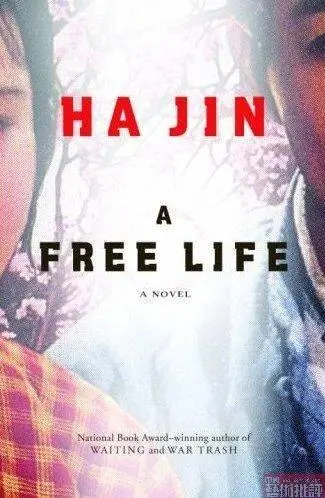
- Название:A Free Life
- Автор:
- Жанр:
- Год:неизвестен
- ISBN:нет данных
- Рейтинг книги:3 / 5. Голосов: 1
-
Избранное:Добавить в избранное
- Отзывы:
-
Ваша оценка:
A Free Life: краткое содержание, описание и аннотация
Предлагаем к чтению аннотацию, описание, краткое содержание или предисловие (зависит от того, что написал сам автор книги «A Free Life»). Если вы не нашли необходимую информацию о книге — напишите в комментариях, мы постараемся отыскать её.
Ha Jin, who emigrated from China in the aftermath of Tiananmen Square, had only been writing in English for 12 years when he won the National Book Award for Waiting in 1999. His latest novel sheds light on an émigré writer's woodshedding period. It follows the fortunes of Nan Wu, who drops out of a U.S. grad school after the repression of the democracy movement in China, hoping to find his voice as a poet while supporting his wife, Pingping, and son, Taotao. After several years of spartan living, Nan and Pingping save enough to buy a Chinese restaurant in suburban Atlanta, setting up double tensions: between Nan's literary hopes and his career, and between Nan and Pingping, who, at the novel's opening, are staying together for the sake of their young boy. While Pingping grows more independent, Nan -amid the dulling minutiae of running a restaurant and worries about mortgage payments, insurance and schooling-slowly snuffs the torch he carries for his first love. That Nan at one point reads Dr. Zhivago isn't coincidental: while Ha Jin's novel lacks Zhivago's epic grandeur, his biggest feat may be making the reader wonder whether the trivialities of American life are not, in some ways, as strange and barbaric as the upheavals of revolution.
***
From the award-winning author of Waiting, a new novel about a family's struggle for the American Dream.
Meet the Wu family-father Nan, mother Pingping, and son Taotao. They are arranging to fully sever ties with China in the aftermath of the 1989 massacre at Tiananmen Square, and to begin a new, free life in the United States. At first, their future seems well-assured. But after the fallout from Tiananmen, Nan 's disillusionment turns him toward his first love, poetry. Leaving his studies, he takes on a variety of menial jobs as Pingping works for a wealthy widow as a cook and housekeeper. As Pingping and Taotao slowly adjust to American life, Nan still feels a strange attachment to his homeland, though he violently disagrees with Communist policy. But severing all ties-including his love for a woman who rejected him in his youth-proves to be more difficult than he could have ever imagined.
A Free Life — читать онлайн бесплатно полную книгу (весь текст) целиком
Ниже представлен текст книги, разбитый по страницам. Система сохранения места последней прочитанной страницы, позволяет с удобством читать онлайн бесплатно книгу «A Free Life», без необходимости каждый раз заново искать на чём Вы остановились. Поставьте закладку, и сможете в любой момент перейти на страницу, на которой закончили чтение.
Интервал:
Закладка:
Janet could see the logic of those words and was even more fascinated by their marital state, which seemed quite stable despite Ping-ping's denying that Nan loved her. Aren't passion and sex essential parts of the married life? Can a marriage last without those basic ingredients? Sometimes Janet raised those questions to herself and couldn't answer them, unable to imagine living with Dave without the desire to possess him and without deep love for him. She was sure that if Dave hadn't loved her, he could definitely have started an affair with another woman, and then their marriage would disintegrate. But in the Wus' case, Pingping and Nan seemed in harmony, and neither was really bothered by the absence of passion in their marriage. On the other hand, Pingping had admitted to Janet that she and Nan did make love from time to time, and that the longer they lived together, the more comfortable she felt with Nan in bed. Strange. Maybe they did love each other, but in their own peculiar way.
18
NAN was peeling ginger while watching CNN. The TV, hung up in a corner behind the counter, had tiny refulgent spots on its screen. As the camera shifted to a street crowded with Asian faces, the anchor-woman with kohl-rimmed eyes said, "A Chinese dissident was arrested yesterday afternoon in Beijing. Mr. Bao Yuan, an exiled artist living in New York City, returned to China last week with the intention of publishing a literary magazine in his homeland. The charge is still unclear, but our CNN source reports that he's accused of the crime of sabotage…"
Nan was flabbergasted and stopped the peeler in his hand, his eyes fixed on the screen. He was eager to see Bao's face, but it never appeared. Instead, a scene that didn't directly bear on his apprehension emerged: a group of policemen frog-marched four handcuffed criminals toward a six-wheeled truck, whose back was canvased, as if they were heading for an execution ground.
At once Bao became the topic at the restaurant, though neither Pingping nor Niyan had ever met him. Nan told them how he had lived off Wendy and how she had called in her brother, who threw Bao out of her house. They all felt that Bao might have planned to get arrested for the sake of publicity; otherwise only a fool would have run the risk of sneaking back into China, where the police were awaiting him. Shubo stopped by on his way to work and left a copy of World Journal for Nan, saying Bao Yuan must have been out of his mind. He had to hurry to Grand Buddha and couldn't stay to join them in their conversation. Before Nan could tease him, saying Shubo's unshaven face brought to mind a koala today, his friend was already outside, striding away toward his car. Shubo's bald patch was more eye-catching when viewed from behind.
Nan opened the newspaper. The front page listed Bao's arrest as a major piece of news. On the third page was a long article about the incident, entitled " China 's New Human Rights Violation." Together with the writing was Bao's photo, in which he wore a sardonic grin as if trying hard to fight down a wild laugh. The article reported that he had taken with him a hundred copies of New Lines and intended to distribute them in China. He also wanted to explore the possibility of publishing the journal on the mainland, but before he could find a business partner, the police seized him and confiscated all the copies of the journal. Rumor had it that the authorities were going to put him on trial, which Nan doubted would ever take place, because it might raise more international uproar. He was sure Bao already had a green card, so it would be difficult for the government to imprison him like a regular Chinese citizen. More troublesome for the authorities, the dissident communities in major U.S. cities were already on the move, launching protests and staging condemnations. The article stated that a group of freedom activists in New York and Washington, D.C., had started collecting signatures and appealed to some U.S. congressmen to intervene on Bao's behalf.
Nan talked with Dick on the phone about Bao's trouble. Dick chuckled and said, "I've heard about it. He's famous now, and even my colleagues in Asian Studies have been talking about his bravery."
"What? Zey believe he's brave?" asked Nan.
"Sure, how could they think otherwise?"
"He might have meant to attract attention."
"Probably. Still, it takes a lot of guts to smuggle the journal into China personally, don't you think?"
"I guess all zer copies must have been back issues. Zer journal was dead long ago, you know zat."
"Maybe he meant to resurrect it in China."
"Well, I'm not sure."
"Jeez, Nan, you're too cynical. Come to think of it, the guy might do many years behind bars just because he believes in free speech and free press."
"It's not zat simple. I don't feel he'll become a prisoner of conscience."
"What makes you think that way?"
Nan couldn't explain it in detail on the phone, so he suggested they meet and talk about it. Dick was busy going through his copy-edited poetry manuscript, which he had to send back to his editor that weekend, so he couldn't come until the following Wednesday.
19
WHEN Dick came to the Gold Wok on Wednesday afternoon, Bao had just been released and expelled from China. It was reported that some in the U.S. Congress had pressured the Chinese government for his release. Nan felt vindicated and said to his friend, "See, I told you he wouldn't be in jail for long."
"I don't get it. Why wouldn't they sentence him to a prison term?" Dick shook his chin, on which sweat was beading.
"Zat would make him more famous," said Nan.
"I guess now he has quite a bit of material for a book."
"He was writing a memoir when I worked for him in New York."
"I know. I saw some chapters of it in translation. Utterly atrocious. I told him to scrap the whole thing and start over."
"Maybe he has finished it." Nan wanted to say that perhaps Bao could easily find a publisher now, but he checked himself.
Out of his back pocket Dick pulled a mock cover of his new book. It was a piece of glossy paper, fourteen by ten inches and divided down the middle, the right half red and the left half white. Two large handwritten words stood in the center of the right-hand side, Unexpected Gifts, above which was the author's name, "Dick Harrison," and below which was a basket of fruit: apples, pears, tomatoes, grapes. The opposite half of the paper bore some words of praise for Dick's other books and a blurb on this volume by Sam Fisher, commending Dick for "his unerring ear." Nan disliked the cover on the whole, but was impressed by the fruits embodying the gifts.
"How do you like this cover?" Dick asked.
"To tell zer truth, I don't like zer crimson, too loud, like a cover of a revolutionary book."
"The color's fine. Red is eye-catching and will help it sell better."
Dick's reply surprised Nan, who had never thought that a poet would be so concerned about the sales of his book. In spite of his own hard effort to make money, when it came to poetry Nan couldn't imagine it as a commodity. He didn't know how to say this to his friend, so he pointed at the wicker basket on the cover, saying, "Zese fruits look nice."
"I hate it!" said Dick.
"How come?"
"It's so banal. Why can't they have a basket of more peculiar things, like squash, or pinecones, or trout, or pheasants? I quarreled with the publisher this morning before I went to class. Gosh, he's impossible."
"Are they going to change zis?"
"I don't know. The guy said it was too late. I told him it wasn't too late because they just started working on this book. We yelled at each other on the phone. He's a schmuck, but he's my publisher. Maybe I shouldn't have had the altercation with him."
Читать дальшеИнтервал:
Закладка:
Похожие книги на «A Free Life»
Представляем Вашему вниманию похожие книги на «A Free Life» списком для выбора. Мы отобрали схожую по названию и смыслу литературу в надежде предоставить читателям больше вариантов отыскать новые, интересные, ещё непрочитанные произведения.









Обсуждение, отзывы о книге «A Free Life» и просто собственные мнения читателей. Оставьте ваши комментарии, напишите, что Вы думаете о произведении, его смысле или главных героях. Укажите что конкретно понравилось, а что нет, и почему Вы так считаете.