Ha Jin - A Free Life
Здесь есть возможность читать онлайн «Ha Jin - A Free Life» весь текст электронной книги совершенно бесплатно (целиком полную версию без сокращений). В некоторых случаях можно слушать аудио, скачать через торрент в формате fb2 и присутствует краткое содержание. Жанр: Современная проза, на английском языке. Описание произведения, (предисловие) а так же отзывы посетителей доступны на портале библиотеки ЛибКат.
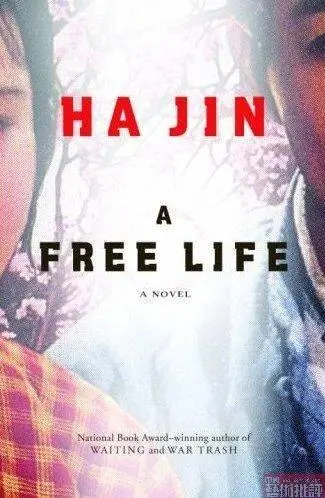
- Название:A Free Life
- Автор:
- Жанр:
- Год:неизвестен
- ISBN:нет данных
- Рейтинг книги:3 / 5. Голосов: 1
-
Избранное:Добавить в избранное
- Отзывы:
-
Ваша оценка:
A Free Life: краткое содержание, описание и аннотация
Предлагаем к чтению аннотацию, описание, краткое содержание или предисловие (зависит от того, что написал сам автор книги «A Free Life»). Если вы не нашли необходимую информацию о книге — напишите в комментариях, мы постараемся отыскать её.
Ha Jin, who emigrated from China in the aftermath of Tiananmen Square, had only been writing in English for 12 years when he won the National Book Award for Waiting in 1999. His latest novel sheds light on an émigré writer's woodshedding period. It follows the fortunes of Nan Wu, who drops out of a U.S. grad school after the repression of the democracy movement in China, hoping to find his voice as a poet while supporting his wife, Pingping, and son, Taotao. After several years of spartan living, Nan and Pingping save enough to buy a Chinese restaurant in suburban Atlanta, setting up double tensions: between Nan's literary hopes and his career, and between Nan and Pingping, who, at the novel's opening, are staying together for the sake of their young boy. While Pingping grows more independent, Nan -amid the dulling minutiae of running a restaurant and worries about mortgage payments, insurance and schooling-slowly snuffs the torch he carries for his first love. That Nan at one point reads Dr. Zhivago isn't coincidental: while Ha Jin's novel lacks Zhivago's epic grandeur, his biggest feat may be making the reader wonder whether the trivialities of American life are not, in some ways, as strange and barbaric as the upheavals of revolution.
***
From the award-winning author of Waiting, a new novel about a family's struggle for the American Dream.
Meet the Wu family-father Nan, mother Pingping, and son Taotao. They are arranging to fully sever ties with China in the aftermath of the 1989 massacre at Tiananmen Square, and to begin a new, free life in the United States. At first, their future seems well-assured. But after the fallout from Tiananmen, Nan 's disillusionment turns him toward his first love, poetry. Leaving his studies, he takes on a variety of menial jobs as Pingping works for a wealthy widow as a cook and housekeeper. As Pingping and Taotao slowly adjust to American life, Nan still feels a strange attachment to his homeland, though he violently disagrees with Communist policy. But severing all ties-including his love for a woman who rejected him in his youth-proves to be more difficult than he could have ever imagined.
A Free Life — читать онлайн бесплатно полную книгу (весь текст) целиком
Ниже представлен текст книги, разбитый по страницам. Система сохранения места последней прочитанной страницы, позволяет с удобством читать онлайн бесплатно книгу «A Free Life», без необходимости каждый раз заново искать на чём Вы остановились. Поставьте закладку, и сможете в любой момент перейти на страницу, на которой закончили чтение.
Интервал:
Закладка:
One Saturday morning Alan said to Nan about the house, "I won't buy it unless it's under ten grand."
"Eef you can fix it and sell it to someone, you can make a lawt of money," said Nan.
"But the renovation will cost a fortune. Too many things have to be replaced." Alan slapped his thigh as if an insect had gotten into his pant leg, and his other hand was holding a tiny spade with which he dug dandelions out of his lawn.
Nan went on, "My friend Shubo may be interested in buying it, but he doesn't know how to repair a house."
"Who's your friend?"
"You know zer waitress at my restaurant?"
"Yes, she's a pretty gal." Alan swatted a mosquito that had landed on his sinewy neck.
"Shubo is her hahsband. Zey live outside Lawrenceville and want to move closer."
"I think I met the guy. Well, tell him he's not welcome." Alan's tone was rather casual, but he seemed to speak accidentally on purpose.
Nan was taken aback. "Why?"
"I like you and Pingping, to be frank, and you're good neighbors. But there're too many Chinese in this neighborhood already. We need diversity, don't we?"
"But we are probably zee only Chinese here."
"How about the big family across the lake?"
"Oh, they're Vietnamese." Nan remembered seeing seven or eight cars parked in the yard of that brick raised ranch the other day. He had also noticed two young Asian couples in this area, but he was sure they weren't Chinese.
Alan continued, "Mrs. Lodge, Fred, Terry, and Nate, we all talked about this. We don't want this subdivision to become a Chinatown."
Nan was scandalized but didn't know how to argue with him. He managed to say, "All right, I will tell Shubo what you said. You want to keep Chinese as minority here, but don't you sink our neighborhood should be a melting pot?"
"But some people are not meltable."
"Maybe the pot is not big enough. Make it a cauldron, zen everybody can melt in it, yourself included."
They both laughed. Alan said, "To be honest, the worst-case scenario is that a slumlord will buy this house, fix it up, and rent it out. That'll cause a lot of trouble to our neighborhood."
"See, my friend will be a mahch better choice."
"Sure, compared with a slumlord."
The thought flashed through Nan's mind that some people in the neighborhood had taken his family to be interlopers all along and probably would continue to do so whether they were naturalized or not. When he passed Alan's words on to Shubo, his friend was so outraged that his eyes turned rhomboidal and his face nearly purple. The opposition from the neighborhood made Shubo all the more determined to bid for the house, even though he was uncertain how to renovate it and even though originally he and Niyan had worried that the property might depreciate in value because it was right next to the Wus'. He didn't know anyone in the house-repairing business and would have to use a contractor, who might rip him off. Worse still, it would be impossible for him to keep a close watch on the renovation because he'd have to bartend at Grand Buddha six days a week. All the same, his anger didn't abate, and the more he thought about Alan's words, the more resolved he was-he and his wife must enter into the neighborhood like a thorn stuck in those racists' flesh.
By now Niyan had befriended Janet, so Janet volunteered to accompany her and Shubo to the sale on November 6, which they all expected would be something like a Dutch auction. Shubo had drawn a certified check for $15,000 from the bank, as the flyer had indicated would be needed in order to seal the bargain on the spot. Nan urged the couple to be cool-headed about this matter, advising that they should treat it just as a regular business deal. After exchanging views, everybody agreed that Shubo and Niyan should pay no more than $40,000 for the house. If it went higher than that, they should forget it.
To everybody's amazement, the auction was such a quiet affair that few people in the neighborhood even noticed it. Seven real estate brokers showed up and Shubo was the only nonprofessional bidder among them. There was no chair for anyone to sit on, and the auctioneer, a tall man from Southtrust Bank, didn't shout out any offer from the bidders; neither did anyone hold a paddle with a number printed on it. Besides owing a mortgage of $65,000, Gerald hadn't paid real estate tax and several other bills for years. By any means the bank, the town, the utility companies, and even a used-car dealer had to recover the arrears, so the starting price for the property was $81,000. Shubo, Niyan, and Janet were dumbfounded, just standing there and watching others outbid one another. There were no raised voices, as if they all were at a coffee break from a meeting, making small talk. A man with a marzipan face was sucking a large Havana cigar the whole time and just flashed his fingers at the auctioneer without speaking. Two of the brokers quit at $90,000, but they showed no emotion, as if tired of the whole thing.
The final bid was $93,000, and the house went to a young Hispanic real estate broker. Shubo and Niyan returned to the Gold Wok, still in disbelief. Niyan told the Wus the purchasing price. Everybody was surprised and couldn't imagine that after paying that amount someone could still make a profit from the house. Shubo kept shaking his round chin and said, "Without money you can't fight racism in America."
"Just as you have to be rich enough to love your country," added Nan.
Like their neighbors, the Wus also feared that the buyer of the house might be a slumlord; otherwise, who would pay that kind of price for the property? Maybe the broker meant to convert it into a two-family house and rent it out so that he could make a larger profit. The more people talked about this, the more agitated they became.
To the Wus' bewilderment, for a whole winter the buyer left the house untouched. Though the season was less convenient for construction work, people in Georgia don't stop building or repairing homes in the wintertime. The new owner, who was said to intend to fix up the house and then sell it, seemed to have forgotten the property and didn't even come and look at it again until the next spring.
In mid-March the renovation finally started. A group of Mexican workers washed the walls and the roof, painted the doors and windows, and spread grass seeds into the loosened dirt of the lawn. They dismantled the glass porch and built a new deck. A real mailbox was erected at the end of the front yard. Despite the bright appearance of the renovated house, Nan knew that all the inner damages were covered up. The roof should have been replaced, as well as some of the pipes inside. Within two weeks, a sign was planted in the yard with a sheaf of flyers sheathed in a plastic pocket attached to the board. The asking price was $123,000, which pleased Nan and Pingping in a way, because it indicated that their own home must have appreciated considerably in value. Still, they couldn't help wondering who would pay that kind of money for such a house.
Their anxiety proved unjustified. A month later, Judith Goodman, a middle-aged single woman, bought it. She was an optician at the Gwinnett Mall and liked the quiet neighborhood and the lake. Then her mother, previously living down in St. Petersburg, Florida, moved in with her. Many people in the subdivision were relieved to see the Goodmans here. Again, Mrs. Lodge placed a vase of flowers, tulips this time, on their welcome mat the day after they moved in.
PART SIX
1
FOR ANOTHER YEAR Nan devoted himself to making money. The quality of his cooking was so good and the prices so affordable that the Gwinnett Gazette wrote about the Gold Wok, praising it as "the best bargain." Sometimes customers arrived groups and Niyan couldn't wait on so many of them, so Shubo, if available, would come in to help. The Wus had thought of hiring another waitress but decided not to, fearing business might flag again.
Читать дальшеИнтервал:
Закладка:
Похожие книги на «A Free Life»
Представляем Вашему вниманию похожие книги на «A Free Life» списком для выбора. Мы отобрали схожую по названию и смыслу литературу в надежде предоставить читателям больше вариантов отыскать новые, интересные, ещё непрочитанные произведения.












Обсуждение, отзывы о книге «A Free Life» и просто собственные мнения читателей. Оставьте ваши комментарии, напишите, что Вы думаете о произведении, его смысле или главных героях. Укажите что конкретно понравилось, а что нет, и почему Вы так считаете.