Джеффри Арчер - The Prodigal Daughter
Здесь есть возможность читать онлайн «Джеффри Арчер - The Prodigal Daughter» весь текст электронной книги совершенно бесплатно (целиком полную версию без сокращений). В некоторых случаях можно слушать аудио, скачать через торрент в формате fb2 и присутствует краткое содержание. Город: London, Год выпуска: 1982, ISBN: 1982, Издательство: Hodder and Stoughton, Жанр: Современная проза, на английском языке. Описание произведения, (предисловие) а так же отзывы посетителей доступны на портале библиотеки ЛибКат.
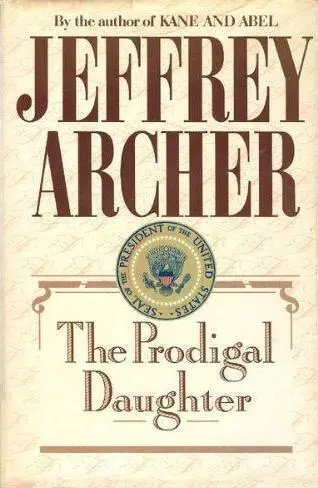
- Название:The Prodigal Daughter
- Автор:
- Издательство:Hodder and Stoughton
- Жанр:
- Год:1982
- Город:London
- ISBN:978-0-340-27687-7
- Рейтинг книги:5 / 5. Голосов: 1
-
Избранное:Добавить в избранное
- Отзывы:
-
Ваша оценка:
The Prodigal Daughter: краткое содержание, описание и аннотация
Предлагаем к чтению аннотацию, описание, краткое содержание или предисловие (зависит от того, что написал сам автор книги «The Prodigal Daughter»). Если вы не нашли необходимую информацию о книге — напишите в комментариях, мы постараемся отыскать её.
Golden boy Richard Kane was born into a life of luxury. The scion of a banking magnate he is successful, handsome, and determined to carve his own path in the world-and to build a future with the woman he loves.
With Florentyna’s ultimate goal only a heartbeat away, both are about to discover the shattering price of power as a titanic battle of betrayal and deception reaches out from the past-a blood feud between two generations that threatens to destroy everything Florentyna and Richard have fought to achieve.
The Prodigal Daughter — читать онлайн бесплатно полную книгу (весь текст) целиком
Ниже представлен текст книги, разбитый по страницам. Система сохранения места последней прочитанной страницы, позволяет с удобством читать онлайн бесплатно книгу «The Prodigal Daughter», без необходимости каждый раз заново искать на чём Вы остановились. Поставьте закладку, и сможете в любой момент перейти на страницу, на которой закончили чтение.
Интервал:
Закладка:
The questions continued to come to Florentyna from all parts of the room and she took the last one over an hour later.
‘Senator Kane, if you become President, will you be like Washington and never tell a lie or like Nixon and have your own definition of the truth?’
‘I cannot promise I will never lie. We all lie, sometimes to protect a friend or a member of our family and if I were President perhaps to protect my country. Sometimes we lie just because we don’t want to be found out. The one thing I can assure you of is that I am the only woman in America who has never been able to lie about her age.’ When the laughter died down, Florentyna remained standing. ‘I’d like to end this press conference by saying that whatever the outcome of my decision today, I wish to express my thanks as an American for the fact that the daughter of an immigrant has found it possible to run for the highest office in the land. I don’t believe such an ambition would be attainable in any other country in the world.’
Florentyna’s life began to change the moment she left the room; four Secret Service agents formed a circle around the candidate, the lead one skillfully creating a passage for her through the mass of people.
Florentyna smiled when Brad Staimes introduced himself and explained that for the duration of her candidacy, there would always be four agents with her night and day, working in eight-hour shifts. Florentyna couldn’t help noticing that two of the agents were women whose build and physical appearance closely resembled her own. She thanked Staimes but never quite became used to seeing one of the agents whenever she turned her head. Their tiny earphones distinguished them from well-wishers, and Florentyna recalled the story about an elderly lady who attended a Nixon rally in 1972. She approached a Nixon aide at the end of the candidate’s speech and said she would definitely vote for his reelection because he obviously sympathized with those who, like herself, were hard of hearing.
Following the press conference, Edward chaired a strategy meeting in Florentyna’s office to work out a rough schedule for the coming campaign. The Vice President had some time before announced that he was a candidate and several other contestants had thrown their hats into the ring, but the press had already decided that the real battle was going to be between Kane and Parkin.
Edward had lined up a formidable team of pollsters, finance chairmen and policy advisors who were well supplemented by Florentyna’s seasoned staff in Washington, still led by Janet Brown.
First Edward outlined his day-by-day plan leading up to the first primary in New Hampshire, and from there to California, all the way to the convention floor in Detroit. Florentyna had tried to arrange for the convention to be held in Chicago but the Vice President vetoed the idea: he wasn’t challenging Florentyna on her home ground. He reminded the Democratic committee that the choice of Chicago and the riots that followed might have been the single reason that Humphrey lost to Nixon in 1968.
Florentyna had already faced the fact that it would be almost impossible for her to beat the Vice President in the southern states, so it was vital that she get off to a strong start in New England and the Midwest. She agreed that during the next three months she would devote seventy-five percent of her energies to the campaign, and for several hours her team threw around ideas for the best use of that time. It was also agreed that she would make regular trips to the major cities that voted in the first three primaries and, if she made a strong showing in New Hampshire, a traditionally conservative area, they would plan their forward strategy accordingly.
Florentyna dealt with as much of her Senate work as possible between making frequent trips to New Hampshire, Vermont and Massachusetts. Edward had chartered a six-seater Lear jet for her with two pilots available around the clock so that she could leave Washington at a moment’s notice. All three primary states had set up strong campaign headquarters, and everywhere Florentyna went she spotted as many ‘Kane for President’ posters and bumper stickers as she did for Pete Parkin.
With only seven weeks left until the first primary, Florentyna began to spend more and more of her time chasing the 147,000 registered Democrats in the state. Edward did not expect her to capture more than 30 percent of the votes, but he felt that might well be enough to win the primary and persuade doubters that she was an electoral asset. Florentyna needed every delegate she could secure before they arrived in the South, even if possible to pass the magic 1,666 by the time she reached the convention hall in Detroit.
The early signs were good. Florentyna’s private pollster, Kevin Palumbo, assured her that the race with the Vice President was running neck and neck, and Gallup and Harris seemed to confirm that view. Only 7 percent of the voters said they would not under any circumstances vote for a woman, but Florentyna knew just how important 7 percent could be if the final outcome was close.
Florentyna’s schedule included brief stops at more than 150 of New Hampshire’s 250 small towns. Despite the hectic nature of each day, she grew to love the classical New England mill towns, the crustiness of the Granite State’s farmers and the stark beauty of its winter landscape.
She served as starter for a dogsled race in Franconia and visited the most northerly settlement near the Canadian border. She learned to respect the penetrating insights of local newspaper editors, many of whom had retired from high-level jobs with national magazines and news services. She avoided discussions of one particular issue after discovering that New Hampshire residents stoutly defended their right to oppose a state income tax, thus attracting a host of high-income professionals from across the Massachusetts border.
More than once she had occasion to be thankful for the death of William Loeb, the newspaper publisher whose outrageous misuse of the Manchester Union-Leader had helped destroy the candidacies of Edmund Muskie and George Bush before her. It was no secret that Loeb had had no time for women in politics.
Edward was able to report that money was flowing into their headquarters in Chicago and ‘Kane for President’ offices were springing up in every state. Some of them had more volunteers than they could physically accommodate; the overspill turned dozens of living rooms and garages throughout America into makeshift campaign headquarters.
In the final seven days before the first primary, Florentyna was interviewed by Barbara Walters, Dan Rather and Frank Reynolds, as well as appearing on all three major morning news programs. As Andy Miller, her press secretary, pointed out, fifty-two million people watched her interview with Barbara Walters and it would have taken over five hundred years to shake the hands of that number of voters in New Hampshire. Nevertheless, her local managers saw to it that she visited nearly every home for the aged in the state.
Despite this, Florentyna had to pound the streets of New Hampshire towns, shaking hands with papermill workers in Berlin, as well as with the somewhat inebriated denizens of the VFW and American Legion posts, which seemed to exist in every town. She learned to work the ski-lift lines in the smaller hills rather than the famous resorts, which were often peopled by a majority of nonvoting visitors from New York or Massachusetts.
If she failed with this tiny electorate of the northern tip of America, Florentyna knew it would raise major doubts about her credibility as a candidate.
Whenever she arrived in a city, Edward was always there to meet her and he never let her stop until the moment she stepped back onto her plane.
Читать дальшеИнтервал:
Закладка:
Похожие книги на «The Prodigal Daughter»
Представляем Вашему вниманию похожие книги на «The Prodigal Daughter» списком для выбора. Мы отобрали схожую по названию и смыслу литературу в надежде предоставить читателям больше вариантов отыскать новые, интересные, ещё непрочитанные произведения.




![Джеффри Арчер - The Short, the Long and the Tall [С иллюстрациями]](/books/388600/dzheffri-archer-the-short-the-long-and-the-tall-s-thumb.webp)







Обсуждение, отзывы о книге «The Prodigal Daughter» и просто собственные мнения читателей. Оставьте ваши комментарии, напишите, что Вы думаете о произведении, его смысле или главных героях. Укажите что конкретно понравилось, а что нет, и почему Вы так считаете.